
Hip protectors add padding over the outer hip bones to help absorb or redirect some impact in a fall. They come as adjustable belts or padded underwear, and the best choice depends on fit, comfort, clothing preferences, and how much help the wearer needs to put them on. No hip protector can prevent every fall or injury, so consider it one part of a broader fall-safety plan.
Below, we compare five options, from a simple wraparound belt to washable padded shorts. Check the size chart carefully before ordering, and ask a healthcare professional which style may suit the wearer’s needs.
| Product | Style | Standout feature | Fit note |
|---|---|---|---|
| XAOMING Adjustable Hip Protector Belt | Wraparound belt | Dual side pads and front closure | Listing is for Medium; measure where the belt will sit |
| Safehip Active Hip Protector Belt | Adjustable belt | Foam shields and breathable AirX fabric | Check the available size information before buying |
| Dr.sendesi Hip Protector Shorts | Padded shorts | Washable design with adjustable waist straps | Sizes are based on hip circumference |
| Safehip AirX Women’s Hip Protector | Padded undergarment | Breathable fabric and several style options | Measure around the widest part of the hips |
| TIDI Posey Hipsters, Large | Unisex padded underwear | Low-profile foam pads and washable fabric | Large is listed for a 34–38-inch waist and 41–45-inch hips |
Our Picks: Best Hip Protectors For The Elderly reviews
XAOMING Adjustable Belt: A Simple Wraparound Option

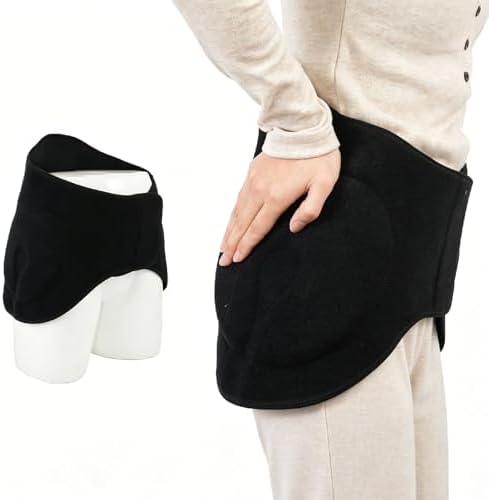
The XAOMING is a belt-style hip protector with a pad positioned over each outer hip. Its wraparound shape and hook-and-loop front closure are intended to make it easier to put on and adjust than padded shorts. It can be worn over or under clothing, depending on the wearer’s fit and preference.
The belt has a focused design rather than full-coverage padded underwear. That may suit someone who wants hip-area padding without changing their usual undergarments. The listing describes the fabric as soft and breathable, but comfort will still depend on how snugly the belt fits and whether the pads stay aligned during movement.
One important limitation is sizing: the supplied listing is for a black Medium belt. Measure the waist where the belt will sit and compare it with the size chart. Since it is a belt rather than a garment, check that it stays in place while sitting, standing, and walking. It offers coverage around the hips but does not prevent every fall or injury.
Pros:
- Two pads cover both outer hip areas.
- Front hook-and-loop closure allows adjustment.
- Can be worn over or under everyday clothing.
- Does not require wearing padded shorts.
Cons:
- The supplied listing is for Medium, so sizing options may be limited.
- A belt may shift if the fit is not secure.
Verdict: Consider this belt if you want adjustable, focused hip coverage and have confirmed that the Medium size fits.
Safehip Active: An Adjustable Belt for Daily Movement

The Safehip Active is a belt-style protector with soft polyethylene foam shields. The product description says the shields are designed to absorb and disperse impact energy. Its adjustable belt is intended to make the protector easier to put on and remove, including for caregivers, and the design can be worn over regular clothing.
The listing also describes AirX spacer fabric for airflow and moisture evaporation, along with a polyester-and-elastane construction. Those features may be useful for someone who wants a belt for household activities, rehabilitation, or supervised movement. The belt format may also be more convenient than changing into padded underwear for a short activity.
The main practical question is fit: a belt needs to stay in place so the shields remain over the hips. The supplied product details do not include a size range, so check the current sizing information before ordering. The product description makes fall-protection claims, but a hip protector should not be treated as a guarantee against fractures or other injuries.
Pros:
- Foam shields are designed to absorb and disperse impact.
- Adjustable belt can be worn over regular clothing.
- AirX fabric is described as breathable and moisture-evaporating.
- Belt format may be convenient for supervised activity or rehabilitation.
Cons:
- Size details should be confirmed before purchase.
- Correct pad placement depends on a secure fit.
Verdict: This is a practical style to consider if the wearer prefers an adjustable belt and the sizing works for them.
Dr.sendesi Hip Protector Shorts: Washable Coverage in a Garment
These padded shorts combine hip protection with a close-fitting garment. The listing describes high-density pads over the hips, a cotton-blend fabric, perforated neoprene lining, and adjustable elastic waist straps. It also states that the shorts are machine washable.
Unlike a belt, shorts cover more of the lower body and may feel more secure to someone who dislikes a separate wraparound layer. The product is described as having a slim profile for wearing under clothing. However, padded shorts add another garment to the wearer’s routine, and the close fit may not suit everyone.
Fit is based on hip circumference: Small is listed for 34–38 inches, Medium for 38–42 inches, and Large for 42–51 inches. Measure around the widest part of the hips, as directed in the listing. If the wearer is between sizes, the product information recommends choosing the larger size. The description mentions support around the waist, pelvis, and lower back, but this should not be taken as a substitute for medical support or treatment.
Pros:
- Garment-style design keeps the pads in place under clothing.
- Adjustable waist straps allow some fit adjustment.
- Listing says the shorts are machine washable.
- Three size ranges are provided with hip measurements.
Cons:
- Requires wearing and laundering a padded garment.
- Close-fitting shorts may not suit someone who prefers a belt.
Verdict: Choose these shorts if you prefer an under-clothing garment and can match the wearer’s hip measurement to the listed size range.
Safehip AirX Women’s Protector: Breathable Padded Underwear

The Safehip AirX is an undergarment with shield-shaped pads designed to redirect some impact away from the hip joint. The listing describes the fabric as soft, breathable, moisture-wicking, and latex-free. It is made to fit close to the body, so it can be worn beneath everyday clothing.
The product information describes several versions, including women’s, men’s, unisex, and an open model intended to make changes easier for people who use incontinence products. The listing also says the textile shields can be washed and dried, with washing permitted at up to 95°C (200°F). Confirm that the chosen style matches the wearer’s needs before ordering.
For sizing, measure around the widest part of the hips and use the size chart. The listing gives a broad range from XS through 2XL, but the fit needs to be snug without causing discomfort. The product description makes a specific claim about fracture reduction; treat that as a manufacturer claim, not a guarantee for an individual wearer. A clinician can help assess whether this type of garment is appropriate.
Pros:
- Underwear format keeps the pads close to the hips.
- Several styles are listed, including an open option.
- Latex-free fabric is described as breathable and moisture-wicking.
- The listing provides a wide range of hip measurements and washing guidance.
Cons:
- It must be put on and removed like an undergarment.
- Choosing the right version and size requires checking the product details closely.
Verdict: This option may suit someone who wants close-fitting padded underwear, especially if one of the listed styles addresses a specific dressing or incontinence need.
TIDI Posey Hipsters: Low-Profile Protection in a Washable Pair
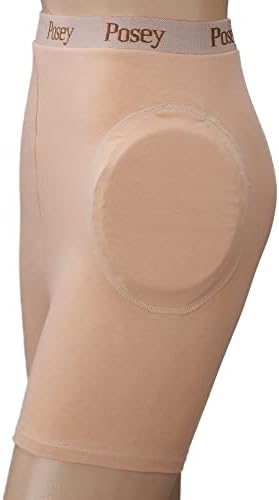
Posey Hipsters are unisex padded pants with viscoelastic foam pads over the hips. The listing describes the garment as a soft blend of 95% cotton and 5% spandex, with a low-profile design intended to be discreet under clothing. The pads remain in the garment during laundering, so there is no need to remove them before washing.
The supplied product is Large. Its listed fit is a 34–38-inch waist and 41–45-inch hips, and the product description recommends a snug fit for protection. Measure both areas and compare them with the size information rather than relying on the size label alone.
Compared with adjustable belts, these hipsters offer a garment-based fit that does not need a separate front closure. That can be convenient for someone comfortable changing into padded underwear. The tradeoff is that the wearer must put on a pair of pants, and the listed size may not fit everyone.
Pros:
- Viscoelastic foam pads are designed to cushion the hip area.
- Soft cotton-and-spandex fabric is made for daily wear.
- Low-profile design is intended to sit under clothing.
- Washable without removing the pads.
Cons:
- The supplied listing is for Large, with specific waist and hip measurements.
- Requires wearing padded pants rather than a removable belt.
Verdict: Posey Hipsters are worth considering if the wearer wants washable, low-profile padded underwear and the Large measurements are a good match.
How to Choose Hip Protectors for the Elderly
Choose a Belt or a Padded Garment
A belt is a separate layer that may be easier to put on for a short period or over regular clothes. Padded shorts and underwear provide a garment-based fit and may keep pads closer to the hips, but they need to be changed and laundered like other clothing. Consider what the wearer can manage comfortably and what caregivers can help with.
Measure for a Secure, Comfortable Fit
Follow the product’s sizing instructions rather than guessing from a usual clothing size. Some products use waist measurements, while others use hip circumference at the widest point. A protector that is too loose may shift and leave the hip area uncovered; one that is too tight may be uncomfortable or difficult to put on. Check that the pads sit over the outer hips when the wearer is standing and sitting.
Check Pad Placement and Coverage
Protectors differ in pad shape and how they stay in position. Look for pads that cover the intended hip area without bunching or sliding during normal movement. If possible, have the wearer try the garment on and check pad placement while walking, sitting, and standing. A product’s description can explain its design, but it cannot confirm how it will fit a particular person.
Think About Dressing and Care Needs
Consider dexterity, mobility, toileting needs, and whether the wearer has help getting dressed. A front-fastening belt may be simpler for some people, while another person may prefer a pull-on garment. If incontinence care is a concern, check whether the product has a specific style for that need. Review the washing instructions and make sure they suit the household’s laundry routine.
Match the Protector to Daily Routines
Think about whether the protector will be worn at home, during rehabilitation, or when going outdoors. A belt may be convenient over clothing for an activity, while underwear-style protectors are intended to be worn beneath it. The most useful option is one the wearer can put on reliably and is willing to wear as directed.
Use It as Part of a Fall-Safety Plan
Hip protectors are not a substitute for preventing falls or getting medical advice. Ask a healthcare professional about fit and suitability, especially after surgery or when the wearer has skin, balance, or mobility concerns. Other steps—such as reviewing medications, improving lighting, and reducing trip hazards—may also be important to discuss with a clinician.
Frequently Asked Questions
Do hip protectors prevent falls?
No. Hip protectors are designed to add padding or redirect some impact if a fall occurs. They do not prevent someone from falling, and they cannot guarantee protection from injury.
Are hip protector belts or padded shorts better?
Neither style is best for everyone. A belt can be easier to put on over clothing, while shorts or underwear provide a garment-based fit. Choose based on comfort, dressing ability, pad placement, and the wearer’s routine.
How should I measure for a hip protector?
Use the measurement requested by the specific product. For a belt, that may be the waist where the belt sits. For padded shorts or underwear, it may be the widest part of the hips. Compare the measurement with the product’s size chart before ordering.
Can hip protectors be worn under regular clothes?
Several options in this guide are designed to be worn under clothing, while the belt-style options may also be worn over regular clothes. Check the product description and make sure the clothing does not shift the pads out of position.
Can hip protectors be washed?
Care instructions vary. The Dr.sendesi shorts are described as machine washable, Posey Hipsters can be laundered with the pads left in place, and Safehip AirX lists washing instructions for its textile shields. Follow the care directions for the specific product you choose.
Should a healthcare professional help choose a hip protector?
That can be helpful, particularly for someone with a history of falls, recent surgery, skin concerns, or difficulty dressing. A clinician or rehabilitation professional can help assess fit and explain how a protector may fit into a broader safety plan.
Final Recommendation
For a straightforward adjustable belt, compare the XAOMING and Safehip Active options, paying close attention to fit and pad placement. If the wearer prefers padded underwear, the Safehip AirX, Posey Hipsters, and Dr.sendesi shorts offer different garment styles and sizing details. Measure carefully, consider dressing and washing needs, and ask a healthcare professional for guidance when the wearer has specific medical or mobility concerns.