
High arches can leave less of your foot in contact with the ground, so the right insole needs to support your arch without making your shoes feel crowded. If you also have plantar fasciitis, look for a stable heel cradle, cushioning where you need it, and a shape that fits your footwear. These five options range from firm, heavy-duty designs to thinner inserts for shoes with less room. An insole may improve comfort, but it cannot guarantee relief or replace advice from a medical professional.
Quick Comparison
| Insole | Support and design | Best suited for |
|---|---|---|
| WalkHero Heavy Duty High Arch Support Insoles | Rigid arch support with layered cushioning | People seeking firm support for long periods on their feet |
| SursilOrtho Supination Insoles for High Arches | Thin rigid shell, deep heel cradle, and metatarsal pad | Work shoes, boots, and footwear with limited space |
| PowerStep Pinnacle High Arch Orthotic Insoles | Firm, flexible arch support with dual-layer cushioning | Everyday use and moving insoles between compatible shoes |
| VALSOLE Heavy Duty 220+ lbs Orthotic Inserts | Rigid support, deep heel cup, and Poron heel pad | Work shoes, boots, and people seeking a heavy-duty design |
| VALSOLE 250+ lbs Plantar Fasciitis High Arch Support Insole | Rigid support with heel and forefoot cushioning | People who want a trim-to-fit insole for daily footwear |
Our Picks: Best Insoles For High Arches Plantar Fasciitis reviews
WalkHero Heavy Duty Insoles: Firm Support with Layered Cushioning

WalkHero’s heavy-duty insoles pair a rigid nylon arch support with several cushioning layers. The listed construction includes a high-density EVA layer, an OrthoLite layer, and soft PU cushioning at the heel. That mix aims to provide a stable base while softening impact underfoot.
The product is designed for people weighing over 220 pounds and is offered in 12 sizes. It is described as suitable for work shoes, sneakers, casual shoes, and leather boots. Check the space inside your footwear before choosing it: a structured, cushioned insert can make a close-fitting shoe feel tighter.
The firm support may suit someone who wants more than a soft, flat cushion, especially for standing or walking through the day. WalkHero recommends starting with a few hours of wear and increasing gradually over one to two weeks, since the arch may feel noticeable at first. This is a sensible choice if you want a supportive, padded design, but it is not the thinnest option here.
Pros:
- Rigid nylon arch support paired with layered cushioning
- Designed for people weighing over 220 pounds
- Intended for several everyday shoe types
Cons:
- The firm arch may take time to get used to
- Its cushioning may use up space in snug shoes
Verdict: Choose WalkHero if you want a firm, cushioned insole for roomy everyday or work footwear and are comfortable easing into arch support.
SursilOrtho High Arch Insoles: Thin Support for Work Shoes and Boots

SursilOrtho takes a more streamlined approach than the cushioned heavy-duty options. Its thin, rigid shell has a high arch, a deep heel cup, and a U-shaped heel cradle. The design also includes a metatarsal support pad, which may appeal to people who want support under both the arch and forefoot.
The thin profile is intended for work boots, safety shoes, sneakers, flats, and some dress shoes. The product description advises removing the shoe’s factory insole and trimming only the toe end if needed. Its listed size range is US women’s 7–12.5 and men’s 6–12, so check sizing carefully before ordering.
This is the most space-conscious pick in the group, but its structure is still deliberately firm. That may be a drawback if you prefer a soft feel or are sensitive to pronounced arch support. The maker recommends a gradual break-in, starting with short periods and building toward all-day wear.
Pros:
- Thin profile is designed for footwear where bulky inserts may not fit
- Combines a rigid arch, heel cradle, and metatarsal pad
- Toe can be trimmed for fit, according to the product directions
Cons:
- Firm construction may feel too rigid for some wearers
- Listed size range may not cover every shoe size
Verdict: Consider SursilOrtho if you need structured high-arch support in a thinner insert for boots, work shoes, or other footwear with limited room.
PowerStep Pinnacle High: A Flexible, Ready-to-Use Orthotic

The PowerStep Pinnacle High combines firm but flexible arch support with a deep heel cradle and dual-layer cushioning. Its design focuses on supporting the heel and arch while adding cushioning from heel to toe. That makes it a middle ground between a very thin, rigid insert and a heavily cushioned model.
PowerStep says the insoles are sized for shoes with removable factory insoles and do not require trimming. They are intended for walking, running, work, and casual dress shoes. If you plan to move them from one pair to another, check that each shoe has enough room and a removable liner.
Compared with the heavier-duty options in this list, the Pinnacle High is not specifically described as a 220-pound-plus design. Its appeal is the combination of flexible support, cushioning, and a ready-to-use fit. The product is listed as made in the USA and backed by a 30-day money-back guarantee; check the current product listing for applicable terms.
Pros:
- Firm, flexible arch support with a deep heel cradle
- Dual-layer cushioning is designed for heel-to-toe comfort
- No trimming is needed when the size matches compatible footwear
Cons:
- Designed for shoes with removable factory insoles
- May not suit people seeking a specifically heavy-duty, weight-rated design
Verdict: Pick the PowerStep Pinnacle High if you want a structured but flexible insole for compatible everyday, work, or walking shoes without trimming it to fit.
VALSOLE Heavy Duty 220+ lbs: Rigid Support with a Poron Heel Pad

This VALSOLE model is built around a rigid support piece, a deep heel cup, and a Poron heel pad. The product description presents it as a heavy-duty option for people over 220 pounds, with shock absorption and support intended for walking, standing, work shoes, and boots.
The insole can be trimmed to fit, and its listed uses include athletic shoes, work shoes, boots, hiking shoes, and high-volume dress shoes. The combination of a firm arch and cushioned heel makes it worth considering if you want more structure than a soft insert can provide. Make sure your shoes have enough depth for the insole before cutting it.
Compared with the WalkHero, this model highlights a Poron heel pad and a trim-to-fit design rather than a stack of named cushioning layers. The firm TPU support may feel substantial, so it may not be the best match if you prefer a flexible or minimally supportive insert. The description also makes several broad pain-relief claims; results can vary, and the insole should be treated as a comfort aid rather than a guaranteed fix.
Pros:
- Rigid support paired with a deep heel cup and Poron heel pad
- Designed for people weighing over 220 pounds
- Can be trimmed for use in several types of footwear
Cons:
- Firm support may feel too strong for people who prefer flexible insoles
- Trimming requires care to preserve a proper fit
Verdict: Choose this VALSOLE model if you want a heavy-duty, trim-to-fit insert with a rigid arch and cushioned heel for roomy shoes or boots.
VALSOLE 250+ lbs Insole: Trim-to-Fit Support with Forefoot Cushioning
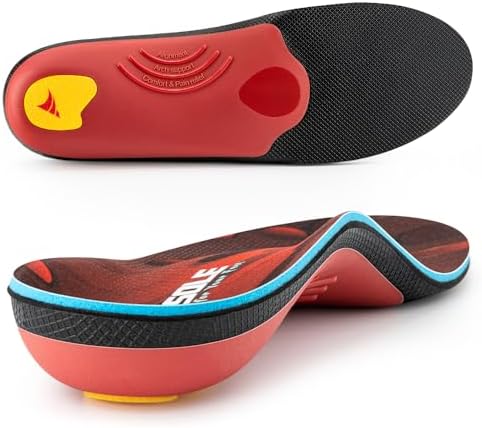
This second VALSOLE option is described as a heavy-duty insole for people weighing over 220 pounds, with the product title highlighting support for up to 250 pounds. Its design includes a rigid TPU support piece, a heel cup, a Poron heel pad, and a metatarsal pad at the forefoot.
The added forefoot pad distinguishes it from the first VALSOLE model in this roundup. It may be a useful feature if you want cushioning under the ball of your foot as well as support at the heel and arch. The insole is trim-to-fit and is listed for walking, running, athletic, work, hiking, and other general footwear.
The product instructions note that the arch can feel noticeable during the first several days and recommend starting with a few hours of wear before gradually increasing use. Like the other heavy-duty models, it may need a roomier shoe than a thin insert. Its weight guidance and cushioning features make it a candidate for demanding daily use, but fit and comfort will depend on your foot and footwear.
Pros:
- Includes both a Poron heel pad and a metatarsal pad
- Rigid support is designed for heavy-duty use
- Trim-to-fit design is listed for several types of shoes
Cons:
- May require a gradual break-in period
- Can take up more shoe space than a thin insert
Verdict: Consider this VALSOLE if you want a trim-to-fit heavy-duty design with cushioning at both the heel and forefoot, and your shoes have enough room.
How to Choose Insoles for High Arches and Plantar Fasciitis
Match the arch shape to your foot
High-arch insoles vary in how tall and firm their support feels. A pronounced, rigid arch can offer a stable contact point, but it may feel uncomfortable if it presses in the wrong place. If possible, compare the insole’s shape with your foot and choose a design that supports your arch without creating a sharp pressure spot.
Look for heel support and cushioning
Several options here use a deep heel cup or heel cradle, while some also add a dedicated heel cushion. These features can make the insole feel more secure and cushioned under the heel. Think about where you want more padding, but remember that cushioning does not make every insert suitable for every foot or condition.
Check how much room your shoes have
A full-length, layered insole can take up more space than a thin rigid shell. If your shoes already fit closely, a bulky insert may make them feel tight or change the fit around your toes. A thinner option such as the SursilOrtho is designed for footwear with less room; the cushioned WalkHero and VALSOLE models may be better suited to shoes with more volume.
Decide between trim-to-fit and ready-to-use sizing
Some insoles are designed to be trimmed at the toe, while the PowerStep Pinnacle High is sold in shoe sizes and does not require trimming. Follow the specific product directions if you choose a trimmable model, and use your shoe’s removable factory insole as a guide when appropriate. Avoid cutting the arch or heel support area.
Consider your daily activity and support preference
If you spend long periods standing or walking, a stable design with cushioning may be more appealing than a very thin insert. If you need to fit an insole into work boots, safety shoes, or dress shoes, profile may matter as much as padding. Choose based on your footwear and comfort needs rather than assuming the firmest option is automatically the best.
Break in firm support gradually
Some of these products recommend starting with short periods of wear and increasing use over time. This can help you judge how the arch feels before wearing the insert for a full day. Stop using an insole if it causes significant discomfort, and ask a qualified health professional for guidance if foot pain persists or worsens.
Frequently Asked Questions
Can insoles help with high arches and plantar fasciitis?
Supportive insoles may improve comfort by adding arch support, heel stability, or cushioning, but they do not work the same way for everyone. They are not a guaranteed treatment. If symptoms continue or limit your daily activities, consult a medical professional.
Should I choose a soft or firm insole?
A soft insole may feel cushioned, while a firm design offers a more structured base. The right choice depends on your foot, shoe fit, and comfort preference. Several options in this list have firm arch support, so follow any break-in guidance and pay attention to pressure or discomfort.
Do these insoles fit every shoe?
No. Shoe depth, the removable factory insole, and the insert’s thickness all affect fit. The product descriptions list several compatible shoe types, but check the dimensions and sizing details on the product page and make sure the shoe still fits comfortably with the insert in place.
Can I trim these insoles?
The SursilOrtho and both VALSOLE options are described as trimmable. SursilOrtho advises trimming only the toe end if needed. The PowerStep Pinnacle High is sized for compatible shoes and does not require trimming. Follow the instructions for the specific model you choose.
How long should I wear a new high-arch insole at first?
Follow the product’s break-in instructions. WalkHero and the VALSOLE 250+ lbs model recommend beginning with a few hours and gradually increasing wear; SursilOrtho also suggests a staged adjustment. If the support feels painful rather than simply unfamiliar, stop and reassess the fit.
What is the best choice for work boots?
SursilOrtho is designed with a thin profile for work boots and safety shoes. The WalkHero and both VALSOLE models are also listed for work footwear, but their more substantial cushioning may need extra shoe room. Check your boot’s fit with the insole installed.
When should I talk to a health professional about foot pain?
Consider professional advice if pain persists, worsens, or interferes with walking or daily tasks. A clinician can help assess what may be causing your symptoms and whether an insole or another approach is appropriate.
Final Recommendation
For a balanced combination of firm support and layered cushioning, the WalkHero is a strong option for roomy everyday or work shoes. Choose SursilOrtho if a thinner profile matters most, or the PowerStep Pinnacle High if you want a firm but flexible insert that does not require trimming. The two VALSOLE models are worth considering for heavy-duty support, with the 250+ lbs version adding a metatarsal pad. The best fit is the one that supports your arch comfortably and works with your shoes; persistent pain deserves professional guidance.