
If you want rich, concentrated coffee without buying an espresso machine, a stovetop moka pot is one of the most affordable ways to get there. A stainless steel model is the choice most buyers should start with, since it resists rust, handles daily use well, and works on more cooktops than aluminum alternatives. Keep in mind that a moka pot produces strong, intense coffee rather than true pressurized espresso with a thick crema. Even so, the drink it makes is bold and satisfying, and the pot itself takes up very little counter space. This guide covers three stainless steel options, explains how they differ, and helps you decide which size and build suit your kitchen.
| Product | Cup Size | Body Material | Cooktop Compatibility | Listing Status at Research |
|---|---|---|---|---|
| Easyworkz Diego Stovetop Espresso Maker Stainless Steel Italian Coffee Machine Maker 4Cup 6.8 oz Induction Moka Pot | 4 cups (6.8 oz) | 18/8 stainless steel with magnetic base | Gas, induction, electric | Listed as available |
| Mixpresso 12 Cup Greca Moka Pot, Stainless Steel Stovetop Espresso Maker | 600ml/20oz Italian stovetop coffee | 12 cups (about 20 oz total) | Stainless steel with magnetic base and black plastic handle | Gas, electric, ceramic, induction | Listed as available |
| DITOSH 12 Cup Thickened 304 Stainless Steel Moka Pot Stovetop Espresso Maker Cafeteras Italian Percolator Espress | 12 cups (20 oz / 600 ml) | 304 stainless steel | Gas, induction, ceramic, electric, alcohol, propane camping stoves | Currently unavailable |
Our Picks: Best Italian Stovetop Espresso Maker Stainless Steel reviews
Easyworkz Diego 4-Cup Stainless Steel Moka Pot for Small Households

The Easyworkz Diego is the smallest of the three options, designed to brew four demitasse-sized cups, or about 6.8 ounces of coffee. That size suits one or two people who want a strong cup in the morning without making more than they will drink. It is built from 18/8 stainless steel with a high-polish finish, and the base uses a heavy-gauge magnetic stainless steel. That magnetic base is what allows it to work on induction cooktops, which is a real advantage if your kitchen has one, since many budget moka pots do not include this feature.
The design details are thoughtful for everyday use. The lid and handle grip are fitted with a heat-resistant, hollow insulated construction, which helps keep your fingers away from hot metal while you pour. The brand also includes a coffee reducer, so you can brew a smaller batch when you only need one cup. A safety valve is included as a second layer of pressure protection, which matters because a moka pot builds steam pressure as it works. The listing suggests about 16 grams of finely ground coffee for the best flavor, and that guideline is a useful starting point for dialing in your cup.
In day-to-day use, the appeal is simplicity. The pot heats quickly, and the brewing process generally wraps up in a few minutes once the coffee starts rising. Many owners appreciate that the pot is easy to take apart for cleaning, which keeps the gasket and filter area fresh and prevents old oils from building up. The listing also notes that the pot is dishwasher safe, though hand washing and thorough drying will extend the life of the gasket and keep the finish looking sharp. The smaller capacity is both a strength and a limit. It is compact and efficient for a solo drinker, but it is not the right tool for a household that wants several cups at once.
Compared with the 12-cup options in this lineup, the Diego is a specialist product. It fits buyers who value induction compatibility, a compact footprint, and a built-in cup-size reducer in a small, attractive package. If you regularly make coffee for a group, the larger models will save you several brewing rounds each morning. For a single person or a couple looking for a sleek, dependable pot that will not take up much cabinet space, this one makes a lot of sense.
Pros:
- Magnetic stainless steel base works on induction cooktops along with gas and electric stoves.
- Built-in reducer lets you brew smaller batches without wasting coffee.
- Insulated lid and handle grip help you handle the pot more comfortably while it is hot.
- Included safety valve adds an extra layer of pressure protection during brewing.
Cons:
- The four-cup capacity is limiting for households or guests who want multiple servings at once.
- Its small size means you will need to brew more often if you drink several cups a day.
The Easyworkz Diego is a sensible choice for a solo drinker or a couple who want a compact, induction-ready stainless steel moka pot. Its reducer, insulated grip, and included safety valve make it more thoughtful than many entry-level pots, while its small capacity keeps it focused on one or two people. If your household drinks coffee in larger quantities, look at the 12-cup options instead.
Mixpresso 12-Cup Greca Moka Pot for Larger Batches
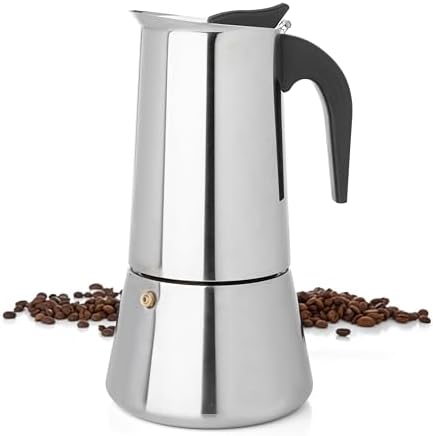
The Mixpresso Greca is a 12-cup stainless steel moka pot aimed at households that want more coffee per brew. The listing describes the pot as holding about 20 ounces of total liquid, with each cup measured as a small demitasse of roughly 50 milliliters. That sizing is worth understanding before you buy. You will get a generous batch, but each individual cup is still concentrated, so a 12-cup pot is best thought of as a way to serve several small, strong coffees rather than several mugs of drip-style coffee.
The construction is straightforward and dependable. The body is stainless steel with a magnetic base, which lets the pot work on gas, electric, ceramic, and induction stoves. The built-in filter removes the need for paper filters, which keeps ongoing costs low and reduces waste. The handle is black plastic rather than metal, and that is the most important design detail to keep in mind. It stays cooler than metal would, but it can be damaged or degraded if exposed to direct flame, so you should always keep the flame centered under the base and away from the handle. Good heat control is essential with this type of pot, so medium heat is the safer approach.
Using the Mixpresso is largely a matter of technique. Fill the bottom chamber with water up to the safety valve, add medium-fine ground coffee to the filter basket without packing it down, and assemble the pot before setting it on the burner. The listing advises waiting about a minute after brewing before opening the lid, because pressure can still be present and may cause spills. It also recommends checking that the gasket and filter are clean and seated correctly, since a misaligned gasket is one of the most common causes of leaks or weak coffee. In real-world use, many people find that a few minutes of attention at the start makes the whole process predictable.
Compared with the Easyworkz Diego, the Mixpresso is clearly built for volume. It makes more sense for families, small gatherings, or anyone who drinks multiple cups in the morning. Compared with the DITOSH model, it is a more conventional, no-frills option with a plastic handle rather than a metal one. If you prefer a fully metal build and want the flexibility of different capacity sizes, the DITOSH may appeal more. If you want a larger pot at a straightforward design, the Mixpresso is a practical pick.
Pros:
- The 12-cup capacity is well suited to households or small gatherings.
- Built-in filter eliminates the need for paper filters and ongoing consumable costs.
- Magnetic stainless steel base works across gas, electric, ceramic, and induction stovetops.
- Simple assembly and brewing process makes it approachable for beginners.
Cons:
- The black plastic handle needs to be kept away from direct flame, which limits how you position the pot on the burner.
- Each cup is small and concentrated, so people expecting full mugs may need to brew more than they anticipate.
The Mixpresso Greca offers a practical balance of capacity, compatibility, and simplicity. It suits families and anyone who wants a larger moka pot without paying for extra features they may never use. Just pay attention to heat control and keep the plastic handle clear of flame, and you will get consistent, bold coffee batch after batch.
DITOSH 12-Cup 304 Stainless Steel Moka Pot for Durable Everyday Brewing

The DITOSH is a 12-cup moka pot made from 304 stainless steel, a grade often chosen for its corrosion resistance and durability. The listing describes a thickened body, a polished exterior, and a body measuring about 4.9 by 10.2 inches. What sets this model apart is its construction philosophy. The handle is made of the same stainless steel as the body, which avoids the plastic component found on some competing designs. The listing states that the handle does not separate from the body, which is a meaningful advantage for long-term durability and easier cleaning.
Safety and build quality receive particular attention in the product description. The pot uses three-ring precision threading and includes a pressure-resistant safety valve, which together form a double safety design. The interior is described as sandblasted rather than coated, and the listing notes that it is not aluminum, which addresses a common concern for people who prefer to avoid aluminum contact with their coffee. Because batches can differ slightly, the logo may or may not appear on the pot, but the listing states that product quality is consistent across production runs.
Using the DITOSH takes a bit of preparation. The listing recommends running the first brew with tea, citrus, or a mild detergent solution and washing thoroughly before use, since new metal pots can carry a noticeable odor. After that, the routine is standard: water in the bottom chamber, ground coffee in the basket, the top screwed on firmly, and medium heat applied until the coffee rises. Rinsing the pot after each use keeps the interior clean. The listing also describes compatibility with a wide range of heat sources, including gas, induction, ceramic, electric, alcohol burners, and propane camping stoves, which makes this pot more versatile than most for travelers and outdoor cooks.
Among the three choices, the DITOSH is the most rugged and the most flexible in terms of heat sources. Its all-metal construction and dishwasher-safe description appeal to buyers who want a pot that can handle years of daily use with minimal fuss. The Mixpresso is a comparable 12-cup option, but it uses a plastic handle, which some people will find less durable. The Easyworkz is far more compact and better suited to one or two cups at a time. One important caveat is availability. At the time of research, this listing was marked as unavailable, so check the current stock status before making plans around this model.
Pros:
- 304 stainless steel body and handle provide a fully metal, durable build.
- Three-ring precision threading and a pressure-resistant safety valve add solid safety features.
- Wide heat-source compatibility, including alcohol and propane camping stoves, makes it highly versatile.
- The interior is not aluminum, and the listing describes a sandblasted finish intended to improve texture and durability.
Cons:
- New pots often need a preliminary cleaning cycle to remove odor before the first brew.
- The listing was unavailable at the time of research, so buyers may need to wait or check other sellers.
The DITOSH 12-cup pot is an excellent pick for buyers who want an all-metal, versatile moka pot for daily brewing or outdoor use. Its handle construction, safety features, and broad heat compatibility make it one of the most well-rounded options in this group. If it is in stock when you shop, it deserves serious consideration, particularly for households that brew larger batches.
How to Choose the Right Stainless Steel Moka Pot
Choosing the Right Cup Size for Your Household
Capacity is the first decision to make, and it matters more than many buyers expect. Moka pots are rated by demitasse cups, which are small servings of about 50 milliliters each, not standard mugs. A four-cup pot like the Easyworkz Diego yields around 6.8 ounces, which works for one or two people. A 12-cup pot holds about 20 ounces total and is better for families or anyone who wants several servings in one brew. Think about how many cups you actually drink in a morning, then add a little margin for guests. Buying too small means brewing repeatedly, while buying too large can waste coffee if you only make one or two cups at a time.
Understanding Stainless Steel Grades and Build Quality
Not all stainless steel is identical. Grades such as 18/8 and 304 are common in cookware because they resist corrosion well and hold up to repeated heating. The Easyworkz is described as 18/8 stainless steel with a high-polish finish, while the DITOSH uses 304 stainless steel with a thickened body. Both are solid choices for daily use. Look for a pot with a sturdy, evenly formed body and a well-fitted lid. Thin metal can warp or develop hot spots over time, which affects how evenly the coffee brews. A heavier, thicker base usually performs more predictably on a burner.
Checking Cooktop Compatibility Before You Buy
Compatibility is where many buyers run into trouble. Induction cooktops require a magnetic base, and not every stainless steel moka pot includes one. The Easyworkz and Mixpresso both list magnetic bases, which makes them suitable for induction kitchens. The DITOSH lists a long range of heat sources, including alcohol and propane camping stoves, which is useful if you cook outdoors. Before buying, confirm what type of stove you use, and look for a pot that explicitly supports it. A pot that works on gas but not induction will leave you frustrated if you later move into a home with an induction range.
Safety Valves, Gaskets, and Pressure Management
A moka pot works by building steam pressure in the bottom chamber, which pushes water up through the coffee grounds. That pressure is what makes the process work, but it also means safety features matter. Look for a pot with a pressure-relief valve, which releases excess steam if the pressure gets too high. The DITOSH and Easyworkz both list safety valves, and the Easyworkz mentions a double safety design. The gasket is equally important because it creates the seal between the upper and lower chambers. A worn or misaligned gasket causes leaks and weak coffee, so it is worth checking that it sits flat and clean before each brew. Replacement gaskets are an inexpensive way to extend the life of any moka pot.
Handle Design and Heat Protection
The handle affects comfort, safety, and durability. Metal handles can get hot during brewing, but they usually hold up well over time. Heat-resistant handles, like the insulated grip on the Easyworkz, offer better protection when you pour. Plastic handles, like the one on the Mixpresso, stay cooler at the grip but can be damaged by direct flame. If you choose a pot with a plastic handle, keep the burner flame centered under the base and avoid letting it lick up the sides. A handle that does not separate from the body, as the DITOSH listing describes, is also a meaningful advantage for long-term cleanliness and structural integrity.
Cleaning, Maintenance, and Long-Term Care
Cleaning is what keeps a moka pot performing well for years. Coffee oils can build up in the filter basket and gasket, which dulls flavor and can cause odd tastes. Disassemble the pot after each use, rinse the parts with warm water, and dry them completely before reassembling. Avoid harsh abrasive scrubbers on polished surfaces. Several of these models are described as dishwasher safe, but hand washing and thorough drying usually keep gaskets in better shape and extend the life of the finish. Whichever model you choose, plan on keeping a spare gasket on hand and replacing it when it looks cracked, flattened, or hardened.
Matching the Pot to Your Brewing Routine
Finally, consider how you brew. Moka pots reward attention. You need to fill the bottom chamber to the valve, use medium-fine grounds, avoid packing the basket too tightly, and watch the heat. Once you learn the rhythm, the process becomes quick and satisfying. If you want an easy, hands-off method, a moka pot may still feel like more work than a drip machine, but the flavor payoff is significant. Be realistic about how much time you want to spend each morning, and choose the pot that fits that routine rather than the one with the most features on paper.
Frequently Asked Questions
Is a stovetop moka pot the same as true espresso?
Not exactly. A moka pot uses steam pressure to push hot water through ground coffee, which produces a strong, concentrated brew. True espresso machines use higher, more controlled pressure and typically produce a thick crema on top. Many people still enjoy moka pot coffee for its boldness, and it is a practical way to get an intense cup without the cost or counter space of an espresso machine.
Which size should I buy if I make coffee for one person?
A four-cup pot, such as the Easyworkz Diego, is usually the most practical choice for a single drinker. It produces a smaller batch that stays fresh and avoids waste. If you occasionally make coffee for a guest, the built-in reducer on that model can also help you adjust the batch size.
Can I use a stainless steel moka pot on an induction cooktop?
Yes, but only if the pot has a magnetic base. Induction cooktops work by detecting magnetic material, so a non-magnetic pot will not heat. The Easyworkz and Mixpresso both list magnetic bases that work on induction. Always check the product details for induction compatibility before you buy.
Why does my moka pot coffee sometimes taste bitter or weak?
The most common causes are grind size, heat level, and gasket condition. Grounds that are too fine can over-extract and taste bitter, while coarse grounds can under-extract and taste weak. Brewing on high heat can also scorch the coffee. Keeping the gasket clean and seated correctly is equally important, since a poor seal can change how the coffee brews. Medium heat and a medium-fine grind are a good starting point.
Do I need to wash a new stainless steel moka pot before using it?
It is a good idea. The DITOSH listing recommends running a cleaning cycle with tea, citrus, or mild detergent before the first use, since new pots can have a manufacturing odor. Rinse thoroughly afterward and run a plain water brew or two before making your first cup.
Is a plastic handle a problem on a moka pot?
Not necessarily, but it requires more care. The Mixpresso uses a black plastic handle that stays cooler than metal, yet it should be kept away from direct flame. If you prefer a fully metal build, look at the DITOSH, which uses stainless steel for both the body and the handle.
How long does a stainless steel moka pot last?
A well-made stainless steel pot can last for years with regular care. The main wear items are the gasket and, in some cases, the filter. Replacing a gasket when it hardens or cracks is far cheaper than replacing the whole pot, and a dry, clean storage routine helps the metal and finish stay in good condition.
Final Recommendation
For most households, the Mixpresso Greca and the DITOSH 12-cup pots offer the best balance of capacity and versatility. The DITOSH stands out for its all-metal construction, safety features, and wide heat compatibility, though it was unavailable at the time of research, so check stock before you buy. The Mixpresso is a dependable, straightforward option for larger batches as long as you keep the plastic handle clear of flame. If you only brew for yourself or a partner, the Easyworkz Diego is a compact, induction-ready choice with thoughtful features like the reducer and insulated grip. Match the cup size to your daily routine first, confirm compatibility with your cooktop, and you will be well positioned to enjoy strong, satisfying stovetop coffee for years.