
Sciatica can make pressure around your hips, lower back, or legs more noticeable at night, but no mattress can treat the condition itself. The right feel is personal: a bed that cushions pressure points while keeping your spine comfortably supported may help you rest better. These three options offer different approaches, from extra-firm all-foam support to a hybrid design with coils. Compare their construction, firmness, and trial terms before choosing.
If your pain is severe, worsening, or accompanied by new weakness or numbness, speak with a healthcare professional. Mattress selection is a comfort decision, not a substitute for medical care.
Quick Comparison
| Mattress | Type and height | Notable features | Best fit for |
|---|---|---|---|
| VISCOFLEX Extra Firm Queen Mattress | All-foam, 14 inches | Gel memory foam, high-density support foam, 365-night home trial | Back and stomach sleepers who prefer an extra-firm feel |
| VISCOFLEX Extra Firm King Hybrid Mattress | Hybrid, 12 inches | Pocketed coils, foam layers, 365-night home trial | Shoppers seeking a firm feel with coil support and airflow |
| back science Essentials Queen Mattress | Hybrid, 10 inches | Seven-layer construction, HyperGel foam, reinforced edges | Shoppers looking for a lumbar-support-focused hybrid |
Our Picks: Best Mattress For Sciatica Back Pain reviews
1. VISCOFLEX Extra Firm Queen: A Firm, Contouring All-Foam Option

This 14-inch queen mattress uses a three-layer foam design. Gel memory foam sits above foundation foam layers, with a high-density base intended to support spinal alignment. The top layer is designed to contour to your body, while the denser foam below provides a firmer foundation.
Its extra-firm feel is aimed especially at back and stomach sleepers who want less sink. That can be appealing if you dislike the enveloping feel of softer memory foam. However, firmness is not automatically better for sciatica: if your hips or shoulders feel pressed against the bed, a very firm surface may not suit you.
The spring-free build may appeal if you want an all-foam mattress and reduced motion transfer. The brand lists CertiPUR-US foam, OEKO-TEX fabrics, a 365-night home trial, and 10-year coverage. Check the seller’s current terms to understand what the trial and coverage include.
Compared with the two hybrid choices below, this model has no coil system. That gives it a simpler foam construction, but it may feel less springy than a hybrid. Its 14-inch profile is also the tallest of these three picks.
Pros:
- Extra-firm feel for sleepers who prefer a stable surface
- Gel memory foam provides a contouring top layer
- Spring-free design is described as minimizing motion transfer
- Includes a listed 365-night home trial and 10-year coverage
Cons:
- May feel too firm for side sleepers or anyone who needs more cushioning
- Does not have the coil structure found in the two hybrid options
Verdict: Choose this VISCOFLEX if you want an extra-firm, all-foam queen mattress and know that a firm surface feels comfortable to you.
2. VISCOFLEX Extra Firm King Hybrid: Coil Support With a Firm Feel

This 12-inch king mattress combines foam layers with pocketed coils. The brand describes its feel as extra firm, with the spring system intended to provide lumbar and hip support while adapting to the sleeper’s shape. A hybrid can feel more responsive than an all-foam bed, which may matter if you prefer a surface that is easier to move across.
The open coil-and-foam construction is designed to promote airflow. The product description also says the independent coils absorb motion and support different sleeping positions. Those are manufacturer claims rather than a guarantee of how the mattress will feel for every couple or sleeper.
This is the largest-size option in the lineup, so it may suit shoppers who want a king bed and prefer a hybrid build. The product listing states that the mattress is fiberglass-free and uses CertiPUR-US and OEKO-TEX certified materials. It also lists a 365-night home trial and 10 years of coverage.
Compared with the 14-inch VISCOFLEX foam mattress, this model is shorter and includes coils. Compared with the back science hybrid, it is described as extra firm and is available here in king size. Its firmness could be a drawback if you need deeper cushioning at the hips or shoulders.
Pros:
- Hybrid construction pairs foam with pocketed coils
- Extra-firm feel is designed for lumbar and hip support
- Coil structure is intended to encourage airflow
- Listing states it is fiberglass-free and includes a 365-night home trial
Cons:
- Extra-firm comfort may not work well for sleepers who need more pressure relief
- King size requires more bedroom space than the queen options
Verdict: Pick this mattress if you want a firm king-size hybrid with pocketed coils, but consider a less rigid feel if firm surfaces aggravate your pressure points.
3. back science Essentials Queen: A Hybrid With Focused Lumbar Support
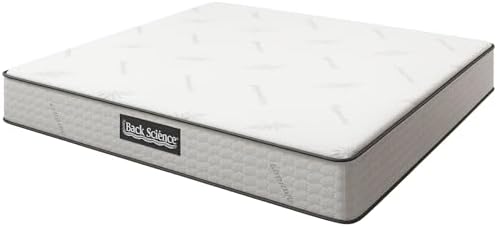
The back science Essentials is a 10-inch queen hybrid with seven layers, including two inches of HyperGel pressure-relief foam. Its design also features firm lumbar support and reinforced edges. The combination is meant to offer cushioning at the surface with support below, rather than relying on a single foam layer.
The brand positions this mattress around spinal alignment and pressure relief. Those features may be worth considering if you want a hybrid and prefer a dedicated lumbar-support design. Still, the product details do not specify a precise firmness rating, so you may want to confirm the feel and return terms before ordering.
This is the shortest mattress among the three choices. It is listed as made in the USA, Greenguard Gold Certified, and backed by a 20-year limited warranty. The brand also lists a 365-night sleep trial with free adjustments and no restocking fees; check the full terms for eligibility and conditions.
Compared with the VISCOFLEX king hybrid, this model is a queen and has a stated HyperGel foam layer and reinforced edges. Compared with the all-foam VISCOFLEX, it uses a hybrid design and is less tall. Its unspecified firmness makes it harder to compare directly if you are specifically shopping for an extra-firm mattress.
Pros:
- Hybrid design includes two inches of HyperGel pressure-relief foam
- Firm lumbar support and reinforced edges are part of the design
- Greenguard Gold Certified materials
- Listed 365-night trial and 20-year limited warranty
Cons:
- Product details do not state a specific firmness level
- At 10 inches, it is shorter than both VISCOFLEX options
Verdict: Consider the back science Essentials if you want a queen hybrid with stated lumbar support and a pressure-relief foam layer, and verify that its feel matches your preference.
How to Choose a Mattress for Sciatica and Back Pain
Start With Comfort, Not a “Best” Firmness Label
There is no single firmness level that works for everyone with sciatica or back pain. Your body shape, sleep position, and comfort preferences all matter. A very firm mattress may feel supportive to one person but create pressure at the hips or shoulders for another. Think about how your current bed feels and whether you need more cushioning, a steadier surface, or a balance of both.
Match the Mattress to Your Sleep Position
Back sleepers often look for support that keeps the lower back from feeling unsupported. Side sleepers may need enough cushioning around the shoulder and hip to reduce pressure. Stomach sleepers often prefer a firmer surface that limits excessive sinking. If you change positions during the night, consider how easily you can move on the mattress as well as how it feels in your main sleep position.
Compare Foam and Hybrid Construction
All-foam mattresses use foam layers for contouring and support. Hybrid mattresses combine foam with coils, which can create a more responsive feel and a different airflow pattern. Construction alone does not tell you whether a mattress will be comfortable, so compare the listed layers and firmness claims with the feel you prefer.
Check the Trial and Return Terms
A mattress may feel different after several nights than it does at first. A home trial can give you time to assess comfort in your own room, but read the terms before buying. Confirm how long the trial lasts, whether adjustments or returns are included, and what conditions apply. Warranty coverage is separate from a trial and does not necessarily cover every comfort concern.
Consider Height, Size, and Your Bed Setup
Mattress height can affect how easy it is to get in and out of bed, especially when paired with a tall foundation. Check the mattress size against your bedroom and existing frame. If you are choosing a foam or hybrid mattress in a box, follow the seller’s setup instructions and allow it to expand as directed.
Look for Clear Material Information
Certification details can help you understand which standards a product says its materials meet. The options here list certifications such as CertiPUR-US, OEKO-TEX, or Greenguard Gold. Read each product’s full listing to confirm which certification applies to the foam, fabric, or finished mattress, rather than assuming that one label covers every component.
Frequently Asked Questions
Can a mattress cure sciatica?
No. A mattress cannot cure sciatica or replace medical care. It may affect your comfort and sleep posture, but persistent or worsening symptoms should be discussed with a healthcare professional.
Is a firm mattress always best for sciatica?
No. Some people prefer a firm surface, while others need more cushioning to feel comfortable. Your sleep position and pressure points are important, so choose based on how your body feels rather than firmness claims alone.
Which option has the firmest feel?
Both VISCOFLEX mattresses are described as extra firm. The back science Essentials lists firm lumbar support, but its product details do not give a specific overall firmness level.
Which mattress is best for side sleepers?
The VISCOFLEX king hybrid description specifically mentions cushioning for side sleepers, but it is still described as extra firm. Side sleepers who need substantial cushioning should compare the feel carefully and use any available trial to assess comfort.
Are hybrid mattresses better than all-foam mattresses for back pain?
Not for everyone. Hybrids combine foam and coils, while all-foam mattresses use foam layers throughout. The better choice depends on your comfort preferences, sleep position, and how each design supports your body.
What does a sleep trial let me do?
A sleep trial generally gives you a period to assess a mattress at home, but each seller sets its own conditions. Check the listing for the exact trial length, return process, and any requirements before purchasing.
Which mattress should I choose if I am unsure about firmness?
The back science Essentials does not state a precise firmness level, while both VISCOFLEX options are labeled extra firm. If firmness is a concern, review the full product details and trial terms before deciding; do not assume that a lumbar-support feature means the mattress will suit your preferred feel.
Final Recommendation
For shoppers who know they like an extra-firm surface, the VISCOFLEX Extra Firm Queen offers a tall, all-foam design, while the VISCOFLEX Extra Firm King adds pocketed coils in a larger size. The back science Essentials is worth considering if you want a queen hybrid with a specified HyperGel layer and lumbar support. The best choice is the one that feels supportive without creating uncomfortable pressure, so compare the construction and trial terms with your own sleep needs before buying.