
If you or someone you care for spends long periods in bed, choosing a pressure-relief topper can be an important part of daily skin care. Alternating-air pads change which areas of the body bear pressure, while foam pads provide a fixed cushioning surface. The right choice depends on the person’s mobility, skin condition, bed setup, comfort needs, and care plan. A topper cannot diagnose or treat a pressure injury on its own, so ask a healthcare professional for guidance—especially if skin is broken, painful, warm, or discolored.
Quick Comparison
| Product | Type | Standout feature | Listed support |
|---|---|---|---|
| Vive Alternating Air Pressure Mattress Pad | Alternating air pad | 130 air cells and adjustable pressure | Up to 300 lb |
| Lunderg Alternating Air Pressure Mattress Pad | Alternating air pad | Static mode and quick connector | Up to 300 lb |
| Alcedo Alternating Air Pressure Mattress Pad | Alternating air pad | Five pressure settings | Up to 300 lb |
| KEKOY Alternating Air Pressure Mattress Pad | Alternating air pad | 130 air cells and five pressure levels | Not stated in supplied product details |
| MABOZOO Wave-Shape Foam Mattress Topper | Foam topper | Wave-cut foam with waterproof cover | Not stated in supplied product details |
Our Picks: Best Mattress Topper For Bed Sores reviews
Vive Alternating Air Pressure Pad: A Straightforward Air-Cycle Option

The Vive is an inflatable overlay designed to sit on an existing mattress. Its pump alternately inflates and deflates 130 air cells, shifting support across the surface instead of leaving the same areas under pressure all the time. The product details describe a cycle of about six minutes and multiple pressure levels.
The pad is made from waterproof vinyl, and its top and bottom flaps tuck between the mattress and frame to help keep it in place. The pump is listed at 22 dBA, and the pad is rated to support up to 300 pounds. As with any air overlay, you’ll need space near the bed for the pump and a safe route for the air hoses and power cord.
This is a practical option for someone who needs an alternating-pressure surface and whose caregiver wants adjustable settings. Compared with the Lunderg, it does not list a static mode; compared with the Alcedo, it specifies a 130-cell layout and cycle length. An air pad also changes the feel of the mattress, so confirm that the user can rest comfortably on the inflated surface and follow the setup instructions.
Pros:
- 130 air cells alternate to redistribute pressure.
- Multiple pressure levels allow adjustment.
- Waterproof vinyl surface and securing flaps.
- Listed support capacity of up to 300 pounds.
Cons:
- Requires a powered pump and bedside hose setup.
- No static mode is listed in the supplied details.
Verdict: Choose the Vive if you want a 130-cell alternating-air overlay with adjustable pressure and a stated six-minute cycle.
Lunderg Air Pressure Pad: A Useful Pick for Static Mode

The Lunderg is an alternating-air mattress pad with a feature that sets it apart from the other air options here: static mode. In that mode, all cells stay inflated rather than continuing to alternate. That can offer a stable-feeling surface when the user needs a break from the moving cycle, though it does not replace a clinician’s guidance about pressure relief.
The pump has soft-to-firm adjustment, a quick connector, and a listed operating noise of 23 dBA. The product instructions say to start at the firm setting while the pad inflates, which can take about 20 minutes, then adjust for comfort. The waterproof pad is designed for a home mattress or hospital bed and is listed for users up to 300 pounds.
Compared with the Vive, the Lunderg offers a clearly stated static setting and quick-connect setup. Its product information does not specify a cell count or alternating-cycle length, so shoppers who want those exact details may prefer a model that lists them. Check that the pad’s dimensions and attachment method suit the bed you have.
Pros:
- Static mode keeps all cells inflated for a stable surface.
- Adjustable soft-to-firm pressure control.
- Quick connector is intended to simplify setup.
- Waterproof design and listed 300-pound capacity.
Cons:
- Initial inflation takes about 20 minutes according to the setup directions.
- The supplied details do not list cell count or cycle timing.
Verdict: The Lunderg is worth considering if you specifically want an alternating-air pad with a static option and straightforward pump connections.
Alcedo Alternating Air Pad: Adjustable Support for Home or Care Settings

The Alcedo uses alternating air pressure to shift support across the body. Its pump has five adjustable pressure settings, giving caregivers several options for adjusting the pad’s firmness. The product details list an inflated bubble area of 75 by 35 inches, a size intended to fit many hospital, home-care, and standard beds.
The pad has a waterproof, breathable surface, while the pump includes metal hooks for mounting. It is listed to support up to 300 pounds. Before ordering, measure the usable mattress surface and check how the uninflated section is meant to tuck under the mattress; a close fit helps keep the overlay positioned as intended.
Alcedo may suit caregivers who want a clear five-setting adjustment and a stated pad size. Unlike the Vive, the supplied details don’t give a cycle duration or cell count. And although the waterproof surface can make routine cleaning easier, the product still needs regular care according to its instructions and the user’s care plan.
Pros:
- Five pressure settings for adjusting firmness.
- Listed dimensions help with bed-fit planning.
- Waterproof and breathable surface.
- Listed capacity of up to 300 pounds.
Cons:
- The supplied details do not state the cycle length or number of air cells.
- Measure the bed carefully to confirm the pad’s fit.
Verdict: Consider the Alcedo if a stated 75-by-35-inch bubble area and five pressure settings are a good match for your bed and care needs.
KEKOY 130-Cell Air Pad: Pressure-Level Choices and a Quiet Pump
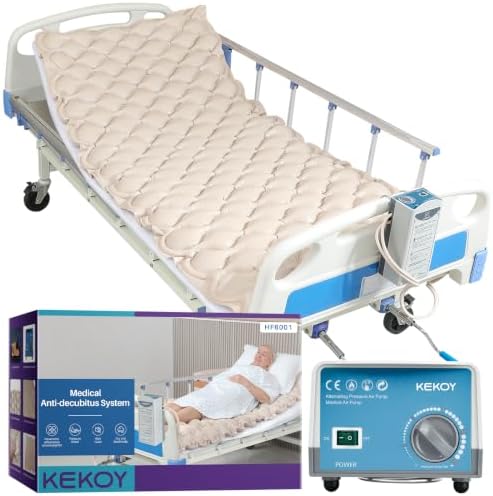
The KEKOY is an alternating-air overlay with 130 bubble cells. The cells inflate and deflate in sequence to shift pressure across the surface. Its pump offers five pressure levels, and the product details list an alternating cycle of about 10 to 12 minutes.
The pump is described as operating below 28 dBA and designed for continuous operation. The waterproof surface is intended to make cleanup easier when spills, sweat, or incontinence are a concern. The supplied product information does not state a weight capacity, so check the manufacturer’s current specifications before choosing it for a particular user.
Compared with the Vive, the KEKOY has a longer stated cycle and five clearly described levels, while the Vive lists a 300-pound capacity and a shorter cycle. The KEKOY may appeal to caregivers who value those pressure adjustments and a quieter pump specification. As with other alternating-air pads, consider whether the user can tolerate the movement and whether the pump placement and hoses work with the room setup.
Pros:
- 130 air cells provide alternating pressure.
- Five adjustable pressure levels.
- Waterproof surface supports easier routine cleanup.
- Product details specify an approximately 10-to-12-minute cycle.
Cons:
- Weight capacity is not stated in the supplied details.
- The moving air cycle and pump may not suit every user or bedroom setup.
Verdict: The KEKOY is a reasonable option if you want 130 cells and five pressure levels, but confirm its capacity and fit before buying.
MABOZOO Wave-Cut Foam Topper: A Nonpowered Cushioning Surface

Unlike the other options in this roundup, the MABOZOO is a foam topper, not an air-pressure system. It has a wave-cut foam surface intended to spread weight and encourage airflow. At about 78 inches long, 36 inches wide, and 1.7 inches thick, it is sized for a standard hospital bed mattress, according to the product details.
The topper comes with a waterproof Oxford-cloth cover that can be wiped clean, plus non-slip points on the bottom to help it stay in place. Because it has no pump or powered cycle, it avoids hoses, cords, and pump noise. It arrives compressed and needs 24 to 48 hours to expand fully, so allow time before use.
This fixed foam surface may suit someone looking for a simple, nonpowered layer, but it does not provide alternating pressure. The product’s stated design features should not be taken as proof that it can prevent or heal a pressure injury. If the person is at high risk, has a wound, or needs a prescribed support surface, ask a clinician whether this style is appropriate.
Pros:
- No pump, hoses, or power connection required.
- Wave-cut foam and a stated airflow-focused design.
- Waterproof wipe-clean cover with non-slip points.
- Hospital-bed dimensions are clearly listed.
Cons:
- Does not alternate pressure like the air pads in this roundup.
- Needs 24 to 48 hours to expand after unpacking.
Verdict: Choose the MABOZOO if you want a simple foam layer and your care team agrees that a nonpowered topper meets the user’s needs.
How to Choose a Mattress Topper for Bed Sores
Consider the person’s pressure-care needs
First, talk with a healthcare professional about the person’s skin, mobility, and risk of pressure injury. An alternating-air pad and a fixed foam topper work differently, and neither should be treated as a cure. A clinician can help decide whether an overlay is appropriate and explain how it fits into a broader plan that may include skin checks, repositioning, moisture management, and other support surfaces.
Choose between alternating air and fixed foam
Alternating-air pads use a pump to change the support pattern over time. They may be worth considering when pressure redistribution is a priority and a powered system is suitable. Foam toppers provide a steady surface without a pump, hoses, or cycling. They may be simpler to set up, but they do not shift pressure in the same way. Confirm the right style with the care team rather than choosing by material alone.
Check dimensions, mattress type, and how it stays in place
Measure the mattress and compare those measurements with the product’s stated pad size. Check whether the topper is designed for a hospital bed, a home mattress, or both, and look for details about tucking flaps, hooks, or non-slip points. A pad that bunches or slides may be uncomfortable and harder to manage. Make sure it works with any adjustable-bed movement and the bedding already in use.
Review the pump settings, cycle, and noise
For an air pad, look at the available firmness settings, cycle timing, and any option to keep the surface static. A user may have different comfort needs than a caregiver expects, so choose a model with controls that are practical to adjust. Pump-noise figures can help with comparison, but the pump still needs a stable location and the hoses should not be pinched or create a trip hazard.
Confirm capacity and setup requirements
Check the product’s listed weight capacity before ordering. Some models state a limit, while others may not include one in the available details; contact the manufacturer if you need clarification. Air pads also require an outlet and enough room to route the hoses. For foam, account for the time needed to expand after unpacking and check the care instructions before placing it into service.
Think through cleaning and moisture management
Waterproof surfaces and wipe-clean covers can make everyday care easier, but they do not remove the need for regular skin and bedding checks. Follow the product’s cleaning directions and the person’s care plan. Keep the skin clean and dry, and ask a healthcare professional how to manage moisture, incontinence, or drainage around the affected area.
Make sure the user remains comfortable
A support surface only works as part of a care routine if the person can rest on it safely and comfortably. Observe whether the surface feels too firm, too soft, or unstable, and watch for changes in comfort or skin condition. Do not add extra pads or thick bedding without checking the instructions and asking the care team, since added layers may change how the support surface functions.
Frequently Asked Questions
Can a mattress topper heal bed sores?
A topper alone cannot be relied on to heal a pressure injury. Care depends on factors such as the injury’s severity, the person’s health, pressure relief, and wound care. Contact a healthcare professional for an assessment and a care plan, especially if the skin is open, worsening, painful, or showing signs of infection.
Is an alternating-air pad better than a foam topper?
Neither is best for everyone. Alternating-air pads change the pressure pattern over time and need a pump. Foam toppers provide a fixed surface and do not require power. The person’s condition, comfort, bed setup, and clinical recommendations should guide the choice.
Can someone use an air-pressure pad without help?
That depends on the person’s mobility, ability to manage the controls, and care needs. A caregiver may need to install the pad, route the hoses, adjust the settings, and monitor comfort and skin. Follow the product instructions and ask a healthcare professional how often the user should be repositioned.
Do alternating-air mattress pads need electricity?
Yes. The air models in this roundup use a pump, so they need a suitable outlet. Keep the pump and power cord positioned safely, and check that the hoses are connected and not kinked according to the manufacturer’s directions.
How do I know if the topper fits the bed?
Measure the mattress and compare its length and width with the product details. Check how the pad is secured, whether it is intended for a standard or hospital bed, and whether it can be used with an adjustable frame. For the Alcedo, the listed inflated bubble area is 75 by 35 inches; the MABOZOO lists dimensions of about 78 by 36 inches.
How should I clean a pressure-relief topper?
Use the manufacturer’s cleaning instructions for the specific surface and cover. The supplied details describe the Vive, Alcedo, KEKOY, and MABOZOO surfaces as waterproof, but cleaning methods may still differ. Keep the bedding and skin clean and dry, and seek care advice when there is a wound or persistent moisture.
When should I contact a healthcare professional?
Seek professional advice for persistent redness or discoloration, new pain, broken skin, swelling, warmth, drainage, or a wound that is getting worse. A clinician can assess the area and recommend a support surface and care routine. Do not wait for a topper to resolve a concerning skin change.
Final Recommendation
For shoppers who want an alternating-air surface, the Vive is a clear option with 130 cells, adjustable pressure, and a stated six-minute cycle. The Lunderg stands out for its static mode, while the Alcedo offers five settings and listed dimensions. The KEKOY also provides 130 cells and five pressure levels, but its supplied details do not state a weight capacity. If you prefer a nonpowered surface, the MABOZOO offers wave-cut foam and a waterproof cover, but it does not alternate pressure. The best choice is the one that fits the bed and the user’s needs—and, most importantly, matches guidance from the person’s healthcare team.