
If you or someone you care for spends long periods in bed, an alternating-pressure mattress pad may help redistribute pressure by changing which air cells support the body. These products sit on top of a mattress and use a pump to inflate and deflate air cells. They can be part of a pressure-care plan, but they do not diagnose or treat pressure sores or replace regular repositioning and professional medical advice. Ask a healthcare professional which type of support is appropriate, especially if a sore is already present.
Our picks focus on practical differences that can affect daily care: pump noise, pressure settings, static mode, fit, and ease of cleaning. Check each pad’s dimensions and weight limit against the bed and the person using it before choosing.
Quick Comparison
| Product | Standout feature | Best suited for | Listed weight limit |
|---|---|---|---|
| Lunderg Alternating Air Pressure Mattress Pad | Alternating and static modes; 23 dBA pump | Caregivers who want a stable mode option | 300 lb |
| MedVance Premium Alternating Air Pressure Mattress Pad | Digital pump with alarms; cycles every 6 minutes | Those who prefer digital controls | Not specified in supplied details |
| KEKOY Alternating Air Pressure Mattress Pad | 130 air cells and five pressure levels | Users seeking adjustable pressure settings | Not specified in supplied details |
| VOCIC Alternating Pressure Air Mattress Pad | Alternating and static modes; 15-inch securing flaps | Home-care beds where pad movement is a concern | 300 lb |
| FOMMOF Alternating Air Pressure Mattress Pad | 130 air cells and adjustable pressure | Users looking for a longer alternating cycle | 300 lb |
Our Picks: Best Mattress Topper For Pressure Sores reviews
1. Lunderg: A Quiet Pad with a Static Mode

The Lunderg is an air-cell pad designed to sit over a home mattress or hospital bed. Its pump alternates air pressure to shift support across the pad, and a separate static mode keeps all cells inflated for a more stable surface. That option may be useful when a caregiver or clinician prefers the bed not to cycle while the person rests or receives care.
The pump is listed at 23 dBA and has a soft-to-firm pressure control. The pad is waterproof and supports up to 300 pounds, according to the supplied product information. Setup involves connecting the hoses, inflating the pad fully, then adjusting pressure for comfort. The initial inflation can take about 20 minutes, so plan for that rather than expecting an instant setup.
Compared with the other picks, Lunderg stands out for combining a quiet-pump specification with static mode and a clearly stated weight limit. It may suit home caregivers who want both cycling and a steady-surface option. The listing does not provide the pad’s dimensions, so check fit with the seller before ordering if the bed is an unusual size.
Pros:
- Alternating and static modes offer two operating options.
- Pump is listed at 23 dBA.
- Adjustable soft-to-firm pressure control.
- Waterproof surface and stated 300-pound capacity.
Cons:
- Initial inflation takes about 20 minutes.
- Pad dimensions are not included in the supplied details.
Verdict: Choose the Lunderg if you value a quieter pump and want the option to switch from alternating pressure to a steady, inflated surface.
2. MedVance: Digital Controls and a Shorter Cycle

The MedVance pad uses alternating air pressure and is designed for standard hospital beds and home-care settings. Its digital control panel includes alarms, while the system’s dual pump cores are intended to provide consistent airflow. The listed cycle is every six minutes, a shorter interval than the approximately 10-to-12-minute cycles described for some of the other options here.
MedVance lists the pump noise as under 20 dB. Its pad is made from medical-grade vinyl and is described as waterproof and easy to clean. Those features may matter when the pad will be used every day, though the supplied details do not give a weight limit or pad dimensions. Confirm those details and bed compatibility before buying.
This option may appeal to caregivers who prefer digital adjustments and alarm features over a simple dial. Unlike the Lunderg and VOCIC pads, no static mode is listed in the supplied information. If a steady surface is important for your care routine, check with the seller or consider a product that explicitly offers that mode.
Pros:
- Digital control panel with alarms.
- Pump is listed as operating under 20 dB.
- Alternating cycle is specified as every six minutes.
- Waterproof vinyl surface is described as easy to maintain.
Cons:
- Weight limit and pad dimensions are not included in the supplied details.
- Static mode is not listed in the supplied details.
Verdict: Consider the MedVance if digital controls, alarms, and a short cycle matter most, but verify its fit and capacity for your situation first.
3. KEKOY: 130 Air Cells and Five Pressure Levels
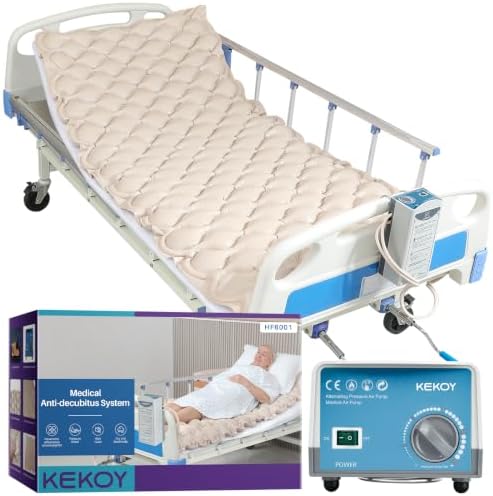
KEKOY’s pad has 130 bubble air cells that inflate and deflate in alternating cycles. The design is intended to shift pressure rather than leave the same areas supporting the body continuously. The product information describes it as support for people at risk of pressure sores, including those with limited mobility or recovering after surgery. It is not a substitute for a clinician’s pressure-care plan.
The pump has five pressure levels and is listed at below 28 dBA. Its cycle runs approximately every 10 to 12 minutes, and the pad has a waterproof surface for easier cleanup. These details make it a flexible option for caregivers who want to adjust firmness, although the supplied description does not state a weight limit or exact pad dimensions.
Compared with the MedVance, KEKOY offers multiple pressure levels but does not list digital controls or alarms in the supplied information. Compared with the FOMMOF, it has a similar cell count and cycle range, so check the sellers’ current product details for dimensions and compatibility before deciding between them.
Pros:
- 130 bubble air cells alternate to redistribute support.
- Five pressure levels allow firmness adjustments.
- Pump is listed at below 28 dBA.
- Waterproof surface is designed for easier daily care.
Cons:
- Weight limit and exact dimensions are not included in the supplied details.
- Static mode is not listed in the supplied details.
Verdict: The KEKOY is worth considering if you want a 130-cell design and several pressure settings, provided its fit and capacity meet your needs.
4. VOCIC: A Stable-Mode Option with Long Securing Flaps

The VOCIC pad offers alternating and static modes. Its pump has six pressure levels, so caregivers can adjust the setting for the person using the bed. Static mode keeps all cells inflated instead of cycling, which can provide a more stable surface when that suits the care routine.
The pad measures about 75 by 33 inches by 3.3 inches when inflated and has a stated 300-pound weight limit. Its 15-inch flaps tuck under the mattress to help hold the pad in place. The waterproof PVC surface wipes clean, and the package includes a repair kit. The pump is listed as operating under 45 dB; that is a higher noise figure than the listed specifications for Lunderg, MedVance, and KEKOY.
VOCIC may be a practical choice when securing the pad is a priority, particularly if the bed or care routine makes shifting a concern. Check the listed dimensions against your mattress, since a pad designed to fit most care beds may not cover every bed size. The stated capacity also makes it important to confirm the user’s weight is within the limit.
Pros:
- Offers both alternating and static modes.
- Six pressure levels provide a range of adjustments.
- Long flaps help secure the pad under the mattress.
- Includes a repair kit and has a stated 300-pound capacity.
Cons:
- Pump is listed at under 45 dB, louder by specification than several alternatives.
- Inflated width is about 33 inches, so check bed coverage before ordering.
Verdict: Choose the VOCIC if you want static mode, multiple pressure settings, and securing flaps, and its dimensions fit your bed.
5. FOMMOF: A 130-Cell Pad with a 10-to-12-Minute Cycle

The FOMMOF pad uses 130 air cells that alternate in soft waves, with a stated cycle of about 10 to 12 minutes. It has adjustable pressure levels and a pump listed at under 28 dBA. The product information also describes a sleep function, but does not explain its operation in detail, so check the current instructions if that feature is important to you.
The pad is made from waterproof PVC and is described as easy to wipe clean. Its stated inflated sleeping area is about 78 by 35 inches, with a listed 300-pound capacity. The product details also give a compact package size of 89 by 38 inches, so distinguish those measurements when checking whether it will fit your mattress.
FOMMOF is similar to KEKOY in cell count, cycle range, and listed pump noise. Its supplied details provide specific sleeping-area dimensions and a weight limit, which can make fit checks easier. However, the listed dimensions may not suit every bed, and static mode is not identified in the supplied information.
Pros:
- 130 air cells alternate on an approximately 10-to-12-minute cycle.
- Adjustable pressure and a pump listed under 28 dBA.
- Waterproof surface is designed for easy cleaning.
- Provides an inflated sleeping-area size and a 300-pound limit.
Cons:
- Static mode is not listed in the supplied details.
- Inflated sleeping area may not fit every mattress size.
Verdict: The FOMMOF is a reasonable candidate if its stated dimensions suit your bed and you want an adjustable 130-cell pad with a listed capacity.
How to Choose a Mattress Topper for Pressure Care
Start with advice from a healthcare professional
A pressure-relief pad may be one part of care, but the right surface depends on the person’s health, mobility, skin condition, and bed setup. Ask a clinician which support surface is suitable and how it should be used. If there is persistent redness, broken skin, or a suspected sore, seek professional guidance rather than relying on a topper alone.
Check the pad size and bed fit
Measure the mattress and compare it with the pad’s inflated dimensions, not only its package size. A pad that is too narrow or short may leave parts of the bed uncovered. Also check how the product stays in place: some models use securing flaps, while others have different setup instructions. Confirm compatibility with your bed frame and any rails or other equipment.
Confirm the weight limit
Use the product’s stated capacity as a firm selection check. Lunderg, VOCIC, and FOMMOF list a 300-pound limit in the supplied information. A limit was not provided for MedVance or KEKOY, so ask the seller or check the product instructions before purchase rather than assuming their capacity.
Consider cycling and static modes
Alternating pads change which air cells are inflated over time. Cycle times vary: MedVance lists a six-minute cycle, while KEKOY and FOMMOF describe cycles of about 10 to 12 minutes. Lunderg and VOCIC also list static modes that keep the cells inflated without alternating. Choose based on the care plan and the user’s comfort; do not assume one cycle or mode is right for everyone.
Compare controls and pressure adjustment
Pressure controls affect how the surface feels and how the system is set up. Some pads have pressure levels, while Lunderg describes a soft-to-firm control and MedVance has a digital panel with alarms. Make sure the controls are clear to the person who will operate them. Follow the product instructions and a clinician’s guidance when setting pressure.
Think about pump noise and placement
The pump runs while the pad is in use, so noise may matter in a shared or quiet room. Compare the listed figures carefully: Lunderg is specified at 23 dBA, MedVance under 20 dB, KEKOY and FOMMOF under 28 dBA, and VOCIC under 45 dB. These figures are supplied by the product descriptions and may not be measured under identical conditions. Check where the pump can be placed and how its hoses reach the pad.
Plan for cleaning and everyday care
Waterproof surfaces can make routine cleanup easier, but follow the manufacturer’s cleaning instructions. Check whether the cover or pad needs a sheet, whether any parts can be removed, and how to handle moisture. Lunderg’s instructions recommend covering the pad with a sheet. For any model, keep the pump and electrical connections dry and inspect the pad and hoses as directed.
Account for setup and ongoing supervision
These products need to be connected to a pump and inflated before use. Lunderg lists an initial inflation time of about 20 minutes, while the other supplied descriptions do not provide a comparable setup time. Before relying on any pad, confirm that it is fully inflated, positioned correctly, and working as intended. Follow the care team’s plan for repositioning and skin checks.
Frequently Asked Questions
Can a mattress topper prevent or heal pressure sores on its own?
No. An alternating-pressure pad may help redistribute pressure, but it cannot guarantee prevention or healing. Pressure care can also involve repositioning, skin checks, moisture management, nutrition, and medical treatment. Follow a healthcare professional’s plan, especially if skin is already damaged.
What is an alternating-pressure mattress pad?
It is an air-cell pad connected to a pump. The pump changes which cells are inflated over time, shifting support across the body. The cycle length and available pressure settings depend on the model.
What does static mode do?
On products that offer it, static mode keeps the air cells inflated instead of cycling between them. Lunderg and VOCIC list this feature. Ask a clinician whether and when a steady surface is appropriate for the person using the pad.
Can these pads go on a regular home mattress?
Some are described for use over home mattresses as well as hospital beds. Lunderg specifically lists both uses, and VOCIC is described for home-care needs. Check the product’s dimensions and setup instructions to confirm fit with your mattress.
How do I choose a suitable pressure setting?
Use the manufacturer’s instructions and any guidance from the care team. Several products offer adjustable pressure, but a setting that feels comfortable is not automatically the right setting for pressure care. Check the user’s comfort and skin as advised by a healthcare professional.
How often should someone using a pressure-relief pad be repositioned?
There is no single schedule that is right for everyone. Repositioning needs depend on factors such as mobility, skin condition, and the care plan. A pump pad should not be treated as a reason to stop repositioning unless a healthcare professional specifically advises otherwise.
Final Recommendation
For a pad with both alternating and static modes and a pump listed at 23 dBA, the Lunderg is our leading pick based on the supplied features. The MedVance stands out for digital controls and a listed cycle every six minutes, while VOCIC offers long securing flaps and a stated 300-pound capacity. KEKOY and FOMMOF both provide 130-cell designs with adjustable pressure. Before choosing, verify the fit and weight limit, then ask a healthcare professional how the pad should fit into the person’s overall pressure-care plan.