
A microwave with inverter technology and convection cooking can do more than reheat leftovers: it can also bake, brown, or air-fry food. The best fit depends on your counter space, the cooking modes you will actually use, and how much room you need inside. These five models pair inverter microwave cooking with convection or other oven-style functions, ranging from compact combos to a larger-capacity option.
Quick Comparison
| Product | Key cooking modes | Capacity and dimensions | Notable detail |
|---|---|---|---|
| TOSHIBA OptiChef Basic | Microwave, air fry, convection, broil, defrost, speed-combi | 0.9 cu. ft.; 19.5 × 17.6 × 11.5 in. | Compact footprint and guided cooking presets |
| Panasonic HomeChef 4-in-1 | Microwave, air fry, convection, broil | Large capacity; 22 × 17.7 × 13.4 in. | App-linked recipes and a 14.2-inch turntable |
| TOSHIBA MASTER Series 6-in-1 | Microwave, air fry, convection, broil, defrost, speedy-combi | Capacity not specified; 19.5 × 17.6 × 11.5 in. | Includes a cookbook and multiple cooking presets |
| Midea 4-in-1 Micro Steam Oven | Microwave, steam, air fry, convection | 0.9 cu. ft. | No turntable; includes app control |
| TOSHIBA Countertop Microwave Air Fryer Combo | Microwave, air fry, convection, broil, defrost, toast, yogurt | Capacity not specified; 20.6 × 16.3 × 11.8 in. | Sensor cooking and a range of specialty functions |
Our Picks: Best Microwave With Inverter And Convection reviews
1. TOSHIBA OptiChef Basic: Best Compact All-in-One

The OptiChef Basic combines a microwave, air fryer, convection oven, broiler, defroster, and speed-combi cooker in a 0.9-cubic-foot body. Its small capacity and listed countertop dimensions make it a practical choice when you want several cooking modes without setting aside space for separate appliances.
TOSHIBA’s Origin Inverter Technology is designed to deliver steady microwave power for cooking, reheating, and defrosting. The convection system circulates hot air for air frying and baking, with a listed maximum temperature of 425°F. The unit also has a broiler and a speed-combi mode that combines microwave energy with convection or broiling.
For everyday convenience, the OptiChef Basic includes one-touch auto menus, air-fry presets, defrost programs, a large turntable, and a sound on/off option. The included bake tray and wire racks give you options for air frying and convection cooking. Its compact interior is the main trade-off: it will not suit every large dish or big batch.
Pros:
- Six cooking functions in a compact 0.9-cubic-foot size
- Inverter microwave operation with convection baking and air frying
- Speed-combi mode can combine microwave power with oven-style heat
- Includes cooking accessories and a recipe book
Cons:
- Small interior may limit dish size and batch cooking
- Its many modes and presets may take time to learn
Verdict: Choose the OptiChef Basic if you want a space-conscious inverter microwave that can also air-fry, bake, and broil.
2. Panasonic HomeChef 4-in-1: Best for App-Guided Cooking
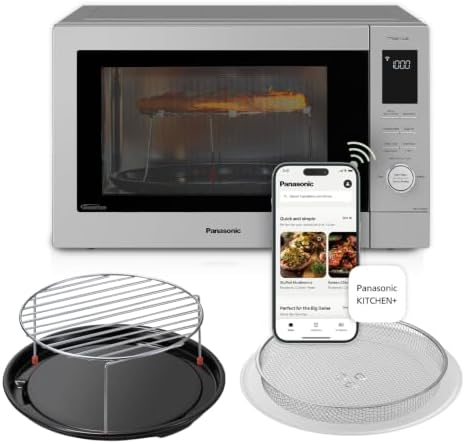
The Panasonic HomeChef brings together microwave, broiler, air-fry, and convection functions. It is the largest-capacity option in this group according to its product description, making it worth considering if the smaller 0.9-cubic-foot models feel too limiting. Panasonic lists a 14.2-inch turntable and dimensions of 22 inches wide, 17.7 inches deep, and 13.4 inches high.
Its inverter technology is intended to provide even cooking, reheating, and defrosting. The product also includes Genius technology and Turbo Defrost, while 20 presets and the Kitchen+ app are designed to help you choose cooking settings and find recipes. This app connection is a useful distinction from the TOSHIBA models, which emphasize built-in menus and included cookbooks instead.
Before buying, check the available counter space and your comfort with app-linked cooking. The unit ships with its child lock enabled, so you will need to follow the instructions provided with the product to disengage it. An optional trim kit is available for built-in installation, but it is not included as a standard feature in the listed product details.
Pros:
- Combines microwave, broiler, air fryer, and convection cooking
- Inverter technology and Turbo Defrost are listed features
- App-linked recipes and cooking guidance
- Large-capacity design with a 14.2-inch turntable
Cons:
- Its listed width and height require more counter space than compact models
- Child lock must be disengaged before normal use
Verdict: Pick the HomeChef if you want a larger microwave-convection combo and value app-supported recipes and cooking guidance.
3. TOSHIBA MASTER Series 6-in-1: Best for Multiple Presets

This TOSHIBA MASTER Series model offers six functions: microwave, air fryer, convection oven, broiler, defroster, and Speedy-Combi. It is a versatile option for kitchens where one countertop appliance needs to handle both quick reheating and oven-style cooking. Its listed dimensions match the OptiChef Basic, though the product details do not specify its capacity.
The unit uses TOSHIBA Origin Inverter Technology for cooking, reheating, and defrosting. For air frying, it circulates hot air around food and includes a bake tray and two wire racks. The convection system is listed at 1800 watts and reaches up to 425°F; the broiler is listed at 1000 watts. Speedy-Combi modes combine microwave, convection, or grill heat to help cook food with a browned exterior.
Built-in menus cover air frying, defrosting, and other common tasks, and the package includes a cookbook. These features may help if you prefer preset cooking options to setting time and temperature manually. The trade-off is that a six-function appliance can involve more setup and mode selection than a basic microwave, so it is worth considering whether you will use the extra functions.
Pros:
- Six cooking modes, including convection, air fry, and Speedy-Combi
- Inverter technology for microwave cooking and defrosting
- Includes a bake tray, two wire racks, and a cookbook
- Listed dimensions suit buyers comparing compact countertop units
Cons:
- Capacity is not specified in the supplied product details
- Several modes may be more than you need if you mainly reheat food
Verdict: Consider the MASTER Series if you want a preset-rich TOSHIBA combo with inverter cooking and multiple ways to brown or crisp food.
4. Midea 4-in-1 Micro Steam Oven: Best for Steam Cooking

The Midea stands out by pairing an inverter microwave with steam cooking, air frying, and convection in a 0.9-cubic-foot appliance. The added steam function makes it a different kind of combo from the other picks, which focus more on broiling and preset air-fry functions. It is aimed at compact kitchens, including RVs and apartments.
Midea lists 900 watts of microwave output, five microwave power levels, and air frying up to 450°F. Its heating system uses steam tubes and graphene heating, and the product description includes steam-assisted grilling. Unlike the other models here, this oven has no turntable, leaving a flat-bottom cooking area for dishes such as casseroles.
The touchscreen and Wi-Fi app control let you preheat remotely and receive finish notifications, while the listed auto functions include defrost, ferment, and cavity cleaning. Those features may be useful if you want cooking modes beyond standard reheating and baking. Keep in mind that the compact interior still limits how much food you can cook at once, and its controls may take some learning.
Pros:
- Combines inverter microwave, steam, air fry, and convection functions
- No turntable, leaving a flat-bottom cooking space
- App control includes remote preheating and finish notifications
- Air-fry temperature reaches a listed 450°F
Cons:
- 0.9-cubic-foot capacity may be restrictive for larger meals
- The steam and app features add complexity compared with a basic combo
Verdict: Choose the Midea if steam cooking and a flat-bottom interior matter more to you than having a traditional turntable or broiler-focused design.
5. TOSHIBA Countertop Combo: Best for Sensor Cooking and Extra Modes

This TOSHIBA countertop combo pairs inverter microwave cooking with air frying, convection, broiling, defrosting, toast, and yogurt-making functions. The range of modes may suit you if you want an appliance that goes beyond the usual microwave-and-air-fryer combination. Its listed dimensions are 20.6 inches wide, 16.3 inches deep, and 11.8 inches high; the product details do not state its capacity.
A built-in humidity sensor is designed to adjust cooking time and power, while inverter technology supports even cooking and defrosting. For air frying, the unit uses 360-degree heat circulation and comes with an air-fry basket, bake tray, and two wire racks. The listed convection system reaches 425°F, and the broiler is listed at 1000 watts.
Its preset selection includes auto menus, sensor-cook presets, air-fry menus, and defrost settings. That gives you several ways to start cooking without manually choosing every detail, though it is important to check the included instructions to understand which preset works for your food. Compared with the OptiChef Basic and MASTER Series, this model adds toast and yogurt functions and includes a humidity sensor, but its capacity is also not specified in the provided details.
Pros:
- Inverter microwave with a humidity sensor for automatic cooking adjustments
- Includes air-fry, convection, broil, toast, and yogurt functions
- Comes with an air-fry basket, bake tray, and two wire racks
- Offers several types of auto, sensor, and defrost presets
Cons:
- Capacity is not specified in the supplied product details
- More specialty functions may be unnecessary for shoppers seeking a simple microwave
Verdict: This TOSHIBA is a strong option if you want sensor-assisted cooking and specialty modes such as toast and yogurt in addition to convection and air frying.
How to Choose a Microwave With Inverter and Convection
Check the interior capacity and usable space
Capacity affects which dishes fit and how much food you can cook at once. The TOSHIBA OptiChef Basic and Midea are listed at 0.9 cubic feet, so they are better suited to smaller portions and compact kitchens than to large-batch cooking. The Panasonic is described as a large-capacity model, while capacity is not stated for the other two TOSHIBA options. Check the product listing and measure your cookware before buying.
Measure your counter and allow for clearance
Compare the appliance’s width, depth, and height with the space where you plan to put it. Remember to account for nearby walls, cabinets, and access to the door and controls. The listed dimensions vary: the OptiChef Basic and MASTER Series are 19.5 inches wide, while the Panasonic is 22 inches wide. Confirm the manufacturer’s clearance guidance before positioning any countertop oven.
Choose the cooking modes you will use
Convection is useful for oven-style cooking, while air-fry and broil functions add options for browning and crisping. Speed-combi modes combine microwave energy with convection or broiler heat. The Midea adds steam cooking, and the TOSHIBA countertop combo includes toast and yogurt functions. More modes are only useful if they match your regular cooking habits.
Understand inverter cooking and microwave power
Inverter technology is designed to provide more continuous microwave power than the on-and-off power cycling used by standard microwaves. It can be helpful for tasks such as reheating and defrosting, where steady heating is desirable. Compare the stated microwave output as well as the controls: the Panasonic is listed at 1000 watts, and the Midea at 900 watts. Wattage alone does not describe how every food will cook, so also consider the included modes and settings.
Consider the turntable and accessories
Most of these models include a turntable or accessories to support their oven-style modes. The Midea is the exception: it has no turntable and uses a flat-bottom interior. Air-fry baskets, bake trays, and wire racks can help with airflow and positioning, but check what comes in the box and how much storage space those pieces will need.
Compare presets, sensors, and app features
Presets can make common tasks easier, while sensor cooking is designed to adjust settings based on the food. The Panasonic offers app-linked recipes, and the Midea provides app control and remote notifications. The TOSHIBA models emphasize built-in menus and, in some cases, included cookbooks. Decide whether you prefer straightforward controls, guided recipes, or connected features, and check that you are comfortable with the setup.
Think about cleaning and daily operation
Microwave-convection combos have more cooking parts and modes than a basic microwave. Consider whether removable trays and racks will be easy to clean and store, and review the manual for care instructions. The Midea lists a cavity-cleaning function, while the other product descriptions highlight cooking accessories and presets. Also check for controls that matter in your home, such as the Panasonic’s child lock, which ships enabled.
Frequently Asked Questions
What does inverter technology do in a microwave?
Inverter technology is designed to deliver steady microwave power rather than relying on repeated on-and-off pulses. It is intended to support more even cooking, reheating, and defrosting. Results still depend on the food, container, setting, and cooking time.
Can a convection microwave replace a regular oven?
It can handle some oven-style tasks, such as baking or browning, but its capacity may be smaller than a full-size oven. Check the interior size, temperature range, and dish dimensions to see whether it suits the meals you make.
What is the difference between convection and air-fry modes?
Both use circulating hot air. An air-fry mode is intended for crisping foods, while convection is commonly used for oven-style cooking such as baking. On some combo ovens, the functions use related heating systems but have different presets or accessories.
Is a smaller microwave-convection combo suitable for a family?
It depends on your portions and cookware. A 0.9-cubic-foot model may work well for reheating and smaller meals, but its interior could be limiting for large dishes or cooking several portions at once. Measure your usual plates and pans before choosing.
Do all of these models have a turntable?
No. The Midea product description specifically says it has no turntable and instead provides a flat-bottom interior. The other product descriptions list turntables, including the Panasonic’s 14.2-inch turntable and the OptiChef Basic’s 11.3-inch turntable.
Which option is best if I want steam cooking?
The Midea 4-in-1 Micro Steam Oven is the only model in this selection that lists steam as a cooking function. It combines steam with inverter microwave, air-fry, and convection cooking.
Final Recommendation
For a compact appliance with a broad range of cooking modes, the TOSHIBA OptiChef Basic is a balanced choice, especially if you want inverter cooking, convection, air frying, and Speedy-Combi in a 0.9-cubic-foot unit. Choose the Panasonic HomeChef if you want a larger-capacity design and app-linked recipes. The Midea is the standout for steam cooking, while the other TOSHIBA models offer their own mix of presets and specialty functions. Before deciding, compare your counter space, cookware size, and the modes you will realistically use.