
A mini over-the-range microwave can free up counter space while combining cooking and ventilation above your stove. The right fit depends on more than capacity: check the unit’s width and height, how much room it leaves above your cooktop, and whether its venting and cooking features match your kitchen. These three options take different approaches, from a low-profile design to a compact-width model and a smart slim microwave.
Quick Comparison
| Microwave | Capacity and power | Standout features | Best suited to |
|---|---|---|---|
| GE Profile 30-Inch Low Profile Microwave | 1.2 cu. ft.; 1,000 watts | 400-CFM, two-speed vent; sensor cooking; LED cooktop lighting | Kitchens needing a low-profile design |
| COSMO 24-Inch Over-the-Range Microwave | 1.34 cu. ft.; 1,000 watts | Sensor cook and reheat; touch presets; 13.6-inch turntable | Kitchens that need a narrower unit |
| Samsung Smart Slim Over-the-Range Microwave | 1.1 cu. ft.; wattage not specified | 550-CFM vent; Wi-Fi and voice control; LED light | Shoppers interested in connected features and strong listed ventilation |
Our Picks: Best Mini Over The Range Microwave reviews
GE Profile: Best Low-Profile Design with Sensor Cooking

The GE Profile is a low-profile over-the-range microwave designed to fit in the space used by a standard under-cabinet hood. Its 1.2-cubic-foot capacity and 1,000 watts offer a useful middle ground: it has room for many everyday dishes without using the space of a taller microwave.
Its sensor cooking controls adjust time and power automatically, while the melt feature is made for ingredients such as butter, chocolate, and caramel. You can also choose time or weight defrost, switch the turntable on or off, and adjust the alert sound. These options add flexibility for routine reheating and small cooking tasks.
The 400-CFM, two-speed venting system and LED cooktop lighting make this a practical hood-and-microwave combination. The main trade-off is that its low height may limit what fits inside compared with a taller model. It is also 30 inches wide, so it is not the narrowest choice here. Confirm the required installation space and vent setup before choosing it.
Pros:
- Low-profile form is designed to leave more room above the cooktop.
- Sensor cooking adjusts time and power automatically.
- 400-CFM, two-speed vent and LED cooktop lighting are built in.
- Includes melt, defrost, turntable-control, and sound-adjustment features.
Cons:
- The shorter interior may not suit taller dishes.
- Its 30-inch width may not fit kitchens looking for a narrower unit.
Verdict: Choose the GE Profile if a low-profile design and sensor cooking matter more to you than maximizing interior height.
COSMO 24-Inch: Best Narrow-Width Option
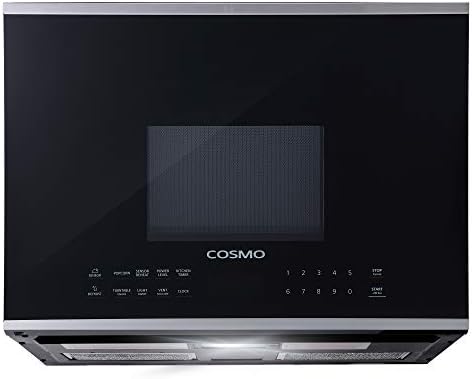
The COSMO is a 24-inch over-the-range model, making it the narrowest option in this comparison. Its listed exterior dimensions are 23.8 inches wide, 16.1 inches deep, and 17 inches high. Measure your cabinet opening and clearance carefully, since the stated width alone does not confirm that the unit will fit your installation.
Inside, it offers 1.34 cubic feet of capacity, 1,000 watts, and a 13.6-inch turntable. Touch presets cover tasks such as melting, softening, defrosting, and making popcorn. Sensor cook and reheat modes are designed to detect when food is done and stop the cycle.
The listing describes an integrated range hood but does not provide its airflow rating, so shoppers who prioritize ventilation should compare that detail with their needs before buying. The COSMO has a larger stated capacity than the GE and Samsung, but it is taller than the GE low-profile model. It is also listed as RV friendly, a useful detail for shoppers considering that type of installation.
Pros:
- 24-inch format can suit kitchens with a narrower opening.
- 1.34-cubic-foot capacity is the largest among these three options.
- Sensor cook and reheat modes help manage everyday cooking tasks.
- Includes touch presets and a 13.6-inch turntable.
Cons:
- The listed description does not specify the vent’s CFM rating.
- At 17 inches high, it may not be the right choice when minimizing height is the priority.
Verdict: Consider the COSMO if you need a narrower over-the-range microwave and want more listed interior capacity than the other picks offer.
Samsung Smart Slim: Best for Connected Features and Venting

Samsung’s smart slim model pairs a 1.1-cubic-foot microwave with a hood vent listed at 550 CFM. Its Wi-Fi and voice-control features set it apart from the other two picks, while an LED light is included for the cooktop. The product information provided does not list its wattage, exterior dimensions, or detailed cooking programs.
The listed capacity is the smallest of these three models, so this choice makes more sense if you value its connected features and ventilation specification over interior room. Since dimensions and installation details are not included in the available product information, check the manufacturer’s specifications and your kitchen measurements before deciding.
Compared with the GE, the Samsung has a higher listed CFM rating and smart controls, but the GE provides more detail about its cooking functions and low-profile fit. Compared with the COSMO, the Samsung’s title emphasizes connected controls and stronger listed ventilation, while the COSMO provides more capacity and specific exterior dimensions.
Pros:
- 550-CFM hood vent is the highest listed airflow specification among these picks.
- Wi-Fi and voice control provide connected operating options.
- LED cooktop lighting is included.
- 1.1-cubic-foot capacity offers a compact interior.
Cons:
- Wattage and exterior dimensions are not provided in the supplied product information.
- Its listed capacity is smaller than the GE and COSMO models.
Verdict: The Samsung is worth considering if smart controls and a higher listed vent capacity are your priorities, provided its dimensions and cooking specifications suit your kitchen.
How to Choose a Mini Over-the-Range Microwave
Measure Width, Height, and Depth
Measure the opening between your cabinets, the available depth, and the clearance above the cooktop. A model described as slim or low-profile may still have a particular width and depth that does not work in your kitchen. Compare your measurements with the manufacturer’s full installation specifications, not just the product title.
Decide How Much Interior Space You Need
Capacity is one guide to interior room, but the shape of your dishes matters too. The models here range from 1.1 to 1.34 cubic feet, and the COSMO lists a 13.6-inch turntable. Consider the plates, bowls, and cookware you use most often, and check the interior dimensions when they are available.
Compare Ventilation Needs
Vent airflow is listed in CFM, or cubic feet per minute. The GE lists 400 CFM and the Samsung lists 550 CFM; the COSMO listing describes an integrated range hood without specifying its CFM. A higher number can be an important point of comparison, but also verify how the unit can be vented and whether that setup matches your kitchen.
Look at Cooking Controls and Power
Wattage can help you compare cooking power, while presets and sensor modes affect convenience. The GE and COSMO each list 1,000 watts. The GE adds sensor cooking and time or weight defrost; the COSMO lists sensor cook and reheat modes plus touch presets. The Samsung’s supplied product information does not state its wattage or cooking programs, so check those details if they matter to you.
Consider Lighting and Everyday Operation
Cooktop lighting, alert sounds, and turntable controls can affect day-to-day use. The GE lists LED lighting, adjustable sound, and turntable operation control. The Samsung lists an LED light, while the COSMO’s supplied details focus on its presets and sensors. Think about which of these features would be useful in your kitchen rather than choosing based on a long feature list alone.
Check Installation and Availability Details
Over-the-range microwaves need to fit your cabinets and work with your home’s electrical and ventilation setup. Confirm installation requirements, clearances, and whether extra parts or professional installation are needed using the manufacturer’s information. Product availability can change, so check the current listing before you plan a purchase.
Frequently Asked Questions
What makes an over-the-range microwave “mini”?
There is no single size definition in the product information here. In practice, shoppers often use “mini” to mean a model with a compact, narrow, or low-profile design. Compare actual dimensions and capacity to make sure the microwave fits both your kitchen and your cookware.
Is a low-profile microwave the same as a narrow microwave?
No. “Low-profile” refers to a shorter design, while “narrow” refers to width. The GE is described as low profile and is 30 inches wide; the COSMO is a 24-inch model. Always check both height and width.
Which model has the largest stated capacity?
The COSMO lists 1.34 cubic feet, compared with 1.2 cubic feet for the GE and 1.1 cubic feet for the Samsung.
Which microwave has the strongest listed vent?
The Samsung lists a 550-CFM hood vent. The GE lists 400 CFM, and the supplied COSMO details do not give a CFM figure. Compare installation and venting requirements as well as the airflow numbers.
Do these models include sensor cooking?
The GE lists sensor cooking, and the COSMO lists sensor cook and reheat modes. The supplied information for the Samsung does not describe its cooking controls, so check its full specifications if sensor cooking is important to you.
Can I install one of these microwaves over any stove?
Not without checking fit and installation requirements. Measure the space, review the unit’s clearance and mounting instructions, and confirm that its venting setup works with your kitchen and range.
Final Recommendation
The GE Profile is the strongest fit if you want a specifically low-profile microwave with sensor cooking and clearly listed ventilation features. Choose the COSMO if a narrower 24-inch model and the largest stated capacity are more important. The Samsung is the better match for shoppers interested in Wi-Fi, voice control, and its listed 550-CFM vent. Before purchasing any of them, confirm the fit, installation details, and current availability for your kitchen.