
Choosing the best mortar and pestle for herbal medicine depends on what you plan to grind and how much you prepare at once. A small glass bowl can work for soft herbs and light mixing, while an unglazed ceramic interior offers more grip for grinding. Stainless steel is a sturdy option if you also want to crush tablets—but check with a pharmacist before crushing any medication, since some pills must be taken whole.
Below, we compare five compact options by material, capacity, and practical design. For herbal preparations, use a clean, dedicated set and follow reliable guidance for handling and using herbs; grinding an herb does not establish that it is safe or effective for a particular health concern.
Quick Comparison
| Product | Material and capacity | Best suited for | Key consideration |
|---|---|---|---|
| Apothecary Products Glass Mortar and Pestle | Glass, 2 oz | Soft herbs, powders, and small batches | Smooth surface; compact capacity |
| United Scientific Ceramic Mortar and Pestle, 70 mL | Ceramic, 70 mL | Small batches that need a grippy grinding surface | Deep bowl and pour spout |
| United Scientific Ceramic Mortar and Pestle, 150 mL | Ceramic, 150 mL | Larger herb or powder batches | Takes up more room than the smaller ceramic set |
| MEDca Stainless Steel Mortar and Pestle | 304 food-grade stainless steel | Herbs, spices, and suitable tablets | No capacity is listed in the supplied product details |
| EPOCHWIT Stainless Steel Mortar and Pestle | 18/8 stainless steel | Small grinding jobs with a lid and collection brush | Product details focus heavily on pill crushing |
Our Picks: Best Mortar And Pestle For Herbal Medicine reviews
Apothecary Products Glass Set: A Compact Choice for Soft Herbs

This small, clear glass set has a 2-ounce bowl and a matching pestle. Its smooth, non-porous surface is designed for mixing powders and grinding soft herbs, and the transparent bowl lets you see what is happening as you work. That visibility can help when you want to check for leftover pieces or gather the material toward the center.
The modest capacity makes it a practical fit for personal use and small preparations, rather than processing a large harvest. The product description recommends a gentle tapping motion for crushing pills. For herbs, it is best suited to light grinding and mixing; a smooth glass interior may offer less bite than the rough, unglazed surface of the ceramic options below.
Glass is easy to wash with warm, soapy water, and its non-porous surface resists absorbing odors and residue. Still, handle it with care and avoid forceful pounding. If you want one set for herbs and another for medicines, keeping them separate can also help prevent mix-ups and unwanted residue transfer.
Pros:
- Clear glass makes ingredients easy to see.
- Non-porous surface is designed to resist stains, odors, and residue absorption.
- Compact 2-ounce capacity suits small batches.
- Works for soft herbs, powders, and light mixing tasks.
Cons:
- Small capacity is limiting for larger batches.
- Smooth glass may not grip firm or fibrous herbs as well as an unglazed grinding surface.
Verdict: Choose this set if you value visibility and easy cleanup and usually prepare small amounts of soft herbs or powders.
United Scientific 70 mL Ceramic Set: A Grippy Bowl for Small Batches
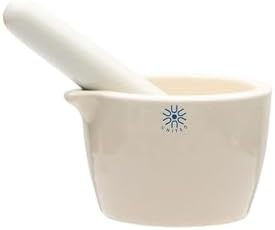
This 70 mL ceramic mortar has a deep bowl, a pour spout, and an unglazed interior with a matching rough pestle tip. That textured contact surface is intended to help ingredients catch during grinding instead of sliding around as they might on a smooth surface. The deep shape can also help contain small amounts while you work.
The set measures 2.75 inches in diameter and 52 mm high, according to the product details. Its compact size suits small herb preparations, powders, or suitable tablets. The pour spout is handy when transferring a finished powder, although very fine material can still cling to the bowl, so transfer gently and clean the interior carefully between uses.
The exterior is glazed apart from the bottom, and the manufacturer describes the ceramic as heat-resistant and suitable for autoclave sterilization. That may matter in lab or professional settings, but home users should follow the product’s care instructions rather than assume every cleaning method is appropriate. Compared with the glass set, this one offers a more textured grinding surface but is less transparent.
Pros:
- Unglazed interior and pestle tip provide a textured grinding surface.
- Deep bowl helps contain ingredients during use.
- Pour spout supports controlled transfer.
- Compact size works well for smaller batches.
Cons:
- Unglazed surfaces may take more attention to clean than smooth glass or steel.
- Its 70 mL capacity is not intended for large quantities.
Verdict: This is a strong fit if you want a small ceramic bowl with a rough interior for controlled grinding and a spout for transferring the result.
United Scientific 150 mL Ceramic Set: More Room for Herb Preparations

This larger United Scientific set keeps the same useful design as the 70 mL version: a deep ceramic bowl, a pour spout, and an unglazed grinding interior and pestle tip. Its 150 mL capacity gives you more room for a bigger batch or for ingredients that need space to move as you grind.
The rough interior is a useful feature for dry herbs and powders that need more friction than a smooth glass bowl provides. A deeper bowl can help keep material contained, while the spout makes it easier to pour out a finished mixture. For best control, work in manageable amounts rather than filling the bowl to the brim.
The larger capacity is the main reason to choose this set over the 70 mL model. It also needs more storage space, and the unglazed area calls for thorough cleaning, especially if you switch between strongly scented herbs or different ingredients. The product description states that the ceramic withstands high temperatures and can be autoclaved; check the supplied care guidance before using specialized sterilization methods.
Pros:
- 150 mL capacity provides more room than the smaller ceramic model.
- Unglazed interior is designed to help ingredients grip during grinding.
- Deep form and pour spout make handling and transfer more controlled.
- Versatile for herbs, spices, powders, and suitable tablets.
Cons:
- Needs more storage room than the 70 mL set.
- The textured, unglazed interior requires careful cleaning between ingredients.
Verdict: Pick the 150 mL version if you like the grippy ceramic design but want more working room than the 70 mL model offers.
MEDca Stainless Steel Set: A Durable Option for Herbs and Spices

MEDca’s set is made from 304 food-grade stainless steel and has curved mortar and pestle surfaces designed for crushing and grinding. The product description presents it as a multipurpose tool for pills, herbs, and spices. Unlike the ceramic sets, it does not have an unglazed interior; unlike the glass set, it is opaque, so you cannot see ingredients through the bowl.
The sturdy steel construction may appeal if you want a set that can handle more than soft herbs. The supplied details say the material does not hold residue or odors and recommend washing with warm water and soap, then drying it fully. No bowl capacity is provided in the product information, so consider that a limitation if you need a specific batch size.
This option makes sense for someone looking for a single grinder for kitchen ingredients and suitable tablets. If your main priority is grinding delicate herbs in a small amount, the glass set offers visibility, while the ceramic sets provide a textured interior. As with any tool used for medicine, confirm that a tablet may be crushed before using a mortar and pestle on it.
Pros:
- Made from 304 food-grade stainless steel.
- Curved contact surfaces are designed for crushing and grinding.
- Product details describe it for herbs, spices, and suitable pills.
- Washable with warm soapy water; drying is straightforward.
Cons:
- Capacity is not specified in the supplied product details.
- Opaque steel does not let you watch the ingredients as you grind.
Verdict: Consider MEDca if you want a stainless steel tool for varied grinding tasks and do not need a stated bowl capacity.
EPOCHWIT Stainless Steel Set: Helpful Extras for Collecting Fine Powder

This EPOCHWIT set is made from 18/8 stainless steel and includes several practical extras described in the product details: a semi-transparent lid, a collection brush, and a removable rubber base. The lid can help limit spills while grinding, and the brush is intended to help gather powder and clean the bowl. The rubber base is designed to protect the counter and help keep the tool in place.
The manufacturer emphasizes pill crushing and says the set is designed to handle small, large, or multiple tablets. It also lists uses for herbs, spices, and other ingredients. The smooth, seamless interior is intended to make powder easier to collect, but the product information does not state the bowl’s capacity. That makes it harder to judge how much plant material it can comfortably hold at once.
This could suit you if you want a steel set with accessories for containing and collecting ground material. For herbal preparations, the most important practical questions are still how much you need to process and whether you prefer a smooth surface or the extra grip of unglazed ceramic. Follow the included care directions, and keep a medicine-only tool separate if you do not want food or herb residue to mix with medication.
Pros:
- 18/8 stainless steel construction.
- Includes a lid, collection brush, and removable rubber base.
- Smooth interior is designed to make powder collection easier.
- Product details list uses for herbs, spices, and tablets.
Cons:
- Capacity is not specified in the supplied details.
- Its product description focuses more on pills than on herbal preparation.
Verdict: Choose this set if the lid and brush are useful to you and you want a smooth stainless steel grinder for small, varied tasks.
How to Choose a Mortar and Pestle for Herbal Medicine
Match the Material to the Herbs You Grind
A rough, unglazed ceramic interior can provide more grip for grinding than a smooth surface. That makes the United Scientific sets worth considering for dry herbs and powders. Glass offers visibility and a non-porous surface that is designed to resist absorbing odors and residue, while stainless steel provides a sturdy option for mixed kitchen and grinding tasks. No single material is best for every ingredient, so think about what you will prepare most often.
Choose a Capacity That Fits Your Batch Size
A small bowl is easier to store and can be suitable for a personal amount, but it may be awkward for a larger batch. The products here range from 2 ounces for the glass set to 70 mL and 150 mL for the ceramic sets. The two steel products do not list a capacity in the supplied details. If you need to prepare larger amounts, a stated capacity gives you a clearer basis for choosing.
Look at Bowl Shape and Transfer Features
A deeper bowl can help contain ingredients while you work. A pour spout can make it easier to transfer a ground mixture, as on both United Scientific sets. Extras such as a lid and collection brush may also help limit spills or gather fine powder. Consider how you plan to move the finished material into a storage container, as well as how you will keep it from scattering during grinding.
Consider Cleanup and Cross-Contamination
Herbs can leave behind fine particles, scents, or residue. Smooth glass and steel are intended to be easy to wash, while the rough texture of an unglazed ceramic interior may call for more careful rinsing and inspection. Let the set dry fully as directed. If you prepare medicines as well as herbs or food, using separate tools—or clearly separating uses—can reduce the chance of unwanted residue transfer.
Use a Mortar and Pestle Safely for Medication
Do not crush a tablet, open a capsule, or alter a dose unless a pharmacist or prescriber confirms it is safe for that specific medicine. Some medications must be swallowed whole or handled in a particular way. A mortar and pestle is a grinding tool, not a way to decide whether a medication can be changed or whether an herb is appropriate for a health concern.
Think About Storage and Handling
Glass and ceramic need careful handling, while steel models may suit shoppers who prefer a metal tool. A compact set can be easier to store, but a deeper or larger bowl may be more comfortable for preparing a bigger amount. Check the product details and care directions for the size and cleaning method that suit your space and routine.
Frequently Asked Questions
What type of mortar and pestle is best for grinding dry herbs?
For dry herbs that need a firm grinding surface, an unglazed ceramic interior can offer more texture than smooth glass or steel. The United Scientific models in this guide have an unglazed interior and pestle tip. Your choice should also account for batch size and how much effort you want to spend cleaning the surface.
Is glass or ceramic better for herbal preparations?
It depends on your priorities. Glass is transparent and non-porous, making it useful when you want to see ingredients and clean a smooth surface. Unglazed ceramic has more texture to help ingredients grip during grinding, but it may require more attention when cleaning. Consider the herbs you use and whether visibility or friction matters more to you.
Can I use a mortar and pestle to crush medication?
Only if a pharmacist or prescriber confirms that the specific medication may be crushed. Some tablets and capsules should not be altered. Follow professional instructions for the medicine and do not rely on the grinder’s design to determine whether crushing is safe.
How do I clean a mortar and pestle after grinding herbs?
Follow the manufacturer’s care instructions. The glass set’s product details recommend warm, soapy water, and the MEDca description also calls for washing and drying. For textured ceramic, check the bowl closely after rinsing so plant particles do not remain in the rough interior. Let every piece dry fully before storage.
Which set is best for a larger batch?
The 150 mL United Scientific ceramic set has the largest stated capacity among these options. It provides more room than the 70 mL ceramic set or the 2-ounce glass set. The capacities of the two stainless steel models are not specified in the supplied product details.
Can I use the same mortar and pestle for herbs, food, and medicine?
That depends on your cleaning routine and comfort with possible residue transfer. A dedicated set for medicine or strongly scented herbs can help keep uses separate. If you do share a tool, clean it thoroughly between ingredients and follow the manufacturer’s care guidance.
Does grinding an herb make it safe or suitable to use?
No. Grinding only changes the herb’s texture; it does not establish that the herb is safe, effective, or appropriate for you. For health concerns, check with a qualified health professional, especially if you take medication or have a medical condition.
Final Recommendation
For most small herbal preparations, the United Scientific 70 mL ceramic set is a practical starting point because its unglazed interior is designed to grip ingredients and its pour spout helps with transfer. Choose the 150 mL version if you want more capacity. If easy visibility and a smooth, non-porous surface matter more, consider the Apothecary Products glass set; if you want stainless steel and added powder-collection accessories, look at the EPOCHWIT set. Whichever you choose, match the bowl to your batch size, clean it carefully, and ask a pharmacist before crushing medication.