
Cooking on an induction stove is different from cooking on gas or standard electric. Induction heats the cookware itself through a magnetic field, so the pan must have a magnetic base to work at all. Choosing the right nonstick pan for induction means looking past the coating alone. You also need to check the base construction, the handle, the pan’s weight, and how it cleans up. The five pans below all list induction compatibility, but they differ in material, size, and intended use. This guide will help you find the one that fits how you cook.
Quick Comparison Table
| Product | Size | Nonstick Type | Standout Feature | Best For |
|---|---|---|---|---|
| KitchenAid Hard-Anodized Induction Nonstick Frying Pan | 8.25-inch | Triple-layer nonstick | Thick forged base and dishwasher-safe build | Single eggs, small sauces, and quick sautés |
| SENSARTE Nonstick Frying Pan Skillet Swiss Granite Omelette Pan | 9.5-inch | Swiss ILAG coating, PFOA free | Woodgrain bakelite handle that stays cool | Omelets, pancakes, and everyday breakfast cooking |
| Agerma 10 Inch Nonstick Frying Pan Tri-Ply Clad Stainless Steel Skillet | 10-inch | Reinforced nonstick coating | Tri-ply clad body, rivet-free interior, removable handle | Searing, finishing in the oven, and cooks who want a sturdy pan |
| CAROTE 10 inch Non Stick Black Frying Pan Skillet | 10-inch | Granite-style nonstick, PFOS and PFOA free | Low-oil cooking and easy wipe-down cleaning | Everyday cooking on a budget-minded setup |
| SENSARTE 11 Inch Nonstick Ceramic Frying Pan with Lid | 11-inch | Natural ceramic coating, PTFE and PFOA free | Included tempered glass lid | Larger meals, braising, and splatter control |
Our Picks: Best Non Stick Pan For Induction Stove reviews
KitchenAid Hard-Anodized Pan: Even Browning in a Compact Size

The KitchenAid hard-anodized frying pan is an 8.25-inch skillet built for induction and other stovetops. Its base is described as thick and forged, which is designed to spread heat evenly across the cooking surface. That matters on induction, where hot spots can appear if the base is too thin. For a pan this size, the even heat helps with browning, so a single chicken thigh or a couple of eggs cooks more predictably.
The body is hard-anodized aluminum, which gives the pan a dense, sturdy feel for its size. The interior has a triple-layer nonstick finish, and the listing notes that the handle rivets also get the enhanced nonstick treatment. That detail is more useful than it sounds, because rivets are a common place where food gets stuck and cleaning becomes annoying. In everyday use, owners often appreciate that food slides off the surface without much effort, and that the pan can go in the dishwasher when cleanup gets busy.
This pan suits people who cook for one or two, or who need a second small skillet for quick tasks. It is not ideal for a large family dinner or for searing big cuts of meat, since the cooking area is limited. Compared with the larger options on this list, it trades capacity for a heavier, more solid feel in a smaller footprint. If you want a dependable, straightforward induction pan for daily small jobs, it is a sensible pick.
Pros:
- Thick forged base supports even heat on induction cooktops
- Hard-anodized aluminum body feels sturdy for its size
- Triple-layer nonstick extends to the handle rivets for easier release
- Dishwasher-safe construction simplifies cleanup
Cons:
- At 8.25 inches, the cooking surface is too small for larger meals
Verdict: Choose this KitchenAid pan if you need a small, well-built induction skillet for eggs, sauces, and quick sautés. Skip it if you regularly cook for a crowd.
SENSARTE Swiss Granite Omelette Pan: Light, Simple, and Breakfast-Ready

This 9.5-inch SENSARTE skillet is designed as an omelet and everyday frying pan. The nonstick coating is described as Switzerland ILAG, and the pan is labeled PFOA free. The cooking surface is a good size for two-egg omelets, pancakes, and small batches of vegetables. It has a high magnetic conductive stainless steel base, which the listing says works on all stovetops including induction. The interior is cast aluminum, which the manufacturer presents as a sturdier option for long use.
The woodgrain bakelite handle is one of its more practical features. Bakelite stays cooler than bare metal during cooking, which makes the pan easier to handle while food is still in the pan. Many home cooks find this comfort matters more than they expect, especially during long breakfast sessions. The surface is smooth and does not have a rivet-heavy interior, so wiping it out with a paper towel usually takes care of most daily messes.
This pan is best for people who make breakfast often, or who want a lightweight pan that is easy to lift and flip with. Because it is designed mainly for gentle to medium heat cooking, it is less suited to hard searing. Some buyers may also want a lid option, which this pan does not include. If your cooking leans toward eggs, crepes, and light sautés, this one is an easy choice.
Pros:
- Good 9.5-inch size for omelets, pancakes, and small meals
- Woodgrain bakelite handle is designed to stay cool during cooking
- Smooth, rivet-free-style interior makes wiping clean straightforward
- Induction-compatible base with a stated magnetic conductive design
Cons:
- Better suited to gentle to medium cooking than high-heat searing
Verdict: This SENSARTE omelet pan is a strong choice for breakfast cooks who want an induction-ready, easy-to-handle pan. Look elsewhere if you need a pan for heavy searing.
Agerma Tri-Ply Skillet: A Sturdy Pick for Searing and Oven Finishing

The Agerma 10-inch skillet stands out because of its construction. It is described as a tri-ply stainless steel pan with an aluminum core, a design meant to heat quickly and evenly while resisting warping. Layered construction is a good match for induction, since the stainless outer layer provides the magnetic base while the aluminum core helps spread heat across the pan. The reinforced nonstick coating is meant for delicate foods, but the body feels more like a traditional clad skillet than a lightweight nonstick pan.
The interior is rivet-free, which simplifies cleaning. Food and grime do not collect around raised rivets, so a sponge can reach the whole surface. The handle is removable and comes with a silicone sleeve for grip and heat protection. The listing says the pan is oven safe up to 400°F (204°C), and that the sleeve should be removed before baking. That makes the pan useful for starting a dish on the stove and finishing it in the oven, such as a frittata or pan-seared chicken.
This pan is a good fit for cooks who want a sturdier, more versatile skillet and who are comfortable with a slightly heavier pan. It suits searing, sautéing, and cooking dishes that move from stovetop to oven. The removable handle also helps with storage, which can be useful in small kitchens or RVs. The seller states a warranty promise covering damaged, dented, or deformed items, which adds some confidence for a purchase of this type. Buyers who want the lightest possible pan may prefer a simpler nonstick option instead.
Pros:
- Tri-ply clad construction supports even heating on induction
- Rivet-free interior makes cleaning easier
- Removable handle with silicone sleeve saves cabinet space and improves grip
- Oven safe up to 400°F (204°C) with the sleeve removed
Cons:
- Heavier than basic nonstick pans, which may matter for one-handed flipping
Verdict: The Agerma skillet is the best choice here for cooks who want a durable, oven-friendly pan that handles searing and finishing. Choose a lighter nonstick pan if you mostly cook eggs and delicate foods.
CAROTE Granite Skillet: Low-Oil Cooking With Simple Cleanup
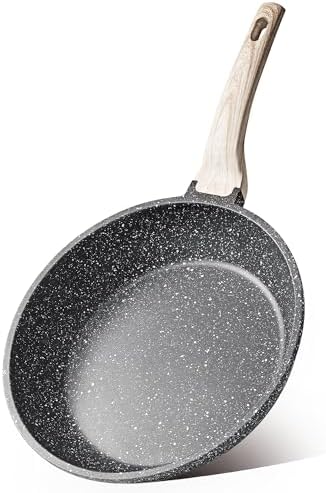
The CAROTE 10-inch skillet uses a granite-style nonstick surface, and the listing describes it as PFOS and PFOA free. The pan has a high magnetic conductive stainless steel base, which the listing says allows it to work on all cooktops, including induction. The extended bottom design is presented as a way to heat quickly and evenly. The 10-inch size gives a practical amount of room for two to three servings of eggs, vegetables, or stir-fried proteins.
The listing emphasizes using less oil, which is a useful point for everyday cooking. A reliable nonstick surface lets you cook with a light coat of fat, and that can make the pan feel more versatile for healthier meals. Cleanup is simple: a paper towel or a quick rinse handles most messes. In regular use, many owners find that this kind of surface is easy to maintain when they avoid high heat and metal utensils, though the listing does not detail specific care limits beyond cleaning.
This CAROTE pan suits households that want a straightforward, all-purpose nonstick skillet for daily meals. It is not a specialty tool, and the listing does not describe a lid, oven rating, or handle design in depth, so it is best viewed as a general-purpose option. It fits well in a kitchen where the main goal is easy cooking and easy cleaning rather than advanced features. If that describes your routine, this pan covers the basics well.
Pros:
- Stated PFOS and PFOA free granite-style nonstick surface
- Magnetic stainless steel base is listed as compatible with induction
- Good 10-inch size for everyday meals
- Simple wipe-down or rinse cleanup
Cons:
- Listing offers limited detail on oven use and handle design, so buyers may need to confirm these points
Verdict: The CAROTE skillet is a practical, everyday induction pan for people who want a simple granite-style nonstick surface and easy cleanup. Pick it for daily cooking, not for specialized tasks.
SENSARTE Ceramic Pan With Lid: Covered Cooking for Larger Meals

This 11-inch SENSARTE pan is the largest option on the list and comes with a tempered glass lid. It uses a natural ceramic coating that the listing describes as free of intentionally added PFOA, PTFE, PFAS, lead, and cadmium. The base is heavy-duty cast aluminum with an induction-compatible design, and the listing says it heats quickly and resists warping. The bakelite handle has a woodgrain look and is described as staying cool during cooking.
The included lid is the feature that sets this pan apart. A glass lid helps trap heat for covered cooking, and it also reduces oil splatter onto the stovetop, which many cooks find helpful when frying or simmering. The ceramic surface is described as very slick, and the listing suggests that foods like pancakes release easily with less oil. Because there are no rivets on the interior, cleaning is generally quick. The listing says the pan is dishwasher safe but recommends hand washing to extend its life, which is a useful detail for planning your care routine.
This pan is ideal for cooks who make larger portions, braise small cuts, or want to keep splatter under control. The trade-off is weight and care. The cast aluminum body is heavier than a basic skillet, and the recommendation to hand wash may not suit everyone. Ceramic coatings also generally reward gentle handling and moderate heat, so it is best used with that in mind. For covered cooking on induction, this is one of the more versatile choices in the group.
Pros:
- Included tempered glass lid helps with covered cooking and splatter control
- Largest cooking surface in this lineup at 11 inches
- Natural ceramic coating is described as free of several listed substances
- Smooth, rivet-free interior that makes cleaning quick
Cons:
- Heavier cast aluminum body, and hand washing is recommended for longer life
Verdict: Choose this SENSARTE ceramic pan if you want a larger induction skillet with a lid for covered cooking and less splatter. It is a good fit for family-sized meals, but plan to hand wash it.
How to Choose the Best Non Stick Pan for an Induction Stove
Make Sure the Base Is Induction Compatible
Induction cooktops only heat pans that respond to a magnetic field. Before you buy, check that the product description clearly states induction compatibility, and look for a magnetic base made of stainless steel or a similar material. All five pans in this guide list induction use, but the way they achieve it differs. A clad stainless base, a thick forged base, or a dedicated magnetic plate can all work well. If a pan does not heat on your induction burner, a simple magnet test at the bottom will tell you quickly whether it is compatible.
Choose the Right Nonstick Coating
Nonstick coatings generally fall into a few families, including traditional PTFE-based finishes, granite-style finishes, and ceramic finishes. The listings here mention PFOA-free, PFOS-free, and PTFE-free formulas, which many shoppers look for when they want to limit certain chemicals in their cookware. Keep in mind that a nonstick surface is not permanent. Its performance depends on heat level, utensil choice, and cleaning habits. Medium heat and silicone, wood, or nylon utensils will usually help any coating last longer.
Consider Pan Size and How You Cook
Pan size affects how much food you can cook at once and how the pan heats. Smaller pans of about 8 to 10 inches are good for single portions, eggs, and sauces. Larger pans of 11 inches or more give you room for family meals and can reduce the number of batches you need to cook. Think about the meals you make most often. If you regularly cook for several people, a larger pan with a lid may save time, while a smaller one may be easier to store and handle for daily tasks.
Look at the Body Material and Weight
The body of a pan influences how it heats and how it feels in your hand. Hard-anodized aluminum and cast aluminum bodies are often lighter and respond quickly to heat changes. Tri-ply clad stainless designs usually feel heavier and more substantial, which can be an advantage for searing and for cooks who want a durable pan. Weight matters more than many shoppers expect, especially if you flip food often or have limited wrist strength. Hold the pan if you can, or compare the listed construction against how you prefer to cook.
Check Handle Design, Oven Use, and Lid Options
Handles affect comfort and safety. Heat-resistant bakelite handles can stay cooler during stovetop use, while removable handles can make storage easier. If you like to move a pan from the stove to the oven, confirm the oven temperature limit and whether the handle or sleeve needs to be removed first. A lid is another useful feature for braising, steaming, or reducing splatter. Make a list of the tasks you do most, then choose the handle, oven rating, and lid option that match those tasks.
Plan Your Cleaning and Care Routine
Cleanup is a major part of everyday satisfaction with a nonstick pan. Rivet-free interiors are easier to wipe clean because there are fewer places for food to hide. Some pans are dishwasher safe, while others are better hand washed to preserve the coating. Even when a pan is labeled dishwasher safe, gentle washing usually extends the life of the nonstick surface. Use soft sponges, avoid abrasive pads, and let the pan cool before rinsing it under cold water to reduce the risk of warping.
Frequently Asked Questions
Will any nonstick pan work on an induction stove?
No. Induction cooktops require cookware with a magnetic base. Look for a product that clearly states induction compatibility, and use a magnet to check the bottom if you are unsure. A pan that is only aluminum or copper without a magnetic layer will not heat on an induction burner.
Is a ceramic nonstick pan better than a granite or PTFE pan?
It depends on what you value most. Ceramic coatings are often chosen by people who want a naturally slick surface without certain traditional coating materials. Granite-style and PTFE-based coatings are also widely used and can perform well. Whichever you choose, follow the care guidance, use moderate heat, and avoid metal utensils to help the coating last.
Can I put these nonstick pans in the dishwasher?
Several of the pans in this guide are listed as dishwasher safe, including the KitchenAid, SENSARTE omelet pan, Agerma, and CAROTE options. The SENSARTE ceramic pan with lid is also dishwasher safe, but its listing recommends hand washing to extend its lifespan. Hand washing is generally gentler on any nonstick surface, so it is a good habit even when a dishwasher is allowed.
Can I use metal utensils on nonstick pans?
It is best to avoid them. Metal utensils can scratch nonstick surfaces, which reduces release performance over time. Silicone, nylon, or wooden tools are safer choices. This habit matters even more with ceramic coatings, which are often described as needing gentle care.
Which pan is best for searing meat on induction?
The Agerma tri-ply skillet is the strongest fit for searing among these five, since its clad stainless construction is designed for sturdy, even heating. The SENSARTE omelet pan is better suited to gentle to medium cooking, and the ceramic pan with lid is better for covered cooking and simmering. For searing, choose a pan with a sturdy base and avoid overheating any nonstick surface.
Do I need a lid with a nonstick frying pan?
A lid is not required, but it is helpful for certain tasks. It can speed up cooking by trapping heat, help keep moisture in, and reduce oil splatter. If you cook a lot of braised dishes, steamed vegetables, or covered sauces, a pan with a included lid is more convenient than buying a separate one later.
How do I make a nonstick pan last longer?
Use low to medium heat, add a little oil or butter for flavor rather than relying on high heat, and wash the pan gently after it cools. Store it without stacking heavy cookware on top, which can scratch the surface. Following these habits helps protect the coating and keeps the pan working well for longer.
Final Recommendation
The best non stick pan for an induction stove depends on how you cook. For a compact everyday skillet with solid construction, the KitchenAid pan is a dependable choice. If breakfast is your main focus, the SENSARTE omelet pan offers a comfortable handle and a good size for eggs and pancakes. For searing and oven finishing, the Agerma tri-ply skillet stands out as the most versatile option in this group. The CAROTE granite pan suits simple, low-oil daily cooking, while the SENSARTE ceramic pan with lid is the best pick for larger meals and covered cooking. Match the pan to your most frequent tasks, confirm induction compatibility, and you will end up with a pan that fits your kitchen well.