
Grease can travel beyond the pan, leaving a film on the wall, counters, and nearby cookware. The best oil splatter guard for your kitchen depends on how much coverage you need, how your stove is arranged, and whether you prefer a freestanding metal barrier or a guard that fits around a pan. These five options include foldable screens for the stove area and a silicone guard designed for a single pan.
Quick Comparison: Best Oil Splatter Guards for Walls
| Product | Type | Key details | Best suited for |
|---|---|---|---|
| 3-Sided Stainless Steel Stove Splatter Guard | Foldable, three-panel screen | Expands to 35.4 × 14.6 inches; weighs 3 pounds | Broad coverage with a sturdy stainless steel design |
| NeilBee 3-Sided Oil Splatter Guard, 2-Pack | Foldable, three-sided screens | Aluminum construction; dimensions are not specified in the supplied product details | Shoppers who want two lightweight screens |
| Frywall 10-Inch Silicone Splatter Guard | Pan-fitting silicone ring | Made for 10-inch pans; rated for sustained temperatures up to 450°F | Containing splatter from one compatible pan |
| Ashgulia 4-Sided Stainless Steel Splatter Guard | Foldable, four-sided screen | 31.5 × 15.8 × 11.8 inches | Enclosing more of the cooking area |
| TINSKY 2-Piece Stainless Steel Splatter Guards | Two foldable panels | Each panel measures about 12 × 16 inches | Flexible coverage with separate panels |
Our Picks: Best Oil Splatter Guard For Wall reviews
1. Three-Sided Stainless Steel Guard for Broad Stove Coverage
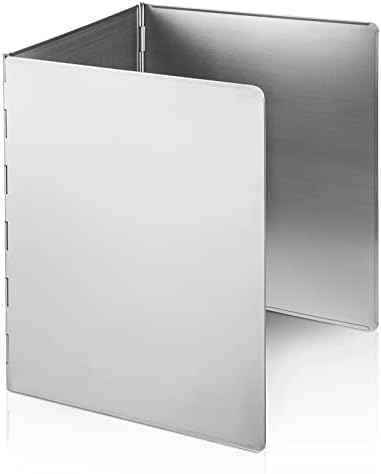
This three-panel screen creates a freestanding barrier around the sides and back of a pan or cooking area. Expanded, it measures 35.4 inches wide by 14.6 inches high, giving it more stated width than the other three-sided guards in this selection. It folds to 11.8 inches wide, so it can be stored alongside flat kitchen items such as baking sheets or cutting boards.
The guard is made from brushed stainless steel and weighs 3 pounds. Its rounded corners and closed hems are intended to reduce the risk of cuts from exposed edges. Unlike guards with rubber edging, this one has no rubber edge that could be exposed to heat. Still, it should be positioned so it does not interfere with burners, flames, or safe handling of cookware.
This is a practical choice if you want a rigid barrier that covers a relatively wide span behind and beside a pan. Its three-sided layout leaves the front open for access. The trade-off is that the stated height is 14.6 inches, so it will not cover the wall as high as the taller four-sided option. Measure your stove and storage space before ordering.
Pros:
- Wide, three-panel coverage when expanded
- Brushed stainless steel construction
- Rounded corners and closed hems
- Folds for compact storage
Cons:
- At 3 pounds, it is heavier than the aluminum option
- Its 14.6-inch height may not suit every wall or setup
Verdict: Choose this screen if you want a substantial stainless steel barrier with broad three-sided coverage and have room to store it folded.
2. NeilBee Two-Pack Aluminum Guards for Flexible Use

The NeilBee set includes two foldable, three-sided guards made from aluminum. Each forms a barrier around a frying pan, skillet, or pot, with the open side providing access to the pan. The product description highlights a lightweight, thin design, which may be appealing if you plan to move the guards often or prefer not to handle a heavier steel screen.
The set is described as having a non-stick surface that can be rinsed and wiped clean. Its panels fold flat for storage in a cabinet, drawer, or pantry. The product information does not give the expanded dimensions, so check the listing and compare its measurements with your cookware and stove before buying. The description also makes a “99%” splash-trapping claim; that is a manufacturer claim, not a guarantee that no grease will escape.
Two guards may be useful if you cook with more than one pan or want a spare, but the absence of dimensions in the supplied details makes fit harder to judge. If you need a specified coverage area or a heavier stainless steel screen, the first or fourth pick is easier to compare by size and material.
Pros:
- Includes two foldable guards
- Lightweight aluminum construction
- Designed to fold flat for storage
- Surface is described as easy to rinse and wipe
Cons:
- Product details supplied here do not state the dimensions
- Aluminum may feel less substantial than the stainless steel options
Verdict: Consider this set if you value a lightweight two-pack, but confirm the panel size before deciding whether it will shield your stove and wall adequately.
3. Frywall Silicone Guard for a Compatible 10-Inch Pan

Unlike the freestanding screens, Frywall fits around the rim of a pan. This medium version is designed for 10-inch pans and is not suitable for pans with a lip-to-lip diameter under 9.5 inches. It is made from BPA-free, FDA-compliant silicone and is rated to withstand sustained temperatures up to 450°F.
The pan-fitting design aims to block fine oil mist while allowing steam to escape. That makes it a different kind of solution: it surrounds the cooking surface instead of forming a wide barrier between the stove and the wall. It may also help contain food that spills over when a pan is full. The guard is listed as dishwasher safe and rolls into a cup-sized sleeve for storage.
Fit is the key limitation. Measure the pan across its rim before ordering, and note that the product is not suitable for downdraft stoves. It is also not a general-purpose wall screen: if your goal is to shield a broad section of the backsplash or nearby counter, a foldable panel guard is a better match.
Pros:
- Pan-fitting design provides access to the cooking surface
- Allows steam to escape while helping block oil mist
- Dishwasher safe and rolls up for compact storage
- Rated for sustained temperatures up to 450°F
Cons:
- Only fits compatible 10-inch pans
- Not suitable for downdraft stoves
Verdict: Pick Frywall if your priority is containing splatter from a compatible pan rather than placing a large guard behind the stove.
4. Ashgulia Four-Sided Screen for More Enclosed Coverage

This foldable screen is designed to surround the cooking area on four sides. Its listed dimensions are 31.5 inches long, 15.8 inches deep, and 11.8 inches high. The extra side can provide more enclosure than an open-front three-panel guard, though the layout may also make access to the pan less direct. Consider how you need to reach the handles and cooking surface before choosing a four-sided design.
The guard is made from stainless steel and has a non-stick coating, according to the product details. The edges are hemmed, and black rubber straps are included as part of its safety design. The panels fold for storage and can be shaped to suit different setups. The listing notes that a protective film covers the surface, so remove it before use.
Its relatively deep footprint may suit a larger cooking area, but it also needs more counter or stove space while in use than a shallow screen. The listed height is lower than the 14.6-inch guards in this selection, so compare all three dimensions with your setup rather than judging by width alone.
Pros:
- Four-sided design encloses more of the cooking area
- Stainless steel construction with a non-stick coating
- Folds and can be shaped for storage or use
- Hemmed edges and rubber straps are part of its safety design
Cons:
- Four sides may make pan access less convenient
- Its 11.8-inch height is shorter than some other options
Verdict: Choose this model if you want a more enclosed, foldable barrier and have checked that its depth and height work with your stove.
5. TINSKY Two-Piece Stainless Steel Guards for Adaptable Coverage

This set contains two stainless steel panels, each measuring about 12 by 16 inches. The product description says the panels can be folded flat and arranged in different configurations for cooking. It refers to using them in three- or four-sided arrangements, so check the listing for the specific setup and connection details that fit your needs.
The panels are described as 304 stainless steel, with rubber edges intended to help prevent hand scrapes. A non-stick coating is listed to make cleaning easier; the suggested care is rinsing and wiping with warm, soapy water or detergent. The separate panels give you more flexibility than a single fixed screen, but the total coverage depends on how you position them.
Unlike the wider one-piece guards, this set does not form a single stated 35-inch-wide barrier. It may be more useful when you want to position panels around particular sides of a pan or stove. If you need a broad, stable wall shield, compare the combined coverage and arrangement carefully before buying.
Pros:
- Two separate panels offer flexible placement
- 304 stainless steel construction
- Each panel has a stated 12 × 16-inch size
- Folds flat for storage
Cons:
- Coverage depends on how the panels are arranged
- Confirm the assembly and configuration details in the listing
Verdict: This set is a good fit if separate stainless steel panels suit your cooking layout better than one large, connected screen.
How to Choose an Oil Splatter Guard for Your Wall
Decide how much of the cooking area to cover
A three-sided screen usually places a barrier at the back and sides of a pan while leaving the front open. A four-sided guard surrounds more of the cooking area, but may make it harder to reach the pan. Separate panels offer more control over placement, though you will need to check how they fit together and how much total coverage they provide.
Measure your stove, cookware, and available space
Compare the guard’s width, depth, and height with your stove and the wall area you want to protect. Also consider nearby burners, pan handles, and counter space. A guard that is too large may get in the way, while a short or narrow one may leave parts of the wall exposed. For a pan-fitting design such as Frywall, measure the pan rim and follow the stated size limits.
Choose a material that suits your routine
Stainless steel offers a rigid barrier and is used in several of the freestanding options here. Aluminum is described as lightweight, which can make a screen easier to move. Silicone works differently: it attaches around a compatible pan instead of standing between the stove and wall. Check each product’s care and temperature information, and do not assume all materials or edge treatments can be used the same way.
Check the edge and heat-safety details
Look for information about finished or hemmed edges, rubber edging, and temperature limits. A guard should be placed where it will not interfere with burners or safe pan handling. Follow the product’s instructions for use, especially if the design includes rubber parts or is made to fit directly on cookware.
Think about cleaning and storage
Foldable guards can be easier to put away than a fixed backsplash panel, but check the folded size and where you plan to store it. Some products describe a non-stick surface or dishwasher-safe care; others recommend rinsing and wiping by hand. Pick a cleaning method that matches the product instructions and your routine.
Match the design to your cooking habits
If you often fry or stir-fry in different pans, a freestanding screen may be more adaptable than a guard sized for one pan. If you mainly want to contain splatter from a particular compatible pan, a pan-fitting silicone guard may be more convenient. For frequent cooking across a wide stove area, prioritize measurable coverage and a layout that does not block access.
Frequently Asked Questions
Do oil splatter guards protect the wall behind a stove?
They can help block grease and food splashes from reaching nearby surfaces, but the coverage depends on the guard’s size, placement, and design. Measure the area you want to protect and choose a screen with suitable dimensions.
Is a three-sided or four-sided guard better?
A three-sided guard leaves the front open for easier access to the pan. A four-sided version provides more enclosure but may make reaching the cooking surface less convenient. Consider your cooking habits and how much access you need.
Can I use a splatter guard with any pan?
Freestanding screens can be placed around many pan and stove setups, but fit still depends on their size and shape. The Frywall model in this guide is specifically for compatible 10-inch pans and does not fit pans with a lip-to-lip diameter under 9.5 inches.
Can I use the Frywall guard on a downdraft stove?
No. Its product information states that it is not suitable for downdraft stoves. Check your stove type before choosing it.
How should I clean a metal splatter guard?
Follow the care directions for the specific product. The metal options here describe wiping or rinsing their surfaces, and some have a coating intended to make cleanup easier. Let the guard cool before handling it and use the method stated in its product instructions.
What is the best option if I want a wide barrier behind my stove?
The three-sided stainless steel guard in this guide has the widest stated expanded width at 35.4 inches. Check its height and your stove measurements too, since width alone does not determine whether it will cover the area you need.
Final Recommendation
For a broad, freestanding barrier with clearly stated dimensions, the three-sided stainless steel guard is the strongest all-around choice in this group. Choose the Ashgulia screen if you prefer a more enclosed four-sided layout, the TINSKY set if separate panels offer better placement, or the NeilBee pair if a lightweight two-pack suits your needs. For a single compatible pan rather than a wide wall shield, consider Frywall. Before ordering, compare the product dimensions with your stove and follow its use and care instructions.