
Choosing an Optoma projector for movie nights comes down to your room, screen distance, and how much resolution matters to you. The models here range from 1080p projectors that accept 4K input to 4K UHD options, plus a short-throw laser model for rooms where the projector needs to sit close to the screen. Use the comparison below to narrow your choices, then check each model’s strengths and tradeoffs.
Quick Comparison
| Projector | Resolution and input | Standout features | Best suited for |
|---|---|---|---|
| Optoma UHZ36 | 4K UHD | Laser, HDR, Filmmaker Mode | Viewers who want 4K and a movie-focused image mode |
| Optoma HD146X | 1080p Full HD | Home cinema experience, Game Display Mode, easy installation | Buyers seeking a straightforward Full HD home theater option |
| Optoma HD28HDR | 1080p; accepts 4K input | HDR10 compatibility, 3,600 lumens, 120Hz support | Movie and gaming setups that need flexible use |
| Optoma GT1090HDR | 1080p; accepts 4K HDR input | Short-throw laser, 4,200 lumens, 30,000-hour light source | Smaller rooms and buyers who want a lamp-free light source |
| Optoma UHD50 | True 4K UHD | HDR10, DCI-P3 support, zoom and vertical lens shift | Movie fans who want 4K resolution and flexible placement |
Our Picks: Best Optoma Home Theater Projectors For Movies reviews
Optoma UHZ36: 4K Laser Projection with Filmmaker Mode

The UHZ36 is the most direct fit here for someone who wants 4K UHD resolution from a laser home theater projector. Its listed features include HDR and Filmmaker Mode, which is intended to preserve the director’s original vision. That makes it an appealing choice for movie-focused setups where image presentation matters more than a long list of gaming specifications.
Laser light is a key distinction from the lamp-based UHD50, HD28HDR, and HD146X. However, the supplied product details do not specify the UHZ36’s brightness, throw distance, lens adjustment, or light-source lifespan. Check those details against your room and screen before buying, especially if you need a particular installation distance or plan to watch with room lights on.
Compared with the HD28HDR and GT1090HDR, the UHZ36 is the clearest option for shoppers prioritizing 4K UHD resolution rather than 1080p projection with 4K input compatibility. It is also the most feature-focused movie pick in this list, thanks to Filmmaker Mode.
Pros:
- 4K UHD resolution
- Laser light source
- HDR support
- Filmmaker Mode for movie-focused viewing
Cons:
- The supplied specifications do not state brightness or throw distance
- Room and installation fit may be harder to assess without more lens details
Verdict: Choose the UHZ36 if you want a 4K UHD laser projector with a movie-oriented picture mode, and confirm its installation specifications before committing.
Optoma HD146X: A Straightforward 1080p Home Cinema Pick
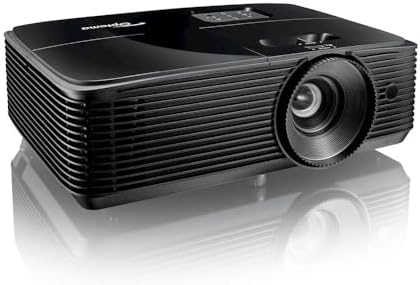
The HD146X is a 1080p Full HD projector aimed at home cinema use. Its listed features also include Game Display Mode and easy installation, making it a simple option to consider if your priorities are movies, occasional gaming, and a setup that does not call for advanced placement adjustments.
Its main tradeoff is resolution: this model is Full HD, not a 4K projector. That may be a sensible match for a 1080p library or a buyer who values a straightforward home theater setup, but it is not the right pick if you specifically want 4K UHD detail. The available product information does not provide brightness, throw distance, or lamp-life figures, so check those before planning a screen location.
Compared with the HD28HDR, the HD146X has fewer listed specifications and does not advertise HDR compatibility or 120Hz support in the supplied details. The HD28HDR may suit a more demanding mixed movie-and-gaming setup, while the HD146X keeps the focus on Full HD home cinema and ease of installation.
Pros:
- 1080p Full HD resolution
- Designed for a home cinema experience
- Game Display Mode for gaming use
- Easy installation is a stated feature
Cons:
- Does not provide 4K UHD resolution
- Key setup details such as brightness and throw distance are not included in the supplied information
Verdict: The HD146X is worth considering if Full HD is enough and you want a home theater projector with a simple feature set; look elsewhere if HDR or 4K is essential.
Optoma HD28HDR: 1080p Movies with HDR and Gaming Features

The HD28HDR combines 1080p projection with support for 4K input and HDR10 compatibility. It is important to separate those terms: the projector displays a 1080p image, rather than native 4K resolution. Its stated 3,600 lumens and 120Hz refresh-rate support also make it a versatile choice for a room used for both films and gaming.
For movie viewing, HDR10 compatibility is intended to support brighter whites and deeper black levels with compatible content. The projector also includes Dynamic Black technology, which adjusts lamp output to add image depth. For gaming, the listing highlights a 16ms response time in Enhanced Gaming Mode and a Game Display Mode that boosts visibility in shadows and dark scenes.
Placement is more specific than with some models: the listed throw distances call for about 11 feet for a 100-inch image and about 13 feet for a 120-inch image. Measure your room before choosing this projector. It also uses a lamp, with a stated lifespan of up to 15,000 hours, so it does not have the lamp-free operation of the GT1090HDR.
Pros:
- 1080p resolution with 4K input support and HDR10 compatibility
- 3,600 lumens for lights-on viewing, according to the supplied specifications
- 120Hz support and a stated 16ms response time in Enhanced Gaming Mode
- Listed standard-throw distances help with room planning
Cons:
- Accepts 4K input but projects at 1080p
- Requires more distance from the screen than a short-throw model
Verdict: Pick the HD28HDR if you want a flexible 1080p projector for movies and gaming, and your room can accommodate its standard-throw setup.
Optoma GT1090HDR: Short-Throw Laser Projection for Tight Rooms

The GT1090HDR stands out for its short-throw lens and laser light source. The supplied specifications say it can project a 120-inch image from 4 feet 4 inches away, which can help when a room does not have space for a projector farther back. It displays at 1080p and accepts 4K HDR input, so it should not be mistaken for a native 4K model.
Its 4,200-lumen rating is the highest listed among these five projectors, and the product details position it for lights-on viewing. The laser light source is rated for up to 30,000 hours and does not require lamp or filter replacements, according to the supplied information. Auto keystone and four-corner correction can help with image setup, although you should still aim to place the projector as squarely as possible to the screen.
The GT1090HDR is a practical alternative to the HD28HDR if your room is short on throw distance or you prefer a lamp-free light source. The compromise is that it remains a 1080p projector, while the UHZ36 and UHD50 offer 4K UHD resolution. Its short throw also makes measuring placement especially important before installation.
Pros:
- Short-throw projection: a 120-inch image is listed from 4 feet 4 inches
- Laser light source rated for up to 30,000 hours
- 4,200 lumens and HDR10/HLG input support
- Auto keystone and four-corner correction assist with setup
Cons:
- Projects at 1080p rather than 4K UHD
- Its short-throw placement requires careful distance and alignment checks
Verdict: Choose the GT1090HDR when a short throw and lamp-free laser operation matter more than native 4K resolution.
Optoma UHD50: True 4K UHD with Flexible Installation

The UHD50 is the other clearly specified 4K UHD choice in this group. Its product details describe 8.3 million addressable pixels, HDR10 compatibility, and DCI-P3 wide color gamut support. For movie fans, those features make it a strong option when fine image detail and a broader color range are priorities.
Installation flexibility is another advantage. The UHD50 includes zoom, vertical lens shift, and keystone correction, and it can be ceiling-mounted or placed on a table. It also lists HDMI 2.0 inputs with HDCP 2.2 support, along with USB and VGA connections. Its lamp life is rated for up to 15,000 hours, so it differs from the laser-based UHZ36 and GT1090HDR in light-source type.
Compared with the UHZ36, the UHD50 has more listed information about lens adjustment and connections, while the UHZ36 highlights Filmmaker Mode and a laser light source. Choose between them based on whether 4K UHD with installation flexibility or the UHZ36’s laser and movie-mode features better match your priorities. As with any projector, check the throw and room requirements before finalizing placement.
Pros:
- True 4K UHD with 8.3 million addressable pixels
- HDR10 and DCI-P3 wide color gamut support
- Zoom, vertical lens shift, and keystone correction aid placement
- Multiple listed connection options, including HDMI 2.0 with HDCP 2.2 support
Cons:
- Uses a lamp rather than a laser light source
- Does not list a short-throw feature in the supplied specifications
Verdict: The UHD50 is a compelling choice if you want true 4K UHD and useful lens adjustments for a home theater installation.
How to Choose an Optoma Projector for Movies
Decide Whether You Need True 4K UHD
Start by checking the projector’s displayed resolution, not just the resolution of the signal it accepts. The UHZ36 and UHD50 are listed as 4K UHD models. The HD28HDR and GT1090HDR accept 4K input but display at 1080p. The HD146X is also listed as 1080p Full HD. If you want the extra detail of 4K projection, focus on the UHD models; if Full HD meets your needs, the 1080p options may be a better fit.
Measure Throw Distance Before You Buy
Throw distance is the space between the projector and the screen. It can determine whether a projector works in your room at all. The GT1090HDR is the short-throw choice here, with a listed 120-inch image from 4 feet 4 inches. The HD28HDR lists about 11 feet for a 100-inch image and about 13 feet for a 120-inch image. For the other models, confirm the manufacturer’s throw details and compare them with your available space.
Match Brightness to Your Viewing Room
Brightness matters when you watch with some lights on, but it does not replace good room planning. The supplied specifications list 4,200 lumens for the GT1090HDR and 3,600 lumens for the HD28HDR. The other product details do not include brightness figures, so avoid assuming that their performance will match either model. If you plan to watch in a bright family room, check brightness information and consider how much light you can control.
Compare the Light Sources and Maintenance Details
The UHZ36 and GT1090HDR use laser light sources. The GT1090HDR’s listing specifies up to 30,000 hours and says lamp and filter replacements are eliminated. The HD28HDR and UHD50 list lamp life of up to 15,000 hours. The HD146X’s supplied details do not state its light-source type or lifespan. If reducing lamp-related upkeep is important, compare the laser models closely and verify any maintenance details for the specific unit you plan to buy.
Check HDR and Color Features
HDR support can matter when you watch compatible movies, but the terms differ across these models. The UHZ36 lists HDR, the HD28HDR lists HDR10 compatibility, the GT1090HDR lists HDR10 and HLG input support, and the UHD50 lists HDR10 support with DCI-P3 wide color gamut support. Look at the exact format and resolution details rather than treating every mention of HDR or 4K input as the same feature.
Consider Gaming and Extra Connections
If you will use the projector for more than movies, check the gaming features and connection options. The HD28HDR lists 120Hz support, Enhanced Gaming Mode, and a 16ms response time in that mode. The HD146X includes Game Display Mode, while the UHD50 lists HDMI 2.0 with HDCP 2.2, USB, and VGA connections. Match these details to your devices and how you plan to use the projector.
Frequently Asked Questions
Which Optoma projector in this list has true 4K UHD resolution?
The UHZ36 and UHD50 are listed as 4K UHD projectors. The HD28HDR and GT1090HDR accept 4K input but project at 1080p, and the HD146X is listed as 1080p Full HD.
Which model is best for a small room?
The GT1090HDR is the short-throw option. Its product details list a 120-inch image from 4 feet 4 inches away. Measure your room and screen location to confirm the placement will work.
Can the HD28HDR display 4K movies in 4K resolution?
No. The HD28HDR accepts 4K input, but its listed display resolution is 1080p. If you want 4K UHD projection, consider the UHZ36 or UHD50 instead.
Which projector has the longest stated light-source lifespan?
The GT1090HDR lists up to 30,000 hours for its laser light source. The UHD50 and HD28HDR list lamp life of up to 15,000 hours. The supplied information does not state a lifespan for the other two models.
Which option is designed for both movies and gaming?
The HD28HDR is described for gaming and movies and lists 120Hz support, Enhanced Gaming Mode, and a 16ms response time in that mode. The HD146X also includes Game Display Mode, though fewer gaming specifications are provided.
Do I need HDR support for movie watching?
HDR compatibility can be useful with compatible content, but it should not be your only buying factor. Also consider resolution, room brightness, throw distance, and whether the projector can be installed in your space.
What should I verify before ordering?
Confirm the resolution, throw distance, brightness, available connections, and light-source details for the exact model. These specifications affect whether the projector fits your room, screen, and devices.
Final Recommendation
For 4K UHD movies, compare the UHZ36 and UHD50: the UHZ36 highlights laser projection and Filmmaker Mode, while the UHD50 lists detailed lens adjustments and connections. For a tight room, the GT1090HDR’s short-throw design and laser light source stand out, though it projects at 1080p. The HD28HDR is the most clearly specified choice for combining 1080p movies with gaming features, while the HD146X is a simpler Full HD option. Measure your room and confirm the specifications you need before choosing.