
Cleaning the bottom of an electric oven is one of those chores most people put off until the mess becomes a real problem. Baked-on grease, sugary drips, and cheese that escapes a casserole can harden into a stubborn layer that is hard to remove without harsh scrubbing. A good oven liner mat sits on the bottom of the oven and catches those spills before they bake onto the surface. The right one should be heat-tolerant, easy to wipe clean, and sized so it fits your oven without bunching or blocking the heating element. This guide covers five popular options, explains what each one offers, and helps you decide which one fits your kitchen and cooking habits.
Quick Comparison Table
| Product | Pack and Size | Material Highlights | Cleaning Method | Best For |
|---|---|---|---|---|
| Buself 3 Pack Oven Liners | 3 pack, 17 x 25 inches | PTFE-coated fiberglass, rated to 500°F | Wipe clean or dishwasher | Households that want spares on hand |
| Linda’s Essentials Oven Liners for Bottom of Oven | 2 pack, 17 x 25 inches, 0.2mm thick | Heat-resistant coating with fiberglass reinforcement, rated to 500°F | Damp cloth or top dishwasher rack | Standard electric and gas ovens |
| ThreadNanny Oven Liners for Bottom of Oven | 2 pack, 17 x 25 inches | Fiberglass-based non-stick mat, BPA and PFOA free, rated to 500°F | Wipe clean or top-rack dishwasher | Buyers who want a thicker, sturdier mat |
| Grill Magic 3 Pack Non-Stick Oven Liners | 3 pack, 23 x 16.25 inches each | Teflon-coated fiberglass, rated to 500°F | Wipe clean or dishwasher | Larger ovens and layered coverage |
| Demiwise Oven Liners for Bottom of Oven | Single mat, 16 x 24 inches, 0.28mm thick | PTFE fiberglass, BPA and PFOA free, rated to 500°F | Damp cloth or dishwasher | Cooks who want one cut-to-fit mat for multiple appliances |
Our Picks: Best Oven Liner Mat For Electric Oven reviews
Buself 3 Pack Oven Liners: Best Value for Keeping a Spare on Hand

The Buself set is a three-pack of 17 by 25 inch oven liners, which makes it a practical choice if you want to swap out a dirty mat while the other one is in the wash. Each liner is made from a PTFE-coated fiberglass material that the listing rates for temperatures up to 500°F. The product is also described as free from BPA and PFOA, which is worth noting if you cook for children or prefer to limit chemicals in your kitchen.
Setup is straightforward. The listing notes that the mat works with both hidden and exposed heating elements. For ovens with hidden elements, the liner goes on the lowest rack. For ovens with exposed elements, it sits beneath the element on the oven floor, with care taken to keep it from touching the element directly. The liners can be trimmed with scissors, so you can adjust the fit if your oven has an unusual shape or a slightly smaller floor area.
In everyday use, the main appeal is convenience. Many owners appreciate having three mats on hand so they can rotate them between cleanups. The product can also be used for grilling, baking, or as a microwave liner, which adds flexibility if you want one accessory to cover several jobs. Because the mat is reusable, it can replace a lot of single-use foil and help you avoid scraping the oven floor after a messy roast.
The main drawback is that the coating is not a substitute for regular cleaning. Thin non-stick mats can still pick up stubborn residue if you let spills sit through several cooking cycles, so you will want to wipe them after each use. The listing also describes the mat as trimmable, but cutting it means you lose any factory edges, so it is smart to measure carefully before you cut. Compared with the other picks here, this set focuses on quantity rather than size variety, which suits households that want replacements more than a different format.
Pros:
- Three-pack format lets you rotate clean liners without waiting for a single mat to dry.
- The listing rates the material for temperatures up to 500°F and describes it as BPA and PFOA free.
- Works with both hidden and exposed heating elements, with clear placement guidance.
- Versatile enough to double as a baking mat, grill mat, or microwave liner.
Cons:
- Stubborn residue can build up if spills are left through repeated cooking cycles.
- Trimming to a custom fit is permanent, so measuring before cutting is essential.
The Buself three-pack is a strong choice if you want a set of replacements and a flexible, all-purpose mat that handles bottom-of-oven duty and other kitchen tasks. It is especially useful for busy households that cook often and want to keep a clean liner ready at all times.
Linda’s Essentials Oven Liners: A Balanced Pick for Everyday Ovens

Linda’s Essentials offers a two-pack of 17 by 25 inch liners, each described as 0.2mm thick. The product is built with a heat-resistant coating reinforced with fiberglass fabric and is rated for temperatures up to 500°F. For a standard electric oven, the 17 by 25 inch footprint covers most of the floor, which makes it a practical all-around option.
The listing gives clear guidance on placement, and that detail matters more than many shoppers expect. Ovens with hidden heating elements need the liner on the lowest rack rather than on the oven floor. Ovens with exposed elements take the liner underneath the element. Because every oven is laid out differently, it is worth checking your owner’s manual before you slide anything in, especially if you are unsure where the element sits.
Cleaning is simple. You can wipe the liner with a damp cloth or place it on the top shelf of the dishwasher. Some users like that the mat can also serve as an oven cover for quick cleanup, which can be handy when you want to keep grease off the floor during a long roasting session. The mat can be cut with scissors to fit an unusual oven size, though it helps to test the fit before trimming.
The drawbacks are mostly practical. At 0.2mm, this liner is thinner than some of the thicker options in this list, so you may want to handle it carefully when placing and removing it from a hot oven. Its two-pack format also means fewer spares compared with the three-pack choices, so you may need to wash one liner while the other is in use. For many households, though, this set strikes a good balance between coverage, cleaning ease, and price-conscious value.
Pros:
- The 17 by 25 inch size covers the bottom of most standard electric ovens.
- Clear placement instructions for both hidden and exposed heating elements.
- Dishwasher-safe on the top rack, which simplifies cleanup.
- Can be trimmed to fit unusual oven dimensions.
Cons:
- At 0.2mm thick, it feels lighter than the thicker mats, so handle it with care when hot.
- The two-pack format gives you fewer spares for rotating between cleanups.
Linda’s Essentials is a dependable, straightforward choice for most standard electric ovens. It suits cooks who want a reliable liner that is easy to clean and quick to install without paying for extras they will not use.
ThreadNanny Oven Liners: A Thicker Mat for Heavy Use

The ThreadNanny two-pack features 17 by 25 inch fiberglass-based liners that the listing describes as non-stick, BPA and PFOA free, and heat-resistant up to 500°F. The product’s main selling point is its thickness. The listing states that it is engineered to be 30 percent thicker than standard oven sheets, which suggests a sturdier feel than thinner alternatives. Thickness is not a guarantee of performance, but it does affect how well a mat holds its flat shape during repeated use.
The mat is marketed as a multi-purpose accessory. The listing suggests using it as a grill mat, baking mat, toaster oven liner, or stove burner liner, and notes that it can be trimmed to create smaller protective pieces. That flexibility can be useful if you already own a toaster oven or want to protect the area around your cooktop. The product is also described as top-rack dishwasher safe, which helps keep cleanup quick after a greasy dinner.
The setup is fairly simple, but you should still check where your heating element sits before placing the mat. Hidden-element ovens call for the lowest rack, while exposed-element ovens need the mat under the element. In everyday use, many owners appreciate the solid feel of the sheet and the way it wipes clean without much effort. A sturdier mat also tends to be easier to handle when you need to lift it out of a warm oven.
The trade-off is that a thicker mat can be less flexible when you try to fold it or tuck it into a tight space, so it may not suit very compact ovens unless you trim it carefully. Also, because the product is a two-pack, you will want to plan your washing rotation if you cook several times a week. Compared with the thinner options, this one leans toward durability and a firmer surface, which is a good match for cooks who bake and roast often.
Pros:
- The listing describes a thicker build, which can feel more substantial during regular use.
- Top-rack dishwasher safe for quicker cleanup.
- Versatile enough for baking, grilling, and smaller appliance liners.
- BPA and PFOA free, rated to 500°F.
Cons:
- The firmer build can be harder to fold or maneuver in tight oven spaces.
- Only two mats are included, so rotation requires more planning for frequent bakers.
The ThreadNanny set is a good fit for cooks who want a sturdier mat that holds its shape and handles frequent cooking. If you prefer a firmer feel and multi-use flexibility, this option deserves a close look.
Grill Magic 3 Pack Oven Liners: Larger Coverage for Bigger Ovens
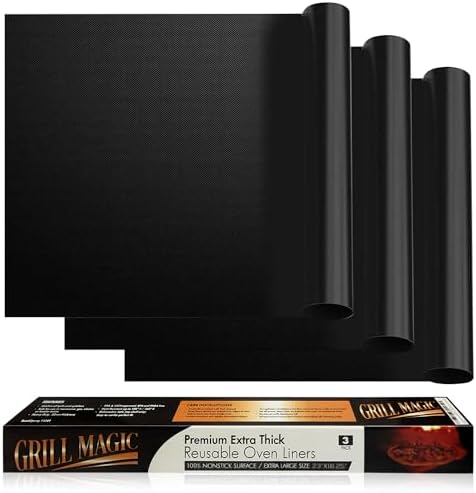
The Grill Magic set is a three-pack of heavy-duty liners that measure 23 by 16.25 inches each. That size is noticeably different from the 17 by 25 inch options in this list. The listing explains that the mats can be trimmed, or laid one on top of the other, to create a custom fit. That approach can be useful if your oven floor is wider than standard or if you want to cover a specific area more fully.
The material is a Teflon-coated fiberglass that the listing describes as heat resistant up to 500°F. The mat is usable on both sides, which gives you flexibility if one side picks up more residue than the other. The product is also described as BPA and PFOA free and dishwasher safe. The listing includes a free user guide ebook sent after purchase, which some buyers may appreciate as an extra set of tips for using the mats.
In practical use, the larger coverage of a layered setup can help catch drips that spread beyond a narrow area. The listing suggests that food can slip between oven grates, so a mat that covers more of the floor can make cleanup easier. Many owners appreciate that they can wipe the mat clean without much scrubbing, especially when the liner is used consistently rather than only after a big mess.
The main drawback is that the size is not a universal fit, so you will need to measure your oven before buying. A piece that is too large may bunch or require trimming, which adds time. The three-pack format is helpful for rotation, but if your oven is compact, you may not need all three pieces. This set is best for people who have a larger oven or who want to layer their coverage for heavier cooking.
Pros:
- Larger 23 by 16.25 inch pieces provide wide coverage and can be layered for extra protection.
- Reversible use, so both sides can serve as a cooking surface.
- Three-pack format gives you spares for regular rotation.
- Includes a free user guide ebook with tips for using the mats.
Cons:
- The non-standard size may require trimming or layering in some ovens.
- Smaller ovens may not need all three pieces, which can make this set feel like more than you need.
The Grill Magic three-pack is a practical choice for cooks with larger ovens or anyone who wants to layer their protection. If you measure your oven first and confirm the size works, it can deliver broad coverage and easy cleanup.
Demiwise Oven Liners: A Cut-to-Fit Mat for Multiple Appliances

The Demiwise liner is a single 16 by 24 inch mat with a listed thickness of 0.28mm. It is built from a PTFE fiberglass material that the listing rates for temperatures up to 500°F and describes as BPA and PFOA free. The mat is intended for bottom-of-oven use, but the listing also highlights its ability to be cut down for toasters, grills, air fryers, baking pans, and stove burners. If you want one mat that can move between several appliances, that versatility stands out.
The product’s most useful feature is the cut-to-fit design. Because it is a single piece rather than a set, it is best used as a flexible tool. You can trim it to match an oven floor or to cover a smaller appliance, then keep the rest for other tasks. The listing also notes that the mat can be wiped with a damp cloth or placed in the dishwasher. It includes a caution not to scrub the surface like laundry, which helps protect the coating and extend its life.
In routine use, the mat is easy to slide into position and easy to lift out after cooling. Many users appreciate that it can handle frequent use when cleaned gently, and the listing suggests it can be replaced when it shows wear. That replacement guidance is a useful reminder that non-stick mats do not last forever, especially when they are exposed to high heat often.
The drawback is that you only get one mat, so you will need to plan around cleaning and replacement. Also, because the size is 16 by 24 inches, it may not cover the entire floor of every electric oven. If you want full coverage, the 17 by 25 inch options may fit better. This product is a strong choice for those who value flexibility and want a mat that can serve in more than one appliance.
Pros:
- Cut-to-fit design makes it useful for ovens, toasters, grills, and other appliances.
- Rated to 500°F and described as BPA and PFOA free.
- Can be cleaned with a damp cloth or placed in the dishwasher.
- The listing offers gentle-cleaning guidance to help protect the coating.
Cons:
- Single-mat format means no spares, so cleaning and replacement must be planned carefully.
- At 16 by 24 inches, it may leave some oven floor uncovered compared with larger options.
The Demiwise liner suits cooks who want one flexible mat for several appliances and do not mind working with a single piece. If your oven is standard in size and you want versatility over quantity, this is a sensible option to consider.
How to Choose the Right Oven Liner Mat for Your Electric Oven
Measure Your Oven Floor and Check the Heating Element Layout
Before you buy, measure the floor of your oven from side to side and front to back. Standard sizes like 17 by 25 inches are common choices, but your oven may be smaller or have a shape that requires trimming. Pay close attention to where the heating element sits. Some electric ovens have hidden elements that are tucked beneath a panel, while others have exposed elements on the floor. The placement instructions for each mat depend on this layout, so checking your owner’s manual is a smart first step. A mat that fits the space but is placed incorrectly can interfere with heating or create a hazard, so take the time to confirm the setup.
Look at Material and Temperature Rating
Most oven liners on the market are fiberglass mats with a non-stick coating, often PTFE. The temperature rating matters because an oven can reach high heat during roasting, broiling, or self-cleaning cycles. The products in this guide are all listed with a rating up to 500°F, which is a useful benchmark. Also look for language about BPA and PFOA, which tells you the product has been described as free from those chemicals. Keep in mind that a rating is only one part of safety, so always follow the manufacturer’s instructions and avoid using a mat that shows signs of damage or heavy wear.
Think About Thickness and Flexibility
Thickness affects how a mat feels and how it behaves over time. Thinner liners, such as those around 0.2mm, are typically easier to fold and store, but they may feel less substantial when you lift them out of a hot oven. Thicker liners often hold their shape better and feel sturdier, but they can be harder to maneuver in tight spaces. Choose based on how you plan to use the mat. If you mostly want drip protection, a lighter mat may be fine. If you cook often and want a firmer surface, a thicker option may feel more comfortable.
Consider Pack Size and Rotation
Some products come in two- or three-packs, while others are single mats. A multi-pack lets you rotate clean liners so you are not waiting for one to dry. That is especially helpful for households that bake several times a week. A single mat can still work well if you clean it regularly and do not mind waiting a bit between uses. The best choice depends on your cooking habits, so think about how often you use the oven and how quickly you want to get back to cooking after a messy session.
Plan Your Cleaning Routine
Oven liners are meant to make cleanup easier, but they still need care. Most of the options here can be wiped with a damp cloth, and several can also go in the dishwasher on the top rack. Wiping the mat after each use prevents residue from hardening, which keeps the coating in better condition. Avoid harsh scrubbing, since the listings suggest that aggressive rubbing may wear down the non-stick surface. A simple routine of wiping after cooling and washing as needed will help your liner last longer.
Decide How Much Flexibility You Need
Many oven liners can be used for more than the bottom of the oven. Some are marketed as baking mats, grill mats, toaster oven liners, or microwave liners. If you want a single accessory that can handle several kitchen tasks, look for a product that describes itself as cut-to-fit or multi-use. Be realistic, though. A mat that works well as a general-purpose accessory may not be the best choice for a specialized task. Think about your priorities, and choose the mat that balances oven protection with the extra uses you actually plan to make.
Frequently Asked Questions
Are oven liners safe to use in an electric oven?
Many oven liners are designed for electric ovens and are rated for high temperatures, often up to 500°F. Safety depends on using the mat correctly. Follow the placement instructions for your oven type, avoid blocking vents or the heating element, and check your owner’s manual before installing anything on the oven floor. If a mat becomes damaged, cracked, or heavily worn, replace it rather than continuing to use it.
Should an oven liner go on the bottom rack or the oven floor?
It depends on where your heating element is located. The product listings in this guide describe two main setups. For ovens with hidden heating elements, the liner goes on the lowest rack rather than the floor. For ovens with exposed elements, the liner sits beneath the element on the oven floor, without touching it directly. Your owner’s manual is the best source for confirming the correct layout for your specific model.
Can I cut an oven liner to fit my oven?
Several of the products here can be trimmed with scissors to fit a specific oven size or to cover smaller appliances. Measure carefully before cutting, because trimmed pieces cannot be restored to their original size. Some liners also allow you to lay one on top of another to extend coverage, which can help if your oven floor is larger than the mat.
How do I clean an oven liner mat?
Most liners can be wiped with a damp cloth after the oven has cooled. Some can also be placed on the top rack of the dishwasher. Avoid aggressive scrubbing, since the listings suggest that rubbing can damage the non-stick coating. Gentle cleaning helps the liner last longer and keeps the surface working as intended.
Do oven liners prevent oven cleaning altogether?
No. Oven liners help catch drips and spills, which can make cleanup easier, but they do not eliminate the need for regular oven maintenance. Food residue can still build up on the mat, and the oven interior may still need occasional cleaning. Think of a liner as a helpful barrier that reduces the amount of baked-on mess rather than a complete replacement for cleaning.
How often should I replace an oven liner mat?
The right replacement timing depends on how often you use the mat and how well you care for it. Replace a liner if the coating is peeling, the mat is cracked or torn, or it no longer lies flat. The Demiwise listing, for example, suggests replacing the mat when it shows wear, which is good general guidance for any non-stick liner.
Can oven liners be used for other kitchen tasks?
Many of these products are marketed for multiple uses, including baking mats, grill mats, toaster oven liners, and microwave liners. Those extra uses can add value if you want one accessory to do several jobs. Before using a liner for a new purpose, confirm that the product’s listing supports that use and follow the manufacturer’s temperature and care guidelines.
Final Recommendation
For most standard electric ovens, the Linda’s Essentials two-pack is a dependable choice. Its 17 by 25 inch size covers a typical oven floor, the placement guidance is clear, and the mats can be cleaned quickly. If you want a set of spares for frequent cooking, the Buself three-pack offers good value and flexibility. Buyers who want a sturdier mat that feels firm during regular use may prefer the ThreadNanny two-pack. The Grill Magic three-pack suits people with larger ovens or anyone who wants layered coverage, while the Demiwise single mat is a smart pick for cooks who value a cut-to-fit piece that can move between several appliances.
Your best choice comes down to your oven size, how often you cook, and whether you want spares or versatility. Measure your oven, check your owner’s manual for the heating element layout, and choose the liner that fits both your space and your cooking habits. With the right mat in place, you can catch spills more easily and spend less time scrubbing the bottom of your oven.