A 30-inch over-the-range microwave can free up counter space while adding ventilation and cooktop lighting above your range. The best fit depends on more than width: compare the microwave’s height and depth with your available space, then consider capacity, vent strength, and whether you want straightforward heating or extra cooking modes. These five models cover low-profile designs, roomy interiors, and a combination microwave with air-fry and convection functions.
Quick Comparison
| Microwave | Capacity | Cooking Power | Ventilation | Standout Feature |
|---|---|---|---|---|
| GE Profile 30-inch Low Profile | 1.2 cu. ft. | 1,000 watts | 400 CFM | Low-profile design and sensor cooking |
| GE 30-inch Over-the-Range Microwave | 1.6 cu. ft. | 1,000 watts | 300 CFM | Simple controls and turntable shutoff |
| BLACK+DECKER Microwave with Air Fryer | 1.5 cu. ft. | 900 watts | 300 CFM | Microwave, air fry, convection, and more |
| Midea 30-inch Over-the-Range Microwave | 1.7 cu. ft. | 1,000 watts | 300 CFM | 18 auto menus |
| GASLAND 30-inch Over-the-Range Microwave | 1.9 cu. ft. | 1,000 watts | 400 CFM | Large interior and two-stage cooking |
Our Picks: Best Over The Range Microwave 30 Inches Wide reviews
GE Profile Low Profile: A Space-Saving Pick with Strong Venting

The GE Profile is designed for kitchens where a standard-height over-the-range microwave would take up too much space above the cooktop. Its listed height is 10.31 inches, and its low-profile form is intended to fit in the space often used by an under-cabinet hood. That can leave more room between the appliance and your cooking surface, though you should still confirm the installation clearances for your range.
It has a 1.2-cubic-foot interior, 1,000 watts of cooking power, and sensor cooking that adjusts heating time and power. The 400-CFM, two-speed vent is the strongest listed here, and LED lighting illuminates the stovetop. Front-facing controls and an integrated handle give it a streamlined look; owners also appreciate the easier access to the controls and the extra cooktop clearance compared with a taller microwave.
The trade-off is interior capacity. At 1.2 cubic feet, it is smaller than the other models in this roundup, so it may be less convenient for oversized dishes or cooking several portions at once. Its low profile is its key advantage, not a large cavity.
Pros:
- Low-profile design can provide more space above the cooktop.
- 400-CFM ventilation and two fan speeds.
- Sensor cooking, melt function, and time or weight defrost.
- LED cooktop lighting and adjustable sound.
Cons:
- Smaller 1.2-cubic-foot capacity than the other choices.
- Check the required mounting clearance and cabinet fit before ordering.
Verdict: Choose the GE Profile if preserving cooktop clearance is your priority and its compact interior suits your usual dishes.
GE 1.6-Cubic-Foot Microwave: A Straightforward Everyday Option

This GE offers a familiar over-the-range layout with a 1.6-cubic-foot interior and 1,000 watts of cooking power. Its listed dimensions are about 29.88 inches wide, 16.13 inches high, and 15.56 inches deep. The keypad includes one-touch express cooking and convenience settings, while 10 power levels give you more control for tasks such as gentle reheating or defrosting.
The 300-CFM, two-speed fan and charcoal filter are designed to help manage cooking fumes and odors. A turntable on/off option can also help when you need to heat an item that does not sit comfortably on a rotating plate. The controls are comparatively uncomplicated, making this a sensible choice if you want a conventional microwave and vent rather than additional specialty cooking functions.
Its 300-CFM ventilation is lower than the 400-CFM options in this list, and it does not have the low-profile shape of the GE Profile. Compare its height and depth with your existing space, especially if you are replacing an older unit.
Pros:
- Useful 1.6-cubic-foot capacity with 1,000 watts of cooking power.
- One-touch cooking settings and 10 power levels.
- Turntable can be switched off for certain larger or awkward dishes.
- Includes a two-speed fan and charcoal filter.
Cons:
- 300-CFM ventilation is less powerful on paper than the 400-CFM models.
- Does not offer air-fry or convection cooking modes.
Verdict: This GE is a good fit if you want a conventional 30-inch microwave with useful everyday controls and moderate ventilation.
BLACK+DECKER 6-in-1: Best for More Than Microwave Cooking

This BLACK+DECKER combines an over-the-range microwave with air-fry, convection, combi, bake, and roast functions. Its 1.5-cubic-foot interior and 13.6-inch turntable offer useful room for everyday dishes, while the listed width is 29.9 inches. It has 900 watts of microwave power, so it has less stated microwave output than the 1,000-watt options in this roundup.
The extra cooking modes may be useful if you want one appliance to handle more than reheating and defrosting. Sensor reheat is included, and the 300-CFM, two-speed fan and integrated light add basic ventilation and cooktop illumination. With several cooking functions in one appliance, it may appeal to households short on counter space or those who want to reduce reliance on separate countertop devices.
More modes can mean more controls to learn, so consider whether you will use the added functions. The supplied owner experiences also indicate that the child-lock behavior may take some getting used to. Read the operating instructions before use, especially if more than one person in your household will operate it.
Pros:
- Combines microwave, air-fry, convection, combi, bake, and roast functions.
- 1.5-cubic-foot capacity with sensor reheat.
- Includes a two-speed 300-CFM vent and cooktop light.
- Can reduce the need for separate countertop cooking appliances.
Cons:
- 900 watts of microwave power is lower than the 1,000-watt models here.
- The added functions and child-lock behavior may require some adjustment.
Verdict: Pick this BLACK+DECKER if you expect to use its air-fry and convection options, not just its microwave function.
Midea 1.7-Cubic-Foot Microwave: Roomy Interior and Auto Menus

The Midea has a 1.7-cubic-foot interior, a 12.4-inch turntable, and 1,000 watts of cooking power. Its listed dimensions are 29.9 inches wide, 16.4 inches high, and 13.5 inches deep. The capacity is a useful middle ground for families who want space for larger dishes without moving to the biggest model in this group.
Its 18 auto menus cover common foods and tasks such as popcorn, pizza, defrosting, and softening cream cheese. There are also 10 power levels, a touch control panel, cooktop lighting, and a 300-CFM fan with adjustable speeds. The menus can make routine cooking simpler, though you can also use manual settings when you want more control.
The Midea’s ventilation rating is lower than the 400-CFM options, and its feature set is focused on microwave cooking rather than air-frying or convection. Its listed dimensions are helpful for planning, but always compare the full measurements with your cabinet and installation space.
Pros:
- Roomy 1.7-cubic-foot interior with 1,000 watts of cooking power.
- 18 auto menus for common cooking and defrosting tasks.
- 10 power levels and adjustable two-speed ventilation.
- Cooktop light and stainless-steel finish.
Cons:
- 300-CFM vent rating is below the two 400-CFM models.
- No air-fry or convection functions are listed.
Verdict: The Midea is a practical choice if you want a roomy, conventional microwave with plenty of preset cooking options.
GASLAND 1.9-Cubic-Foot Microwave: The Largest Listed Capacity
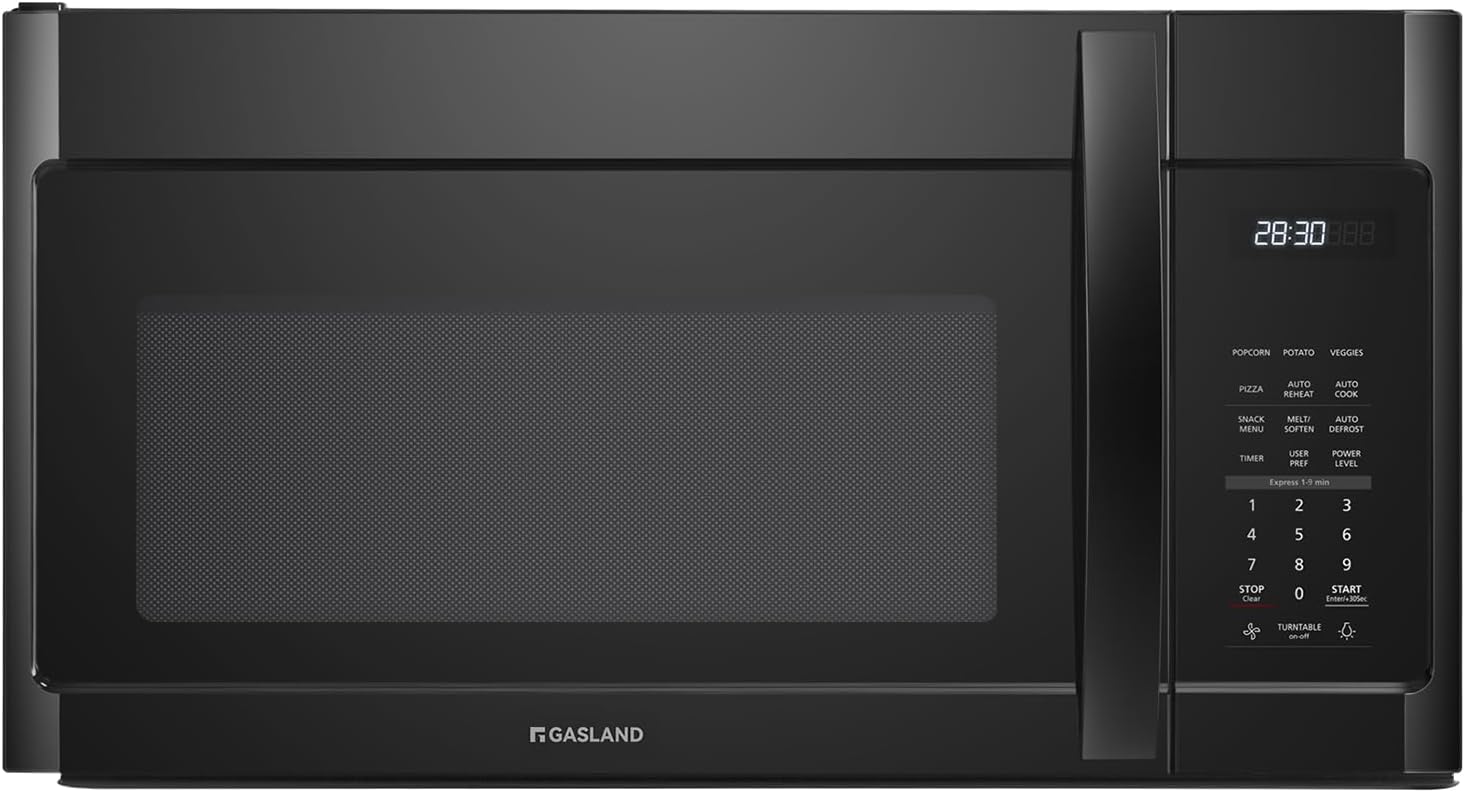
With a listed capacity of 1.9 cubic feet, the GASLAND offers the most interior space among these five choices. It has 1,000 watts of cooking power, 11 power levels, and a removable rack that creates another cooking area. A turntable-off option adds flexibility for dishes that are difficult to rotate.
The 400-CFM fan matches the strongest listed ventilation in this roundup, and two LED lights brighten the stovetop. For cooking, it offers nine one-touch presets and two-stage cooking, which lets you set two different cooking stages in sequence. Some owners also value the adjustable alert volume, especially when quieter beeps are useful in a shared home.
The larger cavity and removable rack may suit family meals, but they may be more than you need if you mostly reheat individual portions. Its listed dimensions are about 29.92 inches wide, 16.42 inches high, and 15.28 inches deep, so confirm that the depth and mounting space work for your kitchen. The controls for power levels may feel different from those on a familiar microwave, so allow time to learn them.
Pros:
- Largest listed capacity at 1.9 cubic feet.
- 400-CFM ventilation with two LED cooktop lights.
- Two-stage cooking, 11 power levels, and one-touch presets.
- Removable rack and turntable-off option add loading flexibility.
Cons:
- The larger capacity may be unnecessary for smaller households.
- Its power-level controls may take some getting used to.
Verdict: Choose the GASLAND if you want the most listed cooking capacity and a 400-CFM vent in a 30-inch-width model.
How to Choose a 30-Inch Over-the-Range Microwave
Measure the Full Installation Space
“30 inches wide” describes the general cabinet and range size, but the listed widths of these models vary slightly. Measure the opening and check the appliance’s actual width, height, and depth before you buy. Also confirm the installation clearances required for your range, cabinetry, and microwave. A low-profile model can create a different fit from a standard-height unit, so do not assume the two styles are interchangeable.
Choose a Capacity That Matches Your Dishes
Capacity in this group ranges from 1.2 to 1.9 cubic feet. A smaller interior may be enough for reheating plates and everyday tasks, while a larger one can be helpful when you often use bigger dishes or prepare food for several people. Check the turntable diameter as well as the stated capacity; the dish you use most needs to fit and rotate as intended.
Compare Cooking Power and Controls
Four models list 1,000 watts of microwave cooking power, while the BLACK+DECKER lists 900 watts. Wattage is one useful comparison point, but the controls and cooking programs matter too. Sensor cooking can adjust time and power automatically, while presets simplify common tasks. If you prefer hands-on settings, look for the number of power levels and whether time or weight defrost is available.
Think About Ventilation and Your Kitchen Setup
The models here list ventilation from 300 to 400 CFM. A higher CFM number indicates a higher stated airflow rating, but the right choice also depends on your kitchen and how the unit is installed. Check whether the microwave can connect to your existing vent arrangement or requires a different setup, and follow the installation instructions. Some models include a charcoal filter, but the details and replacement needs can vary.
Decide Whether Extra Cooking Modes Are Worth It
A standard microwave may be the simplest choice if you mainly reheat, defrost, and cook common foods. The BLACK+DECKER adds air-fry, convection, bake, roast, and combination functions, which may be useful if you plan to use them regularly. Extra modes can make an appliance more versatile, but they also mean more controls to learn. Choose based on the cooking tasks you actually expect to do.
Check Lighting, Sound, and Everyday Convenience
Cooktop lighting can make it easier to see your range, and the models in this selection include lighting features. Other small conveniences may matter in daily use: a turntable-off setting, adjustable beep volume, a melt function, or one-touch cooking buttons. Compare those details against your routine rather than choosing by feature count alone.
Plan for Safe Installation and Operation
An over-the-range microwave is mounted above the range, so check the product’s installation requirements before ordering. Confirm the mounting space, vent arrangement, and any clearance instructions for your range. If you are replacing an existing appliance, compare its mounting setup and dimensions with the new model. Follow the manufacturer’s installation and safety directions, and arrange help with lifting or mounting if needed.
Frequently Asked Questions
Are all of these microwaves exactly 30 inches wide?
They are marketed as 30-inch models, but their listed widths range from about 29.87 to 29.92 inches. Measure your available space and compare it with the exact dimensions for the model you choose.
Which model has the strongest listed ventilation?
The GE Profile low-profile microwave and the GASLAND list 400 CFM. The GE and Midea models, along with the BLACK+DECKER, list 300 CFM. Actual installation and kitchen conditions can affect how ventilation performs.
Which microwave has the most interior capacity?
The GASLAND has the largest listed capacity at 1.9 cubic feet. The Midea follows at 1.7 cubic feet, while the GE Profile is the smallest at 1.2 cubic feet.
What is the benefit of a low-profile over-the-range microwave?
A low-profile design can take up less vertical space above the cooktop than a standard-height microwave. The GE Profile in this roundup is designed for that purpose. Check the installation clearances and interior capacity to make sure the trade-off works for your kitchen.
Do any of these models offer air frying?
The BLACK+DECKER is the listed model with an air-fry function. It also includes convection, combi, bake, and roast modes. The other models focus on microwave cooking and ventilation.
Can an over-the-range microwave replace a range hood?
These appliances combine microwave and ventilation functions, but whether one can replace your existing hood depends on your kitchen setup and installation requirements. Compare the unit’s airflow and venting instructions with your needs before making the change.
Final Recommendation
For the best balance of cooktop clearance and ventilation, consider the GE Profile low-profile model, keeping in mind its smaller interior. If capacity is your main concern, the GASLAND offers the largest listed cavity and 400-CFM ventilation. The Midea is a sensible conventional option with a roomy interior and many auto menus, while the BLACK+DECKER stands out if you want air-fry and convection functions. Before choosing any of them, verify the measurements and installation requirements against your kitchen.
