Back pain can make it hard to rest, but the right sleep setup depends on what is causing your discomfort and how you sleep. The products below are not all full mattresses: they include an alternating-pressure mattress pad, a positioning wedge, and targeted cushions designed to support specific areas. They may add comfort to an existing bed, but they are not a substitute for medical care or a pressure-injury treatment plan. If your pain is severe, ongoing, or linked to limited mobility, ask a healthcare professional which type of support is appropriate.
Quick Comparison
| Product | Type | Best suited for | Key consideration |
|---|---|---|---|
| Vive Alternating Air Pressure Mattress Pad | Alternating-pressure pad | People who spend long periods in bed and need pressure redistribution | Requires a pump and supports up to 300 pounds |
| Kölbs Bed Wedge Pillow | Foam positioning wedge | People who prefer upper-body elevation | The listed option is 7.5 inches high |
| BALAPET Egg-Shaped Foam Pressure-Relief Mattress | Foam pressure-relief pad | Targeted relief around the tailbone or lower back | Its narrow dimensions make it a targeted pad, not a full mattress |
| HOMBYS Memory Foam Bed Sore Cushion | Two-piece pressure-relief cushion | Reducing pressure around the coccyx and sitting bones | Designed as a cushion, not a bed-length mattress pad |
| ComfiLife Lumbar Support Pillow | Memory foam support pillow | Gentle lower-back support in bed | Offers mild cushioning, not firm orthopedic correction |
Our Picks: Best Pain Relief Medical Mattress For Back Pain reviews
Vive Alternating Air Pressure Mattress Pad: Best for Pressure Redistribution

The Vive is an air-cell pad that sits on top of an existing mattress. Its pump alternately inflates and deflates 130 cells in a repeating cycle, shifting pressure across the surface. That makes it a more specialized option than a standard foam topper: it is designed for people who spend extended periods in bed and have difficulty changing position on their own.
The pad is made of waterproof vinyl, has flexible air hoses, and includes top and bottom flaps intended to help keep it in place. Its pump has adjustable pressure settings and is listed as operating at 22 dBA. The stated weight capacity is 300 pounds. Since the system needs power and the pump must remain connected, plan where to place it and manage the hoses before setting up the bed.
This is not a conventional back-pain mattress, and it will not suit everyone who wants a firmer or softer sleep surface. It may be worth considering when pressure management is a key need, but people with limited mobility or existing skin concerns should use it as part of a care plan recommended by a clinician. Some users describe it as helpful for managing pressure during long periods in bed, though comfort and suitability can vary.
Pros:
- Alternates pressure across 130 air cells
- Adjustable pump settings and a stated low-noise operation
- Waterproof surface and flaps designed to help secure the pad
- Made for use over an existing mattress
Cons:
- Requires a pump, power, and careful hose placement
- Not a full mattress or a general-purpose back-pain treatment
Verdict: Choose the Vive if pressure redistribution for extended bed rest is your main concern; for ordinary lower-back support, a positioning pillow may be a more practical fit.
Kölbs Bed Wedge Pillow: Best for Supported Upper-Body Elevation

This foam wedge raises the upper body rather than changing the feel of the whole mattress. The listed version measures 24 by 24 inches and is 7.5 inches high. A 1.5-inch memory foam top layer sits over a high-density foam core, while the removable jacquard cover can be machine washed.
Elevation can be useful when a clinician has recommended a raised sleeping position or when you want support for reading or resting in bed. For back discomfort, the main question is whether the incline feels comfortable and keeps your torso aligned. A wedge can shift pressure or feel awkward for some sleepers, so it is sensible to check the height and positioning before relying on it for a full night.
Compared with the Vive, the Kölbs wedge has no pump or cycling air cells; it is a simple, stationary support. It also does not provide broad pressure redistribution or target the tailbone with a cutout. Its best fit is someone who specifically wants upper-body elevation, not someone seeking a new mattress surface.
Pros:
- Memory foam comfort layer over a supportive foam core
- Removable, machine-washable cover
- Compact design for bed positioning or reading
- Available in two height options, according to the product information
Cons:
- The listed 7.5-inch incline may not suit every sleeper
- Supports the upper body rather than the full back or mattress surface
Verdict: The Kölbs is a sensible option if elevation is part of your comfort plan, but choose a lumbar pillow or pressure-relief pad instead if you need support in a different area.
BALAPET Egg-Shaped Foam Pad: Best for Targeted Tailbone Relief
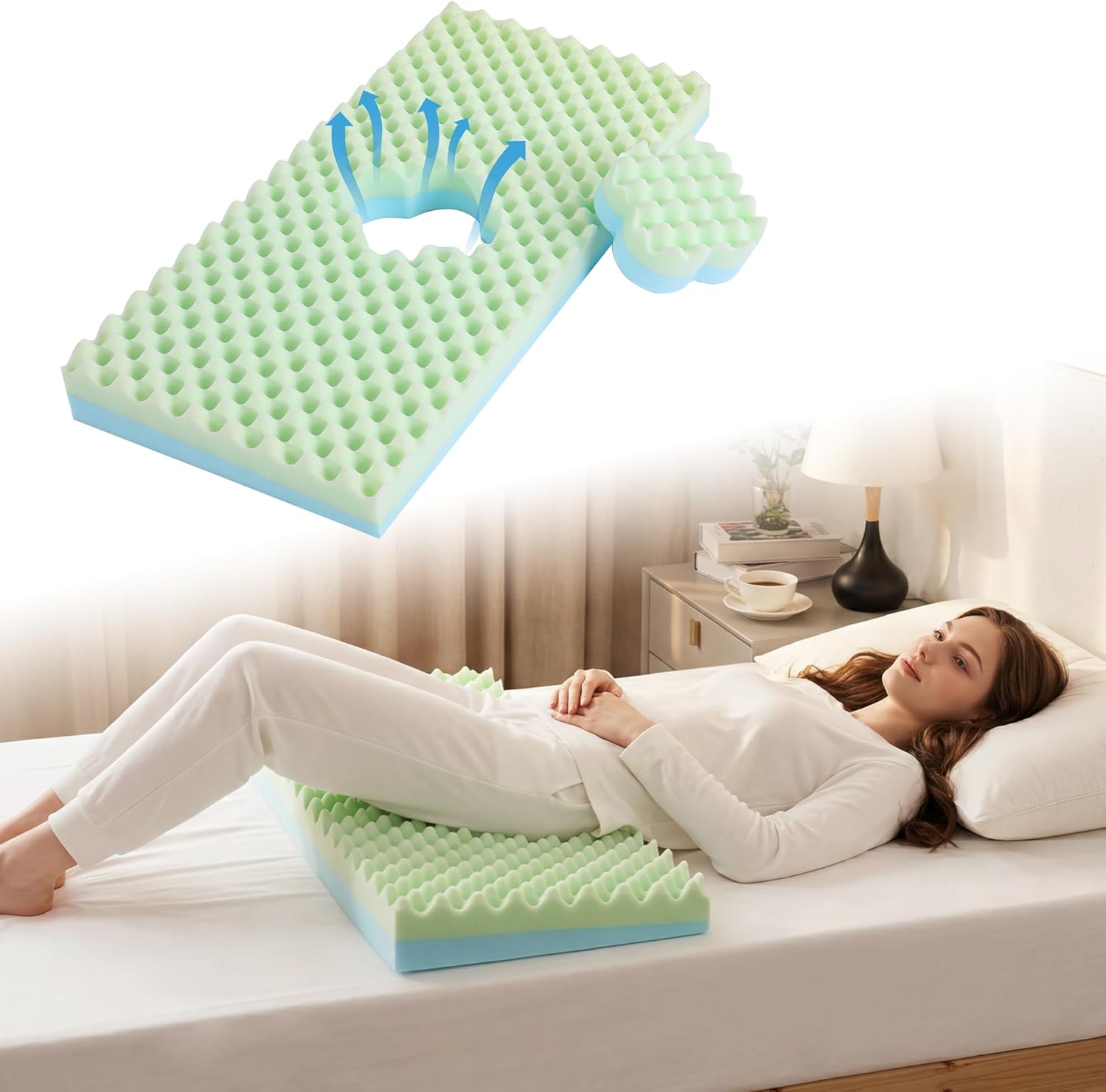
The BALAPET is a small foam pad measuring 35.4 by 16.1 by 3.5 inches, not a full-size mattress. Its egg-shaped foam surface is intended to promote airflow, and a removable center insert lets you create a cutout area or keep the center filled for more continuous support. The design focuses on reducing direct contact around the tailbone, hips, and lower back.
That targeted shape may be useful for someone who needs a pressure-relief zone while lying down or sitting, including during recovery or long periods of bed rest. The compact width means you should compare its dimensions with the area you want to support and the bed or chair where it will sit. Some users report that the removable center helps reduce contact at the tailbone, while others may find the foam’s feel uncomfortable. A cutout should not be assumed to prevent or heal a wound.
Unlike the Vive, this pad has no pump or moving parts. Unlike the HOMBYS cushion, it is longer and intended to be used as a small mattress pad or cut-to-size foam piece. Its narrow shape is the main trade-off: it can address a specific pressure point but cannot replace a standard mattress or provide full-body support.
Pros:
- Removable center insert allows a choice of support or a cutout
- Egg-shaped foam design promotes airflow
- Can be used on a bed or adapted for some chair uses
- Targets the tailbone and other sensitive areas
Cons:
- Much narrower than a full mattress or full-width topper
- Comfort may vary, and the cutout may not be appropriate for every user
Verdict: Consider the BALAPET when you need a compact, targeted foam surface and its dimensions match your setup; consult a clinician for advice about pressure wounds or persistent pain.
HOMBYS Memory Foam Cushion: Best for Coccyx and Sitting-Bone Support

The HOMBYS is a 17.3-by-15.7-by-3.1-inch cushion made from slow-rebound memory foam. Its T-shaped opening is designed to reduce contact around the coccyx and sitting bones. The cushion comes in two sections joined with Velcro, which can make it easier for a caregiver to reposition someone. Its cover removes by zipper and is machine washable.
This is a targeted cushion for a bed, chair, or other suitable surface, rather than a mattress topper. Some users report that the wider opening helps with pressure around the tailbone and that the cushion feels supportive. Others note that the connection between the sections may feel less secure than they would like, so check its fit and stability before using it for transfers or movement.
Compared with the BALAPET, the HOMBYS is more seat-shaped and has a two-piece design; the BALAPET is longer and has a removable center insert. Neither is a full mattress. If you need help turning or repositioning someone, involve a caregiver and follow professional guidance rather than relying on the cushion alone.
Pros:
- T-shaped opening targets the coccyx and sitting bones
- Two-piece design can assist with repositioning
- Removable cover is machine washable
- Can be used on a bed, chair, or other suitable surface
Cons:
- Small cushion footprint does not support the full back
- Velcro connection may need checking for a secure fit
Verdict: Pick the HOMBYS if you need a compact cushion focused on tailbone-area pressure, not a replacement mattress or broad lower-back support.
ComfiLife Lumbar Support Pillow: Best for Gentle Lower-Back Cushioning

The ComfiLife is a 27.5-by-15.5-by-2.5-inch memory foam pillow made to sit under the lower back while you sleep. Its medium-soft foam provides mild elevation and cushioning, and the breathable cover is machine washable. The product information describes use for back, side, and stomach sleepers, with placement adjusted to suit your position.
It can also be placed under the knees, legs, or feet, making it a flexible option if you want to experiment with positioning. The manufacturer notes that comfort depends on body type and mattress softness, and that the pillow is not intended to provide firm orthopedic correction. If it feels too high or creates new discomfort, change its position or stop using it.
Unlike the pressure-relief pads in this guide, the ComfiLife does not have a cutout or alternating air cells. It is the most straightforward choice for someone who wants gentle support beneath the lumbar area without changing the mattress. It may be less suitable if you need firm support, pressure management for extended bed rest, or a cushion for the tailbone.
Pros:
- Long shape can support the lower back or be used under the legs
- Medium-soft memory foam offers gentle cushioning
- Breathable, machine-washable cover
- Can be repositioned to suit different sleep positions
Cons:
- Provides mild support rather than firm orthopedic correction
- Fit and comfort may vary with body shape and mattress softness
Verdict: The ComfiLife is a practical first option for mild lumbar cushioning; choose a more specialized pressure-relief product if your main need is managing pressure at the tailbone or during extended bed rest.
How to Choose a Pain-Relief Mattress Pad or Support for Back Pain
Start with the kind of support you need
First decide whether you need broad pressure redistribution, a change in sleeping position, or support at one specific spot. The Vive is an alternating-pressure pad for use over a mattress. The Kölbs raises the upper body, while the BALAPET and HOMBYS focus on pressure around the tailbone and sitting bones. The ComfiLife provides gentle support under the lower back. These products serve different purposes, so the best fit depends on your needs rather than the word “medical” in a product name.
Check dimensions and how the product will fit
Compare the product’s measurements with your bed, chair, or intended placement. The BALAPET and HOMBYS are targeted pads, not full-size mattress covers, and the Kölbs wedge supports only part of the body. A small pad may work well for one pressure point but leave other areas unsupported. If you share a bed or need a surface that stays in place, consider how much space the product takes up and how it is secured.
Match firmness and feel to your comfort
Foam density, height, and shape can change how a support feels. The ComfiLife is described as medium-soft and intended for mild cushioning, while the Kölbs combines a memory foam top with a firmer foam core. Wedges and cutout cushions may feel unfamiliar at first. If a support increases your pain, numbness, or discomfort, stop using it and ask a healthcare professional for advice.
Consider positioning and mobility
Think about whether you can change position independently or need caregiver help. The Vive cycles air through its cells, while the HOMBYS has two sections joined by Velcro to assist with repositioning. Neither feature replaces a safe turning and skin-care plan. If you or someone you care for has limited mobility, ask a clinician or qualified caregiver how often to reposition and which support surface is suitable.
Review care and setup requirements
Check how the product is powered, cleaned, and maintained before buying. The Vive requires a pump and connected hoses. The Kölbs and ComfiLife have removable, washable covers, and the HOMBYS cover is also machine washable. The BALAPET is a foam pad with a removable insert. Follow the product’s current care instructions, and make sure any hoses, straps, or joined sections do not interfere with safe movement.
Use pressure-relief products as part of a care plan
A pad or cushion may improve comfort, but it cannot diagnose or treat the cause of back pain. A new or worsening wound, persistent redness, numbness, weakness, or pain that does not improve deserves medical attention. Ask a clinician before using a cutout cushion over an existing wound or choosing an alternating-pressure surface for someone with complex health needs.
Frequently Asked Questions
Are these products full medical mattresses?
No. The Vive is a pad placed over an existing mattress, and the other products are a wedge, targeted foam pad, cushion, or lumbar pillow. None of the listed products is a full replacement mattress.
Which option is most focused on lower-back support?
The ComfiLife is designed to sit beneath the lumbar area for gentle cushioning. The Kölbs wedge changes upper-body positioning, which is a different kind of support. Comfort depends on your body, sleep position, and mattress.
Which product is designed to redistribute pressure?
The Vive uses alternating air cells to shift pressure across its surface. It is intended for use over an existing mattress and has a stated weight capacity of 300 pounds. Ask a healthcare professional whether this type of pad is appropriate for your situation.
Can a cutout cushion heal a pressure sore?
A cutout can reduce direct contact in a targeted area, but it should not be treated as a cure or a substitute for wound care. If you have a pressure injury, get advice from a healthcare professional about positioning, skin care, and suitable support surfaces.
Can I use a bed wedge for back pain?
A wedge may help you rest in an elevated position, but elevation is not the same as direct lumbar support. Try it only if the position feels comfortable and is suitable for your health needs. Follow your clinician’s advice if you have a condition that affects sleeping position.
How do I choose between the BALAPET and HOMBYS?
The BALAPET is a longer, narrow foam pad with a removable center insert. The HOMBYS is a compact, two-piece cushion with a T-shaped opening. Compare their dimensions with your intended use and consider whether you need a bed pad or a seat-style cushion.
When should I seek medical advice for back pain or skin problems?
Seek professional guidance for severe, persistent, or worsening back pain, or for redness, an open wound, numbness, or weakness. A clinician can help identify the cause and recommend support that fits your health and mobility needs.
Final Recommendation
For targeted lower-back cushioning, the ComfiLife is the clearest fit among these options. For pressure redistribution during extended time in bed, consider the Vive only after checking whether an alternating-pressure pad suits your care needs. The Kölbs, BALAPET, and HOMBYS each address a more specific positioning or pressure point. Choose based on the area you need to support, and consult a healthcare professional for ongoing pain, limited mobility, or any suspected pressure injury.
