
The best pan for baking sourdough bread depends on the loaf you want. A covered cast-iron pan can trap steam for a crisp crust, while a lidded Pullman pan is better suited to square sandwich loaves. These five options include both styles, plus enameled pans that may be simpler to care for. Compare their shapes, materials, and care needs before choosing.
Quick Comparison
| Product | Pan type | Standout feature | Best for |
|---|---|---|---|
| Vanderlume Cast Iron Loaf Pan with Lid | Cast iron, 9 × 5 inches | Lid doubles as a baking surface | Crusty sandwich-style loaves |
| Articasting Cast Iron Loaf Pan with Lid | Enameled cast iron, 9 × 5 inches | Enamel finish and tight-fitting lid | Bakers who want a covered loaf pan with simpler cleanup |
| Northriver Casting Enameled Cast Iron Bread Pan | Two enameled cast-iron pans, 9 × 5 inches each | Pans can be used separately or as a covered set | Making two loaves or baking with a lid |
| Dipanist Pullman Loaf Pans with Lids | Nonstick carbon steel, two sizes | Sliding lids create square loaves | Sourdough sandwich bread and uniform slices |
| GRMImosa Cast Iron Loaf Pan with Lid | Cast iron, 9 × 5 inches | Two-in-one design with a second baking surface | Home bakers who want a straightforward cast-iron option |
Our Picks: Best Pan For Baking Sourdough Bread reviews
Vanderlume Cast Iron Loaf Pan: A Simple Covered Pan for Crisp Loaves

The Vanderlume is a 9-by-5-inch cast-iron loaf pan with a lid. Used together, the pieces form a covered baking setup intended to hold in moisture as the bread bakes. The lid can also serve as a second baking surface, giving the pan more flexibility than a basic open loaf tin.
Cast iron retains heat, which can help promote even browning and a well-developed crust. This pan is designed for sourdough and other loaf breads, including sandwich-style loaves. Its rectangular shape is a natural fit if you want a loaf that is easy to slice for toast or sandwiches rather than a round artisan boule.
The trade-off is that cast iron calls for more care than a typical nonstick pan. The product description recommends gentle cleaning and seasoning to build a naturally nonstick surface. It is a practical pick if you are comfortable with that routine, but less appealing if you want a pan that needs very little maintenance.
Pros:
- Covered design can help create a crisp crust
- Lid can be used as a separate baking surface
- Standard 9-by-5-inch loaf shape suits sandwich bread
- Cast iron is designed for even heat distribution
Cons:
- Needs careful cleaning and may require seasoning
- Not designed to produce a round boule shape
Verdict: Choose the Vanderlume if you want a straightforward cast-iron pan for covered, rectangular sourdough loaves and do not mind maintaining the pan.
Articasting Enameled Cast Iron Pan: A Covered Loaf Pan with an Easier-Care Finish
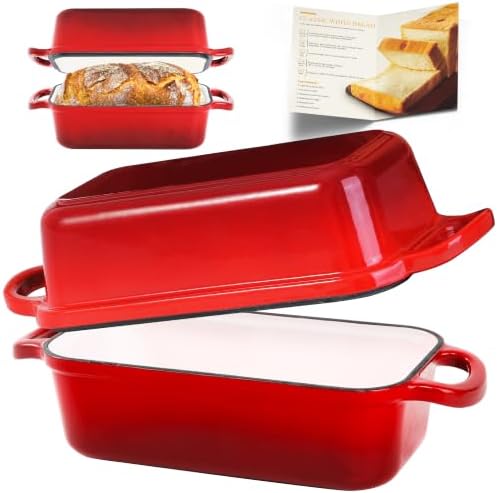
This Articasting pan pairs a 9-by-5-inch cast-iron loaf pan with a lid. Its enameled finish sets it apart from the bare cast-iron options in this group. The maker describes the smooth finish as easier to clean and maintain, making this a useful choice if you like cast iron’s heat retention but would rather avoid seasoning the cooking surface.
The lid is designed to fit tightly and hold in moisture, while the rectangular pan suits sandwich loaves and other loaf-shaped breads. The product is listed as oven-safe up to 500°F and compatible with gas, electric, and induction cooktops, as well as grills. Check your oven and cooking setup before use, and follow the maker’s care instructions for the enamel.
Compared with the Northriver set, the Articasting is presented as a single pan-and-lid option rather than two separate 9-by-5-inch pans. It may be the more direct fit if your main goal is one covered loaf at a time. The product information does not specify the pan’s weight, so consider that cast iron cookware can be less convenient to handle than lighter carbon-steel bakeware.
Pros:
- Enameled finish is described as easy to clean
- Tight-fitting lid is designed to lock in moisture
- Cast iron supports heat retention and browning
- Listed as oven-safe up to 500°F
Cons:
- Cast iron may be less convenient to lift and store than lighter pans
- One pan is less flexible than a set of two separate pans
Verdict: Pick the Articasting if you want an enameled, covered cast-iron loaf pan and value easier cleanup over having two separate pans.
Northriver Casting Enameled Set: Two Pans for Flexible Bread Baking

The Northriver Casting set includes two enameled cast-iron pans, each measuring 9 by 5 inches. Use them separately to bake two loaves, or place one over the other to create a covered baking setup. That flexibility is useful if you sometimes bake a pair of loaves and sometimes want to trap moisture around a single loaf.
The maker describes the thick cast-iron walls as helping spread heat evenly and retain warmth. The smooth enamel surface is intended to reduce sticking and make cleanup easier than maintaining bare cast iron. The pans are listed as oven-safe up to 500°F and suitable for several cooktop types, though bread bakers may mainly use them in the oven.
This set offers more flexibility than a single lidded pan, but it also means handling two substantial pieces of cookware. Its 9-by-5-inch shape is best for rectangular loaves, not the round shape many people associate with rustic sourdough. For the best fit, check that your oven has room for the covered configuration and that this size works with your usual dough amount.
Pros:
- Two pans can bake separate loaves or work together with a lid
- Enameled finish is designed to simplify cleaning
- Cast iron is intended to distribute and retain heat
- Useful for bread and other loaf-shaped dishes
Cons:
- Two cast-iron pieces may take more effort to handle and store
- Rectangular pans are not intended for round artisan loaves
Verdict: Choose the Northriver set if you want two standard loaf pans and the option to cover one for a more enclosed bake.
Dipanist Pullman Pans: Best for Square Sourdough Sandwich Bread

The Dipanist set takes a different approach from the cast-iron options. It includes two carbon-steel Pullman pans, with listed dough capacities of 2.2 pounds and 1 pound. Each pan has a sliding lid that helps shape bread into a square loaf. That design is well suited to sourdough sandwich bread, toast, and other loaves where even slices matter.
The pans have a food-grade nonstick coating intended to help bread release and make cleanup easier. The product description also notes a corrugated design and includes a spatula, brush, whisk, and dough scrapers. Its care guidance calls for hand washing and avoiding metal utensils, abrasive scrubbers, and the dishwasher to protect the coating.
Unlike a covered cast-iron pan, a Pullman pan is focused on shaping the loaf rather than creating the same style of open-topped, crusty loaf. If you want a square-sided loaf with a softer interior, that is a useful distinction. If your goal is a more rustic crust, a cast-iron pan with a lid may be a better match.
Pros:
- Two sizes accommodate different dough amounts
- Sliding lids are designed to create square loaves
- Nonstick coating is intended to help with release
- Includes several baking tools
Cons:
- Care instructions rule out the dishwasher and abrasive cleaning tools
- Square Pullman loaves differ from traditional open-topped artisan loaves
Verdict: Choose the Dipanist set if your sourdough is mainly for sandwiches and you want square loaves in two sizes.
GRMImosa Cast Iron Loaf Pan: A Straightforward Two-in-One Option

The GRMImosa is a 9-by-5-inch cast-iron loaf pan with a lid that also serves as a second baking surface. Its design is aimed at everyday homemade bread, including sourdough and sandwich loaves. The familiar rectangular size makes it a practical choice if you want a pan that fits standard loaf recipes rather than a specialty shape.
Cast iron’s heat retention is intended to support even baking and browning. The product description recommends gentle cleaning and thorough drying to help maintain the pan over time. Unlike the Articasting and Northriver options, this product is not described as enameled, so it may be a better match for someone comfortable with the care routine associated with cast-iron cookware.
The description does not give an oven-safe temperature or detailed dimensions beyond the 9-by-5-inch size, so check the product listing for current care and use instructions before baking. Compared with the Northriver set, this is the simpler choice if you want one loaf pan rather than two pans that can be used separately.
Pros:
- 9-by-5-inch size suits many rectangular loaf recipes
- Lid can also be used as a second baking surface
- Cast iron is intended to retain heat for even baking
- Designed for sourdough and other homemade loaves
Cons:
- Requires careful cleaning and drying
- Product details provide less information about oven temperature limits
Verdict: Consider the GRMImosa if you want a basic two-in-one cast-iron loaf pan and are willing to check its care instructions and maintain it properly.
How to Choose a Pan for Baking Sourdough Bread
Decide What Shape of Loaf You Want
Start with the finished loaf, not just the pan material. A standard loaf pan produces a rectangular loaf that works well for toast and sandwiches. A Pullman pan with a sliding lid is designed to make a square loaf. If you prefer a more open-topped, rustic loaf, consider whether a covered loaf pan fits your recipe and the crust you want.
Choose Between Cast Iron and Carbon Steel
Cast iron is valued for heat retention, and the covered cast-iron choices in this group are designed to help trap moisture during baking. It is also a heavier material to handle than many thin bakeware pans and may require more attention to cleaning. The Dipanist Pullman pans use carbon steel with a nonstick coating, which can make loaf release convenient but requires gentle care to protect the surface.
Consider Whether a Lid Matters
A lid can make a loaf pan more versatile and help create a more enclosed baking environment. Some lids in this lineup also double as a second baking surface, while the Dipanist sliding lids are designed to shape square loaves. Think about whether you want to bake with a lid, bake two separate loaves, or mainly control the shape of sandwich bread.
Match the Pan to Your Dough Amount
Several options measure 9 by 5 inches, while the Dipanist set lists two dough capacities: 2.2 pounds and 1 pound. Pan dimensions and dough capacity are not interchangeable, so use a recipe that suits the pan and avoid filling it based on size alone. When a product listing gives a capacity, compare it with the amount of dough your recipes make.
Weigh Cleanup and Maintenance
Bare cast iron may need careful cleaning, drying, and seasoning, while the enameled options are described as easier to clean and maintain. The Pullman pans have a nonstick coating, but their care instructions call for hand washing and avoiding abrasive tools. Choose the routine you are most likely to follow, since proper care helps protect the pan’s surface.
Check Temperature and Equipment Fit
Some products list an oven-safe limit, while others provide less temperature information. Confirm the limit and care instructions on the product listing before use, especially if your sourdough recipe calls for a high baking temperature. Also check that the pan and lid fit your oven and that you can lift and store the cookware comfortably.
Frequently Asked Questions
What type of pan is best for sourdough bread?
It depends on the loaf you want. A covered cast-iron loaf pan is a good fit for rectangular bread baked with a lid, while a Pullman pan is designed for square sandwich loaves. For a round loaf, these rectangular pans may not be the right shape.
Does sourdough need to bake in a covered pan?
No. A covered pan is one way to bake sourdough and can help hold moisture around the loaf during baking. An open loaf pan can also work, but it will not provide the same covered setup.
Is enameled cast iron easier to care for than bare cast iron?
The enameled pans in this guide are described as easier to clean and maintain. Bare cast iron may need seasoning and careful drying. Follow the specific care instructions supplied with your pan.
Can I use a Pullman pan for sourdough?
Yes. The Dipanist Pullman pans are described as suitable for sourdough sandwich loaves. Their sliding lids are intended to make square loaves, so they are best for bakers who want uniform slices rather than a rustic open-topped shape.
Are all the pans in this guide the same size?
No. The Vanderlume, Articasting, Northriver Casting, and GRMImosa options are listed as 9-by-5-inch loaf pans. The Dipanist set includes two Pullman pan sizes with different dough capacities.
Can I bake two loaves at once?
The Northriver set includes two separate 9-by-5-inch pans that can be used independently, and the Dipanist set also includes two pans. Whether you can bake both at once depends on your oven space and recipe; check the pan and oven dimensions before baking.
Final Recommendation
For a covered rectangular sourdough loaf, the Vanderlume is a straightforward cast-iron option with a lid that can also serve as a baking surface. If easier care is a priority, consider the enameled Articasting pan; if you want two pans, look at the Northriver set. For square sourdough sandwich bread, the Dipanist Pullman set is the clearest fit. Choose based on your preferred loaf shape and the care routine you are comfortable maintaining.