
Cooking over a fire calls for a pan that can handle direct heat, hold steady when you move it, and suit the meal you want to make. Cast iron is a dependable choice for heavier camp cooking, while a lightweight nonstick skillet is easier to pack but needs gentler flame control. These five options cover different needs, from quick breakfasts to griddling and cooking for a group.
| Pan | Material and style | Best suited for | Fire-cooking note |
|---|---|---|---|
| Fire-Maple Camping Frying Pan | Hard-anodized aluminum, nonstick | Lightweight camp meals | Keep flames low and under the pan base |
| Coghlan’s Cast Iron Skillet | Pre-seasoned cast iron | Searing and hearty camp meals | Heavy, sturdy design for open-fire cooking |
| Home-Complete Cast Iron Pizza Pan | Flat cast iron pan | Pizza, tortillas, and griddle cooking | Season before first use; dry thoroughly after cleaning |
| Lodge Cast Iron Rectangle Griddle | Pre-seasoned cast iron griddle | Cooking several foods across a broad surface | Seasoned with vegetable oil, with no synthetic coating |
| Cuisinel Cast Iron Skillet Set | Three pre-seasoned cast iron skillets | Cooking different portions and dishes | Works over a campfire; use mitts for hot handles |
Our Picks: Best Pans For Cooking Over Fire reviews
Fire-Maple Camping Frying Pan: Lightweight and compact

This 7.6-inch Fire-Maple skillet is the lightest, most packable option in this lineup. Its hard-anodized aluminum body has a nonstick coating, and the thicker bottom is designed to heat more evenly than a typical camp frying pan. The self-locking handle folds for storage, making the pan a practical fit for a backpack or compact camp kitchen.
Its small cooking surface is a good match for eggs, bacon, or a single serving rather than a large group meal. The key trade-off is that nonstick cookware needs more care around an open fire than cast iron. Fire-Maple advises keeping flames low and under the pan base; flames that curl around the sides can damage the handle. It is not the best pick if your fire is hard to control or you want to leave a pan over intense heat.
Pros:
- Lightweight at 9.2 ounces and compact when folded
- Nonstick surface suits foods that can cling to an uncoated pan
- Thicker bottom is designed for more even heating
- Self-locking folding handle helps with packing and handling
Cons:
- Small cooking area limits batch size
- Needs careful flame control to protect the handle and coating
Verdict: Choose the Fire-Maple if low weight and easy packing matter more to you than the rugged, high-heat tolerance of cast iron.
Coghlan’s 12-Inch Cast Iron Skillet: A classic campfire choice

Coghlan’s offers a 12-inch pre-seasoned cast iron skillet made for open-fire cooking, grilling, and stovetop use. Its thick construction is intended to retain heat for jobs such as searing, frying, and simmering. Dual pour spouts make it easier to drain or transfer liquid from either side, while the helper handle gives you another grip point when lifting or pouring.
Compared with the Fire-Maple, this is a much heavier, less packable choice, but it is better suited to a camp kitchen where durability and heat retention matter more than carrying weight. Cast iron handles get hot during cooking, so use an appropriate mitt or handle tool. The supplied product data marks this item as unavailable; check its listing before planning a trip around it.
Pros:
- Pre-seasoned for use without a separate initial seasoning step
- Thick cast iron retains heat for searing and simmering
- Dual pour spouts work for left- or right-handed pouring
- Helper handle offers an extra point of control
Cons:
- Heavy for backpacking or trips where every ounce matters
- Listed as unavailable in the supplied product data
Verdict: This is a strong fit for car camping and hearty open-fire meals if the listing is available, but its weight makes it a poor match for lightweight travel.
Home-Complete Cast Iron Pizza Pan: Flat surface for versatile camp cooking

This 14-inch flat cast iron pan is designed to do more than hold pizza. Its broad surface can also serve as a bacon griddle, crepe pan, or comal for tortillas. The maker lists it for use on a grill, stovetop, in an oven, or over a campfire, giving it more flexibility than a pan meant only for frying.
The flat profile makes it useful when you want room to spread food out, though it does not have the raised sides of a skillet to contain grease or sauces. It also requires more care than coated cookware: season it before first use, rinse with hot water, dry it well, and apply a thin layer of oil as needed. At 14 inches, it is best suited to car camping or a roomy camp setup rather than a small backpack.
Pros:
- Large, flat surface for pizza, tortillas, crepes, or bacon
- Cast iron construction is suitable for campfire use
- Versatile across grills, stovetops, and ovens
- Durable material designed for long-term use with proper care
Cons:
- Flat design offers little containment for liquids or greasy foods
- Requires seasoning and thorough drying to help prevent rust
Verdict: Pick this pan if a wide cooking surface is more useful to you than skillet sides, especially for flatbreads, pizza, and griddle-style meals.
Lodge Cast Iron Rectangle Griddle: Pre-seasoned cooking space
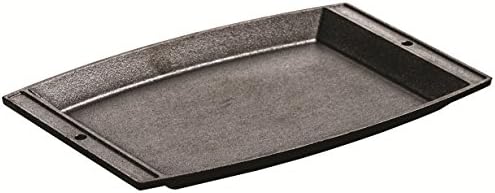
Lodge’s rectangular griddle is a pre-seasoned cast iron option for cooking and serving. The seasoning is made with vegetable oil, without synthetic coatings. Its broad, flat shape makes it a natural choice for foods that benefit from open cooking space, such as breakfast items or tortillas, rather than dishes that need deep sides.
Cast iron’s weight and heat retention can be useful around a campfire, but they also make this a less convenient pan to carry far from your vehicle. As with other bare cast iron, keep it dry after washing and maintain its seasoning. The supplied product information gives conflicting measurements, so check the listing for the exact size before purchasing.
Pros:
- Pre-seasoned with vegetable oil and no synthetic coating
- Rectangular shape provides griddle-style cooking space
- Cast iron is a durable option for camp and home use
- Can be used to cook and serve food
Cons:
- Flat design is less suited to sauces and foods that need deep sides
- Cast iron is heavy compared with a compact aluminum camping pan
Verdict: Choose the Lodge if you want a seasoned cast iron griddle for camp cooking and do not need a lightweight pan or raised skillet sides.
Cuisinel Three-Piece Cast Iron Set: Three sizes for varied meals

This Cuisinel set includes 6-, 8-, and 10-inch pre-seasoned cast iron skillets, giving you options for different portions and dishes. The smallest pan is suited to eggs or sauces, while the larger sizes offer more room for foods such as steaks, chicken, or cornbread. The pans are listed for use on a campfire, grill, stovetop, and in an oven.
The set is more adaptable than buying a single skillet, but three cast iron pans take up space and add weight. Each skillet has a silicone handle cover, but the product instructions say the covers can get hot and should be used with an oven mitt. For open-fire cooking, do not treat the covers as a reason to leave the handles near flames; remove or protect them as needed and handle hot cast iron with care.
Pros:
- Three skillet sizes suit different foods and portion sizes
- Pre-seasoned with natural oil and no synthetic coating
- Listed for campfire, grill, oven, and stovetop use
- Includes silicone handle covers for handling assistance
Cons:
- Three pans are bulky and heavy to transport together
- Silicone covers can get hot and do not replace an oven mitt
Verdict: This set makes sense for car campers who want several pan sizes, but a single skillet is simpler if storage space or carrying weight is a concern.
How to Choose a Pan for Cooking Over Fire
Match the material to your fire and cooking style
Cast iron is the more rugged choice in this group. It retains heat well and is listed for campfire use, but it is heavy and needs regular care to protect its seasoning. The Fire-Maple aluminum pan is much lighter and has a nonstick coating, but it calls for a gentler approach: keep flames low and beneath the pan rather than letting them wrap around the sides. Think about whether your camp setup can provide steady, controlled heat.
Choose the right shape and cooking area
A skillet with sides helps contain food, grease, and sauces. A flat pizza pan or griddle gives you more open space for tortillas, crepes, or several items at once, but offers less help with spills. Pan size matters too: a compact skillet is easier to pack and works well for small portions, while larger pans are more practical when cooking for a group. Consider the meals you make most often, not just the largest meal you might cook.
Consider weight, storage, and handling
For backpacking, weight and packed size can matter as much as cooking performance. The Fire-Maple weighs 9.2 ounces and has a folding handle, while the cast iron choices trade portability for a heavier build. If you are car camping, that weight may be less important. For any pan used over a fire, plan how you will lift it safely; cast iron handles can become very hot, and a helper handle is useful only if you still use proper heat protection.
Think about upkeep before you buy
Nonstick cookware can be easier to clean, but its coating and handle need protection from excessive flame. Cast iron does not have a synthetic cooking coating in these options, but it needs different care. Rinse it with hot water, dry it thoroughly, and maintain its seasoning with a thin layer of oil when needed. Avoid soaking cast iron or putting it in the dishwasher.
Check the pan’s intended heat source and listing details
Product descriptions can help you narrow down what a pan is designed to handle, but fire conditions vary. Use stable cookware support, keep handles away from flames, and adjust the pan’s position if heat is uneven. Also confirm the current listing details before buying: the supplied data marks the Coghlan’s skillet as unavailable and gives conflicting measurements for the Lodge griddle.
Frequently Asked Questions
Can you use a nonstick pan over a campfire?
The Fire-Maple pan is described as suitable for a campfire, with an important caution: keep the fire low and under the pan base. Flames that wrap around the sides can damage its handle. If you cannot control the flame, a cast iron option may be a better fit.
Is cast iron a good choice for cooking over fire?
Cast iron is a practical choice for open-fire cooking because the listed pans are intended for campfire or grill use and retain heat. It is heavier than aluminum and needs proper drying and seasoning care.
Which pan is easiest to pack?
The Fire-Maple is the most packable option listed. It weighs 9.2 ounces and has a folding handle. The cast iron pans are heavier and better suited to a camp kitchen where you do not need to carry them far.
Is a flat pan or a skillet better for camp cooking?
Choose a skillet if you want sides to contain food, grease, or sauces. Choose a flat pan or griddle for pizza, tortillas, crepes, and other foods that need a broad open surface.
Do pre-seasoned cast iron pans need care?
Yes. Pre-seasoning provides a starting surface, but cast iron still needs to be cleaned and dried properly. Avoid soaking it, dry it thoroughly, and apply a thin layer of oil when appropriate to help maintain the seasoning.
Can I use the Cuisinel silicone handle covers over a fire?
The product information says the covers can get hot and advises using an oven mitt. Keep the covers and handles away from direct flame, and use appropriate heat protection whenever you handle hot cookware.
Final Recommendation
For most campfire cooking where portability is not the main concern, the cast iron options offer the most fire-ready designs. Choose the Coghlan’s skillet for a traditional pan shape and pour spouts if its listing is available, or the Cuisinel set if you want several sizes. If you value a lighter pack above ruggedness, the Fire-Maple is the standout—but only use it with controlled, low flames. For pizza, tortillas, and other flat foods, the Home-Complete pan or Lodge griddle offers a more suitable shape.