
If your home runs on a private well, your tap water doesn’t come with the treatment and testing that municipal systems provide. That makes a pitcher filter appealing, since it’s inexpensive, requires no plumbing, and can be used right away. But not every pitcher is built for the problems well owners face. Some focus on taste and chlorine, while others are certified to reduce heavy metals, cysts, or dissolved solids. This guide compares five popular pitcher options and explains which features matter most for well water, so you can match a filter to your water rather than to a label.
Before you buy any pitcher, have your well water tested by a certified lab. Results will show whether your main concerns are bacteria, nitrates, lead, copper, arsenic, hardness, or something else. A pitcher can only address the contaminants it is certified to reduce, so knowing your numbers is the most useful step you can take.
Quick Comparison of the Top 5 Pitchers
| Product | Pitcher Capacity | Filter Life | Standout Feature |
|---|---|---|---|
| Brita Large 10 Cup Water Filter Pitcher, Bright White | 10 cups | Standard filter about 40 gallons; Longlast about 120 gallons | Reduces copper and zinc along with chlorine |
| Clearly Filtered Water Filter Pitcher, 10 Cup | 80 fl oz (about 10 cups) | Up to 100 gallons per filter | Broad contaminant list with NSF certification |
| ZeroWater 22-Cup Water Filter Dispenser | 22 cups | Changes when the built-in TDS meter reads 006 | Removes nearly all total dissolved solids |
| Brita Large 10-Cup Elite Water Filter Pitcher | 10 cups | About every 6 months | Strong lead reduction with an electronic filter indicator |
| Epic Nano XP Water Filter Pitcher for Drinking Water, 10 Cup | 10 cups | 100 gallons, about 3 to 4 months | Cysts, bacteria, and viruses listed among reduced contaminants |
Our Picks: Best Pitcher Water Filter For Well Water reviews
Brita Large 10-Cup Everyday Pitcher: A Simple, Budget-Friendly Starting Point

The Brita Large Everyday pitcher is the most straightforward option on this list. It holds 10 cups, which is enough to fill three 24-ounce bottles, and its slim profile fits on most refrigerator shelves. The lid locks into place and the pour spout is easy to control, which makes it a practical daily tool for a household that goes through water quickly.
For well owners, the most relevant detail is what this filter is listed to reduce. Beyond chlorine taste and odor, it targets mercury, copper, zinc, and cadmium. Copper is a common concern in well systems, especially where plumbing is older or the water is slightly acidic, so this pitcher covers a set of contaminants that many basic filters overlook. It does not, however, address bacteria or the broader list of contaminants found in the other models here.
In everyday use, many owners appreciate how little effort the pitcher requires. The filter swaps out quickly, and the standard cartridge is inexpensive to replace. The trade-off is replacement frequency. The standard filter is rated for about 40 gallons, so a household that drinks a lot of water will go through cartridges faster than with the higher-capacity options. The Longlast filter extends that to roughly 120 gallons, which improves the math considerably.
This pitcher suits a small or medium household that wants a dependable filter for taste and a few metals, and that already knows its water’s main problems. It is less suited to a family that needs maximum filtration or a buyer whose testing shows bacteria or a long list of contaminants.
Pros:
- Compact design that fits standard refrigerator shelves
- Covers copper and zinc in addition to chlorine, which is useful for many well systems
- Locking lid and easy-pour design make daily use simple
- Low-cost cartridges and a Longlast option for longer filter life
Cons:
- The standard filter needs replacing often for heavy water users
- Contaminant coverage is narrower than the newer premium pitchers on this list
Verdict: The Brita Large Everyday pitcher is a sensible choice if your well water testing shows chlorine taste issues, copper, or zinc and you want a reliable, low-maintenance pitcher. If your results show bacteria or a wider mix of contaminants, look to a more comprehensive option instead.
Clearly Filtered 10-Cup Pitcher: Broad Contaminant Coverage in a Family Size

The Clearly Filtered pitcher is built around a long list of targeted contaminants. Its listing names fluoride, lead, PFAS, arsenic, microplastics, chlorine, and perchlorate among the substances it addresses, and it carries NSF certification. For a well owner who has tested for several issues at once, that breadth is a real advantage. It is one of the few pitchers here that tries to cover the kinds of pollutants that can show up in groundwater, not just the common municipal concerns.
The 80-ounce capacity is a practical step up from many pitchers. The design includes a spill-resistant water dam, a hinge-style fill lid that makes refilling quick, and an ergonomic handle that many users find comfortable when the pitcher is full. The body is made from BPA-free Tritan plastic, which is a durable material that resists cracking better than many budget alternatives.
Filter life is a highlight. Each cartridge is rated for up to 100 gallons, which the manufacturer estimates as roughly four months of daily use. Buyers often note that this longer interval makes the pitcher easier to maintain than models that need changing every couple of months. The company also offers recurring ordering, which helps you stay on schedule.
There are limits to keep in mind. Because the pitcher is designed around many contaminants, it works best when you know what you are targeting. Its listing does not reduce bacteria as a headline feature, so households with a known microbial problem should pair a pitcher like this with proper disinfection. Also, the filter’s capabilities should be checked against your test results rather than assumed.
Pros:
- Broad list of targeted contaminants with NSF certification
- Generous 80-ounce capacity suits larger households
- Long filter life of up to 100 gallons per cartridge
- Spill-resistant design and easy hinge lid improve daily handling
Cons:
- Bacteria is not a headline feature, so it is not a complete answer for microbial problems
Verdict: The Clearly Filtered pitcher is one of the strongest all-around choices here for well owners whose testing reveals several chemical contaminants. Pair it with a bacteria solution if your water is unsafe microbially, and you will have a practical, well-rounded setup.
ZeroWater 22-Cup Dispenser: Maximum Dissolved Solids Reduction With a Built-In Meter
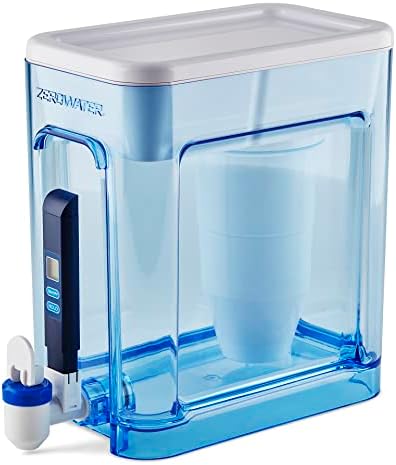
The ZeroWater dispenser takes a different approach. Instead of targeting a specific list of contaminants, its five-stage filter is designed to remove virtually all total dissolved solids, which include metals, minerals, salts, and ions. This can be valuable for well water with high dissolved solids or hardness, where the water tastes heavy or leaves residue. The included TDS meter lets you check the water before drinking, which is a useful feature for anyone who wants a clear signal about filter condition.
The 22-cup capacity is the largest on this list, making it a good fit for a big household or for keeping a supply on hand. It is certified to reduce PFOA/PFOS, lead, chromium, and mercury, which covers several of the metals that concern well owners. The dispenser format also means you can pour without lifting a full pitcher, which some owners find easier.
The trade-off comes from the same feature that makes it effective. Removing nearly all dissolved solids also removes beneficial minerals, such as calcium and magnesium. Some people find the resulting taste flat, and it is worth deciding whether that suits you. Filter replacement is guided by the meter, which is convenient, but you should still track how much water passes through the system so you do not wait too long between changes.
This dispenser suits households with high-solids well water who want a strong purification step and a clear indicator of filter health. It is less appealing to people who prefer mineral content in their drinking water or who need a broad microbial solution.
Pros:
- Removes nearly all total dissolved solids for very pure-tasting water
- Built-in TDS meter shows when water quality or filter condition needs attention
- Large 22-cup capacity suits big households
- IAPMO certification covers lead, chromium, mercury, and PFOA/PFOS
Cons:
- Strips minerals along with contaminants, which some drinkers find less appealing
- Filter changes depend on monitoring the meter, so it requires more attention than a simple timer-based system
Verdict: The ZeroWater dispenser is a strong option if your well water has high dissolved solids and you are comfortable drinking water with minerals largely removed. Make sure your test results support this approach before buying.
Brita Large 10-Cup Elite Pitcher: Strong Lead Reduction and Electronic Filter Reminders

The Brita Elite pitcher is a step up from the standard Brita model in filter performance. Its filter is listed to reduce 99% of lead, along with chlorine, cadmium, mercury, benzene, asbestos, and microplastics. Lead is a serious concern for homes with older plumbing or water that is corrosive, and it is a contaminant many well owners should test for. This filter gives you a stronger lead-reduction option within the Brita line.
The pitcher is compact at 10 cups and fits most refrigerators. The lid is easy to fill, and an electronic indicator reminds you when to replace the filter, which removes guesswork. Owners who have trouble remembering filter dates often find this feature helpful. The filter is compatible with all Brita pitchers and dispensers except the Stream model, so it can work with other containers you already own.
The filter replacement interval is about every six months, which is longer than the standard Brita cartridge’s typical rate for heavy users. For a moderate household, this schedule is convenient. For a larger household that drinks a lot of water, it is worth checking whether the six-month window still fits your usage. Also note that the listing focuses on lead and taste-related contaminants rather than microbial concerns.
This pitcher suits a household whose well water testing shows lead or whose plumbing may introduce it. It is less suitable if your main concerns are bacteria or a wide range of chemical contaminants beyond what the filter lists.
Pros:
- Listed to reduce 99% of lead, a major advantage for homes with plumbing concerns
- Electronic indicator makes filter replacement easy to track
- Compact fit for most refrigerators
- Filter lasts about six months, which is convenient for moderate households
Cons:
- Narrower contaminant focus than the Clearly Filtered or Epic models
Verdict: The Brita Elite pitcher is an excellent choice when lead is your main worry. If your water tests clean for lead but shows other contaminants, a broader filter will serve you better.
Epic Nano XP 10-Cup Pitcher: Our Top Pick for Well Water Households

The Epic Nano XP is the only pitcher on this list that explicitly names well water as a use case, and its contaminant list reflects the broader range of concerns that private water sources can present. The filter is listed to help reduce PFAS, lead, bacteria, viruses, cysts, microplastics, chromium-6, pharmaceuticals, and chlorine. Among the pitchers here, it is the one that addresses microbial contamination directly, which is a significant advantage for well owners whose testing shows biological issues.
The filter is NSF certified and is independently tested to several standards, including NSF/ANSI 53, 401, and P231, with added PFAS testing. The filter is made in the USA, and the manufacturer publishes lab results. Its dual-layer nano pleated media is designed for faster flow than earlier Epic pitchers. One point to note is that the Nano XP does not reduce fluoride. If fluoride is a concern for your household, the listing points to the Epic Pure XP pitcher as the alternative.
Filter life is rated at 100 gallons, or about three to four months. The design lets you swap only the inner cartridge and keep the housing, which the manufacturer says can cut filter plastic waste by up to 75 percent. Owners often appreciate this approach because it reduces both waste and recurring cost. The pitcher itself is a BPA- and BPS-free Tritan design that fits on refrigerator shelves. Buyers often find the instructions important: letting all the water filter through before pouring and keeping a hand on the lid while pouring helps prevent spills, especially when the pitcher is wet.
Compared with the Brita and ZeroWater options, this pitcher trades some simplicity for a much more comprehensive safety profile. It is a better fit for households that need protection from both chemical and biological contaminants. It is less ideal for anyone who wants a purely mineral-free result, or for someone who needs fluoride removed, since that requires a different model.
Pros:
- Lists bacteria, viruses, and cysts among reduced contaminants, which few pitchers here address
- NSF certified with independent testing and published lab results
- 100-gallon filter life and a replaceable-cartridge design reduce waste
- Made in the USA with a BPA- and BPS-free pitcher body
Cons:
- Does not reduce fluoride, so households wanting fluoride removed need the Pure XP model
- Pouring and lid handling require a bit more care, particularly when the pitcher is wet
Verdict: The Epic Nano XP is the best match for well water households, especially where testing shows bacteria, cysts, or a mix of chemical contaminants. Confirm that fluoride is not your main concern before buying, and it will be the most complete pitcher on this list for private water sources.
How to Choose the Right Pitcher Filter for Well Water
Start With a Certified Lab Test of Your Water
The most important step in choosing a filter is knowing what is in your water. Well water varies widely depending on geology, depth, nearby land use, and the condition of your pipes and pump. A certified lab test can identify bacteria such as coliform, nitrates, arsenic, lead, copper, hardness, and other concerns. Once you have results, you can compare them with the certifications listed on each pitcher. A filter that removes chlorine taste is very different from one certified for lead or microbiological reduction, and your test tells you which kind you need.
Understand What Certifications Actually Mean
Certifications from independent organizations such as NSF International and the Water Quality Association indicate that a filter has been tested against specific contaminants at defined reduction levels. When a product lists a standard, look up what that standard covers. A pitcher certified for one contaminant is not automatically effective against others. Be cautious about broad claims that are not tied to a specific certification, and favor products that name the standards and the contaminants they address.
Consider Bacteria and Microbial Safety Separately
Pitcher filters are generally designed for chemical and particulate reduction, and not every model addresses microorganisms. If your well has tested positive for coliform bacteria or other biological contaminants, a pitcher alone may not be enough. In that case, you should follow your local health guidance, which often includes disinfection of the well and treatment of the water at the point of use. Among the pitchers here, the Epic Nano XP lists bacteria, viruses, and cysts, so it is the most relevant to microbial concerns, but it should still be used with appropriate professional guidance for your situation.
Think About Dissolved Solids, Hardness, and Minerals
Some well water is high in dissolved solids or hardness, which can cause scale, residue, or a heavy taste. Filters that remove most dissolved solids, like the ZeroWater dispenser, can produce very pure water but also strip out minerals such as calcium and magnesium. Other filters preserve more of the water’s natural mineral content while targeting specific contaminants. Decide whether you prefer maximum removal or a more balanced result, since this choice shapes which pitcher is right for you.
Match Filter Life and Capacity to Your Household
Filter life affects both convenience and long-term cost. A cartridge rated for 40 gallons will need changing much more often than one rated for 100 or 120 gallons. Estimate how much water your household drinks and cooks with each week, then divide by the cartridge rating to see how frequently you will replace it. Pitcher capacity matters too. A 10-cup pitcher suits one or two people, while a 22-cup dispenser or an 80-ounce pitcher can handle a larger family between refills.
Check Fluoride, Lead, and Other Specific Concerns
Some households want fluoride reduced, while others want it left in the water. Some well owners are most concerned about lead from old plumbing, and others are focused on PFAS or copper. Read each product’s contaminant list carefully. For example, the Epic Nano XP does not reduce fluoride, while the Brita Elite targets 99% of lead. Choosing a filter means matching its specific capabilities to your specific problem.
Evaluate Fit, Materials, and Daily Use
A pitcher needs to fit your refrigerator door and shelves, and it should be easy to fill, lift, and pour. Look for BPA-free materials, a secure lid, and a design that handles spills well. Daily convenience matters because a filter that is annoying to use often gets neglected. Pay attention to the filter’s replacement process as well, since a simple swap helps you stay on schedule and keep the system working as designed.
Frequently Asked Questions
Is a pitcher filter enough for well water?
It depends on what your testing shows. A pitcher can be an effective solution for specific concerns such as chlorine taste, lead, copper, or certain chemicals, but it is not a complete solution for every well. If your water contains bacteria or other microorganisms, you will need appropriate treatment beyond a simple pitcher. Always base your decision on certified lab results and local health recommendations.
Do pitcher filters remove bacteria from well water?
Most pitcher filters are not designed primarily for bacteria. The Epic Nano XP lists bacteria, viruses, and cysts among the contaminants it helps reduce, so it is the best fit among these five models for microbial concerns. Even so, if your well tests positive for bacteria, you should follow guidance from your local health department and consider professional well disinfection.
How do I know when to replace my pitcher filter?
Follow the rated capacity or time interval for your specific cartridge. Some models, such as the ZeroWater dispenser, use a built-in TDS meter to indicate when the filter needs changing, while the Brita Elite uses an electronic reminder. Track how much water passes through the filter so you do not rely only on the calendar, especially in households that drink a lot of water.
Will a filter remove minerals from my water?
Some filters do. The ZeroWater dispenser is designed to remove nearly all total dissolved solids, which also reduces beneficial minerals. Other pitchers focus on specific contaminants and leave more of the natural mineral content in place. If you prefer water with minerals, look for a filter that targets particular substances rather than removing most dissolved solids.
Is fluoride removed by these pitchers?
Not all of them. The Clearly Filtered pitcher lists fluoride among its targeted contaminants. The Epic Nano XP does not reduce fluoride, and the listing points to the Epic Pure XP for fluoride removal. Check each product’s contaminant list directly before buying if fluoride matters to your household.
Can I use these pitchers for other types of water?
Yes, though the right filter depends on the water source. The Epic Nano XP’s listing mentions use with tap water, well water, camping, and emergency kits. Other pitchers are primarily designed for household tap water. If you plan to use a pitcher with a water source other than your well or municipal supply, confirm the filter’s certifications cover the contaminants you expect.
Do I still need to test my water if I buy a filter?
Yes. Testing tells you what to filter for and confirms whether the filter is working as needed. Well water can change over time due to seasonal conditions, nearby activity, or changes in plumbing. Retesting every year or after any major change in your water is a sound habit, and it helps you decide whether your current pitcher is still the right fit.
Final Recommendation
For most well water households, the Epic Nano XP is the most complete choice on this list. Its listed coverage of bacteria, viruses, cysts, and a broad range of chemical contaminants, combined with NSF certification and a 100-gallon filter life, makes it the most relevant option for private water sources. Just confirm that fluoride reduction is not required, since that model does not address it.
If your testing points mainly to lead, the Brita Elite is a strong and affordable alternative. If your water has high dissolved solids and you are comfortable drinking very purified water, the ZeroWater dispenser is worth considering. For a simpler, budget-friendly pitcher aimed at taste and copper or zinc, the standard Brita Large Everyday model works well. The Clearly Filtered pitcher suits households with several chemical concerns that do not include a microbial problem. Whichever you choose, base the decision on your certified lab results first, and the right pitcher will be much easier to identify.