
The best plastic bags for vacuum sealing should match your machine, the size of the food you store, and how often you seal. Rolls let you cut a bag to fit, while precut bags are ready to use. Our picks include both styles, with options for bulk storage, everyday portions, and bags with built-in cutting and storage features.
Quick Comparison
| Product | Type | Best for | Notable feature |
|---|---|---|---|
| Wevac 11-Inch Vacuum Sealer Rolls, 2-Pack | Two rolls, 11 x 50 feet each | Flexible bag lengths | Embossed channels |
| FoodSaver Custom Length Multipack | Heat-seal rolls in two sizes | FoodSaver owners who want size options | Made in the USA |
| Syntus 150-Piece Precut Bag Set | Precut bags in three sizes | Quick, routine sealing | Three bag sizes included |
| Syntus 11-Inch Roll with Cutter | One 150-foot roll | Frequent sealing and bulk storage | Built-in cutter |
| Wevac 11-Inch Roll with Keeper and Cutter | One 150-foot roll | Neat roll storage | Keeper box with cutter |
Our Picks: Best Plastic Bags For Vacuum Sealing reviews
Wevac 11-Inch Rolls: A Flexible Two-Roll Set

This Wevac set includes two 11-inch-wide rolls, each 50 feet long. Rather than choosing from a fixed selection of bag sizes, you cut the material to suit the food and leave extra room at the open end for sealing.
The rolls have embossed channels designed to help air move toward the sealer. Wevac describes the material as heavy duty and puncture resistant, and says it is BPA free. The bags are intended for food storage and sous vide use, as well as non-food storage such as documents and electronics. Check your machine’s instructions before using any bags for cooking or warming.
The main trade-off is that these are rolls, not ready-to-use bags: each bag needs to be cut and sealed at one end before you fill it. This set is a practical middle ground if you want custom lengths but do not need a large roll keeper. It is listed as compatible with suction heat sealers, including brands such as FoodSaver, Seal-a-Meal, Nesco, and Weston.
Pros:
- Two rolls provide a combined 100 feet of material.
- Cut each bag to fit the item you are storing.
- Embossed channels are designed to support air removal.
- BPA-free material is described as suitable for food and sous vide use.
Cons:
- You need to cut and seal each bag before filling it.
- The 11-inch width may be more material than you need for small portions.
Verdict: Choose this set if you want flexible bag lengths and a useful supply of standard-width rolls without a built-in dispenser.
FoodSaver Custom-Length Multipack: Brand-Matched Size Options

This FoodSaver multipack is aimed at people who use a FoodSaver vacuum-sealing system and want more than one width. The listing describes two 8-inch by 20-foot heat-seal rolls and three 11-inch by 16-foot heat-seal rolls, giving you material for both narrower and wider packages.
Cutting the roll to length helps reduce the need to fit every item into one standard bag size. The material is described as BPA free and suitable for storing raw or cooked food in the freezer or refrigerator. The listing also says it can be used in a microwave, dishwasher, or for sous vide; follow the packaging and appliance directions for those uses.
This is the clearest brand-specific option in the group, so it makes sense if you already own a FoodSaver system and prefer matching supplies. Its multiple rolls offer size variety, but the stated lengths are shorter than the 150-foot rolls in this roundup. If you seal large batches often, a longer roll may be a better fit.
Pros:
- Includes both 8-inch and 11-inch material.
- Roll format lets you choose the bag length.
- Made in the USA, according to the product listing.
- Described as BPA free and suitable for freezer storage.
Cons:
- The listing identifies FoodSaver systems as the intended match, so check compatibility if you use another brand.
- The included lengths may not suit people who seal large quantities at a time.
Verdict: This is a sensible pick for FoodSaver owners who want two widths and the ability to customize bag length.
Syntus Precut Bags: Three Sizes Ready to Seal

Syntus takes the cut-to-size step out of the process with 150 precut bags: 50 each in 11-by-16-inch, 8-by-12-inch, and 6-by-10-inch sizes. That mix gives you a large option for bigger portions, a medium bag for everyday storage, and a smaller size for compact items or individual portions.
The bags are described as 4-mil material with a textured dot pattern on one side. Syntus says the texture helps with suction and that the material resists punctures. The bags are BPA free and listed for freezer storage, boiling, and sous vide use. They are designed for traditional desktop vacuum sealers, not handheld sealers that require bags with an air valve.
Precut bags save time, but they do not offer the same length flexibility as a roll. Their fixed sizes can also mean unused space if the item is much smaller than the bag. This set stands out for convenience and assortment, especially if you already know the included dimensions work with your machine and the foods you store.
Pros:
- 150 bags are split across three useful sizes.
- No measuring or cutting is needed before use.
- Textured pattern and stated 4-mil construction are designed for durability and suction.
- Listed for freezer storage and sous vide use.
Cons:
- Fixed dimensions offer less flexibility than rolls.
- Not compatible with handheld vacuum sealers that use valve bags.
Verdict: Choose this set if convenience matters more than custom sizing and you want several bag sizes ready to use.
Syntus 150-Foot Roll: Long Supply with an Integrated Cutter
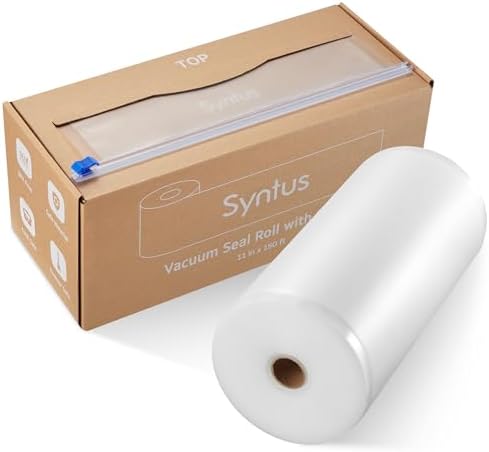
This Syntus roll measures 11 inches wide by 150 feet long and comes with a cutter that mounts to the roll packaging. You pull out the amount you need and cut it at the top, making it easier to create a straight edge than cutting freehand with scissors.
The material has an embossed dotted side for suction and a smooth side. Syntus lists the smooth side as 3.15 mil and the textured side as 6.7 mil, and describes the bags as puncture resistant. The product is BPA free and listed for freezer storage, microwave use, and sous vide, with a stated temperature range of -4°F to 212°F. Check the product directions and your sealer’s instructions before using it with heat.
Its long length suits households that seal often or store bulky items that need custom-sized bags. The built-in cutter is convenient, though it adds packaging to store compared with a plain roll. The 11-inch width is also worth checking against your machine and typical portion sizes before you buy.
Pros:
- Long 150-foot roll offers room for many custom-length bags.
- Mounted cutter is designed for quick, straight cuts.
- Textured side is intended to improve suction, with stated puncture-resistant construction.
- Compatible with major vacuum sealer brands, according to the listing.
Cons:
- You still need to cut the material and seal one end before filling each bag.
- The 11-inch width may be too large for small portions or some storage needs.
Verdict: This is a strong option for frequent sealing if you want a long roll and a built-in cutter to simplify trimming.
Wevac 150-Foot Roll: A Cutter and Keeper in One

This Wevac option pairs one 11-inch-by-150-foot roll with a keeper box and cutter. The box is designed to hold the roll and help keep it tidy between uses; the cutter lets you trim a section without reaching for scissors. You still need to seal one end of each cut piece before filling it.
Like the other Wevac roll, it uses embossed channels to support air removal and is described as heavy duty and puncture resistant. The listing says it works with suction heat sealers, including FoodSaver, Seal-a-Meal, Weston, and Cabela’s. It is also described as BPA free and suitable for food storage and sous vide use.
The main difference from the Syntus 150-foot option is the packaging setup: Wevac emphasizes the keeper and cutter, while Syntus lists specific thicknesses and a temperature range. If tidy storage matters most, the Wevac box is a helpful feature. If you want detailed material specifications, compare the listings closely before choosing.
Pros:
- Long 150-foot roll can be cut to the length you need.
- Keeper box stores the roll and includes a cutter.
- Embossed channels are designed to help with suction.
- Listed as compatible with several suction heat sealer brands.
Cons:
- The keeper box takes up more storage space than a plain roll.
- There are no precut bags, so each bag requires preparation.
Verdict: Pick this roll if you want a large supply of custom-length bags and value having the cutter and storage box together.
How to Choose Plastic Bags for Vacuum Sealing
Check compatibility with your sealer
Vacuum sealer bags are not all interchangeable. The products in this guide are intended for traditional desktop suction sealers, but the Syntus precut set specifically says it is not for handheld sealers that use an air valve. Check the bag listing and your machine’s instructions before ordering. If you have a chamber sealer or a specialty handheld model, confirm the bag style it requires rather than assuming a textured suction bag will work.
Choose rolls or precut bags
Rolls let you choose the bag length, which can be helpful for bulky cuts of food, long items, or portions that do not fit standard sizes. They require a little more preparation: cut the material and seal one end before filling. Precut bags are quicker to use, but their dimensions are fixed. Think about whether speed or sizing flexibility matters more in your kitchen.
Match the bag width to what you store
An 11-inch roll can hold large items, but it may be more material than you need for a small portion. Smaller bags can be easier to manage for individual servings, while larger bags can suit bulkier foods. A mixed-size pack, such as the Syntus precut set, offers a range of options without requiring you to cut a roll to length.
Consider material and texture
Embossed or textured channels help air move through the bag toward a suction sealer. Product listings may also describe thickness, puncture resistance, or heavy-duty construction. Those details can matter when sealing foods with bones or sharp edges, but they do not make a bag impossible to puncture. Handle sharp items with care and leave enough room at the top for a clean seal.
Check the intended temperature uses
Some bags are listed for freezer storage, sous vide, microwave use, or other food applications. These uses depend on the product’s stated limits and directions. For example, the Syntus 150-foot roll lists a temperature range, while other products describe certain uses without giving the same detail. Read the packaging carefully and follow the instructions for both the bags and the cooking appliance.
Think about storage and cutting
If you choose a roll, consider where you will keep it and how you will cut it. A cutter or keeper box can make it easier to dispense and store the roll, but it also takes up space. A plain roll is simpler to store but may require scissors. If you seal food only occasionally, a smaller roll or precut set may be easier to manage than a long roll.
Frequently Asked Questions
Are vacuum sealer bags reusable?
These products are sold as food-storage bags, but the supplied product details do not establish how many times any bag can be reused. Follow the manufacturer’s care directions. For food safety, avoid reusing bags that held raw meat, fish, or greasy foods unless the product instructions clearly say how to clean and reuse them.
Can I use these bags in a sous vide cooker?
Several products in this guide are listed for sous vide use. Check the specific bag’s directions and temperature limits before cooking. The Syntus 150-foot roll, for example, lists a range up to 212°F. Do not assume that every vacuum bag has the same heat limits.
Do vacuum sealer bags work in every machine?
No. Many textured bags are made for traditional suction sealers, while handheld sealers may require valve bags. The Syntus precut set specifically excludes handheld vacuum sealers. Confirm your machine’s requirements before buying.
Are rolls better than precut bags?
Rolls are more flexible because you can choose the bag length, but you need to cut and seal each bag before use. Precut bags save preparation time but come in fixed dimensions. The best choice depends on whether you value customization or convenience more.
What size vacuum sealer bag should I use?
Choose a bag that fits the item with enough extra material at the open end for a reliable seal. A smaller bag can work well for individual portions, while a wider or longer bag may suit bulkier food. Avoid choosing a bag so large that you use much more material than the contents need.
Do BPA-free bags prevent freezer burn?
BPA-free describes the material, not a guarantee against freezer burn. Vacuum sealing removes air from around the food, and several product listings say their bags help reduce freezer burn or dehydration. Results depend on the seal, how the food is packed, and freezer conditions.
Conclusion
For a flexible supply of custom-sized bags, the Wevac two-roll set is a straightforward choice. The Syntus precut set is better if you want to skip cutting and prefer having three sizes ready to use. For frequent sealing, consider one of the 150-foot rolls: Syntus adds a cutter, while Wevac pairs its cutter with a keeper box. Before buying, confirm compatibility with your machine and check the bag’s instructions for any cooking or heating use.