
Gas stoves give you fast, responsive heat, but they can also be hard on cookware. Flames can climb up the sides of a pot, hot spots can scorch sauces, and some materials don’t handle sudden temperature changes well. The right pot makes everyday cooking easier, from boiling pasta to simmering soup. This guide covers five pots that work on gas burners, along with their strengths, limits, and best uses, so you can choose the one that fits how you cook.
Quick Comparison Table
| Product | Main Material | Capacity | Gas Stove Use | Best For |
|---|---|---|---|---|
| ZUFRIEDENIA Glass Pots for Cooking on Stove, 2.0 Liters | High-borosilicate glass | 2.0 L (2.1 quarts) | Listed for gas and electric stovetops | Small meals, eggs, and visual cooking |
| 2 L Glass Cooking Pot, 68oz/2000ml | Borosilicate glass | 2 L (68 oz) | Listed for gas and coil-based stoves | Simple soups, pasta, and light simmering |
| GOTHAM STEEL 5 Qt Stock Pot with Strainer Lid | Aluminum with ceramic nonstick coating | 5 quarts | Listed for gas, electric, ceramic, and halogen | Pasta, rice, and one-pot meals |
| CAROTE 4.5QT Stockpot with Divider, White Granite | Granite nonstick with steel base | 4.5 quarts | Listed for all stovetops, including gas | Two-flavor hot pot and family cooking |
| Jucoan 2.8 Quart Vintage Enamel Cooking Pot with Lid | Steel with porcelain enamel | 2.8 quarts | Listed for gas stove use | Small batches, soups, and decorative serving |
Our Picks: Best Pots For Cooking On Gas Stove reviews
ZUFRIEDENIA 2.0 Liter Glass Pot for Clear, Small-Batch Cooking

This 2.0-liter pot is made from high-borosilicate glass with a fully transparent body and lid. Its main appeal is that you can watch food cook without lifting the lid, which helps you keep heat and moisture in. The listing describes a temperature range from 0°F to 400°F and names gas and electric stovetops, microwaves, ovens, and dishwashers as suitable uses. The capacity is best suited to one or two people, so it fits well for a bowl of soup, a few eggs, or a small pot of pasta.
On a gas burner, the most important thing with glass is to avoid sudden heat changes. Start with moderate heat and add water before the pot gets very hot. Glass heats up more slowly than metal, but it holds warmth well once it gets there. The listing mentions a thicker handle and a heart-shaped lid. Those details make the pot easier to lift, though you should still use an oven mitt, since the glass body and lid get hot during use.
Many owners appreciate how easy the pot is to clean. The interior is smooth, and food tends to release without heavy scrubbing. Some users also use it as a small decorative simmer pot for home fragrance, which is a practical extra for a kitchen display. Compared with the metal options in this list, this pot does less heavy-duty work. It is better as a small, specialized tool than as a daily workhorse for a family.
Pros:
- See-through body and lid let you monitor food without losing heat.
- The smooth glass surface makes cleanup quick.
- Works on gas and electric stovetops according to the listing.
- Compact size is convenient for single servings and small meals.
Cons:
- The 2-liter capacity is too small for larger families or batch cooking.
- Glass can crack if it experiences rapid temperature swings, so it needs gentle handling.
Compared with the other glass option in this lineup, this pot is a close match in size and purpose. The difference comes down to details in the listing and how you plan to use it. If you want a clear pot for small portions, either glass pot can fill that role. Metal pots in this list are better for heavier cooking.
Verdict: This is a good choice if you cook for one or two people and enjoy watching your food cook. It is practical for eggs, soups, and small pasta portions on a gas stove. If you cook for a larger household, choose a larger metal pot instead.
2 Liter Borosilicate Glass Cooking Pot with Wooden Handle

This 2-liter glass pot is made from borosilicate glass and includes a lid and a wooden carrying handle. The listing states that it is BPA-free and lead-free, and that it works on gas, coil-based, and electric stoves, along with ovens and microwaves. It is not suitable for induction cooktops, so it is a poor match for that type of range. The listing also suggests adding water and preheating on low heat for about three minutes to protect the glass over time. That step is worth following on any gas burner.
The wooden handle is a useful feature. It stays cooler than the glass, which makes it easier to lift the pot off a burner. The handle is also designed to keep the pot steady, which can matter when you are pouring or moving a full pot. The transparent lid lets you check progress without disturbing heat, which is helpful when simmering delicate foods or making broth.
In everyday use, this pot suits gentle cooking tasks. It handles soups, pasta, simmering vegetables, and reheating well. It is less suited to searing or high-heat cooking because glass does not brown food the way metal does. Owners who want a simple, visual cooking vessel often find it a pleasant addition to the kitchen. Those who need a pot for frequent heavy use may prefer a stainless or enameled option instead.
Pros:
- The wooden handle keeps hands cooler and helps stabilize the pot.
- Borosilicate glass is listed as BPA-free and lead-free.
- Clear lid and body let you watch food without lifting the lid.
- Covers gas, coil, and electric stovetops according to the listing.
Cons:
- Not suitable for induction cooktops.
Compared with the first glass pot, this model offers a similar capacity and a slightly more detailed set of care instructions. Its handle design is a clear advantage for lifting, but both pots share the same basic limits of glass cookware. Neither is a good choice for high-heat searing, and both work best for gentle, moist cooking.
Verdict: This pot is a solid pick if you want a simple, see-through pot for soups, pasta, and light simmering on a gas stove. The wooden handle and clear lid make it practical for everyday small-batch cooking. Skip it if you need induction compatibility or plan to sear and brown food often.
GOTHAM STEEL 5 Quart Pasta Pot with Strainer Lid

This 5-quart stock pot is designed around pasta, but it works for rice, soups, and vegetables too. The standout feature is the built-in strainer lid. You can drain boiling water straight from the pot into the sink, which removes the need for a separate colander. A twist-and-lock handle holds the lid in place while you pour, which helps you avoid spills. The pot has a ceramic nonstick coating reinforced with titanium, and the listing states it is free of PFOA, PFOS, lead, and cadmium.
The aluminum body is a good match for gas burners because it spreads heat across the base. That helps prevent scorching in sauces and creates more even cooking for pasta. The listing notes that it is under three pounds, which makes it easier to lift and tip than heavier stainless stockpots. The tempered glass lid lets you watch your food while keeping steam inside. The pot is also oven safe up to 300°F, so you can start a dish on the stove and finish it in the oven, provided you stay within that temperature limit.
In practice, this pot shines when you cook pasta often. Draining is quick and tidy, and the lock system gives you control when pouring. Buyers often note that the nonstick surface makes food release easier, though the coating still needs gentle care. Metal utensils can damage ceramic surfaces over time, so silicone or wooden tools are a better choice. This pot is not designed for induction cooktops, which is a limit to keep in mind if you change ranges later.
Pros:
- Built-in strainer lid drains pasta without a separate colander.
- The twist-and-lock handles keep the lid secure while you pour.
- Lightweight aluminum body under three pounds is easy to handle.
- Oven safe up to 300°F adds flexibility for finishing dishes.
Cons:
- Not designed for induction cooktops, and the nonstick coating requires non-metal utensils to stay in good shape.
Compared with the carote pot, this model is more specialized. It excels at pasta and draining tasks, while the other pot focuses on larger, versatile stockpot cooking with a divider. The Gotham Steel pot is also lighter, which matters if you often pour heavy liquids. Both are good on gas stoves, but this one is the better choice if your cooking revolves around noodles and grains.
Verdict: This is one of the most practical choices here for anyone who cooks pasta or rice regularly on a gas stove. The strainer lid is a real time-saver and reduces the number of dishes you need. Pick it if you want convenience and easy handling. Avoid it if you need induction compatibility or plan to use metal tools heavily.
CAROTE 4.5 Quart Granite Stockpot with Divider for Two Flavors
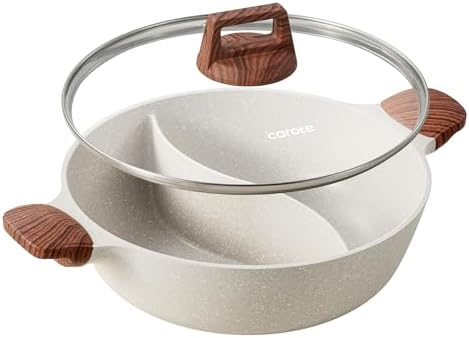
This 4.5-quart stockpot is built for versatility. It has a granite-style nonstick surface, a removable divider that lets you cook two different flavors in one pot, and a glass lid. The listing describes a steel base with a magnetic layer that allows it to work on all cooktops, including induction. That makes it the most flexible option in this lineup if you might change stoves in the future. The listing also says the coating is PFOS and PFOA free and that the pot comes with a 12-month warranty from the date of purchase.
On a gas stove, the extended base is useful because it helps the pot sit well over the flame and heats evenly. The divider is especially useful for hot pot nights or for cooking two side dishes at once without mixing flavors. The pot is also a good size for family meals, soups, and stews. Cleanup is simple, since the listing recommends wiping or rinsing the surface, which is a good sign for everyday use.
The main trade-off is that a divided design can be less convenient for standard cooking. If you only make single-flavor soups or sauces, you may not use the divider often. Nonstick granite coatings also need gentle treatment. High heat, dry heating, and abrasive scrubbing can shorten the life of the surface. Treat this pot as a medium-heat, everyday tool, and it should serve you well.
Pros:
- The divider lets you cook two flavors or dishes in one pot.
- Works across gas, electric, and induction cooktops according to the listing.
- The 4.5-quart size suits family meals, soups, and stews.
- The coating is described as free of PFOS and PFOA, and the pot carries a 12-month warranty.
Cons:
- The divider adds little value if you only cook single-flavor dishes.
Compared with the Gotham Steel pot, this model is less focused on pasta and more focused on flexibility. It has a more general-purpose shape, the divider adds a unique cooking option, and it is more compatible with different stovetops. If you want a pot for many tasks rather than one specialized job, this one has the edge.
Verdict: This is a strong all-around choice for gas stove owners who cook for families or enjoy hot pot meals. The divider sets it apart, and its broad cooktop compatibility makes it a good long-term investment. Choose it if you want one versatile pot. Skip it if you rarely need a divider and prefer a dedicated pasta pot.
Jucoan 2.8 Quart Vintage Enamel Pot with Floral Design

This 2.8-quart enamel pot combines a steel body with a porcelain enamel coating and a green floral pattern. The listing describes it as rust-proof, safe up to 400°F, and suitable for gas stoves as well as electric, halogen, and induction cooktops. It measures about 8 inches across and 4.5 inches tall without the lid. Dual side handles make it easy to grip, and the large lid helps hold moisture in during slow cooking. It is sized for one or two servings, which makes it a good match for soups, noodles, sauces, and small stews.
Enamel gives this pot a different character from the nonstick options. It holds heat well once warmed and looks attractive enough to serve directly at the table. The listing recommends hand washing, even though the pot is labeled dishwasher safe. That advice is worth following, because harsh detergents and repeated thermal shock can dull the finish over time. On a gas stove, keep the flame at a medium level and avoid heating the empty pot, since enamel can crack or chip when stressed.
The biggest limit is capacity. The pot is well suited to small kitchens, solo cooks, and couples, but it will feel cramped for a family meal. Some users also find that enamel requires more attention than stainless steel, especially around the rim, where chips are most likely to appear if the pot is dropped or knocked against a hard surface. Treat it as a careful, decorative cooking vessel rather than a heavy-duty workhorse.
Pros:
- Dual handles provide a comfortable, secure grip.
- Attractive floral finish works well for serving and gifting.
- Compatible with gas stoves and several other cooktop types according to the listing.
- Compact size suits soups, sauces, and small pasta portions.
Cons:
- The 2.8-quart capacity is limited for larger households, and the enamel finish needs careful handling to avoid chips.
Compared with the glass pots, this enamel pot offers better heat retention and a sturdier feel, though it is less transparent. Compared with the larger nonstick pots, it has less cooking room but a more traditional, durable character. It is a good middle ground for those who want something attractive and functional for small meals.
Verdict: This pot is a good fit for one or two people who want a stylish, durable pot for soups and small batches on a gas stove. Its enamel body and comfortable handles make it pleasant to use, as long as you handle it with care. It is not the best choice for families or frequent large-batch cooking.
How to Choose the Best Pot for a Gas Stove
Choosing a pot for a gas stove involves more than picking a size you like. Gas burners produce open flames that can reach up the sides of a pot, and they can create hot spots if the base is thin or uneven. The right pot should stand steady over the burner, heat evenly, and handle the temperature changes that come with cooking. The following factors will help you narrow your options based on how you actually cook.
Material and Heat Safety
Material is the first decision because it shapes how a pot handles heat. Glass, such as the borosilicate options in this list, lets you watch food without lifting the lid, but it reacts poorly to sudden temperature changes. Always add water before heating and start on moderate heat. Metal pots, including aluminum and steel, usually handle gas flames more confidently and recover quickly from changes in heat. Enamel and granite-style coatings combine the look of a traditional pot with a smooth cooking surface, but they require gentle treatment to last. Matching the material to your cooking style is the best way to avoid disappointment.
Capacity and Cooking Volume
Capacity affects both how useful a pot is and how much space it takes up on your stove. A two-liter pot is good for one or two servings, while a 4.5- or 5-quart pot can handle family meals and large batches of pasta. Bigger is not always better, though. A large pot cooking a small amount of food can lead to uneven heating and wasted energy. Think about your typical meal size, and choose a pot that fills your burner reasonably well without overcrowding it.
Base Design and Flame Coverage
The base of a pot determines how well it sits over a gas flame. A flat, thick base spreads heat more evenly and reduces the risk of scorching. Look for a base that is slightly smaller than or equal to your burner grate’s central zone, so the flame wraps around the pot without spilling too far past the edges. Pots with extended or heavy bases tend to perform better on gas, since they absorb and distribute heat more consistently across the surface.
Coatings Versus Bare Surfaces
Nonstick coatings make cooking and cleaning easier, especially for rice, eggs, and delicate sauces. Ceramic and granite-style coatings are popular choices, but they wear down faster when exposed to high heat, metal utensils, or abrasive cleaners. Bare stainless steel and enamel surfaces tolerate higher temperatures and resist scratches better, though they may require more oil or careful cleaning. Decide how much you value easy release versus long-term toughness, and choose the surface that matches your cleaning habits.
Handles, Lids, and Everyday Handling
Handles and lids affect comfort and safety more than most buyers expect. Wooden or cool-touch handles keep your hands away from heat, while dual side handles make heavy pots easier to lift with two hands. Lids matter too. Transparent lids let you check food without losing heat, and strainer lids can replace a separate colander. A lid that locks in place, like the twist-and-lock design in this list, gives you better control when draining hot liquids. Test how a pot feels in your hands, and consider whether you will be lifting it when full.
Cookware Type by Task
Different tasks call for different pots. Pasta and rice are easier with a pot that drains well, while soups and stews benefit from a deeper, wider body with a secure lid. Glass pots suit gentle simmering and visual cooking, and enamel pots work well for small, attractive batches. A divided pot adds flexibility for hot pot meals or dual-flavor dishes. Consider the two or three dishes you cook most often, and choose the pot that handles those well.
Cleaning and Long-Term Care
Cleaning and care determine how long a pot stays in good shape. Many modern pots are labeled dishwasher safe, but hand washing usually extends the life of nonstick and enamel finishes. Avoid metal scrubbers and sudden cold water on hot glass or enamel, since rapid temperature changes can cause damage. Keep your pot dry before storing it, and stack it carefully to prevent scratches. Following the care guidance in the product listing will help you get the most value from your purchase.
Frequently Asked Questions
Can I use a glass pot on a gas stove?
Yes, many glass pots, including the borosilicate models in this list, are listed as safe for gas stoves. The key is to avoid sudden temperature changes. Add water before heating, use a medium flame, and avoid placing a cold pot on a very hot burner. Following these steps reduces the risk of cracking.
Which pot is best for cooking pasta on a gas stove?
The GOTHAM STEEL 5-quart pot with a strainer lid is the most practical choice for pasta. Its built-in strainer lid lets you drain noodles without a separate colander, and the twist-and-lock handles give you control while pouring. The aluminum body also spreads heat evenly, which helps pasta cook consistently.
Are enamel pots safe for gas burners?
Enamel pots like the Jucoan model are listed for use on gas stoves. They hold heat well and work nicely for soups and small batches. Avoid heating the pot when empty, use medium heat, and hand wash when possible to protect the enamel from chips and cracks.
Do I need a special pot for induction cooktops?
You only need an induction-compatible pot if you own an induction range. Several options in this list, including the glass pots and the GOTHAM STEEL pasta pot, are not designed for induction. The CAROTE stockpot is listed for all cooktops, including induction, so it is the most flexible choice if you may switch stoves later.
How do I keep a nonstick pot from wearing out on a gas stove?
Use low to medium heat, avoid heating the pan dry, and choose silicone, nylon, or wooden utensils. Avoid abrasive scrubbers and harsh detergents. Hand washing with a soft sponge helps preserve the coating. These habits can significantly extend the useful life of a nonstick surface.
What size pot should I buy for a small household?
For one or two people, a pot around 2 to 3 quarts is usually enough for soups, pasta, and sauces. Larger households will benefit from 4.5 to 5 quarts, which provides room for family meals and batch cooking. Choose the size that matches your most common meals rather than the largest option available.
Final Recommendation
For most gas stove owners, the CAROTE 4.5-quart stockpot offers the best balance of size, versatility, and cooktop compatibility. Its divider adds unique cooking options, and its broad compatibility makes it a dependable everyday pot. If pasta and rice are your main focus, the GOTHAM STEEL 5-quart pot with a strainer lid is a convenient, time-saving choice. For small-batch cooking, the glass and enamel options offer clear visual appeal and gentle heat for soups and simmering. Match your choice to the dishes you cook most often, and your new pot will fit naturally into your routine.