
Choosing a 2-liter stainless steel pressure cooker is a smart move if you cook for one or two people, want quick meals on a weeknight, or need a compact second cooker for side dishes. A 2-liter size is small enough to store easily and heat up fast, yet large enough for rice, lentils, curries, or a few potatoes. Stainless steel adds durability and resists staining and odors, which makes it a popular choice over aluminum. This guide compares four well-known options so you can find the one that fits your kitchen, your cooktop, and your cooking habits.
Quick Comparison Table
| Product | Capacity | Standout Feature | Best For |
|---|---|---|---|
| HAWKINS SSC20 Stainless Steel Pressure Cooker, 2 Liter, Silver | 2 Liter | Curved body and wide mouth with an improved pressure regulator | Small households of 2 to 3 people |
| Vinod Platinum Triply Stainless Steel Outer Lid Pressure Cooker -68 oz, Induction Friendly, ISI Certified, Small | 68 oz (about 2 Liter) | Triply build with a thick aluminum bottom for even heat | Induction and gas cooktop users who want even cooking |
| Vinod V-2L Stainless Steel Sandwich Bottom Pressure Cooker, 2-Liter, Silver, Medium | 2 Liter | Sandwich bottom and a fusible safety valve | Cooks who value a classic design and added safety features |
| Butterfly Curve Stainless Steel Pressure Cooker – 2 Litres | 2 Liter | Curved shape for a sleek, easy-to-handle body | Shoppers who want a simple, budget-minded 2-liter cooker |
Our Picks: Best Pressure Cooker 2 Litre Stainless Steel reviews
HAWKINS SSC20 Stainless Steel Pressure Cooker: Compact Design for Small Households

The HAWKINS SSC20 is a 2-liter stainless steel pressure cooker built for small households. Its listing describes it as ideal for cooking for two to three people, which matches the capacity well. If you regularly make dal, rice, or a small pot of curry for yourself and a partner, this size gives you enough room without wasting energy on a larger pot.
The design stands out first. The body has a curved shape that makes stirring easier, especially when you are working with thicker foods like lentils or stews that can stick to the bottom of a flat-sided pan. The wide mouth also gives you a clearer view of what is inside and makes it simpler to add ingredients or check on the food without much fuss.
The listing highlights an improved pressure regulator, which is meant to control pressure more consistently and offer better safety. Any pressure cooker demands respect, so a regulator that manages pressure reliably is an important feature. The base measures about 5 inches across and 0.25 inch thick, which gives you a sense of how it will sit on a standard burner. A base of this size works best on burners that match its footprint, so check your cooktop before you buy.
In everyday cooking, this model suits people who want a no-frills, straightforward cooker. Many owners appreciate the curved body and the wide opening because they make routine tasks feel less awkward. Its biggest limitation is that the listing offers fewer technical details about the base construction than some competitors, so if you use induction heat, you should confirm compatibility before you commit. Also, because the capacity is small, it is not the right choice for batch cooking or feeding a larger group.
Pros:
- Curved body makes stirring and everyday handling easier
- Wide mouth provides good visibility and access to food
- Improved pressure regulator is designed for controlled, safer pressure
- Sized well for two to three servings
Cons:
- Limited induction details in the listing, so compatibility should be confirmed
Compared with the Vinod models in this guide, the HAWKINS SSC20 focuses on practical handling and a dependable regulator rather than advanced base construction. If your main goal is a simple, well-shaped small cooker for daily meals, it is a strong contender.
Verdict: The HAWKINS SSC20 is a good choice for a two- or three-person household that wants a compact, easy-to-handle stainless steel cooker. Confirm that it matches your cooktop, and it will serve you well for everyday meals.
Vinod Platinum Triply Stainless Steel Pressure Cooker: Even Heat for Gas and Induction

The Vinod Platinum Triply is a small pressure cooker with a capacity of 68 ounces, which is roughly 2 liters. Its listing describes an outer lid design and an induction-friendly build, and it is marketed as ISI certified. That combination makes it attractive if your kitchen uses a gas stove and an induction cooktop, or if you plan to switch between them over time.
The defining feature is the triply construction with a thick aluminum bottom. The listing describes this base as a way to spread heat evenly, which helps prevent food from scorching on the bottom. Even heat matters most with thick dishes like dal, rajma, or sauces that contain sugar or dairy, because uneven heat can create hot spots that burn the food before the rest is cooked through.
The body is made from AISI 304 18/8 stainless steel. This grade is widely used in kitchenware because it resists corrosion and holds up well to repeated washing. The listing emphasizes easy cleaning, and stainless steel surfaces generally wipe down well after cooking. The cooker is also described as adaptable, with uses that range from steamed snacks to more modern recipes.
Some users report that the even heat helps them avoid scorching, especially with slow-simmering dishes. Other owners value the ability to move between gas and induction without changing cookware. The main drawback is that a triply body with an aluminum base can be a bit heavier than a simpler cooker, so it may feel less nimble for people who prefer lightweight pans. The listing also does not spell out every detail of the pressure system, so it is smart to read the included instructions carefully before first use.
Compared with the HAWKINS SSC20, this Vinod model puts more emphasis on heat distribution and cooktop flexibility. It may be the better pick if you value consistent cooking and plan to use induction at some point.
Pros:
- Triply build with a thick aluminum bottom supports even heat
- Works on both gas and induction cooktops
- Made from AISI 304 18/8 stainless steel for corrosion resistance
- Versatile enough for a wide range of recipes
Cons:
- The heavier base may feel bulkier than simpler, lighter cookers
Verdict: This is the best pick in the group for cooks who use induction or may switch cooktops. Its even-heating base and corrosion-resistant body make it a dependable option for regular, everyday cooking.
Vinod V-2L Stainless Steel Sandwich Bottom Pressure Cooker: Classic Build with Added Safety

The Vinod V-2L is a 2-liter stainless steel pressure cooker with a sandwich bottom. It is a straightforward choice that focuses on a traditional, sturdy build. The listing lists a 2-liter capacity, a fusible safety valve, and 18/8 stainless steel construction, so you know exactly what you are getting without extra features to learn.
The sandwich bottom is a layered base designed to distribute heat across the bottom of the pot. This construction helps reduce hot spots, which is useful when you cook rice or thick sauces that tend to catch. The look is clean and polished, with a silver finish that suits most kitchens.
Safety is a major part of this model’s appeal. The fusible safety valve is a backup feature that releases pressure if the normal system fails or becomes blocked. Many owners appreciate that this model includes it, since it adds a layer of reassurance when cooking under pressure. Still, no safety feature replaces careful use. Always check the gasket and vent before cooking, and never overfill the pot.
In daily use, this cooker suits people who want a no-nonsense design and a familiar stainless steel look. Some cooks find that it handles everyday meals well, from simple rice to quick pulses. The main drawback is that the listing offers limited detail on cooktop compatibility, so induction users should verify it before buying. Also, the design is more traditional, which means it lacks some of the modern touches found in the curved HAWKINS model.
Compared with the Vinod Platinum Triply, this model trades advanced multi-layer heating for a simpler, classic build. It is a solid choice if you want a dependable, safety-minded cooker without paying attention to extras.
Pros:
- Sandwich bottom helps distribute heat across the base
- Fusible safety valve adds a backup safety feature
- Made from 18/8 stainless steel with a polished silver finish
- Simple, familiar design that is easy to learn
Cons:
- Limited cooktop compatibility details in the listing
Verdict: The Vinod V-2L is a sound, traditional 2-liter cooker with a useful fusible safety valve and a heat-spreading base. It is a good match for cooks who want a classic stainless steel pot for everyday meals.
Butterfly Curve Stainless Steel Pressure Cooker: Simple Shape for Everyday Cooking
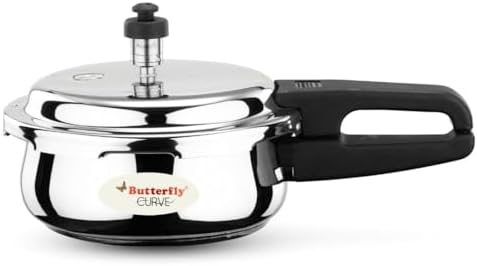
The Butterfly Curve Stainless Steel Pressure Cooker is a 2-liter model with a curved shape. Its listing is brief, so this analysis focuses on the basics: a compact stainless steel body, a 2-liter capacity, and a curved design that gives it a softer, more modern look than many traditional pressure pots.
The curved shape is the main design highlight. Rounded sides can make stirring and pouring feel more natural, and they tend to look more attractive on the stove. For a small cooker meant for daily use, that combination of simplicity and style can be appealing.
Because the listing offers few specifications, you should look closely at the product details before buying. Confirm the base type, the safety features, and the cooktop compatibility. Without that information, it is harder to judge how the cooker will perform on an induction stove or how its pressure system compares with the other options here. Some buyers in this price tier are happy with a basic, reliable pot, while others want more detail about construction.
In practical use, this cooker suits someone who needs a small pressure pot for simple meals like rice, soups, or steamed vegetables. It is a reasonable fit for a first pressure cooker, provided you follow basic safety steps. Many people who choose a simple model appreciate its straightforward operation. The main drawback is the limited information in the listing, which makes it harder to verify advanced features or confirm specific build details.
Compared with the Vinod and HAWKINS models, this option stands out mostly for its shape. If you value a streamlined look and do not need detailed technical specifications, it can work well. If you want clear information about heating and safety systems, the other models in this guide are easier to evaluate.
Pros:
- Curved design gives a modern, streamlined appearance
- Compact 2-liter size suits small households
- Stainless steel body is simple to clean and maintain
- Straightforward design is easy to understand for beginners
Cons:
- The listing provides limited technical detail on construction and compatibility
Verdict: The Butterfly Curve is a simple, good-looking 2-liter cooker for basic everyday use. Before you buy, confirm the details that matter most to you, especially cooktop compatibility and safety features.
How to Choose the Right 2-Liter Stainless Steel Pressure Cooker
Capacity and Household Size
A 2-liter pressure cooker is best suited to one or two people, or to a family of three who cook side dishes and small batches. Because the internal volume is limited, you should never fill the pot more than about two-thirds full, and you should fill it only halfway when cooking foods that expand, such as beans, grains, or lentils. If you regularly cook for four or more people, a larger size will be more practical. Think about your typical meal before you buy, since a cooker that is too small will force you to cook in multiple rounds.
Cooktop Compatibility
Your cooktop matters as much as the cooker itself. Stainless steel works on gas and electric stoves, but induction cooktops require cookware with a magnetic base. Some models in this guide are described as induction friendly, while others offer little detail about compatibility. If you own an induction range, confirm the base type before you purchase. Also check the base diameter so the cooker sits flat and centered on your burner, which helps with even heating and efficient energy use.
Base Construction and Heat Distribution
The base is where cooking results are won or lost. A thick, multi-layer bottom, such as a triply or sandwich design, spreads heat more evenly across the pot. This reduces the risk of scorched rice or burned sauces. A thinner base can heat quickly but may create hot spots, especially on high heat. When comparing cookers, look for a clear description of the base construction and choose the design that matches the foods you cook most often.
Safety Features and Pressure Control
Safety should guide every pressure cooker decision. Look for a clearly described pressure regulator and, when possible, a backup safety feature such as a fusible safety valve. These parts release pressure if the main system fails or becomes blocked. Read the included instructions carefully, inspect the gasket and vent before each use, and never open the lid until the pressure has fully released. A good safety design makes the cooker more reliable, but safe habits are still essential.
Material Quality and Cleaning
Stainless steel is a sensible choice because it resists corrosion, does not react with acidic foods, and holds up to frequent washing. Pay attention to the grade of steel. AISI 304 is a common and durable option for kitchenware. Also consider how the cooker is cleaned. Smooth interiors and wide openings make scrubbing easier, while a curved or rounded shape can make it simpler to reach corners. A cooker that is easy to clean is more likely to stay in good condition over time.
Design, Handling, and Storage
The shape and weight of the cooker affect how comfortable it feels in daily use. A curved body can make stirring easier, and a wide mouth helps you add ingredients without spilling. A heavier, multi-layer base adds stability and better heat control but can make the pot feel bulkier. Think about where you will store the cooker, too. A compact 2-liter size fits well in smaller kitchens, but make sure you have room for the lid and any accessories.
Frequently Asked Questions
Is a 2-liter pressure cooker big enough for a family?
A 2-liter cooker works well for one or two people and can handle small meals for three. For larger families, a bigger pot will be more practical. Remember that you should only fill a pressure cooker partway, so the usable amount is less than the total capacity.
Can I use a stainless steel pressure cooker on an induction cooktop?
Only if the base is magnetic. Induction cooktops need cookware that responds to a magnetic field. Some of the cookers in this guide are described as induction friendly, while others provide limited details. Check the product information and your cooktop manual before you buy.
What is the difference between a triply and a sandwich bottom?
Both designs use layered metal to spread heat across the base. A triply base usually has three layers, often with a thick core such as aluminum between steel layers, which helps prevent scorching. A sandwich bottom is also a layered design and offers similar heat distribution. The best choice depends on the foods you cook and whether you need induction compatibility.
Why is a fusible safety valve important?
A fusible safety valve is a backup feature that releases pressure if the main vent becomes blocked or the regulator fails. It adds an extra layer of protection, but it does not replace safe operating habits. Always check the vent and gasket before cooking, and follow the manufacturer’s instructions.
How should I clean a stainless steel pressure cooker?
Wash the pot and lid with warm soapy water after each use. Let the cooker cool before cleaning, and remove the gasket and vent according to the instructions. Stainless steel is durable, but avoid harsh abrasive pads that can scratch the surface. Dry the cooker fully to prevent water spots.
Can I cook rice and lentils in a 2-liter pressure cooker?
Yes, but use the right fill level. Foods that expand, such as rice, beans, and lentils, should only fill the pot about halfway. Add enough water as recommended for the food you are cooking, and never exceed the maximum fill line.
Which model should I choose if I want the simplest option?
If you want a simple, dependable pot for everyday use, the Vinod V-2L or the HAWKINS SSC20 are both practical choices. If you plan to use induction or want even heat for delicate dishes, the Vinod Platinum Triply is the stronger option.
Final Recommendation
For most buyers, the Vinod Platinum Triply Stainless Steel Pressure Cooker is the best all-around choice. Its triply build and thick aluminum bottom support even heat, and it works on both gas and induction cooktops, which gives you flexibility as your kitchen changes. If you want a compact cooker for simple, everyday meals and do not use induction, the HAWKINS SSC20 offers a practical curved design and a well-regarded regulator. The Vinod V-2L is a solid, classic option with a useful fusible safety valve, while the Butterfly Curve suits buyers who want a streamlined look and a basic 2-liter pot. Whichever you choose, confirm your cooktop compatibility, read the included instructions, and follow safe pressure cooking habits every time.