
When someone spends long periods in bed, pressure on the hips, heels, shoulders, and other bony areas can put skin at risk. An alternating pressure mattress pad uses air cells that inflate and deflate in a cycle to shift pressure across the body. It may be a helpful part of a pressure-care plan, but it does not replace regular repositioning, skin checks, or advice from a healthcare professional.
Our picks below compare pump noise, pressure settings, special modes, and stated size and weight limits. Before choosing one, consider the person’s care needs and the dimensions of the bed. If a pressure injury is present, ask a clinician which support surface is appropriate.
Quick Comparison
| Product | Standout feature | Stated capacity | Best fit for |
|---|---|---|---|
| MedVance Premium Alternating Air Pressure Mattress Pad | Digital pump, alarm, and six-minute cycle | Not stated in supplied product details | Those who want a digital control panel |
| Lunderg Alternating Air Pressure Mattress Pad | Static mode and quick connector | Up to 300 lb | Those who want the option of a steady surface |
| KEKOY Alternating Air Pressure Mattress Pad | 130 air cells and five pressure levels | Not stated in supplied product details | Those who want several firmness settings |
| FOMMOF Alternating Air Pressure Mattress Pad | 130 air cells and a stated static mode | Up to 300 lb | Those comparing a pad for different bed setups |
| Alcedo Alternating Air Pressure Mattress Pad | Five pressure settings and 75-by-35-inch inflated area | Up to 300 lb | Those who want a straightforward adjustable pad |
Our Picks: Best Pressure Mattress For Bed Sores reviews
MedVance Premium: A Digital Pump with a Shorter Alternating Cycle

The MedVance is an alternating air pressure pad designed to sit on top of a bed. Its pump cycles the air cells every six minutes, according to the product details, shifting support over time rather than leaving the same areas under pressure continuously. The digital control panel includes alarms, which may be useful for caregivers who want clear controls and alerts.
The product listing describes a dual-core pump rated below 20 dB and a waterproof medical-grade vinyl surface. Its stated quiet operation may appeal to someone who is sensitive to background noise, though actual sound can depend on placement and the room. The listing says the pad is made to fit most standard hospital beds; check your bed dimensions and setup before buying.
Compared with the other options here, MedVance stands out for its digital controls, alarm feature, and stated six-minute cycle. It does not list a weight limit in the supplied details, so confirm capacity with the manufacturer if that matters for your situation. As with any air pad, the pump needs power and the hoses need to remain connected and unobstructed.
Pros:
- Digital control panel with alarms
- Alternating cycle is stated as six minutes
- Waterproof surface is designed for easier cleaning
- Pump is described as operating below 20 dB
Cons:
- No weight capacity is provided in the supplied product details
- Requires a powered pump and hose setup
Verdict: Choose the MedVance if digital controls and a shorter stated cycle are priorities, but verify its weight capacity and fit before ordering.
Lunderg: A Flexible Pick with Alternating and Static Modes

The Lunderg pad offers two operating choices: alternating pressure and static mode. In static mode, the product description says all cells remain inflated, creating a steadier surface when the user needs a break from cycling. A quick connector joins the pad and pump, and the pressure control adjusts from soft to firm.
The pump is listed at 23 dBA, and the pad has a stated capacity of up to 300 pounds. It can be used on a hospital bed or over a home mattress, according to the listing. Setup involves laying the pad flat, connecting the hoses, and allowing about 20 minutes for initial inflation. The instructions say to start at the firm setting and then adjust for comfort.
That combination of static mode and a stated capacity makes Lunderg one of the more adaptable choices in this group. Keep in mind that a static setting does not provide the same cycling action as alternating mode. The listing also advises covering the pad with a sheet to help avoid moisture, so plan for regular linen changes and skin care.
Pros:
- Offers both alternating and static modes
- Quick connector is designed to simplify setup
- Pressure can be adjusted from soft to firm
- Stated capacity of up to 300 pounds
Cons:
- Initial inflation takes about 20 minutes, according to the listing
- Static mode pauses the alternating cycle
Verdict: Lunderg is a strong option if you want the choice of a cycling pad or a steady, fully inflated surface, provided its dimensions suit your bed.
KEKOY: 130 Air Cells with Five Pressure Levels
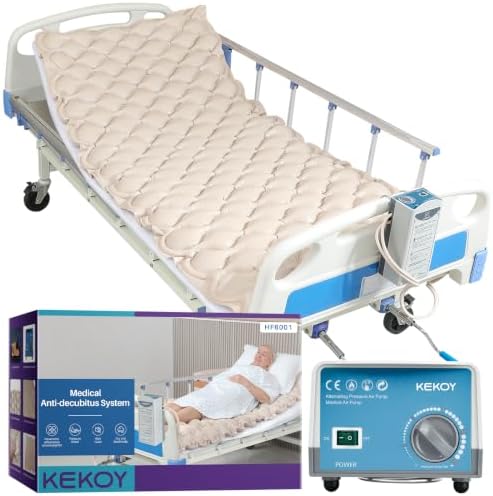
The KEKOY pad uses 130 bubble-style air cells that inflate and deflate in alternating waves. The product details give a cycle time of about 10 to 12 minutes and describe five pressure levels, from softer to firmer support. These settings let caregivers adjust the feel, but the right setting depends on the person and should not be guessed when a clinician has given specific care instructions.
The pump is described as operating below 28 dBA, and the surface is waterproof for easier cleanup after spills or other moisture. The listing presents this pad for people at risk of pressure sores during prolonged bed rest, including people with limited mobility. That is a prevention-support claim, not a guarantee that the pad will prevent or heal an injury.
KEKOY’s key appeal is the combination of many air cells, a range of pressure settings, and a stated alternating cycle. Unlike Lunderg, the supplied details do not mention a static mode or give a weight limit. Confirm those details and the pad’s dimensions with the seller if they are important to your decision.
Pros:
- 130 air cells alternate to redistribute support
- Five pressure levels for adjusting firmness
- Waterproof surface is described as easy to clean
- Pump is listed as operating below 28 dBA
Cons:
- No weight capacity is provided in the supplied product details
- Static mode is not listed
Verdict: Consider KEKOY if you want multiple pressure settings and a 130-cell design, but check capacity and fit before making it part of a care plan.
FOMMOF: A 130-Cell Pad with Adjustable Pressure and Static Mode

The FOMMOF pad is described as having 130 air cells that cycle every 10 to 12 minutes. It also has adjustable pressure and a static mode, giving you an option to pause the cycling and keep the cells inflated. The pump is listed at under 28 dBA, and the product description says the waterproof PVC surface can be wiped clean.
The listing gives a maximum capacity of 300 pounds and mentions an uninflated package size of 89 by 38 inches, with an inflated sleeping area of 78 by 35 inches. Those measurements are important: the product description also makes broad claims about fitting different bed sizes, but the stated sleeping area is narrower than many full-size surfaces. Measure the bed and compare it with the inflated area rather than relying on broad fit language.
FOMMOF is similar to KEKOY in its 130-cell design and stated cycle interval, while its listing also describes a static mode and provides a capacity and inflated sleeping-area measurement. A practical drawback is that a smaller usable area may leave parts of a larger mattress uncovered. Verify the current product dimensions and intended setup before use.
Pros:
- 130 air cells with a stated 10-to-12-minute cycle
- Adjustable pressure and a static mode
- Waterproof surface is designed to wipe clean
- Stated capacity of up to 300 pounds
Cons:
- Stated inflated sleeping area is 78 by 35 inches, so fit needs careful checking
- Broad bed-fit claims may not match every bed’s usable surface
Verdict: FOMMOF may suit someone who wants static and alternating modes, but buy only after confirming that its stated sleeping area fits the user and bed.
Alcedo: Five Settings and a Clearly Stated Inflated Area

Alcedo is an alternating air pressure pad for home or healthcare use. Its pump has five pressure settings, and the product details describe a waterproof, breathable surface with reinforced seams. Built-in metal hooks are included to secure the pump during setup.
The listing gives an inflated bubble area of 75 by 35 inches and a capacity of up to 300 pounds. It says the unused portion should be tucked beneath the mattress. Measure the bed and check how the pad will sit before ordering, especially if the user needs support across a wider area.
Compared with FOMMOF, Alcedo has a slightly shorter stated inflated area, but the dimensions make its coverage easier to assess. Its five settings are similar to KEKOY’s, though the supplied details do not specify a cycle time or a static mode. The pump is described as ultra-quiet, but no exact sound level is provided.
Pros:
- Five pressure settings
- Stated capacity of up to 300 pounds
- Inflated bubble area is specified as 75 by 35 inches
- Reinforced seams and pump hooks are included in the product description
Cons:
- Inflated area may not cover every bed or user fully
- No cycle time or static mode is listed in the supplied details
Verdict: Alcedo is worth considering if its stated 75-by-35-inch area fits your setup and you want five pressure settings without needing a listed static mode.
How to Choose a Pressure Mattress Pad for Bed Sores
Match the support surface to the care need
Alternating air pads are designed to change which areas bear pressure over time. They may be part of a pressure-injury prevention or care plan, but they are not a stand-alone treatment. If a sore is already present, the skin is changing, or the person has complex health needs, ask a clinician to recommend the right support surface and care routine.
Check the bed and sleeping-area dimensions
Compare the pad’s inflated sleeping area with the mattress and the person’s body position. Product descriptions may list the overall pad size as well as a smaller inflated area. Pay close attention to that usable area, and confirm whether the pad is designed to sit on top of a mattress or work with a hospital bed. A poor fit can leave parts of the body without the intended support.
Confirm weight capacity
Choose a pad with a stated capacity that safely covers the user’s weight. In this group, Lunderg, FOMMOF, and Alcedo list capacities up to 300 pounds. The supplied MedVance and KEKOY details do not give a capacity, so check with the manufacturer before purchasing if you are considering either one.
Consider pump noise and controls
The pump runs while the pad is in use, so noise and control placement can matter in a bedroom or care space. Compare the listed sound levels where available, but remember that pump placement and the room can affect what you hear. Digital controls, pressure knobs, alarms, and clear settings can also make day-to-day adjustments easier for caregivers.
Decide whether static mode matters
Some pads offer a static mode that keeps the cells inflated instead of cycling. This can be useful when a steadier surface is preferred for a period, but it pauses the alternating action. Check whether the mode is included and follow any guidance from the person’s clinician about when to use it.
Plan for setup, power, and cleaning
These pads need a pump, a power outlet, and connected air hoses. Make sure the pump can sit securely near the bed and that the hoses will not be pinched or pulled loose. A waterproof surface can simplify cleanup, but it does not replace routine linen changes and skin care. Follow the maker’s cleaning and setup instructions.
Keep repositioning and skin checks in the routine
A pressure pad does not remove the need to follow an individualized repositioning schedule or check the skin. A clinician can advise how often the person should be moved, how to protect vulnerable areas, and what to do if redness or a wound appears. Do not rely on a mattress pad alone to prevent or heal pressure injuries.
Frequently Asked Questions
Can an alternating pressure mattress pad heal bed sores?
These pads are designed to redistribute pressure and may be used as part of a pressure-care plan. They are not a guaranteed treatment or cure. A healthcare professional should assess any existing wound and recommend suitable care.
Does a pressure mattress pad replace turning or repositioning?
No. Follow the repositioning schedule recommended for the person, along with regular skin checks and other care instructions. A support surface is one part of pressure care, not a replacement for the full plan.
Is static mode the same as alternating mode?
No. In alternating mode, air cells inflate and deflate in a cycle. In static mode, the cells stay inflated rather than cycling, as described for Lunderg and FOMMOF. Use each mode according to the product instructions and clinical guidance.
How do I know whether a pad will fit?
Measure the mattress and compare it with the product’s inflated sleeping area, not just the overall pad dimensions. Also check how the pad is intended to be positioned and whether any extra material needs to be tucked under the mattress.
Are these pads suitable for home use?
The product descriptions present these pads for home care, and some also mention hospital or nursing-home use. Before using one at home, make sure the bed, power access, capacity, and setup are suitable for the person’s needs.
What should I do if I see persistent redness or a wound?
Contact a healthcare professional for advice, especially if redness does not fade or the skin is broken. Do not assume that changing the mattress pad alone will address the problem.
Conclusion
The best choice depends on fit, capacity, care needs, and the features you will actually use. Lunderg stands out for its static mode and stated 300-pound capacity. MedVance offers a digital panel and a shorter stated cycle, while KEKOY provides 130 air cells and five pressure levels. FOMMOF and Alcedo list specific inflated-area measurements, making careful fit checks especially important. For someone with an existing pressure injury or a high risk of one, ask a healthcare professional to guide the choice and use of any mattress pad.