
The best RGB LED panel for your content depends on how you shoot. A pocket-size light is easy to mount on a camera, while a larger panel can cover more of your face or background. This guide compares five options by output, color control, battery or power setup, and portability so you can choose a light that fits your videos, streams, or photography.
Quick Comparison
| Product | Standout features | Best suited for |
|---|---|---|
| SmallRig RM120 RGB LED Video Light | 7W output, 2500–8500K, 5000mAh battery, OLED display | Compact camera-mounted lighting |
| NEEWER RGB61 Magnetic RGB Camera Light | Magnetic back, three cold shoes, 20 effects | Small rigs and creative accent light |
| PHOTOOLEX X2077 PRO Panel Light | 80W, 11,000 lux at 0.5m, built-in battery and power options | Brighter studio or location setups |
| Ulanzi LT003 RGB LED Video Panel | 10-inch panel, 8000mAh battery, 2500–9000K | Portable fill light for desks and small studios |
| Pixel K80 RGB LED Video Light Kit | Two lights, app control, stands and soft diffusers | Two-light home studio setups |
Our Picks: Best Rgb Led Panels For Content Creators reviews
1. SmallRig RM120: A Compact Panel with Fine Color Controls

The SmallRig RM120 is a small, metal-bodied RGB light designed to mount on a camera or rig. Its 7W maximum output and pocket-size form make it a better fit for close-range fill or colored accents than for lighting a large room. It offers 360-degree hue adjustment, adjustable saturation, and a 2500–8500K white-light range.
An OLED display and physical controls make it easier to set color and brightness directly on the light. SmallRig lists a 5000mAh battery with up to 180 minutes of runtime at maximum brightness. The light can also charge and operate at the same time, and the included diffuser can soften its output. A dual cold shoe mount is included, and threaded mounting points provide another way to attach it to compatible gear.
This is a useful choice if you want a portable light for a camera rig, product close-ups, or a small creator setup. Its modest output means it is less suited to serving as the main light across a wide space. The supplied listing data also marks this product as unavailable, so check the listing before relying on it for a planned setup.
Pros:
- Wide 2500–8500K color-temperature range and full hue adjustment
- 5000mAh battery with up to 180 minutes of stated runtime
- Metal housing, OLED display, and included diffuser
- Can charge while operating, according to the product details
Cons:
- 7W output is better for close-up use than broad room lighting
- The supplied listing data marks it as unavailable
Verdict: Choose the RM120 if compact size and detailed color adjustment matter more than high output, provided it is available when you shop.
2. NEEWER RGB61: A Magnetic Light for Compact Camera Rigs

The NEEWER RGB61 is a small camera light with a built-in rear magnet, three cold shoe mounts, and a 1/4-inch mounting thread. Its compact size makes it practical for adding light to a camera cage or attaching it to a compatible magnetic surface. The light has 61 LEDs, a 120-degree beam angle, and a listed maximum illuminance of 800 lux at 0.5m.
Color controls include 360-degree hue selection, brightness adjustment, and a 2500–8500K color-temperature range. A rear LCD shows the selected settings, while 20 built-in effects cover options such as candlelight, lightning, and flashing emergency colors. The included diffuser helps soften the light for close-range use.
Its 2000mAh battery is listed for up to 2.6 hours of operation at full brightness, with a USB-C charging port. The product details advise against using it while charging to protect battery life. That limitation is worth considering if you need continuous lighting for long streams. Compared with the SmallRig, it has a smaller battery but adds a magnetic back and more cold shoe mounting points.
Pros:
- Magnetic back and multiple mounting options
- 360-degree hue control and 20 built-in lighting effects
- LCD screen makes settings easy to check
- Compact size and included diffuser suit close-range fill lighting
Cons:
- The product details advise not to use it while charging
- Its listed output is intended for nearby subjects, not broad room lighting
Verdict: The RGB61 is a practical pick for a compact camera rig or creative accent light, especially if you can use its magnetic mount.
3. PHOTOOLEX X2077 PRO: A High-Output Panel for Studio Lighting
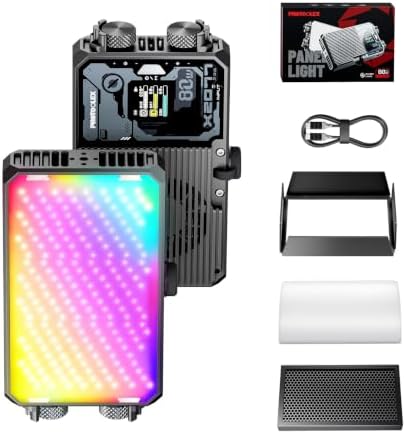
The PHOTOOLEX X2077 PRO is the highest-output option in this group by its stated power rating. It is an 80W panel with a listed output of 11,000 lux at 0.5m at 6500K. The manufacturer also describes a boost mode that doubles brightness. Those specifications make it a more natural candidate for a main light or a brighter setup than the pocket-size panels, though the exact result will depend on distance and how you shape the light.
For color work, the panel offers RGB control, 2700–6500K color temperature, stepless brightness adjustment, and 100 saturation levels. It also includes 21 effects and a color display with dual knobs. Its aluminum-alloy housing and variable-speed cooling system are designed for sustained operation, with the listed fan noise around 20dB at 50cm.
Power options include a built-in 36Wh battery, Type-C power, and a separate 72Wh Energy Stick. The product details state up to 43 minutes at 40W from the built-in battery and up to 86 minutes at 80W with the Energy Stick. The Energy Stick is described as an extension option, so confirm what is included before assuming it comes with the panel. Magnetic accessories such as a softbox, barn door, and grid are supported, but are not listed as included in the supplied description.
Pros:
- 80W rating and listed 11,000-lux output at 0.5m
- RGB and adjustable white-light settings with fine brightness control
- Multiple power options for studio or location use
- Supports magnetic light-shaping accessories
Cons:
- Built-in battery runtime is limited at the stated 40W setting
- Some accessories and the separate Energy Stick may require an additional purchase
Verdict: Consider the X2077 PRO if you need substantially more output than a pocket light and are comfortable checking the power and accessory details before buying.
4. Ulanzi LT003: A Thin 10-Inch Panel for Portable Fill Light

The Ulanzi LT003 gives you a larger light surface than the camera-mounted options while remaining relatively thin and portable. Its 10-inch panel uses 266 LED beads and has a listed maximum output of 2100 lux with a 120-degree beam angle. That broad panel shape can be useful for desk videos, video calls, and close-range fill lighting.
The LT003 provides 360-degree RGB color control, brightness adjustment, and a 2500–9000K color-temperature range. Its LCD displays the selected settings, and 20 lighting effects offer more than standard white fill. The built-in 8000mAh battery is listed for up to 120 minutes of use. It can also charge and operate at the same time.
A standard 1/4-inch screw on the bottom supports mounting to compatible tripods, cameras, and light stands. The light stand is not included, so factor that into your setup. At 0.48kg and 19mm thick, it is easier to pack than a larger studio fixture, but it still needs a mount or stable surface when used as a key light.
Pros:
- 10-inch panel provides a broader source than pocket-size camera lights
- Wide 2500–9000K range and full RGB adjustment
- 8000mAh battery with simultaneous charging and use
- Thin body and standard 1/4-inch mounting point
Cons:
- Light stand is not included
- Listed runtime is up to 120 minutes, which may not cover a long session without charging
Verdict: The LT003 is a strong middle ground if you want a larger, portable panel for desk content without moving up to a high-power studio light.
5. Pixel K80: A Two-Light Kit with App Control

The Pixel K80 is a kit rather than a single portable light. The supplied package description lists two RGB panels, two light stands, two soft diffusers, AC adapters, power cables, and a carrying bag. That combination can help you build a basic two-light setup for interviews, portraits, product shots, or streaming without sourcing the stands and adapters separately.
Each panel uses 552 LED beads and supports 2600–10000K color temperature, 360-degree RGB color, and dimming from 0 to 100 percent. The listed CRI is 97+, and the kit includes nine scene modes. Bluetooth app control lets you adjust lights from a phone; the product description also says one light can act as a master to control other compatible Pixel lights.
The panels can run from the included AC adapters or from NP-F 970 batteries, which are not included. That gives you a choice between a plugged-in home setup and battery-powered use, but you will need to budget for compatible batteries if you want to work away from an outlet. Unlike the smaller individual panels in this comparison, the K80 is best considered a starter lighting kit rather than a light to attach to a camera.
Pros:
- Two panels, stands, soft diffusers, adapters, and carry bag are listed in the package
- Broad 2600–10000K range and RGB control
- App control can make adjustments easier from your shooting position
- Can use AC power or compatible NP-F 970 batteries
Cons:
- NP-F 970 batteries are not included
- Less compact than a single camera-mounted panel
Verdict: Choose the Pixel K80 if you want a ready-to-arrange two-light setup and value included stands and phone-based control.
How to Choose an RGB LED Panel for Content Creation
Match the panel size and output to your setup
A small camera light is handy for close-up fill, product details, and colored accents, but it may not provide enough output to light a wide scene. A larger panel can cover more of your face or set, while a high-output model is better suited to setups where you need more brightness or more distance between the light and subject. Compare output figures only when the measurement distance and setting are also clear.
Check color temperature and RGB controls
Color temperature controls whether white light looks warmer or cooler, which helps it blend with room lighting or other lights. RGB hue controls let you add color to a background or subject. If you want to switch between accurate-looking white light and creative color, look for both a useful Kelvin range and adjustable hue and saturation.
Consider color accuracy for skin and products
CRI and TLCI figures can help you compare how a light is designed to render colors, especially skin tones and product colors. They are useful specifications, but they do not tell the whole story of how a scene will look. Diffusion, distance, brightness, and your camera settings also affect the final image.
Plan for power and session length
Built-in batteries make small panels convenient for mobile shooting, but runtime can change with brightness and settings. Check whether the stated runtime is tied to a specific output level. For longer streams, see whether the light can run while charging. If a panel uses removable batteries or a separate power accessory, confirm whether those items are included.
Choose mounting options that fit your gear
A cold shoe mount can work well on a camera or cage, while a 1/4-inch thread supports many tripods and light stands. Magnetic mounting can add flexibility when you have a suitable metal surface. Before buying, check the mount type and whether the stand, adapter, or other hardware you need comes in the box.
Look at the complete kit, not just the panel
A diffuser softens the light, while a stand can make it easier to position the panel at face level. Some kits include these items; others require separate purchases. App control and preset effects can speed up adjustments, but they matter less if you mainly need a steady, simple key light.
Frequently Asked Questions
What size RGB panel should a beginner creator buy?
For a desk setup or close-up camera fill, a small or medium panel can be easier to place and store. If you need to light your face and background from farther away, consider a larger panel or a kit with stands. Start with the space you need to illuminate rather than choosing by size alone.
Can an RGB panel also work as a white key light?
Yes. The panels here include adjustable white-light color temperatures as well as RGB modes. Set the temperature to suit your room or other lights, then adjust brightness and position for the look you want.
Is a higher CRI or TLCI number always better?
Higher figures can indicate stronger color-rendering performance, but they do not guarantee that every scene will look right. Light placement, diffusion, camera settings, and the colors in the scene all matter. Use these numbers as comparison points alongside the panel’s other features.
Can I use a small RGB camera light as my only light?
You can use one for close-up work or in a small, controlled space, but small panels have limits in output and coverage. For a wider shot or a more even look across a room, a larger panel or multiple lights may be more suitable.
Which option is best for two-person interviews or streaming?
The Pixel K80 is the clearest fit for a two-light arrangement because its listed package includes two panels and two stands. The PHOTOOLEX X2077 PRO is another option if you want a brighter panel, but check its power accessories and setup needs before choosing it for a full session.
Do these lights include stands?
The Pixel K80 package description lists two stands. The Ulanzi LT003 listing says the light stand is not included. The other product descriptions specify camera or tripod mounting options, but do not list a full light stand as an included item.
Final Recommendation
For a compact camera-mounted light, the NEEWER RGB61 offers a useful mix of magnetic mounting, color control, and effects. The Ulanzi LT003 is a better fit if you want a larger portable panel for desk videos or close-range fill. For a ready-to-arrange two-light setup, the Pixel K80 includes stands and diffusers. Choose the PHOTOOLEX X2077 PRO when higher stated output is your priority, and consider the SmallRig RM120 if its compact design suits your rig and the listing is available.