
A softbox kit can make a home studio easier to light by spreading illumination across a subject and softening harsh shadows. The right setup depends on your space and what you film or photograph: a compact kit can work well for a desk or small product shots, while a larger softbox or multi-light set gives you more room to shape portraits and video scenes. These five options range from simple single-light kits to larger sets with adjustable LED bulbs, remote controls, and grids.
Quick Comparison
| Softbox kit | What stands out | Best suited for |
|---|---|---|
| Torjim 16" x 16" Softbox Kit | Compact softbox, 210° rotatable head, remote | Basic home-studio fill light |
| EMART 25.5" Octagonal Softbox Kit | Two softboxes with grids and dimmable bulbs | Portraits and controlled two-light setups |
| EMART 16" x 16" Two-Light Kit | Two compact softboxes with app and remote control | Small studios, streaming, and product shots |
| Andoer Three-Light Softbox Kit | Three large softboxes, stands, and a boom arm | Multi-light home studio setups |
| EMART 16" x 16" Single Softbox Kit | Adjustable 85W bulb, remote, and carry bag | A simple, compact one-light setup |
Our Picks: Best Softbox Kits For Home Studios reviews
Torjim 16" x 16" Softbox Kit: A Compact Starter Light
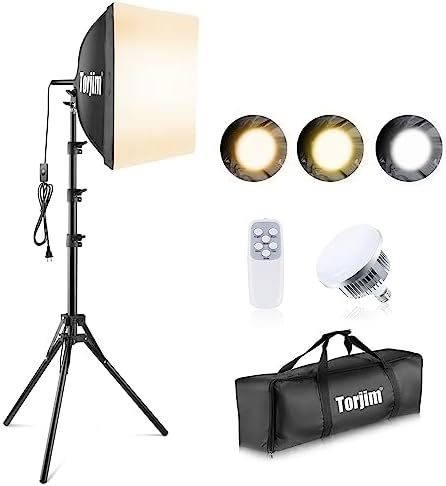
The Torjim kit is a straightforward single-light option for a home studio. It includes a 16-by-16-inch softbox, a stand that extends to 60 inches, a diffuser, a remote, and an 85W bulb. Its compact footprint can be helpful when you need a light near a desk, tabletop, or small filming area.
The softbox has a reflective interior and a 210-degree rotatable head, so you can aim the light toward a subject, wall, or ceiling. The aluminum-alloy stand has independent locking knobs. Those features give you useful positioning options, though a small softbox will not spread light as broadly as the larger boxes in this group.
One detail to check before buying is the bulb description. The product title calls it an LED studio light, while the supplied description also describes an energy-saving CFL bulb and lists a 3000K–7500K range. It does not clearly explain whether that range is adjustable. If you need precise color-temperature control, the EMART kits provide clearer adjustment details.
Pros:
- Compact softbox suits tighter home-studio spaces.
- Rotatable head offers flexible light direction.
- Includes a remote, diffuser, bulb, and stand.
- Stand has locking knobs for height adjustment.
Cons:
- The 16-inch softbox offers less coverage than larger options.
- The bulb type and color-temperature control are not clearly described consistently.
Verdict: Choose the Torjim if you want a compact, all-in-one light for basic fill or small subjects, but consider another option if clear bulb controls or wider coverage are priorities.
EMART 25.5-Inch Octagonal Kit: Two Lights with Beam Control

This EMART package includes two 25.5-inch octagonal softboxes, two 135W LED bulbs, two adjustable stands, and a grid for each softbox. The larger box size can spread light over a wider area than the 16-inch options, making the kit a better fit for portraits or video scenes where you want softer, more even coverage.
The pull-open softboxes are designed for quick setup, and the included honeycomb grids help limit light spill. Each bulb offers stepless brightness adjustment and a listed color-temperature range of 3000K to 6500K. Remote controls can adjust the lights from a distance, and the kit also includes a carry bag, cable ties, and gloves. The remotes require two AAA batteries each, which are not included.
Two softboxes give you room to use one as a key light and the other as fill or background light. However, the larger boxes and two stands need more floor space than a single-light kit. The stands extend to 80 inches, and the power cords are listed as 9.8 feet long, so plan where the kit will sit in relation to outlets and your shooting area.
Pros:
- Two relatively large octagonal softboxes provide broader light coverage.
- Included grids help control light spill.
- Bulbs offer dimming and adjustable color temperature.
- Includes a carry bag, cable ties, and gloves.
Cons:
- Needs more room than a compact one-light kit.
- AAA batteries for the remote controls are not included.
Verdict: This is a strong choice if you want two larger, controllable lights and the option to shape their output with grids.
EMART 16-Inch Two-Light Kit: Compact Lights with App Control

This two-light EMART set pairs two 16-by-16-inch pull-open softboxes with 50W LED bulbs. Each light can be controlled separately through the app or remote, with brightness and color temperature adjustments. The listed temperature range is 3000K to 6000K, which gives you flexibility to match the lights to different indoor scenes.
The softboxes have reflective interiors and removable front diffusers. Their heads adjust up to 120 degrees, and each stand extends from 17 to 63 inches. That range works for many desk and small-room setups, though it does not reach as high as some of the other stands here. The set includes a carry bag and three-meter power cords.
Compared with the single Torjim kit, this package gives you two lights and individual controls, which makes it easier to light a subject from different directions. Its 16-inch boxes are still on the compact side, so they may not provide the broad, soft coverage that larger softboxes offer for full-body portraits or wider scenes.
Pros:
- Two lights allow more flexible lighting arrangements.
- App and remote controls offer separate adjustments for each light.
- Pull-open design is intended for quick assembly.
- Carry bag and long power cords are included.
Cons:
- Small softboxes provide less coverage than the larger EMART octagonal kit.
- Stands extend to 63 inches, which may limit higher placements.
Verdict: Pick this kit if you want two controllable lights for a compact studio and do not need large softboxes or extra-tall stands.
Andoer Three-Light Kit: Broad Coverage for a Larger Home Studio

The Andoer set is the most extensive package in this selection. It includes three 20-by-28-inch softboxes, three stands, three LED lights, three remotes, a boom arm, and a carry bag. The larger softboxes are useful when you need broader illumination, while the three-light layout gives you more options for lighting a subject and the surrounding scene.
Each 85W light supports brightness adjustment from 1% to 100% and a listed color-temperature range of 2800K to 5700K. The softboxes rotate up to 210 degrees, and the stands extend from 68 to 200 centimeters. The included remotes let you change brightness and color temperature without walking back to each light.
This kit makes the most sense if you have room to set up several stands and want to adjust multiple light sources. It is less convenient for a small desk or a studio that needs to be cleared after every session. The supplied details list a boom arm but do not specify its length or exactly how it attaches, so check the product information if that accessory is central to your setup.
Pros:
- Three large softboxes support a more involved multi-light setup.
- Brightness and color temperature are adjustable.
- Rotatable softboxes and remote controls aid positioning and adjustments.
- Includes three stands, a boom arm, and a carry bag.
Cons:
- Requires more floor space and setup than the single- or two-light kits.
- The supplied details do not explain the boom arm’s length or attachment method.
Verdict: Choose the Andoer if your home studio has room for three lights and you want a complete, adjustable multi-light arrangement.
EMART 16-Inch Single Kit: Adjustable Light in a Simple Package

This single-light EMART kit includes a 16-by-16-inch softbox, an 85W LED bulb, a remote, a stand, and a carry bag. Its bulb has adjustable brightness and a listed color-temperature range of 3000K to 6000K. That level of control is useful if you want to tune one light for different indoor subjects without adding a second stand.
The softbox head rotates up to 210 degrees, and its removable diffuser spreads the light across the subject. The stand adjusts from 18 to 65 inches and uses a reverse-folding design intended to reduce storage space. Cable ties are included to help keep the power cord organized. The kit’s single 16-inch box is easy to fit into a smaller setup, but it will not cover as much area as the larger Andoer or EMART octagonal softboxes.
Compared with the similar-sized Torjim kit, this EMART option lists adjustable brightness and a clearer color-temperature range. It is a practical pick if you need one controllable light for video calls, streaming, or small product photography. If you need separate key and fill lights, the two-light EMART set is a better match.
Pros:
- Adjustable brightness and color temperature are specified.
- Rotatable head makes it easier to aim the light.
- Includes a remote, cable ties, gloves, and carry bag.
- Stand’s reverse-folding design can help with storage.
Cons:
- One light limits options for lighting from multiple directions.
- The 16-inch softbox has less coverage than the larger kits.
Verdict: This is a sensible one-light choice if you want clearer brightness and color-temperature controls in a compact setup.
How to Choose a Softbox Kit for Your Home Studio
Match the softbox size to your subject and space
A larger softbox can spread light over more of a subject, which can be helpful for portraits or wider scenes. It also takes up more room. Smaller 16-inch boxes are easier to place near a desk or tabletop, but their light covers a smaller area. Consider both the size of your subject and the space available around your camera before choosing.
Decide how many lights you need
One light can work as a key light or fill light for simple video and photography setups. Two lights let you balance illumination from different directions, while a three-light kit gives you more ways to light a subject and its background. More lights also mean more stands, cords, and equipment to arrange, so choose a set that fits your space and workflow.
Check brightness and color-temperature controls
Adjustable brightness helps you change the light level without moving the stand. Adjustable color temperature can help you make the light warmer or cooler to suit your room or scene. Compare the listed control range and how adjustments are made, such as by remote or app. If the product description is unclear about whether a bulb’s color temperature can be changed, do not assume it is adjustable.
Look at stand height and head movement
Stand height affects where you can place the light relative to your subject. A shorter stand may be fine for desk work, while a taller one can give you more options for portraits or overhead angles. A rotatable head also helps you direct the light where you need it. Check the listed height range and rotation before settling on a kit.
Consider grids, diffusers, and setup style
A diffuser softens the light coming through a softbox. A grid can help keep light from spilling onto nearby walls or the background. If you expect to pack your kit away often, look for features such as pull-open softboxes, a carry bag, and cable ties. These details can make setup and storage simpler, though the overall size of the softbox still matters.
Plan for power and remote-control needs
Check the power-cord length against the location of your outlets and the places you plan to position the lights. Also confirm whether remote controls need batteries, since some kits do not include them. If the kit uses an app, make sure app-based control fits the way you prefer to work.
FAQs
What size softbox is best for a small home studio?
A 16-inch softbox can be easier to fit into a tight space or use near a desk. A larger softbox can provide broader coverage, but it needs more room. Match the size to your subject and the distance between the light, camera, and background.
Is one softbox enough for video calls or streaming?
One softbox can provide a useful main or fill light for a simple setup. If you want to reduce shadows or light a background separately, a two-light kit offers more flexibility.
What is a softbox grid used for?
A grid helps direct light and reduce spill onto areas outside the beam. The EMART 25.5-inch octagonal kit includes grids, making it a useful option if you want more control over where the light falls.
Do all the kits include adjustable color temperature?
No. The EMART kits list adjustable color-temperature ranges. The Andoer set also lists a range, while the Torjim description is less clear about whether its listed range is adjustable. Check the product details carefully if this feature matters to you.
Which kit is easiest to store?
The single-light kits use fewer stands and softboxes, so they may be simpler to put away in a small space. Several of these kits include carry bags, and the EMART single-light kit describes a reverse-folding stand designed to reduce storage space.
Which option is best for product photography?
Small products can often be lit with a compact softbox, while larger products may benefit from broader coverage or two lights. The EMART 16-inch two-light set is a compact option with separate controls; the larger EMART octagonal or Andoer sets offer larger softboxes for setups with more space.
Final Recommendation
For a compact single-light setup with clearly listed brightness and color-temperature adjustments, the EMART 16-inch single kit is a practical starting point. If you want two lights and more control over portraits or video scenes, consider the EMART 25.5-inch octagonal kit. The Andoer set is the more complete choice for a roomy home studio that can accommodate three softboxes, while the compact two-light EMART kit suits smaller spaces. Before buying, compare softbox size, stand height, control options, and the room you have available.