
Stainless steel paint can refresh a worn appliance, but the right choice depends on the surface and the finish you want. Some formulas are made for appliance exteriors, while others are general-purpose metallic or protective coatings. Compare the intended use, finish, and care instructions before you buy—and always follow the product label for surface preparation and application.
Quick Comparison
| Product | Best for | Key details |
|---|---|---|
| Rust-Oleum Appliance Epoxy Stainless Steel Spray Paint | Appliance exteriors | Washable, moisture-resistant epoxy enamel |
| Krylon General Purpose Metallic Spray Paint | General indoor and outdoor projects | Stainless steel finish; listed for appliances and other surfaces |
| Rust-Oleum Professional High Performance Stainless Steel Spray Paint | Metal surfaces needing a protective coating | Oil-based formula with a gloss finish; availability may vary |
| Seymour Stainless Steel Rust Protective Spray Paint | Projects where stainless steel pigment is a priority | Fast-drying formula with 316L stainless steel pigment |
Our Picks: Best Stainless Steel Paint For Appliances reviews
1. Rust-Oleum Appliance Epoxy: Best Match for Appliance Exteriors

This is the most appliance-focused option in the group. Rust-Oleum says its epoxy enamel is intended to renew the exterior of refrigerators, dishwashers, laundry machines, and other indoor metal surfaces. That makes it a direct fit when your goal is to refresh a visible appliance surface rather than paint a general metal project.
The listed finish is smooth and washable, with moisture resistance and a coating designed to withstand everyday wear. Those features are useful on appliance exteriors that see regular handling and cleaning. Still, treat it as a surface coating—not a way to repair dents, peeling metal, or a damaged appliance finish.
Pay close attention to the use limits: the product is for appliance exteriors only. The description says not to use it inside appliances, on stovetops, or on surfaces that stay submerged. As with any spray paint, carefully mask nearby areas and follow the label’s directions for preparation and application.
Pros:
- Specifically intended for appliance exteriors
- Washable, moisture-resistant finish
- Epoxy enamel is designed to handle everyday wear
- Also listed for indoor metal surfaces such as cabinets and tables
Cons:
- Not intended for appliance interiors, stovetops, or continuously submerged surfaces
- Its appliance-specific use makes it less versatile for some outdoor projects
Verdict: Choose this one first if you want a stainless steel finish on an appliance exterior and its use restrictions match your project.
2. Krylon General Purpose Metallic: A Flexible Stainless Steel Finish
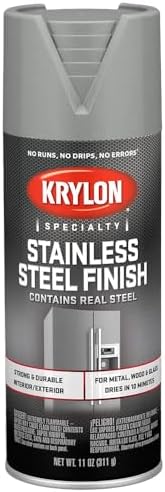
Krylon’s general-purpose metallic spray paint is described as creating a stainless steel finish on appliances, furniture, accessories, and other surfaces. Its broad intended use makes it worth considering if you want one can for an appliance project and smaller matching items.
The listing also identifies it for interior and exterior use. That flexibility may suit projects beyond the kitchen, but the supplied product details do not specify a washable or appliance-epoxy coating. If your appliance will be cleaned often, compare the label instructions with your care needs instead of assuming every metallic finish will perform like a dedicated appliance coating.
This is a practical alternative when you want a stainless steel look and a general-purpose product. For a heavily handled appliance exterior, Rust-Oleum’s appliance-specific epoxy has clearer stated durability and cleaning features. Check that the exact surface is suitable before applying Krylon, and test an inconspicuous area if you are unsure how the finish will look.
Pros:
- Listed for appliances as well as furniture and accessories
- Intended for both indoor and outdoor use
- General-purpose format can suit more than one type of project
Cons:
- Supplied details do not describe a washable or epoxy appliance coating
- Does not include specific care or wear claims for appliance surfaces
Verdict: Consider Krylon for a versatile metallic finish, but choose an appliance-specific coating when washable durability is your main concern.
3. Rust-Oleum Professional: A Protective Coating for Metal Projects

This professional high-performance spray paint is presented as a protective coating for ferrous and non-ferrous metal, along with wood, concrete, masonry, and other surfaces. Its listed strengths are rust protection, corrosion resistance, and a gloss finish. Unlike the first pick, the supplied description does not specifically identify it as an appliance-refinishing paint.
The oil-based formula is described as suitable for demanding environments and weather exposure. The product information also gives a coverage estimate and application timing, but actual results depend on the surface and conditions. Follow the can’s instructions rather than relying on general timing when planning a project.
For an appliance, the main question is whether the label approves the exact surface and indoor use you have in mind. A protective metal coating may suit a utility project better than a refrigerator or dishwasher finish. The supplied data also lists this item as unavailable, so check the listing before planning around it.
Pros:
- Designed for rust protection and corrosion resistance
- Listed for several materials, including metal
- Gloss finish offers a different look from a flatter coating
- Described as suitable for weathering and heavy-use environments
Cons:
- Not specifically described as an appliance-refinishing paint
- Availability may vary
Verdict: This is a better fit for a protective metal-surface project than for an appliance makeover unless the label clearly approves your intended appliance surface.
4. Seymour Stainless Steel Spray: A 316L Pigment Option
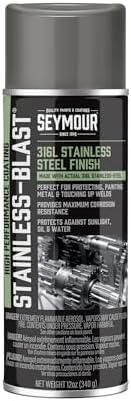
Seymour’s spray is described as a stainless steel rust-protective coating containing 100% stainless steel pigment, identified as 316L. The listed features also include fast drying and resistance to UV light without yellowing. That combination may interest you when the pigment and rust-protection claims are central to your project.
The supplied details do not state that this paint is made specifically for appliance exteriors, nor do they describe a washable finish. That makes it less straightforward for a refrigerator or dishwasher than the Rust-Oleum appliance epoxy. Before using it on an appliance, check the label for surface suitability and indoor-use guidance.
For a visible appliance surface, also consider whether the finish matches the surrounding stainless steel. A product name alone cannot guarantee a close match, so a small test area can help you judge the appearance before coating a larger surface.
Pros:
- Contains 316L stainless steel pigment, according to the listing
- Described as fast drying
- Listed as UV resistant and non-yellowing
- Available for purchase according to the supplied product data
Cons:
- Not specifically described as an appliance paint
- Supplied details do not mention a washable finish
Verdict: Seymour is worth considering for a stainless-pigment protective project, but confirm appliance compatibility before using it on a household appliance.
How to Choose Stainless Steel Paint for Appliances
Check that the paint is meant for the surface
Start with the appliance and the exact area you want to coat. A paint that lists appliance exteriors is a clearer match than a general metal coating. Check the label before using any product on plastic trim, handles, control panels, or other materials, since the supplied product descriptions do not establish compatibility with every appliance part.
Decide how much wear and cleaning the finish must handle
Appliance surfaces are often touched and wiped, so look for clear information about washability and everyday wear if those matter to you. Rust-Oleum Appliance Epoxy specifically lists a washable finish and a coating designed to withstand everyday wear. The other options have different stated features, so do not assume they offer the same cleaning performance.
Compare the finish with your appliance
“Stainless steel” describes the intended appearance, but the exact look can differ from one product to another. Consider the finish named in the listing—such as gloss—and whether it will blend with the appliance or create a visible contrast. When appearance is important, test a small, less visible spot first, following the label.
Look for the right protection claims
Moisture resistance, rust protection, corrosion resistance, and UV resistance are not interchangeable claims. Match the feature to the project: an indoor appliance exterior may call for a washable, moisture-resistant finish, while a metal item exposed to weather may call for a protective coating. Use only the conditions and surfaces allowed by the product label.
Plan the application carefully
Spray paint can reach broad surfaces, but overspray can affect nearby floors, walls, counters, and appliance parts. Prepare and mask the area as directed on the can, and follow its instructions for spraying, drying, and recoating. Do not paint over openings or use a coating inside an appliance unless the manufacturer explicitly allows that use.
Respect safety and use limits
Some appliance coatings have firm restrictions. For example, Rust-Oleum Appliance Epoxy is described for appliance exteriors and not for appliance interiors, stovetops, or continuously submerged surfaces. If your project involves heat, food-contact areas, or a surface that stays wet, check the label and choose a product specifically approved for that use.
Frequently Asked Questions
What is the best stainless steel paint for appliances?
From these options, Rust-Oleum Appliance Epoxy is the most directly aimed at appliance exteriors. It is described as washable, moisture-resistant, and designed to handle everyday wear. Make sure its use limits fit your project.
Can I use stainless steel spray paint inside an appliance?
Do not assume it is safe for interior use. Rust-Oleum Appliance Epoxy is specifically limited to appliance exteriors, and its description says not to use it inside appliances. Check the label for any other product before applying it internally.
Can I paint a stovetop with appliance spray paint?
Not with the Rust-Oleum Appliance Epoxy described here; its product information says not to use it on stovetops. For any heat-exposed surface, use only a coating whose label specifically approves that application.
Is general-purpose metallic paint the same as appliance epoxy?
No. Krylon is described as a general-purpose metallic spray for appliances and other surfaces, while Rust-Oleum Appliance Epoxy is specifically described as an appliance-refinishing coating with a washable finish. Compare the label claims and intended use before choosing.
Will stainless steel paint perfectly match my appliance?
Not necessarily. The product descriptions identify a stainless steel finish, but they do not promise an exact match to every appliance. Test a small area first if the match matters to you.
Can I use rust-protective stainless steel paint on a refrigerator?
Only if its label approves the refrigerator’s exterior material and intended use. The Rust-Oleum Professional and Seymour products list protective features, but their supplied descriptions do not specifically identify them as appliance-refinishing paints.
Conclusion
For most appliance-exterior refresh projects covered by these product descriptions, Rust-Oleum Appliance Epoxy is the clearest choice because it is specifically intended for appliance exteriors and lists a washable, moisture-resistant finish. Krylon is a flexible general-purpose alternative, while Rust-Oleum Professional and Seymour are better considered for protective metal projects unless their labels confirm they suit your appliance. Check the use limits and application directions before you start.