
Choosing the best stand mixer for bread making depends on how much dough you make, how often you bake, and whether you want a mixer that also handles everyday kitchen tasks. The options below range from a compact 4.5-quart model to larger mixers built for substantial batches, with different approaches to kneading and bowl design. Use the comparison table to narrow your choices, then consider the practical trade-offs in each review.
Quick Comparison: Stand Mixers for Bread Making
| Stand Mixer | Capacity | Bread-Making Highlight | Best Fit |
|---|---|---|---|
| KitchenAid Classic Series 4.5 Quart Tilt-Head | 4.5 quarts | Includes a coated dough hook and 10 speeds | Smaller batches and everyday mixing |
| Ooni Halo Pro Spiral Mixer | 7.3 quarts | Spiral mixing system with rotating bowl | Dough-focused home baking |
| Bosch Universal Plus | 6.5 quarts | Listed capacity for up to 15 pounds of whole-grain dough | Large or frequent batches |
| NutriMill Artiste | 6.5 quarts | Listed capacity for up to 8 pounds of dough | Home bakers who want a larger bowl and bottom drive |
| ZACME 8.4QT Commercial Stand Mixer | 8.4 quarts | Listed maximum dough capacity of 6.6 pounds | Large families and bulk baking |
Our Picks: Best Stand Mixer For Bread Making reviews
KitchenAid Classic Series: A Familiar Choice for Smaller Batches
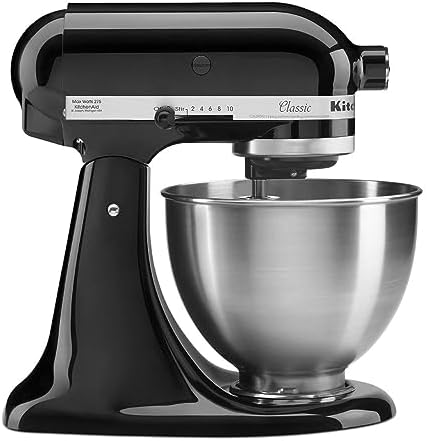
The KitchenAid Classic is a 4.5-quart tilt-head mixer with a metal construction, 10 speeds, and a coated dough hook in the box. The tilt-head design gives you access to the bowl when adding ingredients or changing attachments, and it locks into place for mixing. Its smaller bowl sets it apart from the larger-capacity options in this guide.
For bread making, the included dough hook gives you a dedicated attachment for kneading. The mixer is also supplied with a flat beater and wire whip, so it can handle common mixing and whipping tasks beyond bread dough. Its 4.5-quart capacity is a more natural fit for modest batches than for repeated, high-volume baking; the supplied product details do not specify a bread-dough capacity.
One trade-off is that the KitchenAid has less bowl capacity than the Bosch, NutriMill, Ooni, and ZACME models here. It may be a practical pick if you want a mixer for a range of kitchen jobs and do not need the largest dough capacity. More than 10 optional attachments are available separately, but those add-ons are not included with this model.
Pros:
- Durable metal construction
- Includes a coated dough hook, flat beater, and wire whip
- Ten speeds for a range of mixing tasks
- Tilt-head design provides access to the bowl
Cons:
- Its 4.5-quart bowl is smaller than those of the other picks
- Optional attachments are sold separately
Verdict: Choose the KitchenAid Classic if you want a versatile mixer for smaller bread batches and everyday mixing, rather than a machine selected for high-volume dough capacity.
Ooni Halo Pro: A Dough-First Spiral Mixer

The Ooni Halo Pro takes a different approach from the conventional stand mixers in this group. Its spiral mixing system uses a rotating bowl, spiral dough hook, and removable breaker bar. Ooni describes this design as a way to develop stronger gluten networks in dough, making this model especially relevant if bread and pizza dough are your main reasons for buying a mixer.
The 7.3-quart capacity sits between the smaller KitchenAid and the largest bowls in this comparison. The mixer has 58 speed settings, spanning a stated range from 60 RPM to more than 1,000 RPM. It also includes a flexible beater and geared whisk, so it is not limited to dough work. The four included attachments are the breaker bar, flexible beater, spiral dough hook, and geared whisk.
This specialized design may appeal to bakers who want fine speed control and a dedicated dough-focused setup. The key trade-off is that its spiral system differs from the more familiar arrangement of a conventional planetary stand mixer. If you mostly need a general-purpose mixer, the KitchenAid or another traditional-style option may be a more straightforward fit; if you often make dough, the Ooni’s design is the main reason to consider it.
Pros:
- Spiral mixing system with a rotating bowl
- 58 speed settings for fine control
- Includes four mixing attachments
- Designed for dough as well as cakes, cookies, and whipped mixtures
Cons:
- Its spiral setup is more specialized than a conventional stand mixer
- The listed details do not state a maximum dough weight
Verdict: Consider the Ooni Halo Pro if dough is a priority and you want a spiral mixer with detailed speed control; look elsewhere if you need a clearly stated dough-weight limit or prefer a conventional mixer design.
Bosch Universal Plus: High Capacity for Serious Batch Baking

The Bosch Universal Plus is a 500-watt mixer with a 6.5-quart BPA-free plastic bowl, a dough hook, and wire whips. Its bottom-drive design allows ingredients to be added through the bowl, and the included bowl has a removable drive shaft for cleaning. The bowl is dishwasher safe.
Capacity is its strongest selling point for bread bakers: the supplied product information lists the mixer as able to knead up to 15 pounds of whole-grain dough. That makes it the most clearly specified option in this comparison for very large dough batches. The same details also describe it as suitable for mixing large quantities of other foods, including up to 34 dozen cookies.
The plastic bowl is lighter than a stainless steel bowl, but it may not suit shoppers who specifically want stainless steel. Bosch also uses a bottom-drive layout rather than the familiar tilt-head style, so consider whether that arrangement works for your counter and routine. Optional accessories can expand its kitchen uses, but they are sold separately.
Pros:
- Listed capacity for kneading up to 15 pounds of whole-grain dough
- Large 6.5-quart bowl with a handle
- Bottom drive allows ingredients to be added through the bowl
- Includes a dough hook and wire whips
Cons:
- Uses a plastic bowl rather than stainless steel
- Many optional accessories are sold separately
Verdict: The Bosch Universal Plus is a strong choice if you regularly make large batches and want a mixer with a stated whole-grain dough capacity, provided its plastic bowl and bottom-drive layout suit your preferences.
NutriMill Artiste: A Stable Mixer for Up to Eight Pounds of Dough

The NutriMill Artiste has a 500-watt motor, a 6.5-quart bowl, a dough hook, and wire whips. Its product details list a maximum dough batch of 8 pounds, giving bread bakers a useful capacity reference. The mixer uses a bottom drive, which the manufacturer says sends power directly through the bowl area.
For larger dough batches, the suction-cup feet are intended to help keep the mixer stable on the counter. The package also includes an easy-open cover and a recipe book. Compared with the Bosch, the Artiste has the same listed bowl capacity but a lower stated maximum dough weight. Compared with the KitchenAid, it provides a larger bowl and a higher stated dough capacity.
The Artiste’s product details specify a one-year manufacturer’s warranty. Its included set is focused on mixing basics, so it may be less appealing if you want a metal bowl or a mixer with many attachments included. Optional attachments are not specified in the supplied details, so check the listing for current compatibility before planning to expand the setup.
Pros:
- 6.5-quart bowl with a stated dough capacity of up to 8 pounds
- Includes an extended dough hook and wire whips
- Suction-cup feet are designed to help stabilize the mixer
- Includes an easy-open cover and recipe book
Cons:
- Stated dough capacity is lower than the Bosch’s listed maximum
- Supplied details do not specify a stainless steel bowl
Verdict: Pick the NutriMill Artiste if you want a larger-capacity home mixer with a stated 8-pound dough limit and stability-focused feet, but compare its capacity with the Bosch if you make especially large batches.
ZACME 8.4QT: A Large Stainless Steel Bowl for Bulk Baking

The ZACME is the largest-bowl option in this group, with an 8.4-quart stainless steel bowl and a stated maximum dough amount of 6.6 pounds. It has an 800-watt DC motor, metal gears, and 11 speed settings. The tilt-head design gives you access to the bowl and attachments, while the LED display and timer function let you set a countdown.
Its included set covers common mixing jobs: a dough hook, wire whip, flat beater, and bowl. The bowl and accessories are described as dishwasher safe. The product details also describe adjustable height to accommodate different batch sizes. For a household that wants to mix several types of recipes in a large bowl, the included attachments and digital controls add flexibility beyond dough kneading.
Although the bowl is larger than the Bosch’s and NutriMill’s, its stated dough maximum is lower than the Bosch’s listed 15-pound capacity and the NutriMill’s 8-pound capacity. Bowl volume alone does not tell you how much dough a mixer is rated to handle, so use the listed weight limit—not the 8.4-quart capacity—as your guide. The product listing states that the mixer meets an NSF/ANSI standard for commercial use; this does not replace checking whether its size and setup meet your particular needs.
Pros:
- Largest bowl in this comparison at 8.4 quarts
- Includes a stainless steel bowl, dough hook, flat beater, and wire whip
- Digital display with a countdown timer
- Eleven speeds and a tilt-head design
Cons:
- Listed maximum dough weight is 6.6 pounds, below the Bosch and NutriMill limits
- Its large bowl may be more than you need for small, occasional batches
Verdict: Choose the ZACME if you value a large stainless steel bowl, included attachments, and timer controls; choose the Bosch or NutriMill instead if your top priority is a higher stated dough-weight capacity.
How to Choose a Stand Mixer for Bread Making
Match Dough Capacity to Your Usual Batch
Think about how many loaves you make at once and how often you bake. A smaller bowl can be easier to manage if you make one modest batch at a time. If you bake for a large household, share loaves, or prepare dough in bulk, compare the listed dough-weight limits. Bowl size and maximum dough weight are different measures, so do not assume that the largest bowl automatically handles the heaviest dough.
Consider the Mixer’s Dough System
Most of the mixers here include a dough hook, but the Ooni uses a spiral hook, rotating bowl, and breaker bar. That specialized design may appeal if dough is your main focus. The KitchenAid, Bosch, NutriMill, and ZACME offer different conventional mixer layouts. Consider the type of mixing system you want and how it fits with the other recipes you prepare.
Check Bowl Material and Access
The KitchenAid and ZACME list stainless steel bowls, while the Bosch specifies a lightweight BPA-free plastic bowl. The NutriMill product details do not specify the bowl material. Bowl material can affect what you prefer for handling and cleaning, so check the product listing if that detail is important to you. Also consider access: a tilt head moves out of the way, while a bottom-drive design has a different setup for adding ingredients and removing the bowl.
Look at Stability and Counter Space
Mixing dough can put a mixer to work for longer stretches than many light mixing tasks. The NutriMill lists suction-cup feet as a stability feature, and the ZACME uses a tilt-head design with a large bowl. Before choosing any large-capacity model, make sure you have room for its footprint and enough counter or storage space for the mixer and its attachments.
Think Beyond Bread
If you want one machine for dough, cakes, cookies, and whipped mixtures, compare the included attachments. The KitchenAid, Ooni, Bosch, and ZACME list several attachments for different jobs, while the NutriMill includes a dough hook and wire whips. Some additional accessories are sold separately, so confirm what comes in the box and what requires an extra purchase before deciding.
Use Speed and Timer Features Practically
Speed options are useful when a recipe calls for different mixing actions, but more settings do not automatically mean a mixer is a better fit for your bread routine. The KitchenAid has 10 speeds, the ZACME has 11, and the Ooni has 58 settings. The ZACME also includes a countdown timer. Focus on the controls you are likely to use, along with the capacity and mixing design that suit your dough.
Frequently Asked Questions
Which stand mixer in this guide has the highest stated dough capacity?
The Bosch Universal Plus has the highest listed capacity: up to 15 pounds of whole-grain dough. The NutriMill Artiste lists up to 8 pounds, and the ZACME lists a maximum of 6.6 pounds. The supplied details do not state a maximum dough weight for the KitchenAid or Ooni.
Is a larger bowl always better for bread dough?
No. Bowl volume and maximum dough weight are not the same thing. A mixer can have a large bowl but a lower stated dough limit than a model with a smaller bowl. Compare the listed dough capacity when that information is available and choose based on your usual batch size.
Which option is most focused on dough mixing?
The Ooni Halo Pro stands out for its spiral mixing system, rotating bowl, and breaker bar. Its product details describe the design as intended to develop stronger gluten networks. It also includes attachments for other mixing tasks, but its distinctive feature is the dough-focused spiral setup.
Which mixers include a dough hook?
All five products list a dough hook or spiral dough hook among their included attachments. The Ooni includes a spiral dough hook, and the other four list a dough hook. Check the product listing for the exact included equipment before ordering.
Which mixer has a stainless steel bowl?
The KitchenAid Classic and ZACME list stainless steel bowls. The Bosch has a BPA-free plastic bowl. The NutriMill and Ooni details supplied here do not specify bowl material, so confirm that information in the listing if it matters to you.
Can these mixers handle jobs other than bread?
Yes. The listed attachments and product details describe uses such as beating, whipping, and mixing. The Ooni includes a flexible beater and geared whisk; the KitchenAid includes a flat beater and wire whip; the Bosch includes wire whips; and the ZACME includes a flat beater and wire whip. The NutriMill includes wire whips alongside its dough hook.
Final Recommendation
For frequent large-batch baking, the Bosch Universal Plus is the clearest choice based on its stated capacity of up to 15 pounds of whole-grain dough. The NutriMill Artiste is a useful alternative with a stated 8-pound limit, while the Ooni Halo Pro is worth considering if you specifically want spiral mixing. For a more general-purpose mixer and smaller batches, the KitchenAid Classic offers a familiar tilt-head design. Choose the ZACME if a large stainless steel bowl and timer controls matter more to you than the highest stated dough-weight capacity.