
Choosing the best stone for a pizza oven floor starts with matching the stone to your oven, grill, and pizza size. Cordierite stones can hold and spread heat while absorbing some moisture from the dough, helping you get a crisper base. The five options below range from compact countertop choices to an extra-large baking surface. Measure your cooking space before you buy, and leave the clearance each product requires.
Quick Comparison
| Product | Size | Heat rating | Best for |
|---|---|---|---|
| Unicook 15 x 12-Inch Rectangular Pizza Stone | 15 x 12 x 0.6 in | Up to 1,450°F | Personal pizzas and everyday baking |
| LUNVARION 15 x 12-Inch Rectangular Pizza Stone | 15 x 12 x 0.47 in | Up to 1,472°F | Up to 12-inch pizzas and versatile baking |
| Nuwave Heavy-Duty Cordierite Pizza Stone | 11.5 in wide x 0.47 in thick | Up to 1,472°F | Countertop ovens and smaller pizzas |
| VEVOR 20 x 14-Inch Rectangular Pizza Stone | 20 x 14 x 0.67 in | Up to 1,450°F | Large ovens, grills, and multiple items |
| Unicook 12-Inch Square Pizza Stone | 12 x 12 x 0.4 in | Up to 1,450°F | Compact ovens and smaller batches |
Heat ratings and dimensions are listed by the manufacturers. Confirm that a stone fits with room around it for airflow before ordering.
Our Picks: Best Stone For Pizza Oven Floor reviews
Best All-Around Size: Unicook 15 x 12-Inch Rectangular Pizza Stone

This rectangular cordierite stone measures 15 by 12 inches and is 0.6 inch thick. Unicook recommends it for personal pizzas up to 11 inches in diameter, so it suits a household that wants a useful baking surface without moving up to an oversized stone.
The stone is rated for temperatures up to 1,450°F. Its porous surface is designed to absorb moisture, while the manufacturer says the material distributes heat evenly. It is reversible, and a plastic scraper is included for handling dough or removing residue after baking.
Check your oven or grill carefully: Unicook calls for at least 1 to 2 inches of clearance on all sides. That requirement may rule it out for some compact cooking spaces. It also will not be the best match if you regularly bake pizzas larger than 11 inches; the thinner LUNVARION option is specified for pizzas up to 12 inches, while VEVOR offers a much larger surface.
Pros:
- Useful rectangular size for personal pizzas and other baking
- Reversible surface and included plastic scraper
- Cordierite is rated to 1,450°F
- Can be used in an oven or grill
Cons:
- Unicook recommends limiting pizza size to 11 inches
- Needs 1 to 2 inches of clearance on every side
Verdict: Choose this Unicook if you want a substantial everyday stone for personal pizzas and your oven has the recommended clearance.
Best for 12-Inch Pizzas: LUNVARION 15 x 12-Inch Pizza Stone

The LUNVARION is a 15-by-12-inch rectangular cordierite stone with a 0.47-inch thickness. Its listed baking surface accommodates a pizza up to 12 inches or two smaller pizzas, making it a practical option if you want more room than the Unicook stone’s stated 11-inch pizza limit.
It is rated for temperatures up to 1,472°F and is described for use in ovens, grills, and RV ovens. The maker recommends thoroughly preheating it to 450–500°F and leaving about an inch of clearance around it. Cornmeal or flour can help with release; parchment paper is also listed as an option. Oil and grease should not be applied to the stone.
Its thinner profile may suit shoppers who do not want the 0.6-inch Unicook or the heavier, extra-large VEVOR. The trade-off is that it is not as thick as those options. As with other cordierite stones, marks can develop with use; the manufacturer says these are normal and do not affect performance.
Pros:
- Listed for pizzas up to 12 inches or two smaller pizzas
- Rated for temperatures up to 1,472°F
- Designed for oven, grill, and RV oven use
- Thinner 0.47-inch profile
Cons:
- Requires careful measuring and about an inch of clearance around it
- Oil, grease, and seasoning are not recommended
Verdict: Pick the LUNVARION if you need a 12-inch pizza surface and want a relatively thin stone for an oven or grill.
Best for Countertop Ovens: Nuwave Heavy-Duty Cordierite Pizza Stone
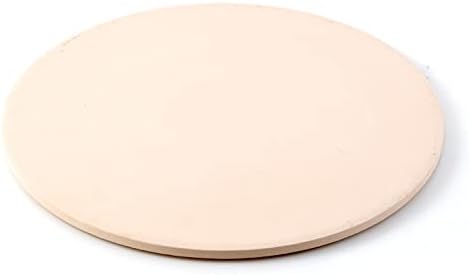
At 11.5 inches wide and 0.47 inch thick, this Nuwave stone is the most compact choice in the group. It is made from cordierite and is described as suitable for most countertop ovens that can hold an 11.5-inch pizza, as well as indoor electric ovens and outdoor gas or charcoal grills.
The stone is rated for temperatures up to 1,472°F. Nuwave describes its heat retention and distribution as helpful for crisping the crust, and lists bread, cookies, pies, muffins, quesadillas, and calzones among its other uses. Its size is the main selling point, but it also sets a clear limit: it is not designed for large pizzas or wide baking batches.
Nuwave says the stone can often be cleaned with a damp cloth, with a brush for more thorough scrubbing. Soap is not recommended, and discoloration over time is described as normal. Compare its 11.5-inch width with your oven’s usable space before buying; the rectangular Unicook and LUNVARION offer more surface area if your appliance can fit them.
Pros:
- Compact width fits many countertop ovens that hold an 11.5-inch pizza
- Rated for temperatures up to 1,472°F
- Listed for indoor ovens and outdoor gas or charcoal grills
- Can also be used for several types of baking
Cons:
- Smaller surface limits pizza and batch size
- Soap is not recommended for cleaning
Verdict: Choose the Nuwave if a compact countertop oven is your main cooking space and its 11.5-inch width fits your needs.
Best Extra-Large Stone: VEVOR 20 x 14-Inch Rectangular Pizza Stone

VEVOR’s 20-by-14-inch stone provides the largest baking area in this selection. It is 0.67 inch thick and made from cordierite, with a stated heat resistance up to 1,450°F. That size can be useful for larger ovens and grills, or when you want space for more than one item.
The porous surface is designed to distribute heat and absorb excess moisture. A plastic scraper is included for dough or baked-on bits. The product is listed for ovens, charcoal grills, barbecues, and stone ovens, and can also be used for bread and pastries.
Size is also its main drawback. VEVOR recommends measuring your oven or grill and allowing 0.8 to 2 inches of clearance on all sides. At 0.67 inch thick, it is also the thickest stone in this roundup, so check both the available floor space and your appliance’s interior dimensions before choosing it. The maker advises cleaning and drying the stone before first use, then heating it gradually.
Pros:
- Largest surface in this comparison at 20 x 14 inches
- Thick cordierite construction rated to 1,450°F
- Includes a plastic scraper
- Listed for ovens, grills, barbecues, and stone ovens
Cons:
- May be too large for many home ovens or grills
- Requires careful clearance checks before use
Verdict: The VEVOR is the strongest fit if you have a large cooking space and want the biggest baking area among these options.
Best Compact Square Option: Unicook 12-Inch Square Pizza Stone

This 12-by-12-inch square Unicook stone is the smallest surface in the group, aside from the narrower Nuwave. Its 0.4-inch thickness makes it a compact option for home ovens and grills, especially when the available space is more square than rectangular.
The cordierite stone is rated for temperatures up to 1,450°F. Unicook says its porous structure helps distribute heat and draw moisture from dough. It is intended for pizza, bread, and cookies, and the package includes a plastic scraper that can be used on the stone when it has cooled.
The small footprint is convenient, but it limits the size of pizza and other items you can bake at once. If you want a larger pizza surface, the 15-by-12-inch Unicook or LUNVARION has more room. Unicook advises hand-washing with warm water and not using soap, detergent, oil, or grease on the stone.
Pros:
- Compact square shape for smaller cooking spaces
- Cordierite rated to 1,450°F
- Can be used for pizza, bread, and cookies
- Includes a plastic dough scraper
Cons:
- Smaller baking area limits pizza size
- Requires hand-washing without soap or detergent
Verdict: Choose this square Unicook if your oven is compact and you want a simple stone for smaller pizzas and everyday baking.
How to Choose the Best Stone for a Pizza Oven Floor
Measure the Cooking Space
Measure the usable interior width and depth of your oven or grill, not just its outside dimensions. Leave the clearance specified by the maker so air can circulate around the stone. The recommendations differ: Unicook calls for 1 to 2 inches on all sides for its 15-by-12-inch stone, while VEVOR specifies 0.8 to 2 inches. The LUNVARION calls for about an inch. Check the full product instructions before ordering.
Match the Stone to Your Pizza Size
Consider the size of the pizza you usually make and allow room to position it on the stone. The 15-by-12-inch Unicook is recommended for personal pizzas up to 11 inches, while LUNVARION lists its similar-sized stone for pizzas up to 12 inches. Nuwave is 11.5 inches wide, and the 12-inch square Unicook offers a smaller, compact surface. VEVOR is the largest choice, but only if your appliance has enough room.
Consider Thickness and Weight
Thickness can affect how a stone fits and how much space it takes up in your oven. The products here range from 0.4 inch for the square Unicook to 0.67 inch for VEVOR. The 15-by-12-inch Unicook weighs about 6.8 pounds, so account for weight when handling or storing it. If you are comparing stones, check both thickness and weight rather than choosing by surface area alone.
Check the Heat Rating and Intended Use
All five options are cordierite stones, with listed heat ratings from 1,450°F to 1,472°F. Their intended uses vary: some are described for indoor ovens and countertop ovens, while others are also listed for grills, barbecues, or RV ovens. Confirm that the product’s use guidance matches your appliance. A portable baking stone is not automatically a suitable replacement for a built-in oven’s floor.
Plan for Preheating and Handling
Preheating is part of using these stones as intended. LUNVARION specifically recommends preheating to 450–500°F, and Unicook says to preheat for even cooking. Follow the instructions for the stone and your appliance, and avoid rushing the process. VEVOR recommends heating its stone gradually, while LUNVARION says to let the stone cool naturally after use.
Know the Cleaning Routine
These stones are not meant to be treated like nonstick pans. The product directions generally call for letting the stone cool, scraping away residue, and cleaning with water rather than detergent or soap. LUNVARION recommends air-drying it completely before storage. Natural stains or darker spots can develop with use; more than one maker notes that discoloration is normal and does not need to be scrubbed away.
Frequently Asked Questions
What material is best for a pizza oven floor?
All five choices here are made from cordierite, a material described by their makers as heat-resistant and suited to pizza baking. For a specific oven, the best choice still depends on fit, clearance, intended use, and the maker’s instructions.
Can I use one of these stones in a built-in pizza oven?
Some product descriptions list use in ovens, grills, or stone ovens, but that does not confirm a fit for every built-in pizza oven. Check the oven’s interior dimensions and the stone’s instructions, including required clearance, before using a portable stone as a floor surface.
Should I preheat a pizza stone?
Yes, the product directions recommend preheating. Unicook says preheating helps support even cooking, and LUNVARION recommends preheating its stone to 450–500°F. Follow the specific instructions supplied with your stone and oven.
Can I put oil or grease on a cordierite pizza stone?
Do not oil or grease the stones in this selection. The Unicook and LUNVARION directions specifically advise against it, and LUNVARION also says not to season the stone.
How should I clean a pizza stone?
Let it cool first, then scrape off food residue and use water as directed by the manufacturer. The Unicook stones advise against soap or detergent, and Nuwave says soap is not recommended. Let a washed stone dry fully before storing it.
Is discoloration on a pizza stone a problem?
Not necessarily. Unicook, LUNVARION, and Nuwave describe discoloration or natural marks as normal with use. Follow the care instructions rather than trying to make the stone look new after each bake.
Which stone is best for a small oven?
The 11.5-inch-wide Nuwave or the 12-by-12-inch Unicook may suit a smaller cooking space, depending on its shape and interior measurements. Measure first and make sure you can leave the required clearance around the stone.
Final Recommendation
For many home cooks, the 15-by-12-inch Unicook offers a balanced size for personal pizzas, bread, and other baking, provided your oven has the required clearance. Choose the LUNVARION if you want a stated 12-inch pizza capacity, the Nuwave or square Unicook for a compact oven, and the VEVOR only when you have room for its much larger surface. Measure your cooking space and follow the maker’s heating and cleaning instructions before deciding.