
A strainer that fits a five-gallon bucket can help catch debris before it reaches paint, coatings, or other liquids. The right mesh depends on what you are filtering: a finer mesh can catch smaller particles, while a coarser one may be a better match when you want to remove larger debris. Below, we compare five bucket-top inserts by their mesh rating, construction, and stated uses so you can narrow down the best strainer for your job.
Quick Comparison
| Product | Mesh rating | Standout feature | Best suited for |
|---|---|---|---|
| Duda Energy 25-Micron EZ Strainer | 25 micron | Washable nylon mesh and a retaining lip | Fine filtration for compatible liquids |
| Duda Energy 100-Micron EZ Strainers, 2-Pack | 100 micron | Two washable, stackable strainers | General-purpose bucket filtering |
| BayTec 600-Micron Coarse EZ-Strainer | 600 micron | Coarse nylon mesh with an HDPE rim | Removing larger particles |
| BayTec 200-Micron Fine EZ-Strainer | 200 micron | Fine nylon mesh and an HDPE rim | Filtering finer debris from liquids |
| CDF 400-Micron EZ-Strainer | 400 micron | Patented lip design and high-density polyethylene | Paint and general liquid filtering |
Our Picks: Best Strainer For 5 Gallon Bucket reviews
Best for Fine Filtering: Duda Energy 25-Micron EZ Strainer

This Duda Energy insert has a 25-micron nylon filter and is made to sit inside the top of most standard five-gallon pails. Its listed dimensions are 11.5 inches inside diameter, 12 inches outside diameter, and 4 inches high. The pail is not included.
The washable monofilament nylon media and HDPE rim are designed for repeated use. A shaped lip helps hold the strainer in place on the pail, and the insert can be stacked for storage. The stated maximum continuous fluid temperature is 180°F, but you should still confirm that the strainer is suitable for your particular liquid and process.
At 25 microns, this is the finest-rated option in this group. That can make it a better fit when catching smaller particles is more important than fast flow. The trade-off is that finer mesh can take longer to pass liquid through and may clog sooner when the material contains a lot of debris. Its fine rating also does not make it a substitute for a filter designed for a specific safety, food, or industrial standard.
Pros:
- Finest stated mesh rating among these five options
- Washable nylon filter media
- Retaining lip is designed to help keep it in place
- Includes listed dimensions and a maximum continuous temperature
Cons:
- Fine mesh may clog more quickly with debris-heavy liquids
- Bucket is not included, and fit should be checked against your pail
Verdict: Choose this insert when you need the finest mesh in this comparison and your liquid is compatible with its materials and temperature limit.
Best Two-Pack: Duda Energy 100-Micron EZ Strainers
This listing is for two 100-micron EZ strainers, not a bucket-and-strainer set. The inserts are described as fitting on top of a standard five-gallon pail. Their support lip is designed to help the strainer rest on the rim while you pour.
The nylon mesh is washable and the strainers are stackable. A 100-micron rating falls between the 25-micron Duda insert and the coarser options in this roundup, making it a middle-ground choice for filtering. The two-pack may also be useful if you want a spare or need to prepare a second bucket, though the supplied details do not specify dimensions or a temperature limit.
Compared with the 25-micron option, this mesh is less fine, which may be preferable when you do not need to catch very small particles. Compared with the 200-, 400-, and 600-micron choices, it has a finer stated rating. Check the product details and your bucket dimensions before ordering, especially if your pail has an unusual rim or opening.
Pros:
- Includes two strainers
- Washable and stackable nylon mesh
- Support lip is designed for use on a standard five-gallon pail
- 100-micron rating offers a middle option in this lineup
Cons:
- Bucket is not included
- Supplied details do not list dimensions or a temperature limit
Verdict: Pick this two-pack if you want a washable 100-micron option and value having a second strainer available.
Best for Coarse Filtering: BayTec 600-Micron EZ-Strainer
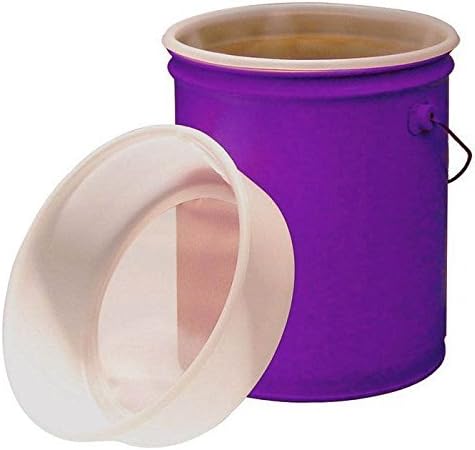
BayTec describes this insert as a coarse 600-micron strainer for a five-gallon bucket or pail. It has multi-element nylon mesh and a heavy-duty HDPE rim. The intended use is to catch unwanted particles as you pour a liquid into the container.
A 600-micron mesh has the coarsest stated rating in this comparison. That makes it more appropriate when you want to remove larger debris than when you need fine particle control. The product description lists paints, coatings, silicones, inks, and honey as possible applications, but you should verify compatibility and any relevant handling requirements before use.
One limitation is availability: the supplied product information marks this item as unavailable. If the listing remains unavailable, the 400- or 200-micron options may be alternatives to consider, depending on how fine a filtration you need. They are not direct substitutes for every job, so choose by particle size rather than by name alone.
Pros:
- Coarsest stated mesh rating among the five picks
- Heavy-duty HDPE rim
- Nylon mesh is intended to catch unwanted particles during pouring
- Description names several possible liquid applications
Cons:
- Supplied product data indicates it is unavailable
- Coarse mesh is not the choice for catching smaller particles
Verdict: This is the option to look for if your job calls for coarse filtration, but confirm availability and make sure 600 microns is fine enough for your needs.
Best Mid-Range Mesh: BayTec 200-Micron Fine EZ-Strainer

This BayTec insert uses 200-micron fine nylon mesh and has a heavy-duty HDPE rim. It is designed to rest on a pail or bucket while you pour, keeping larger-than-mesh particles in the strainer rather than in the receiving container.
Its rating is finer than the 400- and 600-micron choices, but coarser than the 25- and 100-micron options. That places it between fine filtering and a more open, coarse screen. The product description lists paints, coatings, silicones, inks, and honey among potential uses; always check that the material is suitable for your liquid and working conditions.
The supplied product data marks this item as unavailable, so check the listing before planning a purchase. If you need a similar filtering level and this listing cannot be purchased, compare the available mesh ratings carefully rather than assuming that another insert will perform the same way.
Pros:
- 200-micron nylon mesh is finer than the 400- and 600-micron options
- Heavy-duty HDPE rim
- Designed for use on pails and buckets
- Description identifies several possible liquid applications
Cons:
- Supplied product data indicates it is unavailable
- Does not include a bucket
Verdict: Consider this insert when you want a 200-micron screen, but check availability and confirm that its mesh rating suits your filtering task.
Best for Paint and General Liquid Filtering: CDF 400-Micron EZ-Strainer

The CDF 5HD-400 is a 400-micron insert described for filtering paint and other liquids. Its high-density polyethylene construction is intended to be lightweight and durable, and its patented lip design is meant to help the insert stay in place while you pour.
At 400 microns, its mesh is coarser than the 200-micron BayTec and the 25- and 100-micron Duda options, but finer than the 600-micron BayTec. The product description also names uses such as fermentation, beer making, and screening antifreeze. Those examples do not guarantee suitability for every food or chemical application, so check the material requirements for your particular use.
The supplied data marks this product as unavailable. If the listing is not purchasable, the Duda 100-micron two-pack or the BayTec 200-micron insert may be alternatives to compare, though both have finer mesh. This CDF model may be worth considering if it becomes available and its 400-micron rating matches your needs.
Pros:
- 400-micron rating sits between the finer and coarser choices
- Patented lip design is intended to help keep the insert in place
- High-density polyethylene construction
- Description lists paint and several other potential uses
Cons:
- Supplied product data indicates it is unavailable
- Mesh is not as fine as the 25-, 100-, or 200-micron options
Verdict: Consider the CDF if you need a 400-micron insert for paint or another compatible liquid, but verify availability and application suitability first.
How to Choose a Strainer for a 5-Gallon Bucket
Match the Mesh Rating to the Particles
Micron ratings describe the size of particles a filter is designed to catch. A lower number means a finer mesh in this comparison: the 25-micron insert is finer than the 100-, 200-, 400-, and 600-micron options. Choose based on the debris you need to remove. A coarse screen can be more practical for larger particles, while a fine screen is intended to catch smaller ones.
Balance Filtration with Flow
Finer mesh can slow pouring and may clog sooner if your liquid contains a lot of debris. If your main goal is to catch large pieces, a coarse rating may be a better fit. If smaller particles matter, expect that a finer strainer may need more attention during use. The product details here do not provide flow-rate comparisons, so your liquid and debris load will affect the result.
Check the Fit on Your Bucket
These products are inserts that sit on a bucket or pail; they do not include a five-gallon container. Bucket openings and rims can vary, so compare the product dimensions with your pail where dimensions are provided. The Duda 25-micron insert lists a 12-inch outside diameter and says it fits most standard five-gallon pails. Other listings describe pail use but do not provide the same detailed measurements.
Consider Materials and Temperature
Look at the strainer’s mesh and rim materials, then check whether they are suitable for the liquid you plan to filter. The Duda 25-micron insert is described as having nylon media and an HDPE rim, with a maximum continuous fluid temperature of 180°F. The other products also name nylon mesh and/or HDPE construction, but the supplied details do not give a temperature limit for them. Do not assume that a product is suitable for food, chemicals, or hot liquids just because the description names a possible use.
Think About Cleaning and Reuse
The Duda strainers are described as washable and stackable, which can be useful if you plan to reuse or store them. Cleaning needs depend on what you filter; paint, coatings, and other materials may leave residue that is hard to remove. Follow the product instructions and any safety guidance for the liquid rather than reusing a strainer across incompatible materials.
Check What Is Included and Whether It Is Available
These are strainer inserts, not bucket kits. The Duda 100-micron listing is a two-pack, while the Duda 25-micron listing specifically says the pail is not included. The supplied product information marks the BayTec 200-micron, BayTec 600-micron, and CDF 400-micron listings as unavailable. Check the current product listing for availability and included items before ordering.
Frequently Asked Questions
What micron rating should I choose for a five-gallon bucket strainer?
Choose the rating based on the size of particles you need to catch. Lower micron ratings indicate finer mesh in this group. The 25-micron option is the finest listed, while the 600-micron option is the coarsest.
Will these strainers fit every five-gallon bucket?
No. The listings describe them as fitting standard pails or buckets, but rims and openings can vary. Check the product dimensions when available and compare them with your bucket before buying.
Does a strainer insert include a bucket?
No bucket is listed as included. These products are described as inserts that sit on top of a pail or bucket. Check the individual listing for the exact package contents.
Can I use these strainers for paint?
Several product descriptions list paint, coatings, or inks as possible uses. Select a mesh rating that suits the particles you need to catch, and confirm that the strainer is compatible with the specific product you are filtering.
Can a finer mesh slow down filtering?
It can. Fine mesh has smaller openings and may pass liquid more slowly, especially when the liquid contains a lot of debris. The product data does not provide flow-rate figures, so results will depend on the material and how much you pour.
Are the strainers reusable?
The Duda 25-micron and 100-micron strainers are described as washable. The supplied descriptions do not give the same cleaning details for every model, so check each product’s instructions before planning to reuse it.
Which option should I choose for the finest filtration?
The Duda Energy 25-micron insert has the finest stated mesh rating among these five products. Confirm that its materials, dimensions, and temperature limit suit your bucket and application before choosing it.
Final Recommendation
For the finest stated filtration in this group, the Duda Energy 25-micron EZ Strainer is the clearest choice, provided its dimensions and temperature limit suit your setup. If you want a middle-ground mesh and a second insert on hand, consider the Duda 100-micron two-pack. The BayTec and CDF options offer other mesh ratings, but the supplied product data marks those listings as unavailable. Before buying, match the micron rating to your debris, check your bucket’s opening, and confirm that the strainer is suitable for the liquid you plan to filter.