
The best tea pot for green tea makes it easy to steep loose leaves, pour cleanly, and brew an amount you’ll actually finish. These four options range from a compact glass pot to sturdy cast-iron designs and an everyday porcelain teapot. The right choice depends on whether you value easy viewing, heat retention, stove compatibility, or simple serving most.
| Teapot | Capacity | Standout feature | Best for |
|---|---|---|---|
| Sweese Porcelain Teapot with Infuser | 27 oz | Porcelain body and stainless-steel infuser | Everyday brewing for one or two |
| Toptier Diamond Cast Iron Teapot | 30 oz as a teapot; 24 oz boiling capacity | Stovetop-safe cast iron construction | Heat retention and stovetop use |
| TOPTIER Leaf-Design Cast Iron Teapot | 32 oz full-load capacity; 25 oz recommended boiling capacity | Removable stainless-steel infuser | Cast-iron styling and loose-leaf tea |
| PARACITY Glass Teapot with Infuser | 18.6 fl oz | Clear borosilicate glass design | Small servings and watching tea steep |
Our Picks: Best Tea Pot For Green Tea reviews
Best Everyday Pick: Sweese Porcelain Teapot with Infuser

The Sweese is a straightforward serving pot for loose-leaf tea. Its 27-ounce capacity is sized for about two mugs or three teacups, making it a practical fit when you want more than one serving without brewing a large batch.
The porcelain body has a glossy sage-green finish, while the stainless-steel infuser gives loose leaves room to steep. A silicone gasket helps keep the lid in place as you pour. The handle and spout are designed for pouring, and the pot is listed as dishwasher- and microwave-safe.
One important distinction: this is a teapot, not a kettle. It should not be placed on a heating element. For green tea, heat water separately, let it reach a suitable brewing temperature, and then pour it into the pot. Compared with the cast-iron choices, the Sweese is less focused on retaining heat or stovetop use; compared with the glass pot, it is larger and less see-through.
Pros:
- 27-ounce capacity suits one or two tea drinkers.
- Removable stainless-steel infuser accommodates loose-leaf tea.
- Silicone gasket helps hold the lid in place while pouring.
- Listed as dishwasher- and microwave-safe.
Cons:
- Not designed for use on a stovetop or heating element.
- The opaque body does not let you watch the leaves steep.
Verdict: Choose the Sweese if you want a simple, medium-size porcelain pot for brewing and serving green tea after heating water separately.
Best Stovetop Cast Iron Option: Toptier Diamond Teapot

This diamond-pattern cast-iron pot stands out for its sturdy construction and stated stovetop compatibility. It holds 30 ounces when used as a teapot, but its listed boiling capacity is 24 ounces. That difference matters: use the lower capacity when heating water on the stove, rather than filling it to the top.
The interior is enameled, and a removable stainless-steel infuser is included for loose leaves, tea bags, or blooming tea. The handle folds down, and the design is intended to work with several heat sources, including gas, electric, ceramic, and induction cooktops. The supplied guidance recommends low or moderate heat and warns against heating the pot dry.
For green tea, this can be useful if you want one vessel that can heat water and then serve it. Still, cast iron is not essential for brewing green tea, and it calls for a different care routine than the porcelain or glass choices. The product instructions recommend cleaning with water, so it may not suit someone looking for a pot that can simply go in the dishwasher.
Pros:
- Stated as compatible with several stovetop types.
- Removable stainless-steel infuser works with loose leaves and tea bags.
- Enameled interior helps keep the tea’s flavor distinct.
- 30-ounce serving capacity is useful for sharing.
Cons:
- Boiling capacity is lower than its full teapot capacity.
- Care instructions call for water cleaning rather than dishwasher use.
Verdict: Pick the diamond cast-iron model if stovetop use and heat retention are priorities, and you are comfortable following its capacity and care instructions.
Best Leaf-Pattern Design: TOPTIER Cast Iron Teapot

This TOPTIER model pairs a cast-iron body with a green leaf pattern and a stainless-steel infuser. Its full-load capacity is 32 ounces, but the recommended amount for stovetop boiling is 25 ounces. It is described as serving two or three people when filled, though the recommended boiling limit is the more useful figure if you plan to heat water in the pot.
The enameled interior is intended to preserve the tea’s flavor and make care easier. The infuser can be removed for cleaning, and the fold-down handle and curved spout are designed to support handling and pouring. The product description recommends low heat for stovetop use and says to clean the pot with water rather than dishwashing detergent.
Like the diamond-pattern option, this is a better match for someone who wants cast iron and stovetop flexibility than for someone seeking a lightweight, low-maintenance serving pot. Its capacity is a little larger than the diamond model, but its recommended boiling amount is close. If you only need to brew a cup or two, the Sweese or PARACITY may be more convenient.
Pros:
- 32-ounce full-load capacity for serving several cups.
- Removable 18/10 stainless-steel infuser.
- Enameled interior and cast-iron construction.
- Designed for stovetop use with low heat recommended.
Cons:
- Recommended boiling capacity is 25 ounces, below the full-load capacity.
- Care guidance calls for water cleaning and advises against dishwashing detergent.
Verdict: Choose this model if you want a cast-iron pot with a botanical look and a removable infuser, while keeping its lower stovetop capacity in mind.
Best Compact Glass Pot: PARACITY Teapot with Infuser
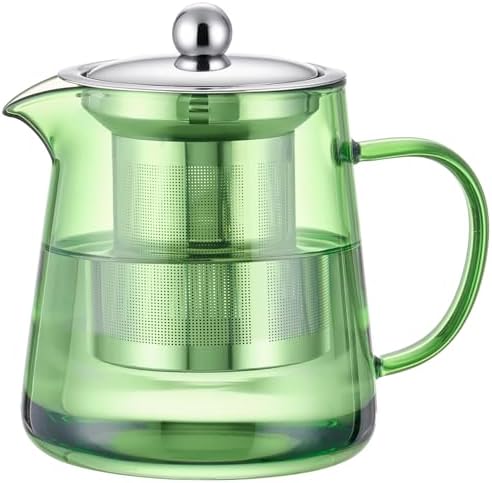
With an 18.6-ounce capacity, the PARACITY is the smallest pot in this group. Its clear borosilicate-glass body lets you see the tea as it steeps, which is useful if you want to keep an eye on color or enjoy watching the leaves unfurl.
The pot includes a removable glass infuser with an 18/8 stainless-steel ultra-fine strainer. The product description lists it as stovetop-, microwave-, and dishwasher-safe, and says the glass is designed to withstand temperatures from -68°F to 302°F. Its compact size makes it a better fit for individual servings or a small shared pot than for a larger gathering.
The glass construction gives it a different feel from the porcelain and cast-iron options: it is transparent rather than opaque, and the product description emphasizes ease of pouring and one-handed operation. If you want more servings, the 27-ounce Sweese or either cast-iron pot offers greater capacity. Before using any glass pot on a stove, check the manufacturer’s instructions for the specific heat source and use it as directed.
Pros:
- Clear body makes it easy to see the tea while it steeps.
- Removable infuser includes an ultra-fine stainless-steel strainer.
- Compact 18.6-ounce capacity suits smaller servings.
- Listed as stovetop-, microwave-, and dishwasher-safe.
Cons:
- Smallest capacity among these four options.
- Glass may not be the right choice if you prefer an opaque, cast-iron pot.
Verdict: The PARACITY is a good fit if you want a compact, see-through pot with an infuser and value watching your green tea steep.
How to Choose a Teapot for Green Tea
Choose the right capacity for your routine
Think about how many cups you usually make at once. The PARACITY holds 18.6 ounces, the Sweese holds 27 ounces, and the two cast-iron models offer capacities of 30 and 32 ounces when used as teapots. If you usually drink tea alone, a smaller pot can help you avoid making more than you need. For sharing, a larger capacity may be more convenient.
Decide whether you need a kettle or a serving pot
A teapot is not always designed to heat water. The Sweese is explicitly a serving pot and should not go on a heating element. The two cast-iron models and the PARACITY are described as stovetop-safe, but each has its own capacity or use guidance. If you prefer to heat water separately, any of these can serve as a brewing pot when used according to its instructions.
Look for an infuser that suits your tea
A removable infuser keeps loose leaves contained while tea steeps and makes it easier to remove them when brewing is finished. All four options include an infuser. The PARACITY specifies an ultra-fine strainer, while the other models describe stainless-steel infusers. Consider whether you usually use loose leaves, tea bags, or both.
Consider material and visibility
Glass lets you watch the tea steep, while porcelain offers an opaque, traditional serving style. Cast iron is described as sturdy and able to retain heat, but it comes with specific care and heating instructions. Choose the material that best fits your routine rather than assuming one is ideal for every kind of green tea.
Check care and heat instructions before buying
Care needs vary across these pots. The Sweese is listed as dishwasher- and microwave-safe, and the PARACITY is also listed as dishwasher-, microwave-, and stovetop-safe. The cast-iron models have more specific cleaning guidance, and their recommended boiling capacities are lower than their full-load capacities. Follow the product instructions, especially when using a pot on a stove.
Plan for green tea’s brewing needs
Green tea is generally brewed with water that is below a rolling boil, so a pot that holds heat well is not the only feature to consider. You can heat water separately and let it cool to an appropriate brewing temperature before adding it to the leaves. An infuser that is easy to remove also helps you stop steeping when the tea is ready.
Frequently Asked Questions
Can I use any of these teapots for loose-leaf green tea?
Yes. Each product includes an infuser for loose-leaf tea. The PARACITY specifically describes its strainer as ultra-fine; for the other pots, check the infuser design and your preferred leaf size before choosing.
Can I put the Sweese porcelain teapot on the stove?
No. Its product description says it is a pot, not a kettle, and warns against placing it on a heating element. Heat water separately and pour it into the pot.
Which teapot is the smallest?
The PARACITY has the smallest listed capacity at 18.6 fluid ounces. It is the most compact choice here for a single serving or a small pot to share.
How much water can I boil in the cast-iron teapots?
The diamond-pattern Toptier lists a 24-ounce boiling capacity, while the leaf-design TOPTIER lists a recommended boiling capacity of 25 ounces. Their full teapot capacities are higher, so follow the lower boiling limits when heating water on a stovetop.
Which option lets me see the tea as it steeps?
The PARACITY’s clear glass body is the only transparent design among these four. The Sweese and cast-iron options have opaque bodies.
Is cast iron necessary for brewing green tea?
No. Cast iron may appeal if you want its sturdy construction, heat retention, or stated stovetop compatibility, but it is not required. Porcelain or glass can work well as a serving pot when you heat water separately.
Conclusion
For most everyday green-tea drinkers, the Sweese Porcelain Teapot is the most balanced choice: it has a useful 27-ounce capacity, a removable infuser, and straightforward serving features. Choose the PARACITY if you want a smaller transparent pot, or pick one of the Toptier cast-iron models if stovetop use and heat retention matter more than simple care. Always follow the listed capacity and heating instructions for your chosen pot.