
Bed bug sprays can help treat mattress seams and nearby hiding places, but they are only one part of a control plan. Bed bugs can hide in bed frames, headboards, furniture, and cracks, so treating only the mattress may not solve an infestation. The options below differ in their ingredients, application directions, and treatment plans. Always follow the product label, and do not use a spray on a surface unless the label allows it.
| Product | Standout feature | Best fit |
|---|---|---|
| Hygea Natural Bed Bug Killer Spray | Odorless, stain-free formula and included treatment guide | Shoppers who want a straightforward spray and step-by-step instructions |
| Premo Guard Bed Bug & Dust Mite Killer | For mattresses and other household surfaces | People looking for a scent-free option for a range of surfaces |
| GoneNaturally Bed Bug Spray | Detailed repeat-treatment and monitoring plan | Shoppers who want a structured, multi-week approach |
| Bed Bug Patrol Bed Bug Spray | Plant-based formula with clove and peppermint oils | People seeking a plant-based spray for listed household surfaces |
| RID Home Lice, Bedbug, and Dustmite Treatment | Permethrin spray for non-washable items | Those who need to treat eligible non-washable items |
Our Picks: Best Treat Mattress For Bed Bugs reviews
Hygea Natural Bed Bug Killer Spray: A simple option with a treatment guide

Hygea Natural is a ready-to-use spray intended for home and commercial use. The product description says it can be applied to water-friendly surfaces such as mattresses, upholstery, linens, clothing, floors, and walls. It is described as odorless and stain-free, but you should still check the label for the exact surfaces and application instructions before spraying.
The included three-step guide is a useful feature for anyone who needs help organizing a treatment. Bed bugs hide in more places than the mattress surface, so a plan that prompts you to inspect and treat likely hiding spots can be more practical than spraying only where you see a bug. The product description says it works on contact; that does not mean one application will reach bugs tucked into inaccessible cracks or prevent a later hatch.
The formula is marketed for households with children and pets. Treat that wording as a product claim, not a reason to skip precautions: follow the label, keep people and animals away during application, and wait until treated areas are fully dry before allowing contact. Its broad surface list may appeal to people treating several parts of a room, while shoppers who want a clearly stated repeat schedule may prefer GoneNaturally.
Pros:
- Includes a step-by-step treatment guide.
- Described as odorless and stain-free.
- Listed for use on multiple water-friendly household surfaces.
Cons:
- The included guide and careful coverage still require time and follow-through.
- Its contact action alone should not be treated as a complete room-wide solution.
Verdict: Choose Hygea Natural if you want a versatile spray paired with a basic treatment guide, and are prepared to follow its label and inspect more than just the mattress.
Premo Guard Bed Bug & Dust Mite Killer: A scent-free multi-surface spray

Premo Guard is described as a natural-ingredient spray for bed bugs and dust mites. Its listed uses include mattresses, blankets, pillows, furniture, clothing, carpets, curtains, and pet bedding. The brand also describes the formula as scent-free and non-staining when used according to its directions.
The product description says it kills bugs at all life stages when sprayed directly on them, and cites university testing. That is a claim from the manufacturer; in practical use, direct contact matters, and bugs hidden inside seams, joints, or cracks may not be reached by a surface application. Read the label closely to confirm where and how to apply it, especially before treating bedding or anything that touches skin.
This could suit someone who wants one product for several eligible surfaces rather than a mattress-only treatment. Compared with GoneNaturally, the supplied description gives less detail about a repeat-treatment schedule. For any infestation, plan to pair an approved spray application with other control steps, such as laundering bedding as directed and carefully vacuuming hiding places.
Pros:
- Listed for use on a range of household fabrics and surfaces.
- Described as scent-free and non-staining when used as directed.
- Targets bed bugs and dust mites.
Cons:
- Contact is required, so hidden insects may not be reached by spraying exposed surfaces.
- The product description does not provide a detailed repeat-treatment schedule.
Verdict: Premo Guard is worth considering if you want a scent-free spray for multiple label-approved surfaces, but do not rely on it as a stand-alone treatment for bugs you cannot reach.
GoneNaturally Bed Bug Spray: A clearly outlined repeat-treatment plan

GoneNaturally stands out for the detail in its stated treatment plan. The product description directs users to treat hiding places, repeat treatment every seven days for four rounds, and then monitor for three weeks. It also recommends vacuuming seams, edges, and cracks and washing and drying bedding on the hottest safe setting. This is a more structured approach than simply spraying the mattress once.
The listed active ingredients are sodium lauryl sulfate and soybean oil. The formula is described as scentless and non-staining on mattresses, upholstery, linens, and travel bags, with a recommendation to test a small hidden area first. The description also warns against use on certain materials, including unfinished wood, natural stone, grout, matte paint, and raw concrete, so take care around the bed frame and room surfaces.
The product is described as suitable around children and pets when used as directed, but it is not for use on people or animals. Keep it on eligible household surfaces only, and follow the label’s instructions for drying and re-entry. Its repeat schedule may suit shoppers who want clear next steps; it may be less appealing if you are looking for a one-time application.
Pros:
- Provides a specific repeat-treatment and monitoring schedule.
- Lists mattress seams, headboards, frames, and other hiding places in its treatment plan.
- Described as scentless and non-staining on several listed surfaces.
- Includes practical reminders about vacuuming and laundering.
Cons:
- Requires repeated applications and monitoring over several weeks.
- Not for use on people or animals, and some surfaces are excluded.
Verdict: GoneNaturally is a strong fit if you value a detailed, repeatable plan and are willing to treat, clean, and monitor consistently.
Bed Bug Patrol Bed Bug Spray: A plant-based formula for home surfaces
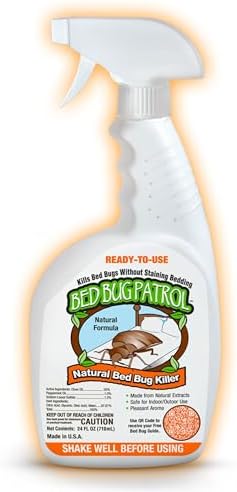
Bed Bug Patrol is a plant-based spray made with clove oil, peppermint oil, and sodium lauryl sulfate, along with other listed ingredients. The product description says it is intended for mattresses, furniture, seams, and cracks. Its plant-derived ingredients may appeal to shoppers who prefer that type of formula, although “plant-based” does not mean a product is risk-free or suitable for every surface.
The brand describes the spray as fast-acting on bed bugs, eggs, and larvae and says it can leave a lasting defense barrier on treated surfaces. These are product claims, and the supplied details do not explain how long a barrier lasts or what conditions affect it. Follow the label rather than assuming a treated area will remain protected indefinitely.
Compared with the other options here, Bed Bug Patrol emphasizes its ingredient profile and broad treatment settings, including homes, hotels, and other facilities. The product description does not lay out as precise a repeat schedule as GoneNaturally. If you choose it, make sure the label permits your intended mattress application and follow its safety directions, particularly around children, pets, and bedding.
Pros:
- Uses a plant-based formula with clove and peppermint oils.
- Listed for mattresses, furniture, seams, and cracks.
- Made in the USA according to the product description.
Cons:
- The presence of plant-derived ingredients does not remove the need for label precautions.
- The supplied description does not give a specific repeat-treatment schedule.
Verdict: Consider Bed Bug Patrol if you prefer a plant-based spray and want a product listed for several common hiding places, but check the label for surface and safety limits.
RID Home Treatment Spray: A permethrin option for non-washable items

RID Home is a permethrin spray described for bed bugs, lice, and dust mites on non-washable items. The product information lists mattresses, furniture, and car interiors as possible uses, and directs users to spray for three seconds and let the treated area dry. Because its directions are focused on non-washable items, it is not a substitute for washing bedding that can be laundered.
This option differs from the other sprays in the comparison because it uses permethrin rather than the ingredients listed for the plant-based or other formulas. Check the full label before use and follow its instructions exactly. Do not assume that every part of a mattress or bedding set is an approved application site simply because the product is described for some non-washable items.
RID may suit shoppers who already need a treatment for eligible non-washable household items and want one product that also targets lice and dust mites. It is a less flexible choice for anyone specifically looking for a scent-free or plant-based formula, and careful attention to application directions is essential.
Pros:
- Designed for non-washable items such as furniture and listed mattress surfaces.
- Also targets lice and dust mites, according to the product description.
- Provides a simple application direction for eligible items.
Cons:
- Its use is limited to non-washable items as described.
- Permethrin and surface-specific directions may not suit shoppers seeking a plant-based formula.
Verdict: RID is best considered for label-approved non-washable items, not as an all-purpose mattress and bedding treatment.
How to Choose a Bed Bug Spray for a Mattress
Confirm the label allows mattress use
Not every household insect spray is suitable for every mattress surface. Check the label for the exact application sites, directions, and any restrictions on bedding or items that touch skin. Product descriptions can summarize a spray’s uses, but the label is the guide to follow. If the label does not clearly allow your intended use, do not apply the product there.
Look for a plan beyond the mattress
Bed bugs can hide in mattress seams, bed frames, headboards, furniture joints, and cracks near the bed. A spray that is easy to apply can still miss insects hidden out of sight. Consider whether the product gives useful instructions for treating hiding places and whether you can follow them without spreading bugs to another room.
Understand contact action and repeat treatments
Some products describe killing bugs on contact, which means the spray must reach the insect. A single application may not contact every bug or egg hidden in a room. Check whether the label or product plan calls for repeat applications and monitoring. GoneNaturally, for example, describes a weekly repeat schedule followed by monitoring; always follow the current product label for safe use.
Match the formula to your household and surfaces
Compare ingredients and application limits, not just terms such as “natural,” “plant-based,” or “family-friendly.” Those phrases do not replace safety directions. Check whether the spray is listed for your mattress material, nearby furniture, and any other intended surfaces. Keep children and pets away as directed, and do not apply household sprays to people or animals unless the label specifically permits it.
Plan for cleaning and monitoring
Spraying is only one possible step in managing bed bugs. The product information for some options recommends vacuuming seams and cracks and laundering bedding on the hottest safe setting. Use care when moving items so you do not carry bugs to another room. If activity continues or the infestation is extensive, consider contacting a qualified pest management professional.
Think about scent, residue, and drying time
Several products are described as scent-free or non-staining, while others contain oils or different active ingredients. Even when a brand describes a formula as non-staining, test a small hidden area if instructed and follow the label’s drying directions. Keep treated bedding and surfaces out of use until the label says it is safe to return.
Frequently Asked Questions
Can a bed bug spray alone get rid of an infestation?
A spray may help when applied to bugs and hiding places allowed by its label, but spraying only the visible mattress surface can miss insects elsewhere. Follow a complete treatment plan, including any cleaning, repeat application, and monitoring steps. For a persistent or widespread problem, seek professional help.
Should I spray the whole mattress?
Only apply a product to the mattress areas specifically permitted by its label. Some products are intended for seams or non-washable items, and application directions vary. Do not soak a mattress or treat bedding unless the label says to do so.
Do these sprays kill bed bug eggs?
Some product descriptions claim activity against eggs, but effectiveness depends on the product and whether the spray reaches the eggs. Eggs can be concealed in seams and cracks. Follow the label’s instructions for repeat treatments and check treated areas over time.
Are bed bug sprays safe around children and pets?
Safety depends on the product and how it is used. Follow the label’s directions for keeping children and pets away during application and until treated surfaces are safe to contact. Never use a household bed bug spray directly on a person or animal unless its label expressly allows that use.
Can I sleep on a mattress after spraying it?
Do not use the mattress until the product label’s drying and re-entry instructions say it is safe. If the directions are unclear, contact the manufacturer before applying the spray to a sleep surface.
Should I wash my bedding instead of spraying it?
Washable bedding should be laundered according to its care instructions and the treatment plan you are following. Sprays are generally meant for specific surfaces, not as a replacement for laundering. Check the product label before using any spray on sheets, blankets, or pillowcases.
When should I call a pest professional?
Consider professional help if you keep finding bed bugs after following the product directions, cannot locate where they are hiding, or suspect the infestation has spread. A qualified professional can assess the situation and recommend a broader approach.
Final Recommendation
For shoppers who want a clear repeat-treatment plan, GoneNaturally is the most structured option in this group. Hygea Natural is a practical alternative if you value an included guide and a spray described for several household surfaces. Whichever product you choose, use it only as directed, treat likely hiding places rather than just the mattress top, and monitor for continued activity.