
Back pain and a bad mattress often go together. If you wake up stiff, shift position all night, or feel pressure in your hips and lower back, the surface you sleep on may be part of the problem. The right mattress does not have to be the firmest one on the shelf. It should keep your spine in a neutral line, cushion pressure points at the shoulders and hips, and stay supportive through the night. This guide compares five mattresses that are marketed for back pain relief, explains how each one is built, and highlights who will get the most out of each design. You will also find a buying guide that walks through the factors that matter most, so you can choose with confidence.
Quick Comparison Table
| Mattress | Construction | Firmness Feel | Best For |
|---|---|---|---|
| UniPon Firm Queen Mattress 12 inch for Back Pain and Pressure Relief | Hybrid with pocket springs and foam layers | Firm | Back and stomach sleepers who want a firm, bouncy feel |
| VISCOFLEX Extra Firm Mattress Queen Size – 14 Inch Memory Foam Queen Mattress | Three-layer memory foam, spring-free | Extra firm | Sleepers who need maximum lumbar firmness and couples concerned about motion |
| Novilla 12 Inch Queen Size Mattress, Hypoallergenic & Back Pain Relief | Hybrid with SmartS coils and contouring foam | Medium to firm (balanced support) | Side, back, and stomach sleepers who want edge support and allergy-conscious materials |
| EGOHOME King 14 inch Memory Foam Mattress for Back Pain Relief Medium Firm | Copper gel memory foam, Adaptifoam, and high-density base | Medium firm | Back sleepers and those with chronic lower back or joint discomfort who want a king size |
| back science Essentials Queen Mattress – Chiropractic Designed to Best Align Your Spine | Seven-layer hybrid with HyperGel pressure-relief foam | Firm lumbar support | Sleepers who want a thinner profile with chiropractic-focused support |
Our Picks: Best Types Of Mattress For Back Pain reviews
UniPon Firm Queen Mattress: A Firm Hybrid for Lower Back Support

The UniPon is a 12-inch queen hybrid that combines independent pocket springs with several layers of foam. It is built for people who want a firm, supportive surface rather than a soft, sinking feel. The mattress uses an egg crate foam layer, which the listing says helps air move through the mattress and reduces trapped heat. That design choice matters if you tend to sleep warm, because heat buildup can make it harder to settle into deep sleep.
The core idea behind this mattress is targeted lumbar support. The listing describes extra foam and enhanced coils in the hip and lower back zones, which is meant to stop the midsection from dropping too far. For many back sleepers and stomach sleepers, that kind of reinforcement keeps the spine closer to a straight line. Side sleepers may find it firmer than they expect, especially at the shoulder and hip, so the feel may require a short adjustment period.
In everyday use, many owners appreciate the independent springs because they respond to movement in a localized way. When one person gets in or out of bed, the motion tends to stay closer to that side. Buyers often note that the surface feels springy and supportive rather than dense. On the other hand, the firm feel is not ideal for everyone. Lighter sleepers who want a cushioned, hugging surface may find it stiff, and the mattress may not offer the same pressure relief that a memory foam design provides at the hips.
Compared with the other picks, the UniPon sits in the firm, hybrid category. It is less foam-heavy than the VISCOFLEX and EGOHOME options, so it feels more responsive and less enveloping. It is a good fit for people who want a traditional firm feel with added lumbar reinforcement, but it is a less natural match for sleepers who need a soft, contouring layer over the shoulders and hips.
Pros and Cons of the UniPon Firm Queen Mattress
Pros:
- Independent pocket springs help limit motion transfer between partners.
- Extra lumbar reinforcement is designed to reduce sinking in the hips and lower back.
- The egg crate foam layer supports airflow for a cooler sleep surface.
- Foam components are listed with CertiPUR-US, OEKO-TEX, and CFR1633 certifications.
Cons:
- The firm feel may be too rigid for side sleepers or lighter users who want a cushioned surface.
Verdict: The UniPon is a strong choice if you want a firm hybrid with targeted lumbar support and good motion control. Back and stomach sleepers who have felt their hips sink into softer beds will likely appreciate its structure. If you sleep mainly on your side or prefer a plush feel, look at one of the foam-based options below first.
VISCOFLEX Extra Firm Queen Mattress: Maximum Firmness with Memory Foam Comfort

The VISCOFLEX is a 14-inch, spring-free memory foam mattress aimed at people who want an extra-firm surface. Its three-layer design includes a gel-infused memory foam top, followed by foundation foam layers meant to spread weight evenly. The listing presents it as a choice for back and stomach sleepers who need added lumbar support, and that positioning makes sense. The base foam is designed to keep the body from sinking too deeply, which is the main concern for many people with lower back pain.
The gel-infused top layer gives the mattress a softer surface than the firmness rating might suggest. This is a useful balance. Pure extra-firm foam can feel harsh on the shoulders, while this design aims to cushion pressure points without allowing the spine to fall out of alignment. The spring-free construction also means there are no coils to squeak or wear out, and the listing emphasizes quiet motion isolation, which can help couples who share a bed.
Many owners appreciate how little motion carries across the surface. In everyday use, foam mattresses of this type tend to feel calm and steady, and the spring-free build creates a quiet sleeping environment. Some users, however, find that memory foam holds heat more than innerspring or hybrid designs, even with gel infusion. Setup can also take a little time, since foam needs to expand fully after unboxing. Anyone who runs warm should weigh this trade-off carefully.
Compared with the UniPon, the VISCOFLEX feels more enveloping and less bouncy. It is a better match for those who want a firmer, more cushioned surface and do not mind the slower response of memory foam. Compared with the EGOHOME, it leans firmer, so it suits people who find medium firm options too soft.
Pros and Cons of the VISCOFLEX Extra Firm Queen Mattress
Pros:
- Three-layer foam construction is designed to support the spine and cushion pressure points.
- The spring-free design offers strong motion isolation for couples.
- Gel-infused memory foam helps the top layer feel softer than its extra-firm rating suggests.
- The listing notes a 365-night trial and 10-year coverage.
Cons:
- Memory foam can retain body heat, and the extra-firm feel may be too rigid for side sleepers.
Verdict: The VISCOFLEX is a solid pick for back and stomach sleepers who want a firm, foam-based surface with good motion control. It is especially suitable if you have felt that softer mattresses let your lower back sink. Side sleepers and hot sleepers should look at the hybrid options first.
Novilla 12 Inch Queen Hybrid Mattress: Balanced Support with Allergy-Conscious Materials

The Novilla is a 12-inch queen hybrid that pairs SmartS coils with contouring foam. Its goal is to cradle pressure points while keeping the spine aligned, which makes it a versatile choice for side, back, and stomach sleepers. Unlike the firmest options in this list, the Novilla is positioned as a balanced surface. That makes it easier to recommend to people who have tried very firm beds and found them uncomfortable, but who still need reliable support for back pain.
The fabric is one of the highlights. The listing describes AirBreeze fabric that wicks moisture and promotes airflow, which can help the surface feel drier and cooler through the night. The mattress is also described as hypoallergenic and fiberglass-free, with CertiPUR-US foam and OEKO-TEX fabrics. For people who are sensitive to dust or who want a cleaner material profile, those details carry real weight.
Another practical feature is the reinforced perimeter. Edge support is often overlooked, but it affects how usable the mattress is. A firm edge makes it easier to sit on the side of the bed to put on shoes or to get up without feeling like you will roll off. Some owners appreciate this more than they expected, especially those who sleep near the edge of a bed. The trade-off is that a hybrid with a supportive perimeter may feel a bit more structured than a pure foam bed, and some sleepers may want a softer top layer for shoulder comfort.
Compared with the UniPon, the Novilla feels less rigid and more adaptable. It is a better choice for mixed sleepers and for people who want a moderate level of lumbar support without going to the extreme firm end. It also offers a cleaner materials story than many budget hybrids, though buyers with specific allergy needs should still check the full product details before purchasing.
Pros and Cons of the Novilla 12 Inch Queen Mattress
Pros:
- Balanced hybrid support suits side, back, and stomach sleepers.
- AirBreeze fabric is designed to wick moisture and improve airflow.
- Fiberglass-free construction with CertiPUR-US foam and OEKO-TEX fabrics appeals to allergy-conscious shoppers.
- Reinforced perimeter support makes the sleeping surface feel more usable at the edges.
Cons:
- The hybrid structure may feel firmer and less plush than some memory foam buyers prefer.
Verdict: The Novilla is one of the most versatile options here. It is a practical choice for people with back pain who sleep in more than one position and want good edge support and clean materials. If you need a very firm surface, the UniPon or VISCOFLEX may fit better.
EGOHOME King 14 Inch Memory Foam Mattress: Medium Firm Pressure Relief

The EGOHOME is a 14-inch memory foam mattress in a medium-firm feel, and it is the only king-size option in this lineup. Its construction has three distinct jobs. The top layer is copper gel memory foam designed to relieve pressure at the shoulders and hips. The middle layer uses Adaptifoam for airflow, and the high-density base is meant to keep the mattress from sagging over time. The graphite-infused cover is described as cool to the touch, which is a helpful feature for people who sleep warm.
This mattress is clearly designed with back sleepers and people with chronic lower back or joint discomfort in mind. The layered approach aims to balance cushioning with alignment, so the body sinks enough to feel relief but not so much that the hips drop below the shoulders. The listing also states that it is endorsed by the International Chiropractors Association, which adds some credibility for people who want a supportive, professionally oriented design.
Practical flexibility is another strength. The listing says it works on platform beds, box springs, slatted frames, adjustable bases, and even directly on the floor. That range is useful for people who are changing their bed setup or who want a mattress that fits a minimalist room. The stated weight capacity of 750 lbs total is also relevant for couples or heavier sleepers. Still, a king size requires a larger footprint and a bedroom to match, and memory foam can feel slower to change position on than a hybrid. Shoppers who want a bouncier surface may find it less responsive.
Compared with the VISCOFLEX, the EGOHOME is softer and more balanced, making it a better match for people who find extra-firm beds too unforgiving. Compared with the Novilla, it offers a more foam-centered pressure relief feel and a stronger focus on back-specific support, though it lacks the coil structure of a hybrid.
Pros and Cons of the EGOHOME King 14 Inch Mattress
Pros:
- Copper gel memory foam top layer is designed to relieve pressure at the shoulders and hips.
- The medium-firm feel aims to balance cushioning with spinal alignment for back sleepers.
- Flexible foundation compatibility, including floor use, suits a range of bed setups.
- The listing mentions a 100-night trial and a 10-year warranty.
Cons:
- Memory foam can feel slow to respond, and buyers who want a bouncy surface may prefer a hybrid.
Verdict: The EGOHOME is a strong option for back sleepers and anyone dealing with ongoing lower back or joint discomfort who wants a medium-firm, pressure-relieving surface. Its king size and high weight capacity make it especially useful for couples. Those who need a firmer or bouncier feel should compare it with the hybrid and extra-firm picks.
back science Essentials Queen Mattress: A Slim Chiropractic-Focused Hybrid
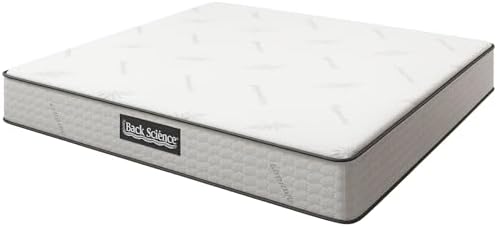
The back science Essentials is a queen mattress built around chiropractic-inspired alignment. The listing describes a seven-layer hybrid construction with a two-inch HyperGel pressure-relief foam layer, along with firm lumbar support and reinforced edges. The mattress is a 10-inch profile, which is thinner than the 12- and 14-inch options in this guide. That lower height can be a plus for people who want a lower bed height or who sleep on a platform frame, though it may not feel as cushioned as taller designs.
The focus on lumbar support is clear in the product description. The firm support zone is intended to help the spine stay aligned, while the HyperGel layer is meant to ease pressure at the points where the body presses hardest into the surface. Motion isolation is also mentioned, which helps when one person moves during the night. The reinforced edges make the surface more usable across its full width, which is valuable for people who need to sit on the side of the bed.
Several features suggest careful attention to materials and manufacturing. The listing notes Greenguard Gold certification, which is a recognized low-emission standard, and it highlights production in the USA. The 20-year limited warranty and the 365-night sleep trial also signal the brand’s confidence in the product. Still, a thinner mattress may feel firmer overall, and people who prefer a plush sink-in feel might find it less forgiving than the EGOHOME or VISCOFLEX.
Compared with the other picks, the back science Essentials sits in a niche. It is the most structured in terms of lumbar support, and its lower profile differentiates it from the taller options. It is well suited to people who want a firm, aligned sleeping surface with a clear chiropractic focus, but it may be less ideal for side sleepers who need a deeper cushion at the shoulder.
Pros and Cons of the back science Essentials Queen Mattress
Pros:
- Firm lumbar support and a chiropractic-focused design aim to keep the spine aligned.
- The HyperGel pressure-relief layer is designed to ease pressure at key contact points.
- Greenguard Gold certification and USA production add to its materials appeal.
- The 365-night sleep trial and 20-year limited warranty offer added peace of mind.
Cons:
- The 10-inch profile may feel firmer and less cushioned than taller mattresses, which could be a concern for side sleepers.
Verdict: The back science Essentials is a good choice for people who want a firm, lumbar-focused hybrid with strong materials credentials and a long warranty. It fits best with back and stomach sleepers who like a structured surface. Side sleepers who need more shoulder cushioning should look at the Novilla or EGOHOME first.
How to Choose the Best Mattress for Back Pain
Choosing a mattress for back pain is less about finding the firmest option and more about finding the right balance of support and comfort for your body and sleep position. The right choice depends on how you sleep, what kind of pain you feel, and how much temperature and motion matter to you. The following factors will help you narrow down the list.
Firmness Level and Spinal Alignment
Firmness is the first factor most people think about, and for good reason. A mattress that is too soft can let your hips sink and your spine bend out of line, which often leads to morning stiffness. A mattress that is too firm can press hard on the shoulders and hips, creating pressure points. Medium-firm and firm mattresses are commonly recommended for back pain, but the best level depends on your body weight and sleep position. Back and stomach sleepers usually need more support through the midsection, while side sleepers often need enough give to cushion the shoulder and hip. A simple test is to lie in your usual position and check whether your spine looks reasonably straight from the side.
Mattress Construction: Hybrid, Memory Foam, or Innerspring
The construction of a mattress shapes how it feels and responds. Hybrid mattresses combine coils or pocket springs with foam layers, offering a bouncier surface with targeted support and usually better airflow. Memory foam mattresses contour closely to the body and are often praised for pressure relief, but they can feel slower to respond and may retain heat. Foam-only designs, like the VISCOFLEX and EGOHOME, work well for people who want a cushioned, pressure-relieving feel. Hybrids, like the UniPon, Novilla, and back science Essentials, may suit people who want more lift, easier movement, and stronger edge support. Think about whether you value contouring, responsiveness, or a mix of both.
Pressure Relief and Comfort Layers
Pressure relief depends on the comfort layers closest to your body. Gel-infused foam, HyperGel foam, and Adaptifoam are all designed to cushion key contact points such as shoulders, hips, and knees. These layers matter most for side sleepers and for anyone whose pain is worse when pressure builds up over time. Be sure to look at the thickness of the top layers as well as the base. A thin comfort layer over a firm base can feel very different from a thick, plush layer over the same base. If you sleep on your side, prioritize a surface that gives enough at the shoulder without letting the hip sink too far.
Support Core and Lumbar Reinforcement
The support core is the layer or structure that prevents the mattress from sagging under your weight. In hybrids, this often means pocket springs or coils. In foam mattresses, it means high-density base foam. Lumbar reinforcement is an additional feature designed to keep the lower back from dropping. Mattresses with extra support in the hip and lower back zones, like the UniPon, can be helpful for people who feel the most discomfort in that area. Ask whether the base is designed to resist sagging over time, since a supportive core that wears out will lose its benefits.
Temperature Regulation and Breathability
Many people with back pain sleep poorly because they wake up hot. Overheating can disrupt deep sleep and make it harder to stay still, which may aggravate stiffness. Look for breathable covers, airflow-friendly layers, and features that help moisture escape. The Novilla’s AirBreeze fabric and the EGOHOME’s graphite-infused cover are examples of design choices aimed at keeping the surface cooler. Foam mattresses generally hold more heat than hybrids, so if you tend to sleep warm, a hybrid or a gel-infused foam design may be a better fit.
Motion Isolation and Partner Considerations
If you share a bed, motion isolation matters. A restless partner can disturb your sleep and make it harder to stay in a comfortable position. Pocket springs and dense foam layers can absorb movement well, while spring-free foam designs often do an excellent job of limiting motion transfer. The VISCOFLEX highlights this strength, and the UniPon’s independent springs are meant to do the same. Consider how much movement you typically experience and whether a partner’s position changes often during the night.
Mattress Size, Setup, and Foundation
Size and setup affect both comfort and practicality. The queen options in this guide suit many single sleepers and couples in standard bedrooms, while the EGOHOME is a king that offers more room but needs a larger space. Check the mattress height and compare it with your bed frame, since a taller mattress may change how easy it is to get in and out of bed. Also confirm that your foundation is compatible. Some mattresses work well on platform beds or the floor, while others are better suited to a box spring or slatted base. Foam mattresses often need a little time to fully expand after unboxing, so plan for an adjustment period before judging the feel.
Trial Periods, Warranties, and Materials
A mattress is a major purchase, and a long trial period can make a big difference when you are dealing with pain. The VISCOFLEX and back science Essentials list a 365-night trial, while the EGOHOME lists a 100-night trial. Warranty coverage is also worth comparing, with the VISCOFLEX and EGOHOME listing 10-year coverage and the back science Essentials listing a 20-year limited warranty. Read the terms carefully, including any return conditions. On materials, look for certifications such as CertiPUR-US, OEKO-TEX, and Greenguard Gold, which indicate that the foam and fabrics have been tested against specific standards for emissions and safety.
Frequently Asked Questions
Is a firm mattress always better for back pain?
Not always. Firm mattresses often help back sleepers and stomach sleepers keep the spine aligned, but a mattress that is too firm can create pressure at the shoulders and hips. Many people find that a medium-firm surface with good lumbar support offers the best balance. The right firmness depends on your sleep position, body weight, and the type of pain you feel.
What type of mattress is best for side sleepers with back pain?
Side sleepers usually need a surface that cushions the shoulders and hips while keeping the spine level. A medium-firm hybrid or a foam mattress with a responsive comfort layer often works well. The Novilla is a versatile option for side sleepers, while the EGOHOME provides pressure relief with a balanced feel. Extra-firm mattresses can be harder for side sleepers to tolerate for long periods.
Are memory foam mattresses good for lower back pain?
They can be, especially when the foam is supportive enough to prevent sinking. Memory foam contours closely and relieves pressure well, which many people find helpful for lower back discomfort. The trade-offs are heat retention and a slower response when you change positions. Gel-infused or copper gel foam, like the options highlighted above, may help manage temperature somewhat.
Do hybrid mattresses offer better support than all-foam mattresses?
Hybrids often provide more lift, better airflow, and stronger edge support than all-foam designs, which can make them easier to move on and get out of. Foam mattresses, on the other hand, excel at contouring and limiting motion transfer. Neither option is automatically better. The best choice depends on whether you prioritize responsiveness and airflow or deep contouring and quiet movement.
How long should I test a new mattress before deciding?
Most people need at least several weeks to adjust to a new mattress, particularly if they are switching from a very different feel. Foam mattresses can also take a few days to fully expand. Use the trial period to check your morning comfort, how often you wake up, and whether your back pain improves over time. Keep an eye on the return conditions so you do not miss the deadline.
Do I need a box spring or special foundation for these mattresses?
It depends on the mattress and your bed setup. Many of the options described here are designed to work on a range of foundations, including platform beds and slatted frames. The EGOHOME specifically lists compatibility with floor use as well. Check the manufacturer’s guidance and confirm that your bed frame provides even, sturdy support before you buy.
Which mattress should I choose if I need the most support?
If you want the most structured, firm support, the back science Essentials and the UniPon are strong candidates, and the VISCOFLEX is the best choice if you prefer a foam-based extra-firm feel. Choose based on your sleep position and temperature needs. Side sleepers may find these very firm options less comfortable.
Final Recommendation
All five mattresses in this guide are designed with back pain in mind, but they serve different sleepers. For a firm hybrid with targeted lumbar reinforcement, the UniPon is a strong pick. If you want maximum firmness in a foam design, the VISCOFLEX is the most committed option. For balanced support, edge stability, and a cleaner materials profile, the Novilla is the most versatile choice. If you need a medium-firm, pressure-relieving surface in a king size, the EGOHOME stands out. And if you want a slimmer, chiropractic-focused hybrid with a long warranty, the back science Essentials is a compelling option.
To decide, start with your sleep position and any temperature concerns. Back and stomach sleepers who want firm support will likely lean toward the UniPon, VISCOFLEX, or back science Essentials. Side sleepers and mixed sleepers may find the Novilla or EGOHOME more comfortable. Whichever you choose, use the trial period to assess how your back feels after several weeks, and do not hesitate to consult a healthcare professional if your pain is persistent or severe.