
A good vacuum packing machine can help you portion food, reduce freezer exposure, and keep ingredients organized for meal prep. The right choice depends on what you seal most: a countertop external sealer is simpler for everyday portions, while a chamber machine is better suited to liquids, marinades, and larger batches. These five options range from the versatile FoodSaver V4400 to chamber sealers built for more demanding kitchen use.
Quick Comparison
| Product | Type | Best for | Standout feature |
|---|---|---|---|
| FoodSaver V4400 2-in-1 Vacuum Sealer | External sealer | Everyday home food storage | Automatic bag detection and moisture sensing |
| Avid Armor USV32 Chamber Vacuum Sealer | Chamber sealer | Liquids, marinades, and larger portions | 11.5-inch sealing bar and marinate mode |
| VEVOR 260W Chamber Vacuum Sealer | Chamber sealer | Wet foods and bulk packing | Real-time pressure gauge |
| VEVOR 380W Chamber Vacuum Sealer | Chamber sealer | Frequent sealing and varied ingredients | Adjustable settings and multiple modes |
| VEVOR 3.1-Gallon Chamber Vacuum Sealer | Chamber sealer | Large portions and sous vide prep | External vacuum-sealing support |
Our Picks: Best Vacuum Packing Machine For Food reviews
1. FoodSaver V4400: Best for Everyday Home Food Storage
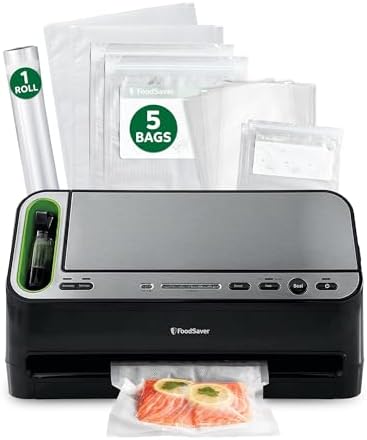
The FoodSaver V4400 is an external vacuum sealer designed for regular kitchen use. It automatically detects a bag placed in the vacuum chamber, then guides the sealing process with LED indicators. Automatic moisture detection is intended to switch the machine to a suitable mode when sealing damp foods.
Built-in roll storage and a cutter let you make bags to fit different portions, and the removable drip tray is dishwasher safe. The included starter kit has a roll, several vacuum-seal bags, and zipper bags, so you can try more than one storage format before buying additional supplies. The machine is compatible with FoodSaver rolls, premade bags, zipper bags, containers, and certain optional accessories.
This is the most straightforward choice here if your usual jobs are portions of meat, leftovers, produce, or pantry items. Its external design is less suited to sealing liquids directly than a chamber machine, so take care with wet foods and follow the instructions for the selected mode. Its five-year limited warranty is a notable detail, though the countertop footprint and use of bags or rolls are worth considering if storage space is tight.
Pros:
- Automatic bag detection simplifies the sealing process.
- Built-in roll storage and cutter allow custom bag lengths.
- Moisture detection and a removable, dishwasher-safe drip tray support easier cleanup.
- Starter kit includes several types of bags and a roll.
Cons:
- Less suited than a chamber machine to packing liquids and very wet foods.
- Custom bags and ongoing sealing require compatible rolls or bags.
Verdict: Choose the FoodSaver V4400 if you want an approachable, feature-rich external sealer for everyday portions and meal prep.
2. Avid Armor USV32: Best for Liquids and Marinades

The Avid Armor USV32 is a chamber vacuum sealer built for foods that can be difficult to pack with a standard external sealer. In a chamber machine, the bag and food sit inside the chamber during the vacuum cycle. The product description highlights this pressure-equalizing design for sealing soups, sauces, and juicy meats with less mess.
Its stainless steel chamber, tempered glass lid, and 11.5-inch dual-wire sealing bar are aimed at frequent use and thicker pouches. The glass lid lets you watch the cycle, while the automatic one-touch operation keeps the basic process simple. A marinate mode is designed to speed up flavor infusion, and an external accessory hose port supports jar use.
This model may suit home cooks who often prepare sous vide portions, marinated meat, or liquid-rich foods, as well as hunters and cooks packing larger cuts. Compared with the FoodSaver, it offers a chamber format and a stronger focus on wet foods, but it takes more dedicated counter or storage space. It is also described as a high-volume machine, so it may be more than you need if you seal only a few dry portions at a time.
Pros:
- Chamber design is intended to handle soups, sauces, and juicy foods.
- 11.5-inch dual-wire sealing bar accommodates larger pouches.
- Marinate mode and accessory hose port add useful options.
- Glass lid makes it possible to monitor the vacuum cycle.
Cons:
- A chamber machine generally calls for more counter and storage space than a compact external unit.
- Its professional-style feature set may be unnecessary for occasional, small-batch sealing.
Verdict: Consider the USV32 if handling liquids and marinades is a priority and you have room for a larger chamber sealer.
3. VEVOR 260W Chamber Sealer: Best for Wet Foods and Bulk Packs

This VEVOR is a chamber vacuum sealer with a 10.2-inch sealing length, a stainless steel chamber, and a stated 180W vacuum pump. The manufacturer also lists 260W sealing power. Its chamber format is meant to make packing wet foods easier, while the wide seal strip is designed to create a firm closure.
A built-in pressure gauge shows the pressure during operation, which can help you keep an eye on the cycle when packing delicate foods. The machine is described as compatible with standard vacuum bags and suitable for a range of items, including meat, seafood, coffee, and dry goods. That mix makes it a practical option for a household that alternates between freezer portions and pantry storage.
Compared with the Avid Armor USV32, the VEVOR gives you a pressure gauge and a stated 10.2-inch sealing length, while the Avid Armor listing emphasizes a longer bar and a marinate mode. The VEVOR may appeal to people who want chamber-style packing without needing the specific extras highlighted by the other model. Check the chamber dimensions and your usual portion sizes before buying, since a sealing-bar measurement alone does not tell you how large an item can fit inside.
Pros:
- Chamber design is suitable for wet foods and liquids.
- Pressure gauge displays vacuum pressure during the cycle.
- Described as compatible with standard vacuum bags.
- Stainless steel chamber is intended for repeated kitchen use.
Cons:
- The 10.2-inch sealing length may limit the width of bags you can seal.
- Its chamber size should be checked against the largest foods you plan to pack.
Verdict: Pick this VEVOR if you want a chamber sealer for wet foods and bulk packing, with a visible pressure gauge to monitor the process.
4. VEVOR 380W Chamber Sealer: Best for Frequent, Varied Packing

This VEVOR chamber sealer is designed for repeated packing sessions. Its listed features include a 380W pump, a stated air flow rate of 90 liters per minute, and a chamber measuring 12.87 by 12.20 by 3.15 inches. The manufacturer describes the chamber as stainless steel and the lid as full glass.
Adjustable vacuum and seal times let you change the cycle for different ingredients, and the listed modes include marinating, single sealing, and jar vacuuming. The product description says it can handle wet, dry, soft, and powdery foods, along with paste-like ingredients. That versatility makes it a possible fit for someone who packs more than just meat portions, though the size of each item still needs to fit inside the chamber.
Compared with the 260W VEVOR, this model lists adjustable timings and more specific modes, plus a larger stated chamber footprint. Those features can help if you regularly switch between different kinds of food. The trade-off is a machine that needs a dedicated spot and may be excessive for someone who seals food only now and then. The stated performance figures are manufacturer specifications, not a guarantee of a particular storage life.
Pros:
- Adjustable vacuum and seal times provide more control for different ingredients.
- Marinating, single-seal, and jar-vacuuming modes add flexibility.
- Stainless steel chamber and glass lid make the sealing process visible.
- Designed for wet, dry, soft, and powdery foods.
Cons:
- The chamber needs more dedicated space than an external sealer.
- Its multiple settings may be unnecessary for simple, occasional sealing.
Verdict: Choose this model if you expect frequent sealing and value adjustable settings for a broad mix of ingredients.
5. VEVOR 3.1-Gallon Chamber Sealer: Best for Large Portions and Sous Vide Prep

This VEVOR chamber sealer combines a 3.1-gallon chamber with a 12-inch seal bar, according to its product title. Its listed chamber dimensions are 14.1 by 13.5 by 2.8 inches. The machine is built for larger portions, and the product description specifically mentions sous vide preparation, marinating, and sealing longer foods with external vacuum sealing.
A 10 mm-wide heat seal is intended to help reduce leaks, while the stated vacuum level reaches up to -100 kPa. The control panel offers Canister, Marinate, and Seal Only modes. External vacuum support is a useful point of difference: the product description says it can work with large embossed bags outside the chamber, which can help when an item will not fit inside.
This model offers more size flexibility than a basic external sealer and includes a chamber for wet foods and marinade. It may be a strong match for batch cooking or larger cuts, but the extra capacity comes with a larger countertop footprint. If your main task is sealing small, dry portions, the simpler FoodSaver may be easier to store and use.
Pros:
- Large chamber and 12-inch seal bar suit substantial portions.
- External vacuum-sealing support can handle some items too large for the chamber.
- Includes Canister, Marinate, and Seal Only modes.
- Designed for wet foods, sous vide preparation, and vacuum marinating.
Cons:
- The larger chamber may take up significant counter or storage space.
- External sealing requires compatible embossed bags, according to the product description.
Verdict: Pick this VEVOR if large portions, marinating, and the option to seal some oversized items externally matter more than a compact footprint.
How to Choose a Vacuum Packing Machine for Food
Choose between an external and a chamber sealer
An external sealer pulls air from a bag outside the machine, making it a practical choice for common household jobs such as portioning dry goods, meat, or leftovers. The FoodSaver V4400 is the only external model in this selection. A chamber sealer places the food and bag inside a chamber during the cycle; the Avid Armor and VEVOR models are designed for this format. Chamber models are especially worth considering if you often pack liquids, sauces, or marinades.
Match the machine to the food you seal
Think about your usual ingredients before comparing power figures. If you mostly seal dry or lightly moist foods, a straightforward external machine may cover your needs. For soups, sauces, juicy meat, or marinated portions, look at the chamber options. If you pack a mix that includes soft or powdery foods, prioritize a model with controls that let you adjust the cycle or monitor the vacuum process.
Check the chamber and seal-bar dimensions
For chamber machines, compare the listed chamber dimensions with the largest portion you expect to pack. A seal-bar measurement indicates the maximum sealing width, but it does not show how tall or bulky an item can be inside the chamber. If you plan to seal long fish, whole loaves, or large cuts, also consider whether the model supports external vacuum sealing.
Consider bag compatibility and ongoing supplies
Bag requirements can affect both convenience and long-term use. The FoodSaver V4400 is listed as compatible with FoodSaver rolls, premade bags, zipper bags, containers, and certain accessories. One VEVOR chamber model specifically lists standard vacuum bags, while another lists embossed bags for external sealing. Confirm the manufacturer’s instructions for the machine you choose, and check that the bags you want to use match the intended sealing method.
Look for controls that fit your routine
Automatic bag detection and indicator lights can make an external sealer easier to operate. On a chamber model, a pressure gauge, adjustable vacuum and seal times, or a dedicated marinate mode may matter more. More controls can be useful when you seal varied foods, but they may add complexity if you only need a basic cycle.
Plan for counter space and cleanup
External sealers are generally the simpler format to store, while chamber machines need space for the chamber and lid. Also consider the cleanup steps. The FoodSaver V4400 has a removable drip tray described as dishwasher safe. For other machines, review the care instructions and think about where you will place the unit so you can load and clean it comfortably.
Think about how often you will seal food
For occasional portions, an easy-to-use external sealer may be the most sensible fit. If you process larger batches or regularly prepare wet foods, the features of a chamber model may justify the extra space. Compare the sealing width, chamber capacity, modes, and included accessories with your actual routine rather than choosing by a single power specification.
Frequently Asked Questions
What is the difference between a chamber sealer and an external vacuum sealer?
An external sealer removes air through the open end of a bag outside the machine. A chamber sealer performs the vacuum cycle with the bag and food inside the chamber. Chamber machines are designed to be more suitable for packing liquid-rich foods, while external machines are often a simpler fit for everyday dry or lightly moist items.
Can I vacuum seal soup or sauce?
A chamber sealer is the better match for soups and sauces among these options. The Avid Armor USV32 and the VEVOR chamber models are described for wet foods, and the Avid Armor specifically highlights sealing soups and sauces. Follow the machine’s instructions and avoid filling bags beyond what the cycle can safely handle.
Can I use any vacuum-seal bag with these machines?
Bag compatibility varies by machine and sealing method. The FoodSaver V4400 lists compatibility with specific FoodSaver rolls and bag types. The VEVOR 260W listing says it supports standard vacuum bags, while the VEVOR 3.1-gallon model specifies embossed bags for external sealing. Check the manufacturer’s guidance before buying bags.
Is a chamber sealer necessary for sous vide cooking?
No. A chamber sealer can be useful for preparing sealed portions and handling marinades, but the best machine depends on the foods you plan to pack and the features you need. The FoodSaver V4400 and the chamber models in this list all offer vacuum-sealing options, though their designs and suitability for wet foods differ.
Which model is easiest to use for everyday food storage?
The FoodSaver V4400 is the most household-oriented option in this selection. Its automatic bag detection, LED indicators, built-in roll storage, and included starter supplies are designed to make common sealing tasks more straightforward.
How should I choose the right chamber size?
Measure the largest food portions you expect to seal and compare them with the chamber’s listed length, width, and height. Also check the seal-bar width. If some items will not fit inside the chamber, look for a model that specifically supports external vacuum sealing.
Final Recommendation
For most homes, the FoodSaver V4400 is the most versatile starting point: it has guided operation, custom bag sizing, and a useful starter kit. If you regularly seal liquids or marinated foods, consider a chamber model instead. The Avid Armor USV32 emphasizes wet-food sealing and marinating, while the larger VEVOR 3.1-gallon model adds external sealing support for some oversized items. Match the machine to the foods you pack most often, the space you have, and the bag system you are willing to use.