
If you own an ultra-short throw (UST) projector, your screen matters as much as the projector itself. A UST unit sits close to the wall or floor and throws a bright image at a steep angle, so a standard flat white screen often washes out in a lit room and can look dim. VIVIDSTORM builds ambient light rejecting (ALR) screens designed for this kind of projector, and its lineup includes floor-rising, portable, and ceiling-mounted models. This guide compares five of its options so you can match a screen to your projector, room, and installation style.
Quick Comparison of the Five VIVIDSTORM Screens
| Product | Mounting Style | Listed Screen Size | Standout Trait | Best Fit |
|---|---|---|---|---|
| VIVIDSTORM Floor-Rising UST ALR Screen | Motorized floor-rising | Not stated in listing | Adjustable black border and multiple control options | Home theaters with no wall mounting option |
| VIVIDSTORM Motorized UST Screen, 4K/8K Ready | Motorized floor-rising | Not stated in listing | 4K/8K HDR-ready tensioned surface | Viewers who want high-resolution support |
| VIVIDSTORM S PRO 120 Portable Folding Screen | Portable folding with stand | 120 inch (range listed as 72 to 120 inch) | No wall or ceiling installation required | Renters and rooms that change often |
| VIVIDSTORM Motorized UST Screen, Cinematic Viewing | Electric pop-up floor-rising | 110 inch | Tensioned surface with a larger image area | Larger rooms with a dedicated viewing spot |
| VIVIDSTORM Revolve ALR Ceiling Screen | Ceiling, wall, or suspended pull-down | 92 inch (range listed as 84 to 120 inch) | Perforated, sound-transparent lower border | Ceiling installs and bright rooms |
Our Picks: Best Vividstorm Projector Screens For Ust Projectors reviews
VIVIDSTORM Floor-Rising UST ALR Screen for Home Theater Setups

This is a motorized floor-rising screen built for ultra-short throw projectors. Instead of mounting on a wall or ceiling, the screen sits in a base on the floor and rises when you press a button. When you are done watching, it retracts back into the base. For many people, this is the main appeal. You get a large, flat image area without drilling holes or planning a wall mount around a television or artwork.
The ALR surface is designed to reduce the effect of room light on the picture. That matters with UST projectors because their light hits the screen at a sharp angle, and daytime light from windows or overhead fixtures can wash out the image. The listing also describes a tensioned, wrinkle-free surface, which helps keep the picture flat. Control options include an RF remote, a touch panel, and compatibility with a projector trigger, so you can link the screen to your projector’s power cycle if your setup supports it.
The black border on this model can be adjusted slightly to help with image alignment. The listing is clear that large changes are not recommended. It says adjustments beyond a small range can cause ripples or surface deformation, and that significant changes may require a custom-built screen. Treat this feature as a fine-tuning tool, not a way to fix a major alignment problem. Plan your projector position first, then use the border adjustment for small corrections.
In everyday use, many owners appreciate how quickly the screen goes from hidden to ready. Some users also value the simple setup, since you place the unit on the floor and connect power. The trade-off is that a floor-rising screen needs clear space around the base, and you should measure the travel height before you buy. Compared with the 4K/8K model in this list, this version puts more emphasis on the control options and border adjustment, while the other model leans on its resolution support.
Pros:
- Motorized floor-rising design removes the need for wall or ceiling mounting
- ALR surface is built to handle room light with UST projectors
- Multiple control options, including RF remote, touch panel, and projector trigger
- Small black border adjustment helps with alignment
Cons:
- Large border changes are discouraged and can damage the surface if handled improperly
- The listing does not state a screen size, so you need to confirm dimensions before buying
Verdict: This is a strong choice if you want a clean, wall-free setup with a UST projector and expect some daytime light in the room. Confirm the screen size and floor space first, and avoid planning on large border adjustments.
Motorized Tensioned UST Screen with 4K/8K HDR Support
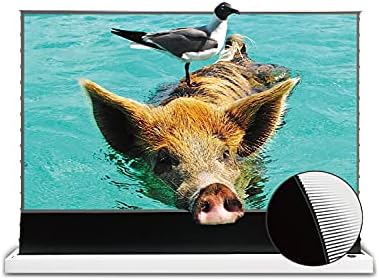
This model shares its core design with the floor-rising screen above. It is a motorized UST screen that rises from a floor base, uses ALR technology for ambient light control, and relies on a tensioned surface to stay flat. The difference is the emphasis on 4K and 8K HDR readiness. If you own a high-resolution UST projector and want a screen that is marketed for that level of detail, this model is the one to examine more closely.
Resolution support is only part of the picture. A screen can accept high-resolution input, but the visible result still depends on the projector’s brightness, the room’s lighting, and how well the screen is positioned. The ALR surface is the feature that does most of the work in a bright room. In practice, that means you should set your projector up with the screen in its final spot, then check the image during the day and at night before you settle on your room layout.
Some buyers like the flexibility of a floor-rising design because it keeps the wall space free. Others find the screen a bit more involved to plan around, since the base needs clearance and the motor needs a stable outlet. The listing does not state a diagonal size, so measure your viewing wall and your floor space before you order. Compared with the 110-inch model later in this list, this option may suit people who want the HDR and resolution messaging and who are still deciding on size.
Pros:
- Tensioned surface helps keep the image flat during use
- Listed as 4K and 8K HDR ready, a useful point for high-resolution projectors
- Floor-rising design eliminates wall mounting for a clean look
- Same ALR approach as the other floor-rising option for rooms with some ambient light
Cons:
- The listing does not give a screen size, so sizing takes extra research
Verdict: Choose this screen if you have a high-resolution UST projector and want a motorized floor-rising solution with an ALR surface. Make sure you know your target size and floor clearance before you buy.
Portable Folding UST ALR Screen with Stand for Flexible Rooms

The S PRO 120 takes a different approach from the motorized models. It is listed as a portable, folding indoor screen with a stand, so it does not need a wall, ceiling, or motor. That makes it a practical choice for people who rent, move often, or want a screen they can set up in a living room one weekend and store the next. The listing gives a 120-inch model within a range of 72 to 120 inches, so you can pick a size that fits your room.
The screen is built for ultra-short throw laser projectors and uses an ambient light rejecting surface. The listing states a 16:9 aspect ratio, a standard view area of about 104.57 inches wide by 58.82 inches high, and a gain of 0.6. A lower gain means the image looks more natural in a dark room but will not look as bright as a high-gain screen. This is a sensible trade-off for a surface meant to resist room light, but it means you should avoid expecting cinema-level brightness from a dim projector.
The main limitation is that this screen is not compatible with suspended projector installations, and the listing specifies use with ultra-short throw laser projectors. Its weight is listed at about 72.75 pounds, which is significant for a portable unit. Setup is simple, but the stand and screen are not light enough to move around casually. In everyday use, many owners value the no-mount design, but the weight and the stand footprint are worth planning for. Compared with the motorized options, this model trades convenience of retraction for portability and the freedom to place it anywhere.
Pros:
- Portable design with a stand requires no wall, ceiling, or motor
- Available in a 120-inch size within a listed 72 to 120 inch range
- ALR surface targets room light for UST laser projector use
- Good option for renters and rooms that change often
Cons:
- At about 72.75 pounds, it is heavy to move, and it is not compatible with suspended projector setups
Verdict: This is the best fit for a flexible, no-mount setup with a UST laser projector. Pick it if you want a freestanding screen and can handle its weight and footprint.
110-Inch Motorized UST Screen for Cinematic Viewing
This is a 110-inch motorized UST screen with an electric pop-up, floor-rising design. It uses the same family of ALR and tensioned-surface technology as the other floor-rising models, but in a specific size. The listing gives a standard view area of about 95.87 inches wide by 53.94 inches high, which tells you the picture is large enough to fill a wide wall in a dedicated room. It is aimed at people who want a true cinema feel without mounting hardware.
The ALR surface helps with light from above, which is the common problem in rooms with ceiling fixtures. The listing also states a 0.6 gain and a 170-degree viewing angle, so most seats in the room should see a consistent image. Because the screen sits on the floor, you should check the sightlines from your sofa or chairs before you commit. A low-profile floor screen can look great from the middle of a room but may feel too low for someone seated at a side angle.
Some users find that a fixed size of this kind is easier to plan around because the room layout is set once. The weight is listed at about 70.55 pounds, so the base and motor are substantial, and the unit is not something you will move frequently. Compared with the 120-inch portable option, this model gives up portability for a more permanent setup. If you want the screen to live in one place and rise on command, it is a good match.
Pros:
- 110-inch size with a listed view area that suits a dedicated viewing room
- Electric floor-rising design keeps the screen hidden when not in use
- ALR surface and 170-degree viewing angle help with room light and seating positions
- Tensioned surface supports a flat picture
Cons:
- Roughly 70.55 pounds, and the listing notes it is not compatible with suspended projector installations
Verdict: Choose this model if you want a fixed, floor-rising screen in a larger size for a dedicated room. Confirm your projector mounting and seating layout before purchasing.
Ceiling-Mount Revolve ALR Screen with Sound-Transparent Border

This screen is a different type of product from the floor-rising models. It is a motorized pull-down screen that the listing describes as suitable for ceiling, wall, or suspended installation. When it is not in use, it retracts into a housing. Because it mounts overhead or on a wall, it works well in rooms where you want to keep the floor clear. The housing is available in black or white with an aluminum casing, which helps the unit blend into a ceiling or wall.
The listing describes an ALR surface that focuses on light from below the screen, which is an important difference from the floor-rising designs. This orientation suits rooms where light from the floor, such as low lamps or reflected light, is the main problem. It is worth noting that the listing describes this model as compatible with ceiling-mounted UST laser projectors, so you should confirm that your projector type and mounting position match before you buy. The screen is listed at a 92-inch diagonal with a 16:9 aspect ratio and a standard view area of about 73.23 inches wide by 41.18 inches high.
A distinctive feature is the perforated black border below the picture area. The listing says this section is acoustically transparent, which means the speakers placed behind it can project sound through the screen. This is a helpful design detail for a home theater, since speakers can sit behind the screen instead of beside it. In everyday use, the trade-off is that a ceiling or wall installation requires more planning than a freestanding unit. At about 33 pounds, the screen is much lighter than the floor-rising models, which makes mounting more manageable. Compared with the other picks, this is the most permanent option and the best fit for people who want a clean, built-in look.
Pros:
- Flexible mounting for ceiling, wall, or suspended installation
- Perforated, sound-transparent lower border supports speaker placement behind the screen
- Lighter at about 33 pounds than the floor-rising models
- Retracts into a housing and keeps the floor clear
Cons:
- Requires proper ceiling or wall mounting, so installation takes more planning
- The listing states compatibility only with ultra-short throw laser projectors, which limits your projector choices
Verdict: This is the top pick for a permanent installation where you want the screen hidden in the ceiling or on a wall and want speakers behind the screen. Make sure your projector is an ultra-short throw laser model and plan the mounting carefully.
How to Choose the Right VIVIDSTORM Screen for Your UST Projector
Confirm Your Projector Type First
Before you compare any screen, check what type of ultra-short throw projector you own. Several of the models in this list are built specifically for UST laser projectors, and some listings state that they are not compatible with suspended projector setups. A screen that is designed for one projector type may not perform the same way with another. Look up your projector’s throw type and light source in its manual or product specifications. Matching the screen to your projector is the most important step, because a good screen cannot fix a mismatch.
Understand ALR and Ambient Light Control
Ambient light rejecting technology is the main reason to buy a screen like these instead of a plain white surface. UST projectors throw light at a steep angle, and ALR surfaces are designed to reflect that light toward your seating area while reducing the influence of room light from other directions. The direction matters. Some models in this list focus on light from above, while the ceiling-mounted model focuses on light from below. Think about where the most unwanted light in your room comes from, such as a ceiling fixture, a window, or a floor lamp, and choose the screen that addresses that source.
Pay Attention to Gain and Viewing Angle
Gain describes how much light the screen reflects compared with a standard reference surface. A lower gain, like the 0.6 listed on several of these screens, usually produces a more even image with better control of room light, but it will look less bright than a high-gain surface. The listed viewing angle tells you how wide an area can see a consistent picture. If your room is wide or you have seating on the sides, a broader viewing angle helps. Keep in mind that the best setting depends on how dark your room can get and how bright your projector is.
Choose the Right Screen Size for Your Room
Screen size should match your seating distance and the size of your room. A larger screen feels more immersive, but it also needs more floor or wall space and a projector with enough brightness to fill it. Several listings in this group provide a view area measurement, which is the actual picture size you can expect. Use that number to measure the wall or floor, then leave room for the screen housing and any furniture. If the listing does not state a size, as is the case with some of the motorized models here, measure carefully before you order.
Compare Floor-Rising, Portable, and Ceiling-Mounted Designs
The mounting style will shape your daily experience more than any other factor. Floor-rising screens are a good choice when you want to keep walls clear and enjoy a clean look when the screen is down. Portable screens offer the most flexibility, but they are heavy and take up floor space when in use. Ceiling and wall-mounted pull-down screens are the most permanent. They keep the floor open and can house speakers behind a perforated border, but they require careful installation. Choose the design that matches how often you will move the screen and how much setup you want to handle.
Plan for Weight, Storage, and Setup
Weight affects both installation and how often you are willing to adjust the screen. The listed weights range from about 33 pounds for the ceiling-mounted model to about 72.75 pounds for the portable stand model. A heavier screen is more stable on a floor base but may be harder to move. Measure the space where the screen will sit when it is up and when it is retracted. Make sure you have a nearby power outlet and that the base will not block walkways or furniture. A few minutes of planning here can prevent frustration after delivery.
Consider Border Adjustments and Surface Care
Some motorized screens include a black border that can be adjusted slightly for alignment. This is useful, but it has limits. The listings for these screens warn that large changes can cause ripples or surface deformation, and that damage from improper adjustment may not be covered by the warranty. Set your projector position first, then use small border changes only when needed. Handle the screen gently when it is rising and retracting, and keep the surface clean so the ALR material performs as intended.
Check Availability and Warranty Details
Availability can change, and several of the listings in this group showed as unavailable at the time of research. Before you plan your setup or budget, check the current stock status on the product page. The listings for these screens also mention a manufacturer warranty, and the VIVIDSTORM brand describes itself as an ISO9001 manufacturer. Read the warranty details on the product page before you buy so you understand what is covered and for how long.
Frequently Asked Questions
What makes a screen good for an ultra-short throw projector?
A good screen for a UST projector uses ambient light rejecting technology to handle the steep angle of the projector’s light. It should also have a surface that stays flat, since any wrinkle or ripple is visible at close range. Look for a listing that clearly states UST compatibility, because a standard screen may not reflect the light efficiently.
Do I need a motorized screen for a UST projector?
No. A motorized screen is a convenience choice, not a requirement. If you want the screen to disappear when not in use, a motorized floor-rising or ceiling-mounted design makes sense. If you move the screen often or want a lower cost of setup, a portable folding model may suit you better.
Can I mount a VIVIDSTORM screen on the ceiling?
The ceiling-mounted Revolve ALR model in this list is built for ceiling, wall, or suspended installation. Other models here are floor-rising or portable and are not designed for ceiling mounting. Check each listing’s installation notes before you plan a ceiling setup, and confirm that your projector is compatible with ceiling-mounted use.
How do I know what size screen to buy?
Start with your seating distance and the wall or floor space you have available. Use the listed view area as your guide to the actual picture size. Leave room for the housing, base, or stand, and make sure the screen will not block a doorway or walkway. If the product listing does not give a size, measure your space carefully and confirm dimensions with the seller before you order.
Is an ALR screen worth it in a room with some daylight?
An ALR screen is designed to help in rooms with some ambient light, so it is worth considering if your room is not fully dark. It will not make a bright room feel like a theater, but it can reduce the washed-out look that UST projectors often show in daytime conditions. For the best results, reduce direct light on the screen where you can, such as closing blinds or repositioning lamps.
Which screen is best for a room that changes often?
The portable folding S PRO 120 is the most flexible option in this list. It needs no wall, ceiling, or motor, so you can set it up in different spots. Keep its weight and stand footprint in mind, and confirm that your projector type is compatible before you buy.
Which VIVIDSTORM screen should most buyers choose?
For most home theater setups with a UST projector, the motorized floor-rising screens offer the best balance of convenience and picture performance. The 110-inch model suits a dedicated room with a defined viewing area, while the 4K/8K-ready model appeals to buyers with high-resolution projectors. If you want a permanent installation with speakers behind the screen, the ceiling-mounted model is the stronger choice.
Final Recommendation
Your best pick depends on your room, your projector, and how you plan to use the screen. For a clean, wall-free setup that rises on command, the floor-rising ALR screen is the most practical everyday option, especially if you want multiple control choices. If your projector is high resolution and you want a motorized floor screen with that emphasis, the 4K/8K-ready model is worth a close look. Renters and anyone who moves often should consider the portable S PRO 120, while a dedicated room with a fixed viewing spot suits the 110-inch model. For a permanent installation with a sound-transparent border, the ceiling-mounted Revolve ALR screen stands out. Confirm your projector type, measure your space, and check current availability before you buy.