
If you live on municipal water, there’s a good chance your tap water contains chlorine, and in many areas it also contains fluoride. Chlorine is added for disinfection and usually affects taste and smell. Fluoride is added to many public water supplies for dental health, but some households want to reduce how much they drink. Finding a filter that handles both is harder than it sounds, because many basic pitcher and faucet filters are built for chlorine and taste alone. This guide compares five popular options that claim to address both chlorine and fluoride, with a focus on how each one works, what it does well, and where it falls short, so you can pick the right system for your kitchen and your budget.
Quick Comparison Table
| Product | Style | Filtration Highlights | Installation | Best For |
|---|---|---|---|---|
| Purewell 8-Stage Gravity Fed Water Filter System | Countertop gravity | Ceramic and fluoride filter elements, 8 stages, claimed 90% fluoride reduction | No plumbing required | Renters and households without under-sink access |
| Waterdrop TSA 8 Layer Under Sink Water Filter System | Under sink | 8-stage filtration with resin for fluoride, carbon for chlorine, NSF/ANSI 42 certification noted | Connects to standard under-sink cold water lines | Homeowners who want a dedicated filtered faucet |
| Purewell Upgraded 9-Stage Gravity Water Filter System | Countertop gravity | 9 stages including fluoride reduction material and 0.01μm ultrafiltration membrane | No plumbing required, transparent water level window | Counter-top users who want to monitor water level at a glance |
| Waterdrop WD-TSA-UF Under Sink Water Filter System | Under sink | 9-stage filtration with 0.01μm ultrafiltration, fluoride and chlorine reduction | Twist-and-lock design, about 3 minutes to install | Families who want staggered filter replacement schedules |
| Waterdrop TSB-UF Under Sink Water Filter System | Under sink with dedicated faucet | 9-stage filtration, 0.01μm ultrafiltration, KDF and ion-exchange resin layers | Works with 1/2″ and 3/8″ tubing, about 3 minutes to install | Households that want separate filtered water for drinking and cooking |
Our Picks: Best Water Filter For Fluoride And Chlorine reviews
Purewell 8-Stage Gravity Fed Water Filter System for Countertop Use

This countertop gravity system is the simplest option on the list. It holds about 2.25 gallons and uses a stainless steel housing with a metal water level spigot. You fill the top chamber with tap water, and gravity pulls it through the filter elements into the bottom chamber. There’s no plumbing involved, which makes it a practical choice for renters or anyone who can’t or doesn’t want to modify their sink.
The filtration uses two types of elements. The ceramic filter combines ceramic, activated carbon block, and a silver ion membrane to address chlorine, sediment, and other contaminants. The fluoride filter uses a fluoride reduction membrane along with activated carbon and sediment membranes. The manufacturer states that the fluoride element can reduce about 90% of fluoride and that the system has been certified to NSF/ANSI 42. Those are the claims to check against your local water report, since fluoride levels vary widely by location.
In everyday use, gravity systems trade speed for simplicity. Water moves through slowly, so this is better for filling a pitcher or a few bottles for drinking and cooking than for supplying large volumes at once. Many owners appreciate that the included sponge can be used to scrub the ceramic surface when sediment builds up, which helps extend the life of the element. The manufacturer advises against using soap or other cleaners, since they can clog or damage the pores, so this is a maintenance step you need to follow carefully.
The main drawback is the daily routine. You have to refill the top chamber, and the system takes up counter space. It also does not reduce TDS, so it won’t change the total dissolved solids in your water. For someone who wants a hands-off, under-sink solution, this will feel like extra work. For someone who wants a low-commitment way to reduce chlorine and fluoride without a plumber, it’s a sensible starting point.
Pros:
- No installation or plumbing needed, so it works in rentals and dorms
- Includes a fluoride-specific element alongside the ceramic filter
- Stainless steel housing and metal spigot feel sturdy on the counter
- Ceramic element can be gently scrubbed to extend its service life
Cons:
- Gravity flow is slow, so it isn’t ideal for high-volume needs
- Does not reduce TDS, and filter performance depends on your local water quality
Verdict: Choose this if you rent, don’t have under-sink space, or only need filtered water for drinking and cooking. It’s a practical, low-cost way to address chlorine and fluoride, but expect a manual refill routine and slower output.
Waterdrop TSA 8 Layer Under Sink Water Filter for Fluoride and Chlorine

This under sink system uses three filter cartridges to deliver what the brand describes as eight stages of filtration. It targets PFAS, PFOA and PFOS, residual chlorine, fluoride, silt, and rust. The fluoride reduction comes from a resin layer, and the carbon-based stage is designed to improve taste by reducing residual chlorine. The product is marketed with NSF/ANSI 42 certification, which is a useful point for shoppers who want independent verification of a system’s claims.
Installation is designed for standard cold-water supply lines. The system connects to most faucets with 1/2″ or 3/8″ female NPT threads, and the brand notes that quick-connect faucets may need adapter fittings. Because it installs under the sink, you get filtered water from a dedicated source without taking up counter space. The downside is that you need to be comfortable with basic fittings, and you’ll need to supply your own faucet, since none is included.
One point deserves attention. After full filtration, the water flows more slowly than unfiltered tap water. The manufacturer states a maximum flow rate of 1.5 GPM and says a standard 12-oz glass fills in about four seconds. That’s perfectly workable for drinking and cooking, but it’s noticeably slower than the tap you may be used to. Some owners find the pace acceptable for daily use, while others may prefer a dedicated faucet for filling large pots.
Keep these limits in mind. The system does not reduce TDS, and it isn’t suitable for hot water. For well water, the brand says you’ll need a pre-filtration system first. If you’re on a private well, this isn’t the right choice without additional equipment.
Pros:
- Under sink design keeps the counter clear and delivers filtered water on demand
- Resin-based fluoride reduction paired with carbon for chlorine and taste
- Carries NSF/ANSI 42 certification, a meaningful check for shoppers
- Connects to common 1/2″ and 3/8″ female NPT faucet threads
Cons:
- Flow after filtration is slower than direct tap water, which may frustrate users who fill large containers
- Requires a separate faucet and is not suitable for hot water or well water without pre-filtration
Verdict: This is a strong pick for homeowners on municipal water who want a permanent, under-sink solution with certification and clear fluoride and chlorine targets. Be prepared for a slower flow rate and make sure your plumbing setup matches its requirements.
Purewell Upgraded 9-Stage Gravity Filter With Water Level Window
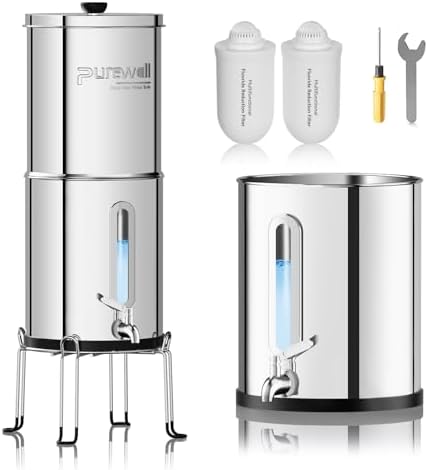
This gravity system builds on the same countertop concept but adds a transparent window so you can see the water level without lifting the lid. That’s a small change with a practical payoff, because you can check how much filtered water is ready without opening the unit or disturbing the filter elements. It is also a stainless steel system, which gives it a clean look on the counter.
The filtration is more layered than the first Purewell model. The manufacturer lists nine stages, including a fluoride reduction material, two mesh layers, two PP cotton membranes, activated carbon, KDF, silver ions, and a 0.01μm hollow fiber ultrafiltration membrane. The ultrafiltration stage is the main difference, because it targets very small particles and adds a physical barrier that many basic gravity filters lack. The brand states that the composite fluoride filter can remove about 90% of fluoride.
Some users report that the water level window makes daily refills easier to manage, since they can tell when the bottom chamber is close to full. The manufacturer also includes an important warning: when the bottom container is full, don’t add tap water to the top container, or it may leak. Treat that as a firm rule, because overfilling is the most likely way to make a mess with this design.
Filter replacement matters here. The manufacturer recommends replacing the elements about every six months for best performance, and it notes that the pair of fluoride filters provides up to 2,000 gallons combined, with lifespan depending on water quality. The system is also not compatible with other brands’ filter elements, so you’ll need to stay with the manufacturer’s replacements. Like the other gravity model, it does not lower TDS.
Pros:
- Transparent water level window makes it easy to monitor output
- Ultrafiltration membrane adds a finer physical barrier than basic gravity designs
- Stainless steel housing gives it a durable, countertop-friendly appearance
- Simple setup with no plumbing or tools
Cons:
- Requires strict use of the manufacturer’s filters and a careful refill habit to avoid leaks
- Gravity flow is slow, and the system does not reduce TDS
Verdict: If you want a countertop solution with more filtration stages and a visible water level, this model is a good upgrade over the basic gravity option. It suits people who are comfortable with a manual refill routine and who will stick with the brand’s replacement filters.
Waterdrop WD-TSA-UF Under Sink Filter With Ultrafiltration

This under sink system pairs nine stages of filtration with a 0.01μm ultrafiltration membrane. The brand says it reduces chlorine, taste and odor, fluoride, heavy metals, rust, sediment, and fine particles, and that third-party lab testing supports those claims. It uses three compact filters, which keeps the housing relatively simple compared with systems that require more cartridges.
What stands out is the replacement schedule. The brand lists the 10PP sediment filter at up to six months, the 10GC carbon filter at eight to twelve months, and the 10UF ultrafiltration filter at up to twelve months, depending on water quality and use. Staggering the swaps means you don’t have to change everything at once, which many households find easier to plan. The brand also includes a note on storing filters in sealed bags in the refrigerator before a vacation, though it specifically says not to freeze them.
Installation uses a twist-and-lock design with push-to-connect fittings. The manufacturer claims about three minutes to install and three seconds to swap a filter, and most standard cold-water under-sink setups should be manageable for a confident DIYer. As with the TSA model, it is designed for cold municipal water only, and it needs pre-filtration for well water. It does not reduce TDS, and it isn’t intended for hot water.
Where this model feels most useful is for households that want a practical, long-service system without a lot of maintenance juggling. The main caution is the same as with any under-sink unit: you have to be sure your water source and plumbing match the product’s requirements before you buy.
Pros:
- Staggered filter lifespans make replacement schedules easier to manage
- 0.01μm ultrafiltration adds a fine physical barrier alongside chemical stages
- Quick twist-and-lock installation with push-to-connect fittings
- Third-party lab testing is cited for its contaminant claims
Cons:
- Limited to cold municipal water, so well users need extra pre-filtration equipment
Verdict: This is one of the most balanced options here for a homeowner who wants a permanent under-sink system with ultrafiltration and a clear, staggered maintenance plan. It’s best for households on municipal water who value a predictable routine over a slower but simpler countertop setup.
Waterdrop TSB-UF Dual-Faucet Under Sink Water Filter System

This under sink system uses nine stages of filtration with a 0.01μm ultrafiltration membrane, along with KDF and ion-exchange resin layers. The brand says it reduces chlorine, taste and odor, fluoride, heavy metals, rust, sediment, and fine particles. What sets it apart from the other under-sink option here is the dual-faucet design. You get a main tap for everyday washing and a second dedicated faucet for drinking water, coffee, tea, or cooking.
The dedicated faucet is the feature most likely to change how you use the system. It is made of brushed stainless steel and is described as lead-free. Because the main tap stays available for general use, you can keep filtered water for the tasks where taste matters most. The brand notes a flow rate of 11.5 ounces in about five seconds, which is a reasonable pace for filling a glass or a bottle.
Installation is designed to be straightforward, with a claimed three-minute setup and a filter swap that takes about three seconds. The system works with both 1/2″ and 3/8″ tubing, which helps with a wider range of under-sink plumbing. The brand also describes a 20× larger accordion-style filtration surface, which it says helps with anti-clogging performance and longer service life. The manufacturer lists up to six months for the PP pre-filter and up to twelve months for the carbon and UF elements, depending on local conditions.
The usual limits apply. It is designed for municipal tap water and cannot filter well water without pre-filtration, and it should only be connected to a cold-water source. It does not reduce TDS. If you want a dual-purpose setup with a dedicated drinking faucet, this is the most purpose-built option in this list.
Pros:
- Dedicated second faucet separates filtered water for drinking and cooking from everyday use
- Brushed stainless steel faucet with a clean, lead-free design
- Works with both 1/2″ and 3/8″ tubing for flexible installation
- Nine-stage filtration with ultrafiltration and KDF for chlorine and fluoride
Cons:
- Requires drilling or using an available faucet hole for the second tap, which may not suit every sink
- Cannot be used with well water without pre-filtration or with hot water
Verdict: If you want filtered water on demand without giving up your main faucet, this dual-faucet system is the most convenient choice here. It fits best in kitchens with room for a second tap and households that use filtered water for both drinking and cooking.
How to Choose the Right Water Filter for Fluoride and Chlorine
Understand What Each Contaminant Requires
Chlorine and fluoride behave differently, and that matters when you compare filters. Chlorine is generally handled well by activated carbon, which is why carbon stages appear in nearly every system on this list. Fluoride is harder to remove, and most filters rely on a specialized material such as a resin or a dedicated fluoride reduction membrane. Before you buy, look for a product that names fluoride specifically rather than just listing chlorine and taste. Also keep in mind that the percentages manufacturers publish, such as the 90% fluoride reduction claimed by some Purewell models, describe performance under the brand’s own testing conditions. Your results depend on your starting fluoride level and water chemistry.
Compare Countertop Gravity Systems and Under Sink Units
Countertop gravity filters are the easiest entry point. They require no plumbing, they work in rentals, and they can be moved if you change homes. Their trade-off is volume and convenience, since you have to refill the top chamber and wait for water to drip through. Under sink systems deliver filtered water through a dedicated faucet, which feels much closer to using a normal tap. They take more effort to install and require a clear view of your plumbing, but they’re better suited to daily cooking and drinking in a busy household. Think honestly about how often you’ll use filtered water and whether you’re willing to refill a pitcher-style unit several times a day.
Look at Filtration Stages and Membranes
Stage counts are easy to compare but less useful on their own. A system described as nine stages may include mesh layers, sediment membranes, carbon, and a specialized fluoride element, and the actual performance depends on what those stages do. Ultrafiltration membranes rated at 0.01μm are a meaningful feature because they add a physical barrier against very small particles, which is valuable if your water has sediment or fine particulate matter. Look for named certifications, such as NSF/ANSI 42 for aesthetic effects like chlorine taste and odor, and check whether the product states which contaminants it targets. Certification and clear claims make it easier to judge whether a filter fits your needs.
Consider Flow Rate and Daily Practicality
Flow rate affects how a filter fits into your routine. Many filtered systems slow the water down, sometimes noticeably. Under sink models with a dedicated faucet can deliver a steady pour, while gravity systems can take a while to fill a container. If you cook large pots of pasta or fill a water bottle several times a day, check the stated flow rate and decide whether the pace will feel acceptable. A slower system is not necessarily a bad system, but it can change how you plan your day, especially if you have a family.
Plan for Filter Replacement and Lifespan
Filter replacement is where long-term costs show up. Lifespans on this list vary. Some gravity elements are recommended for replacement about every six months, while under-sink models may use staggered schedules, with a sediment filter replaced sooner than a carbon or ultrafiltration element. Lifespan is also tied to water quality, so the same filter may last longer in one home than in another. Before buying, find out where replacement filters are sold and whether they’re specific to the brand. Some products state they are not compatible with other brands’ elements, which limits your options. Check the replacement model numbers and make sure you can keep them in stock.
Check Installation Requirements and Plumbing Compatibility
Under sink systems depend on your plumbing. Most units on this list connect to standard cold-water supply lines with 1/2″ or 3/8″ female NPT threads, but quick-connect faucets, hot water lines, and well water sources can all create problems. If you’re not comfortable with fittings, you may want to hire a plumber for the install. Measure the space under your sink and confirm the faucet situation before you order. For the dual-faucet model, make sure you have an available hole or are willing to modify your sink. Taking a few minutes to check these details can prevent a return or a frustrating install.
Understand Water Source Limits and TDS
Several products here are clear that they are designed for municipal tap water and not for well water, unless a pre-filtration system is used first. They also state that they do not lower TDS. TDS, or total dissolved solids, is a different measure from fluoride and chlorine, and a filter that targets specific contaminants may leave TDS unchanged. If you’re interested in TDS reduction, you’ll need a different kind of system, such as reverse osmosis. Match your water source to the product’s stated requirements, and check your local water quality report to understand which contaminants you’re actually dealing with.
Frequently Asked Questions
Can a single filter remove both chlorine and fluoride?
Some systems are designed to address both, but they usually rely on more than one type of media. Chlorine is commonly handled by activated carbon, while fluoride typically requires a specialized resin or fluoride reduction material. Look for a product that names fluoride specifically and explains which stage handles it.
Do these filters reduce TDS?
The products discussed here state that they do not reduce TDS. If total dissolved solids are your main concern, you’ll need a different type of filtration system, such as reverse osmosis, which is designed for that purpose.
Is a gravity filter good enough for daily drinking water?
It can be, especially for a single person or a small household that needs filtered water for drinking and cooking. The main limitations are slower output and the need to refill the top chamber regularly. If you go through a lot of water, an under sink system may be more practical.
Can I use these systems with well water?
Some of the under-sink models state they need a pre-filtration system if you’re using well water. Check the product’s requirements and confirm your water source before buying. If you’re on a private well, consider testing your water first and choosing equipment that is designed for your specific situation.
How often do I need to replace the filters?
Replacement timing depends on the model and your water quality. Gravity systems may be recommended for replacement about every six months, while under-sink systems often use a staggered schedule with different lifespans for each cartridge. Keep track of your schedule and buy replacements before your filters run low.
Do I need a plumber to install an under sink filter?
Many of these systems use push-to-connect fittings and a twist-and-lock design, so a confident DIYer can often install them. You’ll need to match the product to your cold-water supply and faucet connections. If your plumbing is unusual or you’re not comfortable with fittings, a plumber can handle the job.
Which option is best overall for most households?
For most households on municipal water, the Waterdrop WD-TSA-UF offers a strong balance of nine-stage filtration, ultrafiltration, and a staggered replacement schedule. If you want filtered water for drinking and cooking without giving up your main faucet, the Waterdrop TSB-UF is the most convenient choice. For renters or anyone without under-sink access, the Purewell 8-Stage gravity system is the simplest starting point.
Final Recommendation
The best water filter for fluoride and chlorine depends on your living situation and how you use water. If you need a no-installation option, a Purewell gravity system is a sensible way to address both contaminants, provided you accept a slower flow and a manual refill routine. If you want a permanent under-sink setup on municipal water, the Waterdrop WD-TSA-UF stands out for its balance of filtration and a practical replacement schedule. For households that want a dedicated drinking faucet, the Waterdrop TSB-UF is the most convenient option. Before buying, check your local water report, confirm your plumbing or water source, and make sure the replacement filters are easy to find. That combination of research and practical fit will lead you to the filter that works best for your home.