
Good real estate drone photography depends on more than a 4K label. Stable footage, predictable positioning, useful battery life, and a clear view from the controller can make it easier to show a home, its lot, and the surrounding area. This guide compares five 4K camera drones, from compact models with 3-axis gimbals to budget-style options with built-in controller screens. Check the features that matter for your shoots—and confirm current availability and included accessories on the product page before buying.
Quick Comparison
| Drone | Camera and stabilization | Flight-time claim | Standout feature |
|---|---|---|---|
| DJI Mini 4K Combo | 4K UHD; 3-axis gimbal | Up to 31 minutes per battery; bundle lists two batteries | Compact, beginner-friendly design |
| Bwine F7GIM | 4K video, 6K photos; 3-axis gimbal | Up to 35 minutes per battery; 70 minutes total claimed | Smart flight modes and long stated transmission range |
| Vvoqeote GPS Drone | 4K camera; adjustable 90-degree lens | Up to 60 minutes total with two batteries | Controller with built-in screen |
| DJI Mini 3 with DJI RC | 4K HDR; 3-axis mechanical gimbal | Up to 38 minutes; longer with a separately sold battery | Built-in controller display and vertical shooting |
| sllcll GPS Foldable Drone | 4K camera; adjustable 90-degree lens | About 60 minutes total with two batteries, according to the listing | Screen controller and GPS return functions |
Our Picks: Best 4K Drones For Real Estate Photography reviews
DJI Mini 4K Combo: A Compact Pick With a 3-Axis Gimbal
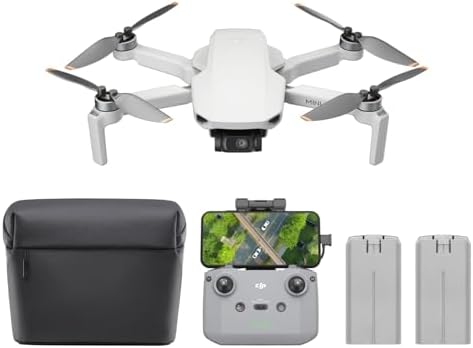
The Mini 4K is a lightweight option for agents or photographers who want a small aircraft with a stabilized 4K camera. Its 3-axis gimbal is a meaningful advantage for property footage: it helps keep the image steady as you move around a home or make a slow reveal of the grounds. The listing also describes GPS return-to-home, stable hovering, and one-tap takeoff and landing, which can make basic flight tasks less intimidating for a new pilot.
The supplied combo includes two batteries, a controller, a shoulder bag, and spare propellers. Each battery is listed for up to 31 minutes, though actual flight time can vary with conditions and how you fly. The drone is advertised as under 249 grams. That weight does not by itself remove commercial-flight requirements: real estate work for business purposes generally requires an FAA Part 107 certificate, and registration and Remote ID rules may apply.
Compared with the other compact options here, the Mini 4K’s strongest case is its combination of small size and a 3-axis gimbal. The listing provided for this guide marks this particular product as unavailable, so check the product page before planning around this bundle or its accessories.
Pros:
- 4K UHD video with 3-axis gimbal stabilization
- Compact, under-249-gram design as listed
- GPS return-to-home and beginner-friendly controls
- Combo listing includes two batteries and a carrying bag
Cons:
- The supplied product data marks this listing as unavailable
- Flight time and transmission range depend on conditions and operating limits
Verdict: Consider the Mini 4K if you want a compact drone with a gimbal, but confirm that this specific combo is available before choosing it.
Bwine F7GIM: A Gimbal Drone With Smart Flight Modes

The Bwine F7GIM stands out for its listed 3-axis brushless gimbal, 4K video recording, and 6K photo capture. For property work, the gimbal is the feature to focus on: stable camera movement can help make exterior passes and wide establishing shots look smoother. The drone also offers GPS-based modes such as orbit, cruise control, and waypoint planning, which may help you plan repeatable movements around a property.
Bwine claims up to 70 minutes of total flight time, split between two flights of up to 35 minutes each, and a transmission range of up to 10,000 feet. Treat those as stated maximums rather than a promise of the time or distance you will get on a real shoot. Wind, flight style, local rules, and the need to keep the aircraft within visual line of sight all affect practical use. The listing also describes a case, English-language instructions, and support resources.
This is a feature-rich alternative to the lighter DJI models, but its advertised range is not a reason to fly beyond legal or safe limits. The listing does not state that the drone weighs under 249 grams, so check its weight and applicable rules before using it for paid work.
Pros:
- 3-axis gimbal with listed 4K video and 6K photo modes
- GPS flight modes include orbit and waypoint planning
- Two batteries are listed for up to 70 minutes total flight time
- Listing includes a protective case and setup resources
Cons:
- Listed maximum flight and transmission figures may not match real shoot conditions
- Weight is not specified in the supplied product details
Verdict: The F7GIM is worth considering if you want a gimbal and planning modes, provided you verify the weight, local operating rules, and bundle contents first.
Vvoqeote GPS Drone: A Built-In Screen for Phone-Free Viewing

This foldable GPS drone pairs a listed 4K camera with a controller that has a built-in 4.5-inch screen. That setup lets you view the live feed on the controller instead of relying on your phone, which can be convenient when you want a dedicated viewing screen. Its camera lens can be adjusted remotely through a 90-degree range, giving you more control over the angle while the aircraft is in the air.
The product details list one-key return, low-battery return, and signal-loss return, along with Follow Me, Tap Fly, and Point of Interest modes. Two batteries are claimed to provide up to 60 minutes total, with up to 30 minutes per battery. These are useful features for learning and planning basic aerial views, but the supplied information does not specify a 3-axis gimbal. If smooth, cinematic motion is a priority, that is an important difference from the DJI and Bwine models above.
The drone is described as foldable and under 249 grams, but commercial real estate flights still require you to follow the applicable FAA rules. The listing mentions an included SD card, though it does not provide details here about the card’s capacity or video workflow.
Pros:
- Built-in 4.5-inch controller screen means a phone is not required for viewing
- Adjustable camera angle and GPS return features
- Two batteries are listed for up to 60 minutes total flight time
- Foldable design for easier packing
Cons:
- The supplied details do not specify a 3-axis gimbal
- Camera and transmission performance are not described in as much detail as the DJI models
Verdict: Choose the Vvoqeote if a built-in screen and phone-free viewing matter more to you than a clearly specified gimbal system.
DJI Mini 3 with DJI RC: A Screen Controller and 4K HDR

The Mini 3 is the more fully featured DJI option in this group. It records 4K HDR video and uses a 3-axis mechanical gimbal, while its DJI RC controller has a built-in 5.5-inch display. You do not need to mount a phone just to see the flight view, which can simplify setup and keep phone notifications out of the way during a shoot.
For real estate, two features are especially useful: the gimbal for smoother movement and True Vertical Shooting for portrait-format clips. The listing also names QuickShots, Panorama, GPS return-to-home, precise hovering, and a stated flight time of up to 38 minutes. An Intelligent Flight Battery Plus is sold separately and is listed as extending flight time up to 51 minutes; with that battery, the drone weighs more than 249 grams.
Like other camera drones, it requires a careful pilot and a suitable shooting plan. Its under-249-gram weight is listed for the standard configuration, but do not assume that weight-based recreational exemptions cover paid real estate work. If you want a ready-to-view controller and more flexible framing than the Mini 4K, the Mini 3 is a strong step up.
Pros:
- 4K HDR video with a 3-axis mechanical gimbal
- Built-in 5.5-inch display on the included DJI RC
- True Vertical Shooting can help create portrait-format content
- GPS return, hovering aids, and automated shot modes
Cons:
- The longer-flight Battery Plus is sold separately and raises the aircraft weight above 249 grams
- The controller display and extra features may be more than a casual user needs
Verdict: The Mini 3 is a well-rounded choice if you want a stabilized 4K camera and an integrated controller screen for more convenient property shoots.
sllcll GPS Foldable Drone: A Screen Controller and Return Features

The sllcll is a foldable GPS drone with a built-in 4.5-inch controller screen, so you can view the live feed without connecting a phone. Its camera has an adjustable 90-degree lens, and the product details describe GPS-assisted return functions for one-key return, low battery, and signal loss. Those features can add convenience, but they do not replace careful flight planning or keeping track of the aircraft.
The listing claims about 60 minutes of total flight time from two batteries. It also lists brushless motors, several speed settings, Tap Fly, Point of Interest, and waypoint flight. As with the Vvoqeote, the supplied information does not specify a 3-axis gimbal. That leaves a gap for real estate photographers who want predictable stabilization while panning or moving past a building.
The screen controller may suit beginners who prefer a self-contained setup, and the foldable design is practical for transport. Before buying, confirm the exact camera specifications, included accessories, and aircraft weight on the product page; the supplied listing details do not state its weight.
Pros:
- Built-in 4.5-inch controller screen for phone-free viewing
- Adjustable camera angle and GPS return functions
- Two batteries are listed for about 60 minutes of total flight time
- Foldable design and multiple flight modes
Cons:
- The supplied details do not specify a 3-axis gimbal
- Weight and several camera details are not stated in the provided information
Verdict: Consider this model if you value a screen controller and foldable design, but verify its camera stabilization and weight before using it for paid property work.
How to Choose a 4K Drone for Real Estate Photography
Look beyond the 4K label
A 4K specification tells you the video resolution, but it does not tell you everything about image quality. For property work, check whether the camera has a gimbal, how it handles changing light, and whether the listing gives useful detail about its video format and frame rate. In this group, the DJI Mini 4K, DJI Mini 3, and Bwine F7GIM explicitly list 3-axis gimbals. The Vvoqeote and sllcll product details describe adjustable camera angles but do not specify a gimbal.
Prioritize stable flight and camera movement
Smooth movement helps make a home’s exterior, yard, or surrounding area easier to view. A 3-axis gimbal can help steady the camera, while GPS hovering and return functions can support controlled flight. These features are aids, not guarantees: wind, obstacles, and pilot skill still matter. Plan slow, simple movements and avoid flying close to people, buildings, or trees.
Match battery time to your shoot plan
Compare both the stated time per battery and the total time across a bundle. A claim such as 60 or 70 minutes may refer to multiple batteries rather than one uninterrupted flight. Allow time to set up, move between shots, and land with a safe battery reserve. Real flight time can be shorter than a manufacturer’s maximum, so spare batteries can be useful for a full property shoot.
Choose a controller you can use comfortably
A controller with a built-in display, such as those listed for the DJI Mini 3, Vvoqeote, and sllcll, avoids relying on a phone for the live view. A phone-based setup may be fine if you prefer using your own device. Consider screen size, setup steps, and whether you want notifications or other apps competing for your attention while you fly.
Check weight and FAA requirements for paid work
Real estate photography done for business purposes generally falls under FAA Part 107 rules, even if the drone weighs less than 249 grams. The FAA’s weight-based registration and Remote ID exceptions are limited and depend on the type of operation; they should not be treated as a blanket exemption for commercial work. Review current FAA requirements, including pilot certification, aircraft registration, Remote ID, airspace, and operating limits before flying.
Plan for safe, useful coverage
Think about the shots the property needs before selecting a drone. A broad approach shot, a steady view of the lot, and a clear look at nearby features may be more useful than a long list of automated flight modes. Keep the aircraft within visual line of sight and follow applicable airspace rules. The transmission distances in product listings are maximum claims, not a reason to fly farther than permitted or safe.
Confirm what comes in the box
Bundles can differ in battery count, controller, case, memory card, and spare parts. Confirm the exact package on the product page, especially if you are comparing a standard model with a combo. For a work setup, also check how footage is saved and transferred, and whether you need to buy a memory card or extra batteries separately.
Frequently Asked Questions
Is a 4K drone enough for real estate photography?
4K resolution can provide detailed video for property presentations, but it is only one part of the decision. Stabilization, camera performance, flight control, and your shooting technique all affect the result. Check whether the specific drone has a gimbal and whether its camera details meet your needs.
Do I need a Part 107 certificate to photograph homes for a real estate business?
In general, a drone flight conducted for business purposes requires the pilot to follow FAA Part 107 rules, including holding the required remote pilot certificate. Review FAA guidance for your specific operation before flying.
Does a drone under 249 grams avoid all FAA requirements?
No. The weight can affect some registration and Remote ID rules for certain operations, but it does not create a general exemption for paid flights. Requirements depend on how you use the drone, so check current FAA rules for commercial operations.
Is a 3-axis gimbal important for property videos?
It can be helpful because it steadies the camera as the drone moves. That is especially useful for smooth exterior passes and gradual reveals. A drone without a listed gimbal may still be useful for basic aerial views, but the supplied product details may not give enough information to judge its stabilization.
Are the listed maximum flight times realistic?
They are manufacturer-stated maximums, and actual flight time can be lower. Wind, temperature, flight speed, and battery condition can affect how long a drone stays in the air. Plan conservatively and land with enough battery reserve.
Can I use a drone’s advertised long range to fly beyond visual line of sight?
No. A stated transmission range does not change FAA operating rules or make a flight safe. Keep the drone within visual line of sight unless you have the required authorization for another type of operation.
Final Recommendation
For real estate work, a 3-axis gimbal and dependable flight controls are strong priorities. The DJI Mini 3 with DJI RC is the most complete option in this selection if you want 4K HDR video, gimbal stabilization, and a built-in controller screen. The Bwine F7GIM is another candidate if you want a gimbal plus GPS flight modes and multiple batteries. The screen-controller models may appeal to beginners, but check their stabilization details before relying on them for polished property footage. Whatever you choose, verify availability, package contents, and FAA requirements before your first commercial flight.