
The best cleaning solution for kitchen cabinets depends on the mess and the finish: a spray degreaser can be handy for sticky buildup, while a cream cleaner may suit slower, more controlled cleaning. The five options below are described for wood, painted, or laminate cabinets, but finishes can vary. Test any cleaner in a hidden spot first, and follow the product label and your cabinet maker’s care instructions.
Quick Comparison
| Product | Type | Best For | Notable Feature |
|---|---|---|---|
| Final Touch Kitchen Cabinet Cleaner and Degreaser | Spray cleaner kit | Grease and grime on finished cabinets | Includes a detail brush |
| FORTIVO Kitchen Cabinet Cleaner | Spray cleaner kit | Everyday touch-ups | Compact 8-ounce bottle and brush |
| Parker & Bailey Kitchen Cabinet Cream | Cream cleaner | Cleaning and conditioning cabinets | Applied with a damp cloth |
| Parker & Bailey Kitchen Cabinet Cream Wood Cleaner | Cream cleaner | Built-up grease and dull wood | Also described for furniture and trim |
| Thomasville Kitchen Cabinet Cream | Cream cleaner and polish | Cleaning and refreshing cabinet surfaces | Multi-surface formula |
Our Picks: Best Cleaning Solution For Kitchen Cabinets reviews
Final Touch: A Spray Degreaser for Sticky Cabinet Grime

Final Touch is a spray cabinet cleaner made for grease, fingerprints, and kitchen grime. The product description says it is designed for wood, painted, white, and laminate cabinets, with particular attention to sticky buildup around handles, above the stove, and along door tops.
The kit includes a soft detail brush for recessed panels, corners, and grooves. That can be useful on shaker-style doors and other cabinets where a cloth may not reach every crease. The suggested method is straightforward: spray, brush as needed, and wipe. The maker says no rinsing is needed and that the formula does not leave an oily film.
Its plant-derived, low-odor formula may appeal if you prefer to avoid strong-smelling cleaners. The main trade-off is that a spray-and-wipe product still requires care: use a soft cloth, avoid soaking seams or unfinished areas, and test an inconspicuous spot before cleaning a whole cabinet run. Compared with the cream cleaners below, this option is more focused on quick grease removal than cloth-applied conditioning.
Pros:
- Designed for grease, fingerprints, and everyday kitchen grime
- Described for wood, painted, white, and laminate cabinets
- Includes a brush for grooves and recessed panels
- Plant-derived and low odor, according to the product description
Cons:
- Spray application may be less controlled around seams and delicate areas
- Cabinet finish compatibility should still be checked in a hidden spot
Verdict: Choose Final Touch if you want a ready-to-use spray kit with a detail brush for greasy, hard-to-reach cabinet areas.
FORTIVO: A Compact Kit for Regular Cabinet Touch-Ups

FORTIVO’s cabinet cleaner comes as a small spray kit with an 8-ounce bottle and a precision cleaning brush. Its description says the formula is intended for wood, painted, laminate, and other finished surfaces, and can be used for light splatters or more built-up grime.
The instructions allow you to spray onto a towel for quick touch-ups or use the brush for more focused cleaning. That flexibility may suit a household that wants one product for routine wiping and occasional attention to grooves or handles. The description also names vanities, trim, and sealed furniture as possible uses.
The bottle is smaller than the 32-ounce kit listed for Final Touch, so it may be less appealing if you plan to clean a large kitchen often. The supplied details do not give a precise coverage amount, so consider the bottle size rather than assuming how long it will last. Its main distinction from the cream options is the spray format and included brush.
Pros:
- Includes a precision brush and spray bottle
- Can be applied to a towel for quick cleaning
- Described for wood, painted, and laminate surfaces
Cons:
- The 8-ounce bottle is a relatively compact option
- Less suited to shoppers who prefer a cream applied by hand
Verdict: FORTIVO is a practical pick for smaller cleaning jobs and routine touch-ups, especially if you want a brush in the kit.
Parker & Bailey: A Cream Cleaner for Cleaning and Conditioning
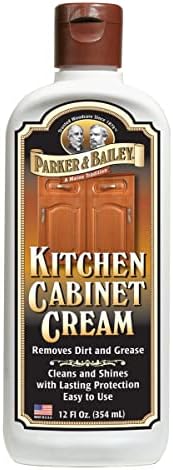
Parker & Bailey Kitchen Cabinet Cream is a cloth-applied cleaner for natural wood, painted, white, and laminate cabinet surfaces. The product description presents it as a cleaner, spot treatment, and buildup remover, with a conditioning role for cabinets and furniture.
To use it, apply a small amount to a damp cloth, work it over the surface, and rinse the cloth as it collects dirt. The description recommends buffing with a clean, dry cloth. This approach gives you control over how much product reaches the cabinet, but it involves more hands-on wiping than a spray cleaner.
The formula is described as low odor and free of wax, silicone, petrochemicals, and harsh solvents. Those details may be useful if you are looking for a cream without a waxy polish feel. It may take more than one pass on heavy buildup, so it is better viewed as a gradual cleaning and care option than a one-swipe solution for thick grease.
Pros:
- Described for natural wood, painted, white, and laminate cabinets
- Can clean and condition cabinet surfaces
- Cloth application provides control over product use
- Low-odor formula without wax or silicone, according to the description
Cons:
- Requires cloth application and dry buffing
- Heavy buildup may need repeated cleaning
Verdict: Pick Parker & Bailey Kitchen Cabinet Cream if you prefer a controlled, cloth-applied cleaner that also aims to condition finished cabinets.
Parker & Bailey Wood Cleaner: For Stubborn Grease and Dull Surfaces

This Parker & Bailey cream is positioned as a wood cleaner and grease remover for cabinets, doors, and trim. Its product description also says it can be used on laminate and painted surfaces, and describes it as a way to clean food stains, grease, and buildup while refreshing the appearance of dull, dry wood.
The formula is also presented for furniture such as tables, chairs, and shelving, so it may be useful if you want a cleaner for more than kitchen cabinets. The description emphasizes cleaning and conditioning without a sticky residue. As with any product used across different materials, check the label and test each type of surface before applying it broadly.
This option overlaps with the other Parker & Bailey cream, but its description puts more focus on tougher buildup and restoring the look of dull wood. It still calls for a hands-on approach, which may take longer than spraying and wiping, especially across a large kitchen. Avoid treating “restoring” language as a substitute for refinishing: results depend on the cabinet’s condition and finish.
Pros:
- Designed for grease, food stains, and buildup
- Described for wood, laminate, and painted surfaces
- Also intended for furniture and trim
- Product description highlights conditioning and a non-sticky finish
Cons:
- Cloth-based application takes more effort than a spray-and-wipe cleaner
- Claims about refreshing dull surfaces may vary with the finish and its condition
Verdict: Choose this cream if your priority is working on greasy buildup and dull-looking surfaces with a cloth-applied product.
Thomasville: A Multi-Surface Cream for Cabinet Care

Thomasville Kitchen Cabinet Cream is described as a multi-surface cleaner and polish for wood, painted, laminate, and white cabinet surfaces. The supplied product details also describe a cleaner-conditioner approach intended to remove dirt and grease while helping maintain the look of the finish.
The directions call for applying a small amount to a damp cloth, wiping the surface, rinsing the cloth as needed, and buffing with a dry cloth. That method offers a measured application, but it is not as quick as spraying a cabinet and wiping it down. It may suit shoppers who already prefer cream cleaners for furniture and cabinet care.
The product details provided closely resemble those for Parker & Bailey Kitchen Cabinet Cream, including the application method and surface types. The supplied information does not explain how the two formulas differ, so the listing details alone do not give a strong reason to expect a different cleaning experience. Compare the current package information before choosing between them.
Pros:
- Described for wood, painted, white, and laminate cabinets
- Combines cleaning with a polish or conditioning role
- Can also be used on furniture, according to the description
Cons:
- Requires damp-cloth application and dry buffing
- Supplied product details do not clearly distinguish it from the similar Parker & Bailey cream
Verdict: Thomasville is worth considering if you want a cloth-applied cream for cabinet and furniture care, but compare its label with similar options before deciding.
How to Choose a Kitchen Cabinet Cleaner
Match the Cleaner to Your Cabinet Finish
Start by identifying whether your cabinets are finished wood, painted, laminate, or another material. A product may list several compatible surfaces, but cabinet coatings differ, and the wrong cleaner or cleaning method can dull or damage a finish. Follow the cabinet maker’s care instructions when available, and test the cleaner in a hidden area before using it on visible doors.
Think About the Kind of Grime You Need to Remove
For grease and sticky residue near a stove or cabinet handles, look for a product described as a degreaser. For lighter fingerprints and routine wiping, a general cabinet cleaner may be enough. Heavy buildup can take repeated cleaning, so avoid pressing hard or using rough pads that could scratch or wear the finish.
Choose Between Spray and Cream
Spray cleaners are convenient for quick application and can pair well with a brush for grooves or recessed panels. Cream cleaners are applied with a cloth, which lets you control the amount used on each area but usually takes more wiping and buffing. Consider which method feels manageable for the size of your kitchen and the detail of your cabinet doors.
Check the Directions and Residue Instructions
Some products are designed to be wiped away without rinsing; others call for a damp cloth and a clean, dry buffing cloth. Use the method on the label rather than assuming all cabinet cleaners work the same way. Keep product away from areas where liquid could collect, such as joints, seams, or damaged finish.
Consider the Kit and Bottle Size
A detail brush can help reach corners and decorative grooves, while a larger bottle may be more convenient for cleaning many cabinets. Compare what comes in the package with the way you plan to clean. The supplied product descriptions list an 8-ounce bottle for FORTIVO and a 32-ounce kit for Final Touch; the other listings do not provide a size in the supplied details.
Be Careful With “Restoring” and “Polishing” Claims
Some formulas are described as restoring luster, conditioning wood, or polishing surfaces. These claims may suit cabinets that look dull, but a cleaner cannot repair peeling paint, worn-through finish, or structural damage. If a cabinet has a delicate, unfinished, or damaged surface, check with the cabinet maker before using a cleaner or polish.
FAQs
What is the best cleaner for greasy kitchen cabinets?
A cabinet cleaner specifically described as a degreaser is a sensible place to start. Final Touch and both Parker & Bailey options are described for grease or buildup. Follow the label, use a soft cloth, and test a hidden spot before cleaning the full surface.
Can I use these products on painted cabinets?
The supplied descriptions list painted cabinets as compatible with these products. Still, paint type and condition matter. Check the product label and your cabinet care instructions, then test a small, hidden area first.
Should I use a spray cleaner or a cream?
A spray may be convenient for quick wiping and reaching larger areas. A cream is applied with a cloth, which offers more control but takes more hands-on work. Choose based on the cleaning task and the method you prefer.
Do I need to rinse cabinet cleaner off?
It depends on the product. Final Touch is described as not needing a rinse, while the Parker & Bailey and Thomasville directions call for rinsing or refreshing the cloth as dirt is removed, followed by dry buffing. Always follow the directions for the specific cleaner you use.
Can I use a cabinet cleaner on laminate?
Each product listed here is described as suitable for laminate surfaces. Check the package instructions and test first, especially if the laminate is chipped, lifting, or otherwise damaged.
How often should I clean kitchen cabinets?
There is no single schedule for every kitchen. Wipe fresh splashes and fingerprints when they appear, and clean heavier grease as needed. Regular gentle cleaning can help limit buildup without requiring aggressive scrubbing.
Can cabinet cleaner fix a worn or peeling finish?
No cleaner should be expected to repair a worn, peeling, or damaged finish. Products described as polishing or restoring may change the appearance of some dull surfaces, but they cannot replace repair or refinishing. Check with the cabinet maker if you are unsure how to treat the surface.
Final Recommendation
For a ready-to-use spray kit aimed at greasy buildup, Final Touch stands out for its included detail brush and stated use on several cabinet finishes. If you prefer a cloth-applied cleaner with a conditioning focus, Parker & Bailey Kitchen Cabinet Cream is a strong alternative. Whichever you choose, confirm compatibility, follow the label, and test a hidden spot before cleaning your cabinets.