
A whole-house water filter and softener combo can address two different water concerns: filtration targets selected contaminants, tastes, or odors, while a softener reduces hardness minerals. The right setup depends on your water test, household demand, available space, and how much upkeep you are willing to handle. Below, we compare five options, from a softener paired with a separate carbon tank to bundled systems that also include reverse osmosis.
| Product | Softening capacity | Notable features | Best suited for |
|---|---|---|---|
| AFW Filters Fleck 5600SXT with Upflow Carbon | 48,000 grains | Upflow coconut-shell carbon; rated service flow up to 12 GPM | Homes seeking a separate softener and carbon filtration tank |
| PRO+AQUA PRO-E-S80E Elite Combo | 80,000 grains | Up to 20 GPM; targets hardness, chlorine, iron, VOCs, rust, and sediment | Large households with higher water demand |
| Kenmore Elite 520 Hybrid System | Not specified | Carbon filtration, metered regeneration, and a 1-inch high-flow valve | Homes wanting an integrated, compact softener and filter |
| EcoPure EPH130 2-in-1 System | Not specified | Compact cabinet design and AutoSense technology | Households of up to five people seeking an all-in-one design |
| Aquasure Whole House Bundle with RO | 48,000 grains | Whole-house prefilters plus a 75 GPD, four-stage RO system | Homes wanting whole-house treatment and an RO drinking-water system |
Our Picks: Best Whole House Water Filter Softener Combo reviews
AFW Filters Fleck 5600SXT: Separate Softener and Upflow Carbon Tank

This package pairs a 48,000-grain softener with a separate upflow carbon filtration tank. The softener uses a Fleck 5600SXT digital meter valve and upgraded 10% resin. AFW recommends it for households of two to five people and lists a service flow rate of up to 12 GPM.
The carbon tank uses 1.5 cubic feet of coconut-shell carbon media. According to the product details, it is designed to reduce chlorine, chloramines, pesticides, herbicides, organics, MTBE, THM, and many compounds that affect taste and odor. Its upflow design does not require backwashing, a drain line, or electricity for the carbon tank. That does not remove the softener’s separate needs: plan for the usual connections and upkeep required by a metered softener.
This is a practical choice if you want filtration and softening handled in separate tanks rather than in a single cabinet. The separate design may also be easier to evaluate when you need to focus on specific water concerns. However, it takes more room than a compact all-in-one unit, and the listed 12 GPM flow recommendation is worth checking against your home’s peak demand.
Pros:
- Combines a 48,000-grain softener with a dedicated carbon tank.
- Upflow carbon filtration does not need its own backwash cycle or drain line.
- Includes installation instructions, technical support, and hardness test strips.
- Lists a five-year valve warranty and a ten-year tank warranty.
Cons:
- The two-tank setup needs more installation space than an integrated cabinet.
- The recommended service flow rate may not suit every high-demand household.
Verdict: Choose the AFW Filters system if you want a conventional metered softener paired with a separate, low-maintenance carbon tank and your home fits its stated flow recommendation.
PRO+AQUA PRO-E-S80E: High-Capacity Choice for Large Homes

The PRO+AQUA PRO-E-S80E combines whole-house filtration with an 80,000-grain softener. Its listed flow rate is up to 20 GPM, and the product is designed for homes with six or more bathrooms. The system is described as suitable for well or municipal water.
Its stated treatment targets include hardness, chlorine, iron, VOCs, rust, and sediment. The digital metered valve is designed to manage regeneration based on water use, with the product description highlighting salt and water efficiency. This higher capacity and flow rating make it the most appealing option here for a large household, though capacity alone cannot determine whether a system is properly sized for your water hardness and daily use.
The product details describe commercial-grade resin and tanks, easy-access filter housings, a five-year softener warranty, and lifetime technical support. Before choosing it, confirm the system’s installation footprint and the exact filtration stages included. The supplied description lists the substances it treats but does not give detailed media specifications or reduction certifications for each one.
Pros:
- Highest listed softening capacity in this comparison at 80,000 grains.
- Rated for flow up to 20 GPM and designed for six or more bathrooms.
- Targets several common water concerns, including hardness, chlorine, iron, and sediment.
- Includes a five-year softener warranty and lifetime technical support.
Cons:
- Its higher capacity may be more system than a small household needs.
- The supplied details do not specify the filtration media or certifications for each contaminant claim.
Verdict: The PRO+AQUA is the strongest capacity-focused option here for a large home, provided its treatment claims match your water test and you have room for the installation.
Kenmore Elite 520: Compact Hybrid with Carbon Filtration

The Kenmore Elite 520 combines a water softener and carbon media filter in one system. The product description says it softens water, reduces clear-water iron, and helps improve chlorine taste and odor throughout the home. Its self-cleaning carbon media is intended to avoid routine filter replacements.
IntelliSoft technology is designed to learn household water-use patterns and regenerate when needed. The unit also has a 1-inch high-flow valve and a space-saving design, which may appeal if your utility area cannot accommodate two separate tanks. The description identifies the system as NSF certified, but it does not specify which individual claims or components that certification covers, so check the product documentation if a particular certification is important to you.
The main limitation is that the supplied product information does not state the softening capacity or maximum service flow rate. That makes it harder to compare sizing with the AFW, PRO+AQUA, and Aquasure systems. The listing data supplied for this article also marks this item unavailable; availability may change, so confirm the listing before planning an installation around it.
Pros:
- Combines softening and carbon filtration in a single unit.
- Designed to improve chlorine taste and odor and reduce clear-water iron.
- Metered, adaptive regeneration is intended to limit unnecessary cycles.
- Self-cleaning carbon media means no routine carbon filter replacement is specified.
Cons:
- The supplied product details do not list grain capacity or a maximum flow rate.
- The listing data provided marks the product unavailable; verify availability before considering it.
Verdict: Consider the Kenmore if a compact hybrid design and self-cleaning carbon media are priorities, but verify its capacity, certification details, and availability before choosing it.
EcoPure EPH130: Space-Saving Softener and Filter in One Cabinet

The EcoPure EPH130 is a 2-in-1 system that combines softening and filtration media in a compact cabinet. It is designed for households of up to five people and multiple bathrooms. That integrated layout may suit a home where floor space is limited and a separate filter tank is not practical.
Its AutoSense technology is described as adapting to water-use patterns, with the manufacturer claiming it can use up to 40% less salt than traditional systems. Treat that figure as a product claim, not a guaranteed result for every home: actual use depends on water conditions and household demand. The supplied details say the system improves water clarity and taste, but do not list specific contaminants or a grain capacity.
This model is less straightforward to size than options with a stated grain rating and flow rate. The listing data supplied for this article marks it unavailable, so check the listing before making plans. If it becomes available, ask for detailed treatment and sizing information to confirm it suits your water test and household usage.
Pros:
- Combines filtration and softening in a compact all-in-one cabinet.
- Designed for households of up to five people and multiple bathrooms.
- AutoSense technology is intended to adapt to household water use.
- Could be a fit when saving installation space is a priority.
Cons:
- The supplied details do not specify grain capacity, flow rate, or individual filtration targets.
- The listing data provided marks the product unavailable; confirm availability before considering it.
Verdict: The EcoPure is worth a closer look if you want a compact integrated design, but its missing capacity and contaminant details make it harder to size confidently against the other picks.
Aquasure Whole House Bundle: Softening, Prefilters, and Reverse Osmosis
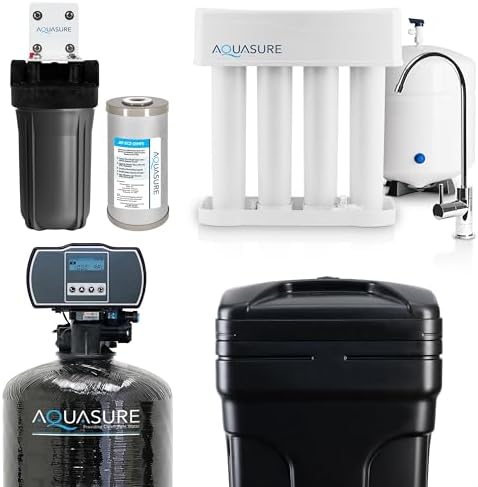
The Aquasure bundle combines a 48,000-grain whole-house softener with sediment, granular activated carbon, and zinc prefilters. It also includes a four-stage reverse-osmosis system rated at 75 gallons per day. This makes it different from a basic whole-house combo: it pairs treatment for water throughout the home with a separate RO stage for drinking water.
The product description says the prefilters target chlorine, VOCs, odors, taste issues, soil, silt, sand, rust, heavy metals, and sediment. It recommends replacing the RO filters every six to twelve months to support filtration and flow. The softener uses a programmable digital control head for automatic regeneration and backwashing. Its fiberglass-lined tank, bypass valve, and prefilled resin are also noted in the supplied details.
This bundle may suit a household that wants both softened whole-house water and a dedicated drinking-water filtration stage. It also brings more components and maintenance than a single softener-filter tank. Before buying, check the installation requirements for both the whole-house equipment and the RO system, and confirm the stated contaminant reduction claims match the documentation for your water concerns.
Pros:
- Includes a 48,000-grain softener and sediment, carbon, and zinc prefilters.
- Adds a four-stage, 75 GPD reverse-osmosis system for drinking water.
- Automatic controls manage softener regeneration and backwashing.
- Includes lifetime US-based technical support and a five-year extended warranty when activated as described.
Cons:
- The RO filters require periodic replacement, listed at six- to twelve-month intervals.
- More components may mean a more involved installation and maintenance plan than a basic combo.
Verdict: Choose the Aquasure bundle if you want whole-house softening and filtration plus an RO drinking-water system, and are prepared to maintain the additional filters.
How to Choose a Whole-House Water Filter and Softener Combo
Start with a water test
Find out what is actually in your water before choosing a system. A hardness test helps establish whether you need a softener and helps with sizing. If taste, odor, iron, sediment, or other contaminants are concerns, use a suitable water test or lab analysis to identify them. Then compare the results with the system’s documented treatment targets. A general filtration claim does not mean a system addresses every possible contaminant.
Size the softener for your household
Softener capacity is measured in grains, but a higher number is not automatically better for every home. Household water use and incoming water hardness both affect how often a system must regenerate. Compare the capacity with your test results and typical demand, and ask the manufacturer or a qualified installer to help size the unit if you are unsure. In this group, the AFW and Aquasure list 48,000 grains, while the PRO+AQUA lists 80,000 grains; the Kenmore and EcoPure details supplied here do not state a capacity.
Check flow rate and peak demand
Flow rate matters when several taps or appliances may run at once. A unit that is too restrictive for your home’s peak use can affect water delivery. Compare a system’s stated service flow with the number of bathrooms and the way your household uses water. The AFW lists up to 12 GPM, and the PRO+AQUA lists up to 20 GPM. The other product details here do not provide a maximum flow rate, so ask for that information before buying.
Match the filter media to the problem
Carbon media is commonly used to address chlorine taste and odor, but systems vary in their media, design, and stated treatment targets. Other filtration stages may be aimed at sediment, iron, VOCs, or different concerns. Check the product documentation for specific reduction claims and applicable certifications. If your test identifies a contaminant that is not listed in the product details, do not assume the system will remove it.
Choose between separate tanks and an integrated cabinet
Separate tanks, such as the AFW setup, give you distinct softening and carbon components but need more floor space. Integrated systems like the Kenmore and EcoPure combine media in one unit and may fit tighter utility areas. A bundle such as Aquasure’s adds an RO system, which means more equipment and filter upkeep. Measure the installation area and consider access for servicing before choosing a layout.
Understand regeneration and ongoing maintenance
Most salt-based softeners require periodic regeneration, and their operation involves salt and a drain connection. The AFW carbon tank’s no-backwash design applies to its carbon stage; it does not eliminate the softener’s own requirements. Check how each system handles regeneration, what supplies or replacement filters it needs, and how often maintenance is recommended. The Aquasure description, for example, lists RO filter changes every six to twelve months.
Review installation needs, warranties, and support
Confirm the plumbing connections, drain access, electrical needs, clearance, and any required bypass arrangement before purchase. Warranty coverage can vary by component: the AFW package lists separate valve and tank warranties, while Aquasure describes a five-year extended manufacturer warranty when activated as directed. Read the product documents for the exact terms, installation conditions, and support options.
Frequently Asked Questions
What does a whole-house water softener and filter combo do?
A softener reduces hardness minerals in water, while a filter targets certain contaminants, tastes, or odors. The exact results depend on the system’s media and documented treatment claims. Test your water to determine which functions you need.
Does a carbon filter soften water?
No. Carbon filtration and water softening are different processes. Carbon media is used for certain filtration purposes, such as reducing chlorine taste and odor, while a softener is designed to address hardness minerals.
Do these systems remove every contaminant?
No system should be assumed to remove every contaminant. Treatment varies by model and filter media. Check the product’s specific reduction claims and certifications, and compare them with a water test.
Does an upflow carbon filter need a drain?
The AFW product description says its upflow carbon tank does not require a drain line or backwashing. Its separate softener still has its own operating requirements, so plan for the complete system rather than the carbon tank alone.
Is a higher grain capacity always better?
No. The appropriate capacity depends on household water use and water hardness. An oversized system may not be the best match, while an undersized one may regenerate more often than desired. Use test results and household demand to guide sizing.
Does the Aquasure bundle provide reverse-osmosis water at every tap?
The bundle includes a 75 GPD reverse-osmosis system in addition to the whole-house softener and prefilters. The supplied details do not say that RO treatment is delivered to every household tap, so check the installation documentation to understand where the RO system supplies water.
Final Recommendation
For a balanced setup with clearly stated softening capacity and a separate carbon stage, the AFW Filters Fleck 5600SXT is a strong fit for households that fall within its recommended size and flow range. The PRO+AQUA stands out for larger homes that need more capacity and higher listed flow. Choose the Aquasure bundle if adding reverse osmosis for drinking water matters more than keeping maintenance simple. For any option, use a water test and confirm installation and treatment details before committing.