
A long Japanese sashimi knife can make clean, even slices through fish, but it is not the same tool as a flexible Western-style fillet knife. The options below are mainly yanagiba-style slicers: they work best for trimming and slicing boneless fish in smooth strokes. For removing pin bones or working close to a fish’s backbone, a dedicated fillet or boning knife is usually more suitable.
Our picks include both single-bevel and double-bevel designs, with differences in steel, handle materials, and listed hardness. Check the edge style before buying: a single-bevel knife can suit traditional sashimi work, while a double-bevel option may feel more familiar if you are used to standard Western knives.
Quick Comparison
| Knife | Length | Edge and steel details | Best suited for |
|---|---|---|---|
| SANMEIHO 10-Inch Sushi Knife | 10 inches | Double-sided 12° edge; 5Cr15MoV stainless steel; 57 HRC | Versatile slicing and easier routine care |
| Sunnecko 10.5-Inch Sashimi Knife | 10.5 inches | Single-sided 11–12° edge; high-carbon stainless steel; 58 HRC | Thin sashimi slices and traditional-style cutting |
| Lucky Cook 10-Inch Sashimi Sushi Knife | 10 inches | Traditional single-bevel design; stainless steel | Sashimi slicing with a classic edge profile |
| HOSHANHO 10-Inch 9-Layer Yanagiba | 10 inches | Symmetrical 12° edge; 9-layer steel; listed at 62 HRC | A harder, layered-steel option for fine slicing |
| HOSHANHO 10-Inch Rosewood Yanagiba | 10 inches | Double-bevel 12–15° edge; layered steel; listed at 60±2 HRC | Fish slicing with a familiar two-sided edge |
Our Picks: Best Japanese Knife For Filleting Fish reviews
1. SANMEIHO 10-Inch Sushi Knife: A Versatile Double-Bevel Pick

The SANMEIHO is a 10-inch sushi and sashimi knife intended for slicing fish, sushi, and other foods. Its listed 5Cr15MoV stainless steel blade has a hardness of 57 HRC, and the maker describes the edge as sharpened to 12 degrees on both sides. That symmetrical edge is a practical distinction from the traditional single-bevel options in this roundup.
The full-tang construction and octagonal red sandalwood handle are designed to provide a stable grip. The listing also says the steel is easy to resharpen and maintain. Its comparatively moderate listed hardness may be appealing if you would rather prioritize routine upkeep over the harder steel specifications of some alternatives.
Although the product is described for deboning and filleting as well as slicing, its long, straight profile is better suited to making smooth cuts through prepared fish than to detailed work around bones. Choose a flexible fillet knife for separating flesh from the frame or removing pin bones.
Pros:
- Double-bevel edge may feel familiar to many home cooks.
- Stainless steel is described as rust-resistant and easy to maintain.
- Full tang and octagonal wood handle are designed for grip and stability.
- Suitable for fish slicing as well as some general kitchen tasks.
Cons:
- Not a flexible blade for detailed bone work.
- Its 57 HRC specification is lower than the listed hardness of several alternatives.
Verdict: Choose the SANMEIHO if you want a long, double-bevel slicer with stainless-steel construction and straightforward care.
2. Sunnecko 10.5-Inch Sashimi Knife: A Single-Bevel Slicing Option

At 10.5 inches, the Sunnecko is the longest knife in this selection. Its high-carbon stainless steel blade is listed at 58 HRC, and the product description specifies a hand-sharpened, single-sided edge at 11–12 degrees. That edge geometry is intended for thin, clean sashimi slices made with a smooth pull cut.
The lightweight design and handmade Pakkawood handle are intended to make extended slicing more comfortable. A PVC blade cover and gift box are included, which are useful additions for protecting the edge during storage. As with any single-bevel knife, check that its edge orientation suits your dominant hand before ordering.
This is a focused slicer rather than an all-purpose fillet knife. Its length can help when you have a broad piece of fish to portion in long strokes, but it is less suited to short, controlled cuts around the skeleton. The single-bevel edge may also take some adjustment if you have only used double-bevel knives.
Pros:
- Longest blade in this comparison for long slicing strokes.
- Single-bevel edge is designed for thin sashimi cuts.
- High-carbon stainless steel and Pakkawood handle.
- Includes a blade cover for storage.
Cons:
- Single-bevel geometry may feel unfamiliar and needs to suit your handedness.
- Long blade is less handy for tight spaces and small prep tasks.
Verdict: The Sunnecko is a strong fit if your main goal is slicing prepared fish into thin portions and you are comfortable with a single-bevel edge.
3. Lucky Cook 10-Inch Sashimi Knife: A Traditional-Style Single Bevel

The Lucky Cook is a 10-inch sashimi knife with a traditional single-bevel design inspired by the yanagiba. Its stainless-steel blade is described as rust- and stain-resistant, while the Pakkawood handle is intended to provide a comfortable, slip-resistant hold. The listing does not give a steel grade or hardness figure, so there is less detail available for comparing its edge characteristics with the other picks.
The long blade is meant for smooth, precise cuts through fish, and the product is also presented as suitable for slicing meat and produce. Its edge style is most relevant if you want a traditional sashimi knife rather than a general-purpose, two-sided slicer. The included gift box adds storage, but a blade guard or suitable knife storage is still important once the knife is in regular use.
As with the Sunnecko, a single bevel can require a different cutting approach from a double-bevel knife. It is also not the best shape for working around the bones of a whole fish. Consider it for sashimi preparation and clean slicing, not as your only tool for every stage of filleting.
Pros:
- Traditional single-bevel design for sashimi-style slicing.
- Stainless-steel blade is described as resistant to rust and stains.
- Pakkawood handle is designed for a secure, balanced grip.
- Versatile enough for slicing other boneless ingredients.
Cons:
- Steel grade and hardness are not specified in the supplied product details.
- Single-bevel edge may take practice for cooks used to standard double-bevel knives.
Verdict: Pick the Lucky Cook if you want a traditional-style sashimi knife and value a simple stainless-steel, Pakkawood construction.
4. HOSHANHO 10-Inch 9-Layer Yanagiba: A Harder Double-Bevel Blade

This HOSHANHO model combines a 10-inch slicing profile with a listed 9-layer steel construction and a 10Cr15CoMoV core. The product description gives a hardness of 62 HRC and specifies a symmetrical edge sharpened to 12 degrees on each side. That makes it a double-bevel option, despite the yanagiba name; it is not the single-bevel style found on some traditional sashimi knives.
The octagonal mahogany handle and G10 bolsters are described as water-resistant, with the handle shape intended to support a secure grip. The maker also highlights a hammered finish and layered-steel pattern. These are construction and appearance details, but they do not change the basic role of the knife: making controlled slices through boneless fish and other soft ingredients.
The listed hardness is the highest in this group. A harder blade can suit cooks who value edge retention, but it also calls for careful use: avoid twisting the edge, chopping through bones, or using the knife on frozen food. The listing does not provide a flexible fillet-style profile, so this is not a substitute for a knife designed to follow a fish’s skeleton.
Pros:
- Listed 9-layer construction with a 10Cr15CoMoV core.
- Symmetrical edge is familiar to users of double-bevel knives.
- Octagonal handle and G10 bolsters are designed for grip and water resistance.
- Hardness is listed at 62 HRC.
Cons:
- Hard blade needs careful handling and should not be used to cut through bones.
- Not a flexible knife for detailed filleting work.
Verdict: Choose this HOSHANHO if you want a double-bevel slicer with layered-steel construction and are prepared to handle a harder edge carefully.
5. HOSHANHO 10-Inch Rosewood Yanagiba: A Double-Bevel All-Round Slicer
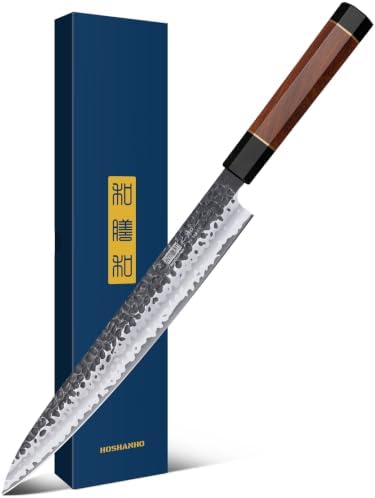
This 10-inch HOSHANHO sashimi knife is listed with a 10Cr15CoMoV steel core protected by 8 layers of composite steel. Its description specifies a double-bevel edge sharpened to 12–15 degrees per side and a hardness of 60±2 HRC. That two-sided edge makes it a more familiar choice for cooks who want a long slicing knife without moving to a traditional single-bevel profile.
The octagonal handle combines rosewood and G10, and is designed to support grip and comfort during longer prep sessions. The knife is intended for fish, sashimi, sushi, tofu, and soft cheese. Its 10-inch blade can make long cuts, but it will need more storage space than a compact chef’s or fillet knife.
Compared with the 9-layer HOSHANHO, this model has a slightly lower listed hardness and a similar double-bevel approach. It may be the more natural fit if you want a long fish slicer for mixed kitchen use. As with the other sashimi-style knives here, use a separate fillet knife for bone work and avoid hard ingredients that can damage a thin edge.
Pros:
- Double-bevel edge suits cooks who prefer a familiar sharpening and cutting style.
- Layered construction with a listed 10Cr15CoMoV core.
- Rosewood and G10 octagonal handle is designed for a secure grip.
- Suitable for fish and other soft ingredients.
Cons:
- Long blade is less convenient for small or cramped prep areas.
- Not designed for chopping bones or replacing a flexible fillet knife.
Verdict: This HOSHANHO is a good choice if you want a long, double-bevel fish slicer that can also handle other soft foods.
How to Choose a Japanese Knife for Filleting Fish
Know whether you need a slicer or a fillet knife
A yanagiba-style knife is built for long, clean slices through prepared fish. A flexible fillet knife is better for following the frame of a fish, separating flesh from bones, and trimming around joints. If you regularly prepare whole fish, these tools can serve different steps rather than replace one another. Use the long Japanese knife for slicing and a suitable fillet or boning knife for detailed breakdown work.
Choose the edge style that suits your experience
A single-bevel edge is sharpened on one side and is common on traditional sashimi knives. It can make precise slices, but it may feel different from a standard kitchen knife and can steer differently as you cut. A double-bevel edge is sharpened on both sides and may be easier to adapt to if most of your knives use that style. Also check the listed edge orientation and make sure it suits your dominant hand.
Match blade length to your fish and workspace
The knives in this roundup range from 10 to 10.5 inches. A longer blade gives you room for a smooth pull cut across a broad fillet, which can help produce an even slice in one stroke. It also takes more space to handle, clean, and store. Consider the size of the fish you prepare and the room available on your cutting board before choosing the longest option.
Consider steel, hardness, and care
Stainless steel is generally a practical choice when you want added resistance to staining and rust, but it still needs proper care. The listed hardness figures vary across these knives, and a harder blade may hold an edge well but needs careful handling. Do not twist a thin blade in a cut or use it to chop through bones. Wash and dry the knife after use, and follow the maker’s care guidance.
Look for a handle you can control
Handle shape and material affect how the knife feels in your hand. The options here include octagonal wood handles, Pakkawood, and designs that combine wood with G10. An octagonal shape can offer distinct grip surfaces, while the listed handle materials vary in their stated resistance to water and wear. A secure, comfortable hold matters especially when making long, smooth cuts.
Think about storage and sharpening
A long, sharp blade needs safe storage that protects both the edge and your hands. One option in this roundup includes a PVC cover, while others mention a gift or storage box. Check what is included and whether it suits your kitchen storage needs. Before buying, also consider whether you can maintain the knife’s edge style; single-bevel and double-bevel blades require different sharpening approaches.
Frequently Asked Questions
Can a sashimi knife fillet a whole fish?
It can slice and trim fish, but a long, straight sashimi knife is not the most practical tool for every part of whole-fish preparation. A flexible fillet knife is usually better for separating flesh from bones and working close to the frame.
What is the difference between a yanagiba and a fillet knife?
A yanagiba-style knife is a long slicer made for smooth cuts through boneless fish, especially for sashimi. A fillet knife is typically more flexible and shaped for separating flesh from bones. They serve different jobs in fish preparation.
Should I choose a single-bevel or double-bevel knife?
Choose a single bevel if you want a traditional sashimi-style edge and are comfortable with its cutting and sharpening needs. A double bevel may feel more familiar if you use standard kitchen knives. Check the product details for the edge type before buying.
Is a longer fish knife always better?
No. A longer blade can help with smooth cuts across broad pieces of fish, but it takes more room to use and store. Pick a length that suits your usual portions, cutting board, and comfort level.
Can I use these knives to cut through fish bones?
That is not their intended use. Thin slicing edges can be damaged by hard contact or twisting against bone. Use a suitable tool for bone work and reserve a sashimi knife for clean slicing.
How should I care for a Japanese fish knife?
Follow the maker’s instructions, clean and dry the blade after use, and store it so the edge is protected. Avoid using the knife on frozen food, bones, or other hard materials, and use a sharpening method suited to its edge style.
Final Recommendation
For a traditional single-bevel sashimi knife, the Sunnecko stands out for its 10.5-inch blade, listed high-carbon stainless steel, and included blade cover. If you prefer a double-bevel edge, the HOSHANHO rosewood model offers a long slicing profile with layered steel, while the SANMEIHO is a more straightforward stainless-steel option. Whichever you choose, treat it as a slicer for prepared fish—not as a replacement for a flexible knife used to remove bones.