
Iron in well water can leave orange-brown stains, cloudy water, and a metallic taste. The right whole-house filter can help, but the best choice depends on your iron level, water flow needs, and whether you also want to reduce manganese, sulfur odor, or chlorine. These five systems use different approaches, so test your water first and compare each model’s stated limits with your results.
Quick Comparison
| Product | Filtration Type | Notable Details | Best For |
|---|---|---|---|
| H&G Lifestyles 3-Stage Iron Filter | PP sediment, carbon block, iron-reduction cartridge | 10 x 4.5-inch housings; 1-inch fittings included | Well water with sediment and odor concerns |
| iSpring Iron and Manganese Filter | Two-stage carbon and iron/manganese filtration | Up to 15 GPM; stated iron and manganese limits | Homes that need clear performance limits |
| XINSHUO 3-Stage Whole House Filter | Sediment, carbon, and iron-reduction cartridges | Three filter sets included; stated 15 GPM flow | Households seeking replacement filters in the box |
| H&G Lifestyles Iron and Manganese Filter | Regenerable iron-reduction resin | Stated flow up to 7 GPM; control valves included | Those looking for a regenerable system |
| Mervian 3-Stage Iron and Manganese Filter | Sediment, carbon, and iron-reduction cartridges | Three filter sets included; stated 15 GPM flow | Homes wanting extra replacement cartridges |
Our Picks: Best Whole House Filter For Iron reviews
H&G Lifestyles 3-Stage Filter for Well Water and Odor
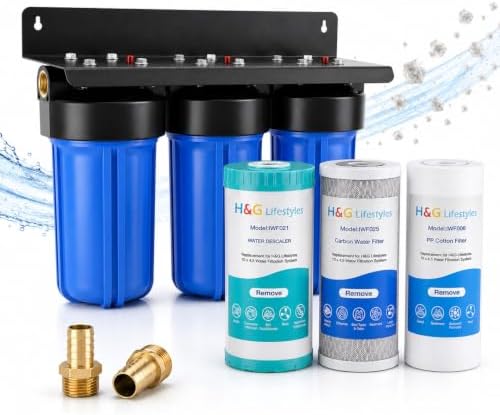
This system combines a PP sediment cartridge, a carbon block, and an iron-reduction cartridge in three 10 x 4.5-inch housings. The stages are intended to address more than one common well-water issue: sediment, iron-related discoloration, and unwanted taste or odor.
The package includes brass adapters for 1-inch NPT connections to 1-inch barb fittings, which may help with compatible plumbing setups. Check your pipe size and connection type before ordering, and allow enough room to access the housings when changing cartridges.
The product description also says the system can help reduce manganese and sulfur odor, but it does not give specific contaminant limits or a flow-rate figure. That makes it harder to judge whether it will suit water with a high iron concentration or a home with heavy simultaneous water use. Compare its capabilities with a lab test and ask the manufacturer for documented limits if your results are borderline.
Pros:
- Combines sediment, carbon, and iron-reduction stages.
- Designed for well-water concerns, including discoloration and odor.
- Uses 10 x 4.5-inch filter housings.
- Includes brass connection fittings.
Cons:
- No iron capacity or flow-rate limit is provided in the supplied product details.
- Confirm that the included fittings match your plumbing before installation.
Verdict: Consider this model if you want a three-stage cartridge system for well water, but get clear performance details before choosing it for high iron levels or demanding flow needs.
iSpring Two-Stage Filter with Stated Iron Limits

iSpring’s two-stage system pairs a coconut-shell carbon block with a dedicated iron and manganese cartridge. The product information states a maximum iron level of 3.0 ppm and a maximum manganese level of 1.0 ppm for the second-stage filter. Those figures make it easier to compare the system with a water test than models that do not list contaminant limits.
The system uses 20 x 4.5-inch cartridges and 1-inch NPT inlet and outlet connections. Its stated flow rate is up to 15 GPM. The carbon stage is described as reducing up to 99% of chlorine and has a stated 100,000-gallon capacity; actual cartridge life depends on incoming water and use, so follow the manufacturer’s replacement guidance.
This setup may suit a home with iron and manganese levels within the listed limits that also wants chlorine taste and odor reduction. It is not presented as a solution for higher iron levels. The manufacturer directs users with iron or manganese above those limits toward other systems, so do not assume this cartridge will handle every well-water condition.
Pros:
- Provides stated maximum levels for iron and manganese.
- Includes a carbon stage for chlorine taste and odor reduction.
- Lists a flow rate of up to 15 GPM.
- Uses standard 1-inch NPT connections and 20 x 4.5-inch cartridges.
Cons:
- Not the right match if iron or manganese is above the stated limits.
- Cartridges need periodic replacement, with timing tied to water conditions and use.
Verdict: This is a strong option to compare first when your test results fall within its stated iron and manganese limits and you want a high-flow cartridge system.
XINSHUO 3-Stage System with Three Filter Sets

This whole-house system uses PP sediment, CTO carbon block, and iron-reduction cartridges. Its stated filtration rating is 0.5 micron, and the package includes three complete sets of filters. That extra stock can make routine maintenance more convenient, though the replacement schedule will depend on your water quality and household use.
The product details list a 15 GPM flow rate, standard 3/4-inch connections, and housings with double O-ring seals. The system is described for both well and city water, with the iron-reduction stage aimed at iron and manganese while the carbon stage targets chlorine taste and odor.
The listing also uses “water softener” language, but it says the system preserves minerals and does not reduce TDS. Do not treat that wording as proof that it works like a conventional salt-based softener. If you need hardness reduction, confirm the system’s capabilities separately. It also does not provide a specific maximum iron level, so match it carefully to your test results.
Pros:
- Includes three sets of sediment, carbon, and iron-reduction filters.
- Lists a 0.5-micron rating and a stated 15 GPM flow rate.
- Uses standard 3/4-inch ports.
- Designed to address sediment, iron, manganese, and some taste and odor concerns.
Cons:
- No specific maximum iron or manganese limits are provided.
- Despite the “softener” wording, the product details say it preserves TDS; verify hardness-treatment needs before buying.
Verdict: Choose this model if having spare cartridge sets on hand matters, but confirm its contaminant limits and do not rely on it as a hardness softener without further documentation.
H&G Lifestyles Regenerable Iron and Manganese System

Unlike the cartridge-based systems here, this H&G Lifestyles model uses a regenerable iron-reduction resin. Its product description also says the system can address manganese and hydrogen sulfide, which may be useful if your water has a sulfur or rotten-egg smell as well as iron staining.
The stated flow rate is up to 7 GPM, with an operating pressure range of 20 to 100 PSI. It includes 1-inch PVC piping and two control valves for installation on the main water line. The manufacturer describes the resin as regenerable and intended for long-term use, but the supplied details do not explain the regeneration process or give a service schedule. Clarify those requirements before purchase.
The description claims reductions of up to 99.6% for iron, 99.3% for manganese, and 99.5% for hydrogen sulfide. Treat these as manufacturer claims, not a guarantee for every water supply. Results can depend on the water’s chemistry and the system’s setup. Its lower stated flow rate may also be a limitation in homes where several fixtures run at once.
Pros:
- Uses regenerable resin rather than standard replaceable cartridges.
- Targets iron, manganese, and hydrogen sulfide odor.
- Includes control valves and 1-inch PVC piping.
- Lists an operating pressure range of 20 to 100 PSI.
Cons:
- Its stated flow rate of up to 7 GPM is lower than the 15 GPM figures listed for some alternatives.
- The supplied information does not detail regeneration steps or maintenance needs.
Verdict: This model is worth considering if you want regenerable media and need to address sulfur odor, provided its flow rate and maintenance requirements fit your home.
Mervian 3-Stage Filter with Extra Replacement Sets

The Mervian system uses three stages: sediment filtration, a CTO carbon block, and an iron-reduction filter. The package includes three complete filter sets, or nine cartridges in total, according to the product description. Keeping replacements on hand can reduce the need to source filters right away, but it does not establish a fixed service life.
The system lists a 0.5-micron rating, a flow rate of up to 15 GPM, and standard 3/4-inch ports. Its product information says it targets iron, manganese, rust, and fine sediment, while the carbon stage is intended to help with odors. The listing does not provide a maximum iron concentration, so a water test and confirmation from the manufacturer are especially important if your iron level is high.
Its double O-ring design is described as helping prevent leaks, and the package includes a filter wrench and plumber’s tape. Those extras may simplify setup, but a main-line installation still needs compatible connections, adequate space, and careful leak checks. The claimed flow rate is not a promise of identical pressure in every plumbing system.
Pros:
- Includes three complete sets of replacement cartridges.
- Lists a 0.5-micron rating and up to 15 GPM flow.
- Uses standard 3/4-inch connections.
- Includes a filter wrench and plumber’s tape.
Cons:
- No maximum iron or manganese concentration is stated.
- Cartridge replacement needs will vary with water quality and use.
Verdict: Consider Mervian if extra cartridge sets and common 3/4-inch connections are priorities, but verify that the filter can handle your measured iron level.
How to Choose a Whole-House Filter for Iron
Test Your Water Before Choosing a System
Start with a water test that measures iron and manganese, and consider testing for other concerns such as hardness, pH, and sulfur odor. Iron levels alone may not tell the whole story: water chemistry can affect how well a particular filter works. If you use a private well, a qualified laboratory can help you understand the results and identify any additional treatment needs.
Match the System to Your Iron Level
Compare your test results with the product’s stated treatment limits. Of these options, the iSpring system lists maximum levels of 3.0 ppm iron and 1.0 ppm manganese. The other product details do not give a specific maximum iron level, so ask the manufacturer for documented limits before relying on them for a higher concentration. Do not assume a general claim of “iron removal” means a system will work for every well.
Consider the Type of Iron and Other Water Issues
Iron can appear as dissolved iron or as visible particles and rust-colored sediment. A sediment stage can help capture particles, while other forms may need a dedicated treatment process. Also decide whether you need help with manganese, sulfur smell, chlorine taste, or hardness. A system aimed at iron and odor is not automatically a water softener or a complete solution for every contaminant.
Check Flow Rate and Plumbing Connections
Look at the listed flow rate and compare it with your household’s water use, especially if multiple showers or appliances may run at once. The products here list rates from up to 7 GPM to up to 15 GPM, but actual flow and pressure depend on the system and your plumbing. Confirm the inlet and outlet sizes, available installation space, and whether you have the right fittings before ordering.
Understand Cartridge Changes or Regeneration
Cartridge systems need replacement filters, and the time between changes depends on the water and how much your household uses. Systems that include extra sets can make future changes more convenient, but the spare filters do not guarantee a specific number of years. For a regenerable system, find out what regeneration involves, what supplies it requires, and how often maintenance is needed.
Verify Claims and Know What the Filter Does Not Do
Look for clear limits, test information, and instructions that match your water conditions. Do not treat broad reduction claims as a guarantee for your home, and confirm any certification claims directly with the manufacturer. The systems described here are not presented as disinfection devices; if your concern includes bacteria or other health risks, use appropriate testing and treatment advice rather than relying on an iron filter alone.
Frequently Asked Questions
Do I need a water test before buying an iron filter?
Yes. A test can show how much iron and manganese are present and help identify other issues that may affect treatment. It also lets you compare your results with a system’s stated limits instead of choosing based only on general product claims.
Can a whole-house iron filter also remove manganese?
Some systems are designed to address both, including the products listed here. However, their stated limits vary. The iSpring system lists a maximum manganese level of 1.0 ppm; the other supplied product details do not give a specific maximum.
Will an iron filter remove sulfur or rotten-egg odor?
Some models in this guide say they help reduce sulfur or hydrogen sulfide odor. Check the product’s stated limits and confirm that they suit your water test results. Odor reduction claims should not be taken as proof that every sulfur-related problem will be resolved.
Does an iron filter soften hard water?
Not necessarily. Iron reduction and water softening are different treatment goals. One listing uses “softener” language but also says the system preserves TDS, so verify its hardness-treatment function with the manufacturer if softening is important to you.
How often should I replace whole-house filter cartridges?
There is no single schedule that applies to every home. Cartridge life depends on incoming water quality, the amount of water used, and the manufacturer’s instructions. Check the system manual and monitor for changes in water flow or performance.
Will a whole-house iron filter make water safe to drink?
Do not assume so. These products are described for iron, sediment, taste, or odor reduction, not as disinfection systems. Test your water for the contaminants that matter and use treatment designed for any identified health risks.
Final Recommendation
For a clear starting point, the iSpring system is the easiest to compare with a water test because it lists maximum iron and manganese levels, along with a stated flow rate. If your results exceed those limits, look for a system specifically rated for your conditions rather than choosing by broad claims alone. The H&G regenerable model may suit households that also need sulfur-odor treatment, while the XINSHUO and Mervian systems include extra cartridge sets. Before buying any option, confirm its limits, connection fit, flow needs, and maintenance requirements.